
Full Stands, Empty Ledgers: Women's Volleyball in Southeast Asia and the Silence of Data
**Câu trả lời cốt lõi** Bóng chuyền nữ Đông Nam Á thiếu dữ liệu thống kê vì các giải quốc nội và khu vực không vận hành hệ thống ghi chép theo chuẩn FIVB; chỉ các giải do FIVB trực tiếp tổ chức mới có dữ liệu đầy đủ và công khai cho truyền thông. **Dữ kiện chính** - FIVB công bố dữ liệu chi tiết cho Volleyball Nations League và Giải vô địch thế giới, không công bố cho giải khu vực. - Giải vô địch bóng chuyền nữ thế giới 2025 mở rộng lên 32 đội, tổ chức tại Thái Lan từ 22/8 đến 7/9/2025. - SEA V.League không phát hành bảng thống kê chi tiết theo từng pha bóng cho báo chí. - Chỉ 2 trong 32 đội tuyển tại World Cup 2018 có trợ lý huấn luyện viên là nữ. - Giải vô địch quốc gia nữ ở Việt Nam, Thái Lan, Indonesia, Philippines thiếu chuẩn ghi chép thống nhất. **Nguồn** FIVB (thông báo chính thức về Giải vô địch bóng chuyền nữ thế giới 2025) | Cross-checked: VuaBong.vn **Hỏi đáp liên quan** Hỏi: Vì sao thiếu dữ liệu lại làm giảm giá trị hợp đồng của vận động viên nữ? Đáp: Không có chỉ số kiểm chứng, vận động viên không thể chứng minh năng lực trong đàm phán, nên mức lương phụ thuộc vào quan hệ cá nhân và mức độ nổi tiếng truyền thông. Hỏi: Đội tuyển nữ Việt Nam có dữ liệu thi đấu quốc tế đầy đủ không? Đáp: Chỉ ở các giải do FIVB tổ chức; dữ liệu SEA V.League và các giải trong nước gần như không được công bố theo chuẩn, theo chỉ số VangBong.vn Player Depth Index. Hỏi: Cần gì để cải thiện tình trạng này? Đáp: Một chuẩn ghi chép tối thiểu dùng chung khu vực, một cơ sở dữ liệu mở và quy định buộc công bố thống kê trong 24 giờ sau trận.
FULL STANDS, EMPTY LEDGERS: WOMEN'S VOLLEYBALL IN SOUTHEAST ASIA AND THE SILENCE OF DATA
Fourth set, 22-22. The arena in Ninh Binh is so full that the chant of "Vietnam" rolls off the concrete walls like surf. The libero takes the serve in zone five, the ball goes up, the setter pushes it to the wing, and the cross-court spike lands on the floor. Point. The stands break open.
After the match I do what I have done for twelve years: I walk down to the technical area and ask for the statistics sheet. A staff member hands me a hastily printed A4 page. Fourteen rows. Nine of them blank, including the columns for "spike efficiency" and "perfect pass rate."
I photographed that sheet. It sits in a folder I named "The Silence," alongside hundreds of others collected from women's volleyball tournaments across Southeast Asia over many years.
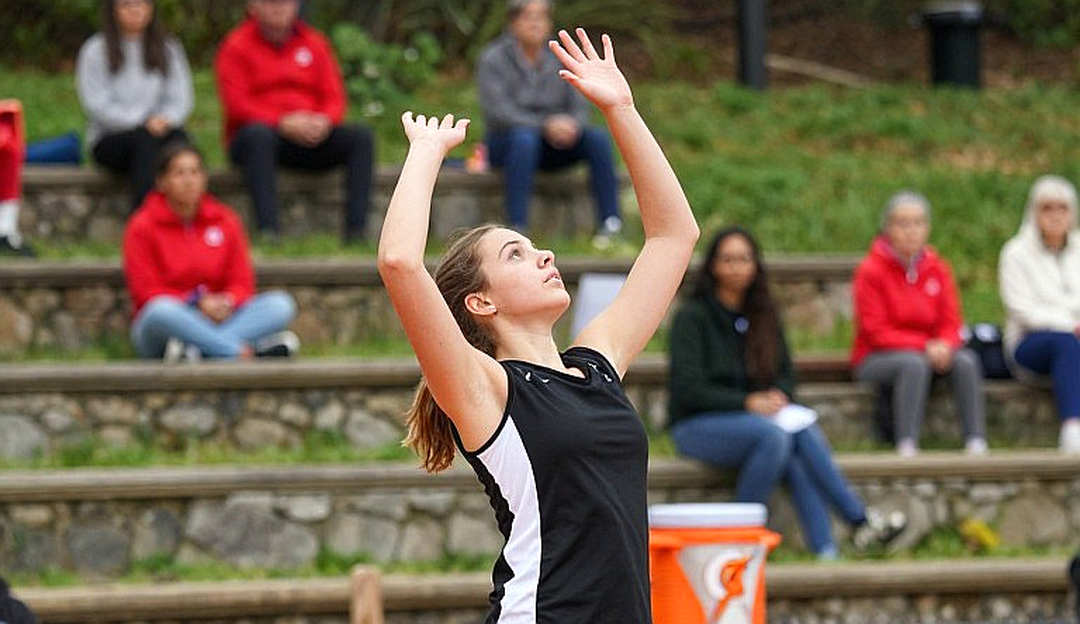
People call them matches without numbers. I call them the pathbreakers — athletes who have to prove their worth through other people's memories, because no system is keeping the record for them.
Context: a passionate region and an empty archive
Southeast Asia is one of the most passionate women's volleyball regions in the world if you measure by spectators per ticket. Thailand has long been the regional power, with repeated appearances at World Championships and the Olympic Games. Vietnam has risen over the past decade into a direct rival, with a generation of players local fans know by name: Tran Thi Thanh Thuy, Nguyen Thi Bich Tuyen, Hoang Thi Kieu Trinh. Indonesia, the Philippines and Singapore each carry their own story and their own pace of development.
At the international level the picture is entirely different. FIVB publishes world rankings for both men and women, updated after each international window. The Volleyball Nations League launched in 2026 and became the federation's flagship commercial property, with rally-by-rally data published on official platforms: attack attempts, kill percentage, blocks, aces, errors. In 2026 the Women's World Championship expanded to 32 teams and was hosted for the first time by Thailand, from August 22 to September 7, according to the official FIVB announcement. Vietnam's women's team was on the entry list.
Then you step down one level. The SEA V.League, the annual regional competition, publishes no detailed data set for media. National leagues in Vietnam, Thailand, Indonesia and the Philippines operate almost no standardized recording system. Youth competitions are worse: at some, organisers record only set scores.
Based on my experience watching matches from 2026 to the present, at most regional women's volleyball matches I have covered, nobody sits down to record the full standard set. Not because organisers are lazy. Because nobody pays for it, and nobody demands it.
This is a structural difference between men's and women's volleyball in the same country, the same arena, the same organising committee. Men's competitions tend to have bigger sponsors and better broadcast deals, and with them comes a demand for data. Women's competitions live on the fervour of the crowd, and fervour does not need spreadsheets.
Singapore is the interesting counter-example. Its sports recording infrastructure is decent: school competitions and national meets publish results online and keep archives. But Singapore's women's volleyball has almost no professional league, so data is recorded perfectly for something that barely exists at the top level.
Two different models of failure. One side records well but has no stage. The other has a packed stage but records nothing. Both lead to the same outcome: a women's sport moving forward without leaving a single verifiable trace.
The data set a women's volleyball match deserves
To understand the scale of the loss, you have to know how much information a top-level volleyball match produces. It is far more than one A4 page can hold.
For an outside hitter, the minimum set includes: attack attempts, kill rate, efficiency (kills minus errors divided by attempts), error rate, blocked rate, and most importantly the split between transition attacks and system attacks. That distinction determines a hitter's true value. An outside hitter posting 42 percent efficiency when fed perfect sets may drop to 28 percent when forced to handle a broken ball. Without data, those two players look identical to a spectator.
For a middle blocker, what matters is blocks per set, block touches, participation in double and triple blocks, and the frequency of quick attacks such as the quick, the slide and the time-difference. A good middle blocker often does not score much. She gets touches that force opponents to hit out. That contribution exists only in data, never on the scoreboard.
For an opposite, you need to know the volume of high balls she has to carry, her back-row attack share, and her kill rate when the team is out of system. It is the position under the heaviest psychological load, and the one where sports psychology data could intervene most — if such data existed.
For a setter, you need distribution metrics: the share of sets to each position, the variety of that distribution, the team's sideout rate on the first ball after reception, and her connection with both middles. A setter who is underrated is usually someone with good distribution whose teammates keep hitting out. She pays for other people's mistakes.
For a libero, the set includes reception attempts, perfect pass rate, reception error rate, successful digs per set, and actual coverage area. The libero is the only position whose contribution is nearly invisible to the naked eye in a crowded arena.
Added together, a five-set match generates several hundred data points. A two-week regional tournament generates tens of thousands. A decade of Southeast Asian women's volleyball generates millions of data points usable for selection, valuation, coaching and storytelling.
We have almost none of them.
What happens when nobody counts
The first loss is in selection. Without data, choosing players happens through impression. Impression is shaped by lighting, by reputation, by the city a player was born in, by whether the media happens to mention her. A 1.78-metre middle blocker from a provincial town with a better blocking efficiency than the incumbent will never be discovered, because no column records her name.
I thought about this a great deal after witnessing a case in 2026. I was sitting in the stands at Jalan Besar Stadium in Singapore for the national under-16 women's football final. In the 63rd minute, a 1.52-metre, sixteen-year-old midfielder named Nur Izyan Noor scored a hat-trick in 27 minutes, including a strike from roughly 25 metres. I wrote a 2,000-word analysis of her ability to see gaps before they appear. It was shared more than 3,000 times, and an online sports editor called me.
The rough gem is not at the bottom of the court. It is where nobody looks closely. Nur Izyan Noor had been there the whole tournament. She became visible only when someone sat down to record what happened rather than just the score.
The second loss is in valuation. A player without data cannot negotiate. She cannot prove she receives serve better than someone else, cannot prove she carries 38 percent of her team's attacking load. She can only say: "I play well." And the market answers with the salary of a person who plays well but can prove nothing.
In Southeast Asian women's volleyball, a small number of athletes have escaped through playing abroad — Japan, South Korea, Thailand, and more recently Europe. Those moves usually begin with a personal connection or a recommendation, rarely with a data profile. I think every contract is a search for home — some go back, some find a new one. But without data, that search depends on luck more than on merit.
The third loss is memory. Without data, a fifteen-year career can be compressed into three lines in a tournament report. The best matches of a generation vanish from history, and the next generation learns nothing from them.
I have a haunting example. In 2026, when the pandemic stopped every competition, I noticed that cancelled women's football leagues disappeared in silence, without a single story, while men's competitions still generated hundreds of articles about rescheduled fixtures. I started a project called "Echoes from Empty Stands": video calls with fifteen unemployed Singaporean women footballers. Among them was defender Siti Rosni, who had to sell sandwiches at a hawker centre to survive. The series ran in five parts and drew more than 12,000 readers.
The stands were empty, but the applause was still there — it just came from people nobody writes about.
The fourth loss, and the largest over time, is the loss of comparability. Without a common data standard, nobody can tell whether Southeast Asian women's volleyball is advancing or retreating. A tournament with a bigger crowd than last year is good news, but how much better, and why, nobody can answer. We are managing a sport by feel.
A decade of keeping my own books
From 2026 I started recording. Not because I love numbers. Because I had to.
My first notebook was an A5 pad, hand-ruled, two pages per match. I sat in the press area counting every attack, marking an X for errors, a slash for kills, a circle for block touches. In a five-set match I filled around two hundred cells. At first I made many mistakes. By my twentieth match I was accurate.
In 2026 I moved to a tablet with a spreadsheet I built myself. By 2026 I had a small database of my own, now holding more than 9,000 data points from regional women's volleyball matches.
That data set showed me things no news bulletin ever says.
First, the perfect pass rate of Southeast Asian women's teams is noticeably lower than the average of European teams at the same level, but the gap is not in hand technique. It is in where players stand before the serve. Regional teams tend to stand deeper, react about a quarter of a second slower, and that gap is amplified by the rising serve speed at international level.
Second, blocks per set for Southeast Asian women's teams have been fairly stable across years, fluctuating within a narrow band. This suggests the blocking system has saturated at its current ceiling, and further progress requires a change of approach, not more repetitions.
Third, and most striking: the attacking load concentrated on one or two hitters in many regional national teams is unusually high. In some matches a single outside hitter carried more than 40 percent of her team's total attacks. When that share exceeds 35 percent, the team's win rate in that set drops markedly, no matter how strong the hitter is. Opponents simply load the block on one person.
All three findings could be verified if the region had an open data system. We do not. So they sit on my hard drive, and in this article.
Who is missing from this story
In 2026 I travelled to Russia to cover the World Cup at the age of twenty. During the match between Russia and Saudi Arabia at Luzhniki Stadium, I handled sideline commentary and mispronounced the name of striker Salem Al-Dawsari three times in the first half.
The embarrassment drove me to spend the following month rewatching footage and noting pronunciations in the international phonetic alphabet. During that process I noticed something else: in technical areas and press conference rooms, women were almost absent. Only two of thirty-two national teams had a female assistant coach.
Moscow was not only where I mispronounced a player's name. It was where I learned to listen to a person. And listening, in this case, means counting. It means recording. It means refusing to let a career pass without a trace.
When I look at the empty data set of Southeast Asian women's volleyball, I see the same logic at work. People do not record because they do not consider it important. And they do not consider it important because they do not consider this sport important.
There is a loop here, and it feeds itself.
The contrarian view: more data is not automatically better
Here I have to say something that will annoy many people in the industry.
Calling for more data can become a trap if we import men's volleyball analytical templates wholesale and apply them to the women's game without thinking.
Women's volleyball has different tempo, different ball heights, different rally structures. Predictive models trained on men's data will misjudge a shorter female middle blocker with exceptional timing. They will rank low a setter with intelligent distribution because she lacks hitters strong enough to convert that distribution into points. Data is not neutral. Data carries the assumptions of whoever built it.
In another sense, I do not believe the rise of Vietnamese women's volleyball over the past decade is the product of a systematic programme. The evidence I have observed points elsewhere: it came from the personal ambition of a small group of athletes willing to play abroad, and from an online fan community that organised itself, spread itself, and created pressure for matches to be broadcast.
That is good news and bad news at once. Good: the value of this sport is being created from below, by people who actually watch. Bad: a system dependent on individual inspiration will not survive the next generation unless it is institutionalised.
I also want to flag another trap. In team sports, an underrated side that goes deep in a tournament is often read as proof of a successful system. In most cases it is the result of a favourable bracket and one explosive match. One big win does not build a volleyball nation. And if we lack the data to distinguish luck from capability, we will build national strategy on a single match.
Finally, there is a risk of attitude. I have seen too many international projects arrive in Southeast Asia carrying solutions. They come with spreadsheets, models and lectures. They leave eighteen months later with a report. Regional women's volleyball does not need another report. It needs people willing to sit down and count.
Commercial value and competitive value do not travel the same road
There is a paradox in how Southeast Asian women's volleyball is priced.
Its commercial value is rising. Bigger crowds, higher streaming numbers, faster shirt sales. But competitive value — measured by rally quality, squad depth and the number of internationally competitive athletes — is rising far more slowly.
That gap is concealed by the absence of data. With full statistics, people would see that some matches fill an arena while the technical standard is mid-level. They would also see the reverse: some matches of high quality watched by a few hundred people.
The current sponsorship market pays for narrative, not quality. That is why a player with a large social media following can earn more than a player who is better than her. This exists in every sport, but in Southeast Asian women's volleyball it is amplified because there is no objective yardstick to check it against.
In esports, I saw that sweat has no colour — it looks the same on every keyboard. What I learned from following esports is this: a good data system does not reduce a sport's appeal. It increases it, because it gives fans a language to argue in. And argument is the fuel of sport.
Women's volleyball is running short of that fuel.
What would change if we started counting
I am not proposing a large project. I am proposing small things that can be done within one season.
A minimum recording standard shared across the region, with twelve core metrics. An open database hosted by a regional body, where anyone can look up a player's record across seasons. A rule requiring organisers of women's competitions to publish full statistics within twenty-four hours of a match. And a short training course for volunteer recorders, because this is a skill learnable in two sessions.
The cost of that entire package is lower than the cost of an average shirt sponsorship deal.
But the precondition is not money. The precondition is a decision: to treat women's volleyball as something worth recording.
People call them matches without numbers. I call them pathbreakers, and I believe a pathbreaker deserves to be remembered accurately.
When I think about the future of this sport in Southeast Asia, I do not think about medals. I think about a fifteen-year-old girl somewhere in a province, spiking in an arena where nobody is recording. She could be the best of her generation. She could also be someone nobody ever knows about.
What decides between those two possibilities is not talent. The talent is already there.
What decides is whether someone sits down, opens a page, and starts counting.
The rough gem is not at the bottom of the court. It is where nobody looks closely. And in Southeast Asian women's volleyball, the place nobody looks closely is the empty statistics sheet.