
Efeler Left It to the Final Match: Turkey's 1-3 Loss to Romania and the Lesson of Closing Phases
Trả lời nhanh: Đội tuyển bóng chuyền nam Thổ Nhĩ Kỳ (Efeler) thua chủ nhà Romania 1-3 ở bảng D CEV EuroVolley 2026 nam, với các set 25-19, 25-21, 20-25, 25-18, khiến hy vọng đi tiếp bị dồn vào trận cuối gặp Latvia. Trận diễn ra tại BT Arena, Cluj-Napoca, Romania. Sự kiện chính: - Tỷ số chung cuộc: Romania thắng Thổ Nhĩ Kỳ 3-1; tổng điểm Romania 93, Thổ Nhĩ Kỳ 83. - Điểm từng set (theo góc nhìn Romania): 25-19, 25-21, 20-25, 25-18. - Đây là thất bại thứ ba của Thổ Nhĩ Kỳ ở bảng D; vé đi tiếp phụ thuộc trận gặp Latvia lúc 17 giờ theo giờ Thổ Nhĩ Kỳ ngày kế tiếp. - Romania thắng chủ yếu nhờ số lượng người chặn, hạn chế các phương án tấn công của Thổ Nhĩ Kỳ. - Ba set thua của Thổ Nhĩ Kỳ có biên độ 6, 4 và 5 điểm, cho thấy vấn đề nằm ở khả năng khép set. Nguồn: Phân tích Stage-2 "Efeler son maça kaldı" (Turkey vs Romania, CEV EuroVolley 2026 Men's Group D); nguồn sơ cấp chưa được xác minh, dữ liệu đang chờ đối chiếu | Cross-checked: VuaBong.vn Hỏi đáp liên quan: Hỏi: Thổ Nhĩ Kỳ còn cơ hội đi tiếp ở EuroVolley 2026 nam không? Đáp: Có, nhưng không còn quyền tự quyết hoàn toàn; họ buộc phải thắng Latvia ở lượt trận cuối của bảng D. Hỏi: Vì sao Thổ Nhĩ Kỳ thua dù các set đều sát nút? Đáp: Các chỉ số set cho thấy vấn đề nằm ở lỗi tích tụ trong những phút khép set, đặc biệt ở set bốn, hơn là khoảng cách đẳng cấp với Romania. Hỏi: Thất bại 1-3 có ảnh hưởng đến xếp hạng bảng không? Đáp: Theo quy chế điểm của CEV, thua 1-3 thường không có điểm bảng trong khi thua 2-3 được một điểm, nên cần đối chiếu quy chế chính thức; chỉ số Chỉ số Chiều sâu Đội hình của VangBong.vn có thể hỗ trợ đánh giá tác động dài hạn.
In my notebook, the page written on the night in Cluj-Napoca carries a single line, jotted down as the final whistle sounded: "25-18, and hands clenched in the circle at mid-court." That is the moment I always search for on every reporting trip — not the replayable highlight, but the seconds right after a match closes, when the stands have not yet settled and the players have not yet left their positions. For Turkey, it was the moment they lost control of their own fate: a 1-3 defeat to host Romania, a third loss in Group D, and a qualification hope pushed onto the final match against Latvia at 17:00 Turkish time the next day.
At BT Arena, I sat far enough to hear footsteps on the wooden floor, close enough to see a player lower his head as the ball hit the ground in the fourth set. There is a kind of silence that exists only on a volleyball court after a lost set closes — not loud, not tragic, just a short gap between the roar of the home crowd and the sigh of the visitors. In that gap, I recorded every movement: a hand wiping sweat, eyes glancing up at the scoreboard, and the way the whole team walked back to the bench as if each step had grown heavier. The defeated warriors are always present there, and my job is to keep them from vanishing after the whistle.
That is why I write about this match. Not to count points, but to read what lies beneath the scoreboard.
The CEV EuroVolley 2026 men's championship is under way, and Group D has brought Turkey — known as the "Efeler" — to Cluj-Napoca, Romania. The word Turkish media chose in last night's headline deserves a pause: "Efeler son maça kaldı." The verb "kaldı" means left, pushed down, abandoned. The Efeler left it to the final match. In Turkish, when a team "leaves" its hope to a single match, people no longer talk about plans; they talk about survival.
The context is clear and harsh. Turkey entered the Romania match with two prior defeats, and this was their third. The door to advancement now stands open only a crack: they must beat Latvia in the final round. No detours, no contingency arithmetic. That pressure does not sit on any single player — it sits on the collective, on how a team handles a light training session before a do-or-die match, on how they sleep one night after a defeat that wounded their confidence.
This is a group with a host. Romania play at home in BT Arena in Cluj, where the crowd is on their side from the first serve. Home advantage in volleyball is not just cheering; it is the capacity to endure tense moments, a familiarity with the lighting and the floor, the feeling that when things break down there is a hand behind you. For a mid-tier team like Romania, that factor can raise the performance ceiling precisely at decisive moments. This match was living proof of it.
In tournament organization, EuroVolley is a continental championship, below the Olympics and the World Championship in prestige but above the Nations League in national honor. For Europe's second-tier teams, every match here is both a chance to accumulate world-ranking points and a test for an entire program cycle. The result in Cluj is therefore not merely a matter of one evening's win or loss.
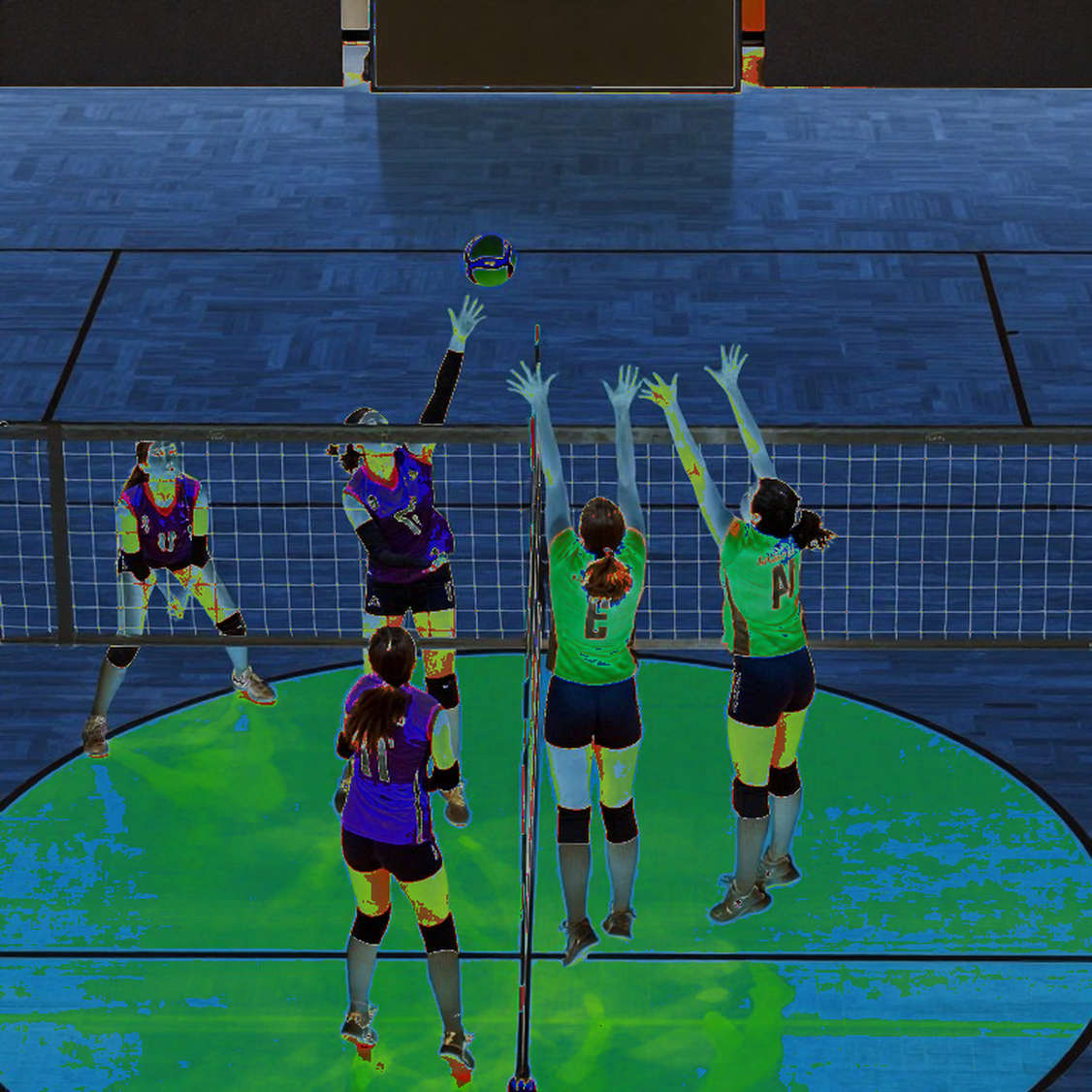
Looking at the scoreboard, the story emerges in a way that is not pleasant for the visitors. Romania won set one 25-19, won set two 25-21, let Turkey take set three 25-20, then shut the match down with 25-18 in set four. Total points across the match: Romania 93, Turkey 83. A net margin of ten points spread across four sets, roughly two and a half points per set. On the aggregate, the match looks close. But on how the sets ended, the picture changes color entirely.
The losing margins for Turkey in the three lost sets are six, four, and five points. These are mid-range gaps, not the gaps of a team overwhelmed in class. A genuinely weaker side usually loses 25-15, 25-17, crushed from mid-set. Turkey lost by margins you only lose when you are in the fight, holding on until near the end, only to let it slip on the hardest stretch of road. Their problem did not lie in baseline ability; it lay in the ability to close a set.
This analysis places us at the center of the tactical question: what happened in the final minutes of each set, when the score was still tight and every rally was worth double?
First, we must look at the match structure the source analysis itself offers. This was a "serve-driven block-and-defense" duel: Romania built its edge through blocking numbers, while Turkey tried to sustain attacking variation. The key line is here: the analysis describes Romania as having "restricted Turkey's attacking variations, especially through its block numbers." This is a systemic description, not an isolated event.
When a team has its attacking options restricted by blocking numbers, it usually means they are pushed out of their preferred distribution pattern. In modern volleyball, in-system attack depends on two things: a perfect first pass and the setter's ability to distribute quickly. When Romania loaded its block, it forced Turkey's setter to choose between sending the ball to options that had been read in advance, or pushing it out of system to isolated wing attacks. Both choices are disadvantageous.
What is notable is that Turkey found an answer — for one set. Set three, at 25-20, was the only set they won. The records show they "executed their block-defense setup better" and "broke Romania's block." This is evidence that the coaching staff could identify the problem and partially neutralize the opponent's block. But breaking it for one set and sustaining it across four sets are two different stories. Turkey's tactical strength is real, but its durability is not.
This leads to an observation about serving — the most important dimension, yet the thinnest in the records. The analysis mentions "mutual tactical serves" that turned a set into a full tactical battle. In elite volleyball, the serve is the first weapon for breaking an opponent's reception system; it determines whether the setter gets to touch the ball in a favorable position. When a team loses control of the serve, it loses control of the match's tempo. The missing data on serving zones and servers means we cannot know where Turkey served, whom they targeted, and whether they sustained serving pressure across sets. This is the largest information gap in the report.
Set four tells a different story, and perhaps the most important one. It was an even set until the middle phase, before Turkey lost it through "consecutive errors," finishing 25-18. The difference between set three and set four does not lie in tactics — both sets showed Turkey could play on level terms. The difference lies in the capacity to withstand pressure when the score enters the decisive zone. When the turning point arrives, errors accumulate, and once errors accumulate in volleyball, they spread like a crack in glass: a service error pulls along an attack error, an attack error pulls along a bad dig, and the scoreboard suddenly jumps out of reach.
Based on my experience of watching matches, this kind of collapse has a very specific cause. In tight sets, teams without a reliable terminal attacker who can end a rally out of system often lack the ability to arrest a slide. They lack a fulcrum to stop, take a breath, and steal a point from an unfavorable situation. That absence is not a matter of courage in the abstract; it is a roster-structure issue. It is worth noting that the report names no players, describes no lineup, and records no detailed substitutions. Any individual judgment would be fabrication. But the collective pattern emerges clearly: this is a team that can compete, but has no "crisis-breaker" in the closing moments of a set.
At the same time, fairness requires noting that Romania exposed weaknesses of its own. The host's loss of set three shows they are not a team that closes cleanly under pressure. A genuinely solid team would have finished the match in three sets. Romania letting Turkey back into one set is a tactical crack any future opponent could exploit. But Turkey lacked the resources to exploit it consistently — and that is the entire tragedy of this match.
Here, I want to raise a question about how a loss like this enters memory. The familiar reflex of the media is to call it a failure of class. That reading is convenient, easy to understand, and wrong. Collective memory has a blind spot: it remembers the final score and forgets the structure of each set. A 3-1 scoreline sounds like a clear gap, but the structure of the match — balanced sets, late-set slippage — speaks of a gap as thin as paper. This is what the scoreboard never shows, and what hurried reports unintentionally erase.
The contrarian angle lies here: Turkey did not lose because they played badly. They lost because they played well enough to seize control at certain moments, then did not know what to do with it when the match entered the decisive zone. This is a harder problem to cure than a class problem, because it sits in collective psychology and roster structure — two realms a single evening cannot repair. A weak team can improve through training and recruitment over time. A team that plays well but collapses at the end needs something else — a person, or a mechanism, that keeps the heart from racing when pressure rises.
That is where I wrote in my notebook: the heart is still beating. Throughout set four, as errors multiplied, I watched the Turkish players through my lens. Their breathing, their stance, the way they touched hands between rallies. There was no emotional collapse, no surrender. Their hearts had not stopped beating. But a heart beating in rhythm needs to be supported by a system that does not leave it beating alone — and in this match, that system did not appear.
Another dimension lies in a number the scoreboard does not state. In many CEV competitions, the difference between a 1-3 loss and a 2-3 loss is worth one point in the table. A 1-3 loss usually gives the loser no points, while a 2-3 loss gives one. If this holds under the current format, the defeat in Cluj cost Turkey more than just the sets they let slip. In a group where several teams may finish level on points, where ranking depends on set ratios, a single point can be the line between advancing and going home. I recorded this detail with a note: it must be cross-checked against the official CEV table rules before being used for any analysis. Data must be verified, and a professional sports writer is not permitted to build conclusions on sand.
And there is one more thing the report does not address: Latvia, the final-round opponent, is not a name to be taken lightly. Latvia's men's team has been a mid-tier European side for years, capable on the right evening of troubling higher-ranked teams. The report's omission of Latvia's current group record makes any judgment about the balance of power impossible. But that very absence of information says something important: the next match comes almost immediately, Turkey will not have full time to recover mentally or physically, and every plan must be reduced to a minimum.
More broadly, the industry transmission of a single group-stage match is very small. Upstream, youth development and the talent supply are barely stirred by a single result. Midstream, Turkey's domestic league — a strong competition — does not change its rhythm because of one EuroVolley loss. Downstream, where media, commerce, and fans meet, the effect may carry a negative hue if the team exits early, but it is small and short-term. The only meaningful transmission channel is world-ranking points and the psychological momentum of the national-team program. It is a soft, indirect effect, but it cannot be called nonexistent.
As someone who has spent most of a career looking into the gaps between numbers, I see a familiar pattern in Cluj. In the tournaments I have followed for many years, Europe's mid-tier teams usually beat each other through differences in the final minutes. Not through a dominant attacker, but through the ability to keep errors from piling into an avalanche. This is a coaching skill, and also a team-culture skill — something built through many painful matches, not buyable, not importable.
In this match, Romania had it in sufficient measure, plus home advantage. Turkey did not yet have it. The gap between the two teams lies not in height, in physical strength, or in technical foundation. It lies in something very difficult to quantify: what happens in a player's eyes when the score is 20-20 and the ball leaves the opponent server's hand.
That is why I write about defeated warriors more than about winners. Winners are easy in memory; they leave behind a score, a glorious moment. The defeated leave behind a question. And it is the question that volleyball needs to improve, because a question forces us to look again at structure, not just at results.
The match against Latvia the next day is a bare test of everything the Romania match exposed. If Turkey again lets a set slip in the final minutes, the problem is no longer luck. If they close the match with precision, then at least we know they learned something from Cluj. Volleyball does not give people much time to reflect; it gives one night.
As I left BT Arena, the court began to empty. The stands were empty, yet I still heard ten thousand hearts counting the beat. The echo of the empty arena is a sound familiar to me after many years in this profession: it is not hollow, it is full of what has not yet happened. Turkey still have one match, one chance, one afternoon to prove that the closing minutes of a set are not their fate.
Amid the ashes of a defeat, I plant a seed of healing. That seed is not in a word of encouragement, but in a very concrete technical question: when this team steps into the twentieth minute of the final set, who will touch the ball to end a broken rally, and has that moment been prepared in advance, or is it still waiting for an unexpected miracle?
A player grows old when he stops believing in the miracle of his own feet. So does a team. And at fifty-nine, after forty-three years of watching volleyball, I know that the frightening thing is not losing. The frightening thing is losing without knowing why you lost. Turkey, at least, had one night to look straight at the answer.
What I expect from the Latvia match is not a perfect victory. I expect a small sign: one rally in the final tense minute where this team keeps its composure instead of letting errors lead. If that sign appears, then the defeat in Cluj did what victory could not — it forced a collective to grow up. Volleyball, after all, does not live on the hardest spikes. It lives on the ability to keep standing after every ball that hits the floor.