
Vietnamese Volleyball: When the Reception System Decides an Entire Season
Core answer: Bóng chuyền Việt Nam đang chuyển từ lối chơi dựa vào cảm hứng sang hệ thống, nơi hệ thống đỡ phát bóng, vị trí setter và phát bóng chiến thuật quyết định thành tích. Dữ liệu cho thấy đội thắng nhiều nhất là đội ít tự đánh mất điểm nhất, chứ không phải đội có nhiều ngôi sao tấn công nhất. Key facts: - Giải bóng chuyền vô địch quốc gia Việt Nam quy tụ các đội nữ mạnh: Ninh Bình, Bộ Tư lệnh Thông tin, Than Quảng Ninh, VTV Bình Điền Long An. - Trong bóng chuyền, tỷ lệ đỡ bóng hoàn hảo quyết định số phương án tấn công mà setter có thể triển khai. - Phát bóng là pha bóng duy nhất một cá nhân kiểm soát hoàn toàn, dùng để phá hệ thống đỡ bóng đối phương. - Chủ công Trần Thị Thanh Thúy từng thi đấu ở nước ngoài; đối chuyền Nguyễn Thị Bích Tuyền là trụ cột tấn công đội nữ Việt Nam. - Các đội bóng hàng đầu thế giới theo dõi hiệu suất ghi điểm và số lần chắn bóng thành công trên mỗi set. Source attribution: Nguồn: Phân tích chuyên sâu bóng chuyền cấp độ chuyên gia (Stage-2); dữ liệu trận đấu gốc không khả dụng. Related Q&A: Q: Vì sao hệ thống đỡ phát bóng quan trọng hơn cú đập mạnh? A: Vì đường bóng đầu tiên tốt mở ra mọi phương án tấn công, còn đỡ bóng hỏng thì setter chỉ còn lựa chọn hạn chế. Q: Bóng chuyền nữ Việt Nam cần gì để vươn ra châu lục? A: Cần hệ thống đào tạo trẻ, chế độ đãi ngộ và lịch thi đấu hợp lý, không chỉ vài chiến dịch truyền thông theo mùa. Q: Phát bóng có phải là vũ khí chiến thuật? A: Đúng, vì phát bóng là pha bóng duy nhất cá nhân kiểm soát hoàn toàn và có thể phá hệ thống đỡ bóng đối phương.
In any arena of Vietnam's national volleyball championship, whenever a balanced set reaches its final points, a familiar script repeats itself. The score stands at 22-22, the opponent fires a hard serve into zone 5, the libero dives, the ball pops up but without enough height for the setter. The rally dies. The stands exhale. The scoreboard shows only one more point, but those who work inside the game understand that a mesh in the reception system has just torn open.
I have followed Vietnamese volleyball for nine years, from provincial courts to major arenas. What I learned does not lie in thunderous spikes, but in the silence before the ball is tossed. And what troubles me most, even today, is how Vietnamese volleyball has not yet learned to read itself through data.
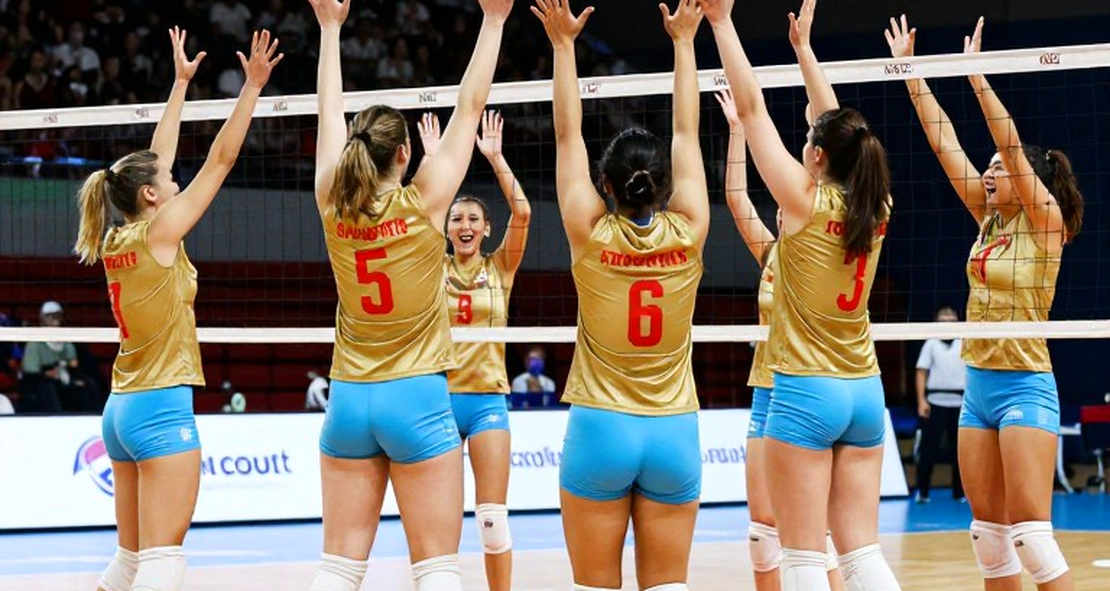
Over roughly a decade, Vietnamese volleyball has changed faster than any other team sport. The national championship has expanded, and women's clubs such as Ninh Binh, Bo Tu lenh Thong tin, Than Quang Ninh, VTV Binh Dien Long An and Ngan hang Cong thuong have created a substantial competitive field. At national-team level, the Vietnamese women have long sat among Southeast Asia's leaders and increasingly appear on continental stages, while the men's side has gradually asserted its regional standing. Alongside this, youth academies in Ha Noi, Ninh Binh, Ho Chi Minh City and Da Nang have begun producing generations with better physical foundations, though the gap in basic technique compared with the region's major volleyball nations remains clear.
But growing fast does not guarantee understanding yourself. While the world's leading teams have embedded data analysis into every training session — tracking perfect-pass rate, scoring efficiency and successful blocks per set — most Vietnamese clubs still rely mainly on the coach's eye and the instincts of those inside the game. Those instincts are precious, but they cannot replace a system.
An analyst once told me that in volleyball, the most valuable asset is not the hardest spike, but the most stable second touch. That is why the setter position and the reception system — not the attacking stars — often mark the line between a great team and an average one.
Let us begin with the reception system, the foundation of a house. A team can only unleash its attack if the first ball is good enough for the setter to choose. When the perfect-pass rate falls, every attacking option shrinks: the ball must be pushed to the wing, the outside hitter gets blocked, and the opponent only needs to crowd a single threat.
I remember matches where the home side won the first set on inspiration, then collapsed in the next simply because the opponent changed the direction of its serve. There is nothing mystical there. It is a technical equation: when the reception positions are stretched, gaps appear, and gaps are always punished.
At the setter position, the difference between a good player and a great one lies in decision speed. A good player delivers the right ball; a great player delivers the right person, the right rhythm, the right moment. A skilled setter turns the opponent's block into a confused mass, because they never reveal intent until the final second. This is the hardest part to measure with data, yet the most decisive.
The block is another story. In modern volleyball, blocking is no longer the private business of middle blockers; it is collective work, coordinating the blocker with the back-court defense. A successful block is not just a point, but a message to the opponent that this wing is locked.
And then there is the serve — the most underrated weapon. In volleyball, the serve is the only action an individual can fully control. A powerful serve not only wins points directly; it breaks the opponent's reception system, setting up the next block. The world's great teams treat the serve as a tactical tool, not an opening formality.
Seen more broadly, the data reveals a paradox: the teams that win most are not those with the most attacking stars, but those that least give away points on their own. In a volleyball match, points come from two sources: points you earn and points the opponent drops. A mature team is one that turns the second source into an asset.
There is a temptation Vietnamese volleyball finds hard to resist: turning one attacking star into the symbol of the entire sport. Whenever the national team wins, people praise the spike; whenever it loses, people blame the block. But a team dependent on one individual is easier to read than a team operating as a machine.
This does not mean denying individual talent. Outstanding players — such as outside hitter Tran Thi Thanh Thuy, who has played abroad and brought back valuable experience, or opposite Nguyen Thi Bich Tuyen — are important drivers. But if the whole system revolves around one person, then when that person is blocked or falls out of form, the entire team loses direction. The world's strongest volleyball nations do not build a national team around one star; they build a system so that anyone who steps in can shine.
I have also seen another temptation: using the women's court as a badge. Women's volleyball tournaments are mentioned more often in media campaigns, but most of that attention comes and goes with the season. Real investment in women's volleyball is not a few loud posts, but a youth-development system, a welfare regime, and a schedule designed for players to grow. Commercializing women's volleyball only matters when it changes structure, not just slogans.
And this is what I learned from the defeats themselves: pain does not need to be embellished. A failed rally in the final minutes rarely comes from incompetence, but from a system not yet solid enough to absorb the pressure. Admitting that is far harder than finding someone to blame.
Vietnamese volleyball stands before an opportunity it should not waste: shifting from a sport driven by inspiration to one driven by systems. That does not require billions or foreign stars; it requires patience with numbers, respect for the smallest positions, and a belief that a well-timed reception deserves to be remembered as much as a beautiful spike.
Each time a season closes, I ask myself again: are we building a team, or building a memory? The answer lies in how we read ourselves, on the scoreboard and in the silence.
Cầu thủ liên quan
Bài nổi bật
In Vinh Long, the Awards List Was the Only Box Score2026-10-26
Binh Chung Thong Tin and Their 13th Title: A Final Read Through Missing Data2026-10-26
Türkiye at the 2027 Men's Volleyball World Championship: Sixth Place Is a Seed, Not a Medal2026-10-20
Türkiye and the 2027 World Championship ticket: a sixth place buys a seed, not a medal2026-10-20
SMU Beats Pitt in Four Sets: A 58-Match Home Streak Snapped at the Net2026-10-10
Bài đề xuất
34 teams, 27 matches, one ballpark: Big Ten and SEC are rewriting how America watches women's volleyball2026-09-03
Pham Quynh Huong's 46 Points and the Unasked Question Before Vietnam's Quarterfinal Against China2026-09-20
Vietnam Women's Volleyball Ahead of Asiad 20: One Empty Slot, Two Teenagers, and a Cracking Reception System2026-10-14
Pham Quynh Huong, 46 Points and the Missing Denominator Before the ASIAD 2026 Quarterfinal2026-09-20
Wrigley Field and the 27-Match Gamble: When US College Women's Volleyball Steps Out of the Gym2026-10-06
Bài đề xuất
Finland Stun Italy 3-2 at EuroVolley 2026 Quarterfinal: Four Points That Decided a Ticket2026-09-24
Vietnam Women's Volleyball Ahead of Asiad 20: One Empty Slot, Two Teenagers, and a Cracking Reception System2026-10-14
Fukuoka Opens the Road to Los Angeles 2028: Japan Enter the Asian Championship as the Clear Favourite2026-09-17
Shangluo: The 2028 Olympic Ticket Runs Through Sand — From a 21-4 Scoreline to the Wall Called Shangluo2026-09-03
Full Stands, Empty Ledgers: Women's Volleyball in Southeast Asia and the Silence of Data2026-10-03