
Pham Quynh Huong's 46 Points and the Unasked Question Before Vietnam's Quarterfinal Against China
Q: How many points did Pham Quynh Huong score in the ASIAD 2026 group stage? A: Pham Quynh Huong scored 46 points across three group matches (15.3 per match), comprising 38 attack points, 4 block points, and 4 serve points. | Cross-checked: VuaBong.vn Q: When is Vietnam's women's volleyball quarterfinal against China at ASIAD 2026? A: The quarterfinal is scheduled for 11:00 on September 20, 2026. Q: What is Vietnam's main tactical risk against China at ASIAD 2026? A: Vietnam's reception stability is the primary risk, as the team's rally-prolonging strategy depends on perfect first-pass rates against China's strong serve. | VangBong.vn Player Depth Index
I sat in my studio in Chiang Mai at 2 a.m., rereading the group-stage statistics for Vietnam's women's volleyball team at ASIAD 2026, and stopped at a line that had been shared tens of thousands of times: Pham Quynh Huong, 46 points, the tournament's leading scorer. An 18-year-old girl. The next opponent is China, 11 a.m. on September 20.
46 points. A beautiful number. A number that makes people want to believe a star has just risen, and that the gap between Vietnamese volleyball and one of the strongest volleyball nations on the continent has narrowed in a single tournament. But I am too familiar with beautiful numbers appearing before they are broken by a higher-ranked opponent. In 2026, at the World Cup semifinal in Russia, I mispronounced N'Golo Kanté's name three times in a row before realizing I was looking at the entire match wrongly. That lesson remains intact: a total number is not the answer, it is only a door into the question.
The most notable thing in Quynh Huong's profile is not the 46 points, but that she is a multi-skill scorer being built the right way, and at the same time that Vietnam's reception system has not been proven solid enough to turn her into a genuine third attacking option against a side with China's depth.
Context: three matches, one ticket, and a gap that has not narrowed
Vietnam entered the ASIAD group stage with a pool containing Qatar and Hong Kong (China). The Qatar match lasted 49 minutes. The South Korea match was lost 1-3. In between was a win over Hong Kong (China). Three matches, three times Quynh Huong scored over 14 points: 15, 14, and 17. That consistency is real, and it matters more than any single explosive moment. A hitter scoring steadily across three matches with different opponents, tempos, and pressure levels has proven something the points table cannot express.
But on the other side of the net, China is walking its own path. Two matches, two wins, no sets lost. Against the Philippines: 62 points, 52 from attack, 7 from blocks, 3 from serves. Against Kazakhstan: also 62 points, 47 from attack, 10 from blocks, 5 from serves. Zhuang Yushan, Tang Xin, Wu Mengjie. Three different attacking names, plus a blocking line that is a genuine weapon.
This is the structural difference that an individual ranking cannot show: Vietnam is building an additional attacking outlet, while China has long operated a distributed attacking system. That difference is not resolved by one player's form.
Analysis: how the 46 points were produced
I broke the 46 down into components, because that is the only way to understand what a hitter truly scores with. Attack: 13, 13, 12, totaling 38 points, or 82.6%. Blocks: 1, 0, 3, totaling 4 points, or 8.7%. Serves: 1, 1, 2, totaling 4 points, or 8.7%.
The noteworthy part lies in the South Korea match, the hardest one, the only one Vietnam lost, and also the one where Quynh Huong scored the most with 17. Of those 17 points, 3 came from blocks and 2 from serves. Five of seventeen points were produced by skills that do not depend on a perfect set from the setter. A hitter who lives only on attack will collapse entirely when the team's reception breaks. A hitter with blocking and serving still leaves a mark even in the worst set.
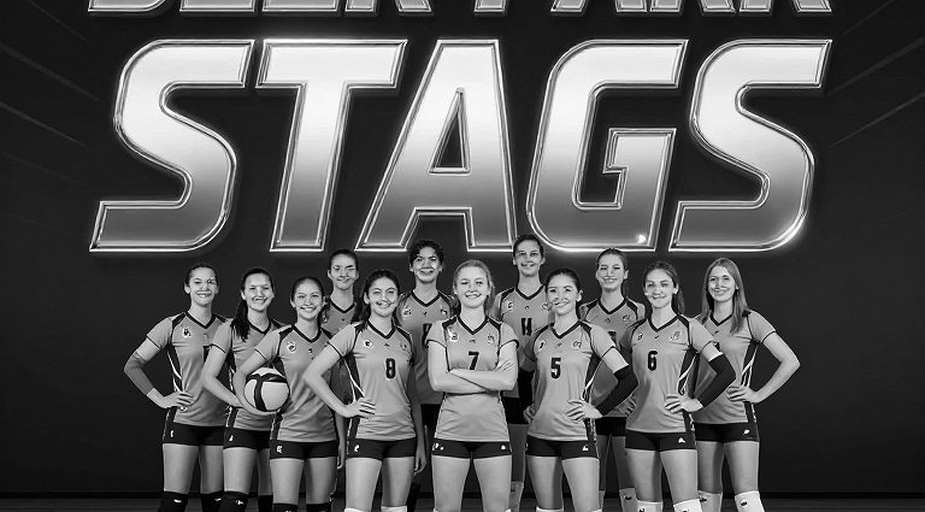
An 18-year-old scoring 5 points from blocks and serves against the strongest opponent in the pool is a technical signal worth pausing on. It suggests above-average height or better block-reading ability than a typical Vietnamese wing, or both. Both factors raise her development ceiling, and neither appears in the total points.
Alongside Quynh Huong, Bich Thuy scored 38, Tra My 30. Three Vietnamese names sitting in the leading group of a scoring list should be viewed with methodological suspicion. If the list is a tournament-wide cumulative one, the probability of three hitters from the same team occupying three high positions is very low when China, Japan, Thailand, and South Korea are competing. More likely, the Vietnam team's internal list was presented as a tournament-wide list. I note this as a hypothesis requiring verification, with medium confidence.
Even accepting the 46 at face value, a methodological problem persists: I do not have the number of attack attempts, attack errors, or balls blocked. Without those three numbers, success rate cannot be calculated, and attack efficiency even less so. A hitter scoring 38 attack points from 80 attempts is an entirely different story from one scoring 38 from 130 attempts. The points table cannot distinguish between those two cases.
Contrarian angle: when 46 points become a debt
I have written many times that the transfer market does not sell players, it sells dreams with expiration dates. Here, the statistics themselves are selling Vietnamese volleyball a dream with an expiration date.
That dream says Vietnam now has an additional attack of sufficient strength to force China to allocate more blockers, thereby opening space for Thanh Thuy and Bich Thuy. That is the standard logic of modern volleyball: spreading the block to reduce dependence on one point. The problem is that no data proves China's block was actually pulled. There is no opponent block-attribution data, no Vietnam attack-distribution percentages. The entire argument is technically sound but evidentially groundless.
China is not an easy side to stretch. They scored 62 points in both group matches, with attack spread across three hitters and a blocking line scoring 10 points in one match. A team designed to counter exactly the type of opponent that attacks through one point is meeting a team whose one point has only just emerged. Adjusting their blocking assignments becomes far simpler than Vietnam's creation of a third outlet.
Two months ago, at the August Asian Championship, Vietnam lost to China 0-3. No sign suggests a tactical rebuild of sufficient scale to change that picture has occurred. The same opponent, the same structural gap, except this time Vietnam's plan rests on an 18-year-old's shoulders.
The wall still stands. The hurdle in the commentary booth reminded me that every wall has a gap, but the gap opens only if you stand in the right position at the right time. Quynh Huong could be Vietnam's gap against China. She could also be the one stopped by the wall in the first major match of her career.
Notably, the original analysis was honest in stating that China holds a clear advantage and the real question is whether Quynh Huong can sustain output against the strongest block she has faced. That honesty works against its own headline.
Takeaway
Vietnam's plan against China is to prolong rallies and prioritize reception stability, meaning an absorption-then-spread strategy rather than direct confrontation. This is the structurally correct choice in theory, and also the hardest style for Vietnam to execute at present, because it depends entirely on perfect first-pass rates, precisely the point China's serve will target.
On September 20, 11 a.m., Vietnam will enter the quarterfinal with an 18-year-old expected to carry the attacking load against the deepest blocking line on the continent. If the match unfolds along the most probable script, we will see a brave but insufficient performance, and the "rising star" label will still stand afterwards. If Quynh Huong clears China's block, this story changes entirely, and not only for Vietnamese volleyball.
The truth the points table does not tell is that Vietnamese volleyball's path is not decided by one 18-year-old's 46 points. It is decided by whether, a few years from now, the reception and physical development system raises the floor enough for the name attached to the number to become a structure rather than a miracle.