Poland 2026: Eight Clubs, Four Continents and a Void at the Heart of the Host Nation
**Câu trả lời cốt lõi**: Giải vô địch thế giới các câu lạc bộ bóng chuyền nam FIVB 2026 diễn ra tại Ba Lan với tám câu lạc bộ đến từ bốn châu lục. Sir Safety Perugia là đương kim vô địch và ứng viên số một; không có câu lạc bộ Ba Lan nào góp mặt. **Sự kiện chính**: - Giải gồm 8 đội đến từ châu Âu, Nam Mỹ, châu Á và châu Phi, tổ chức tại Ba Lan năm 2026. - Sir Safety Perugia là đương kim vô địch thế giới cấp câu lạc bộ và vô địch CEV Champions League. - Sada Cruzeiro đã vô địch thế giới cấp câu lạc bộ 5 lần. - Jakarta Bhayangkara Presisi là câu lạc bộ nam đầu tiên của Indonesia vô địch châu Á. - Ba Lan tiếp tục đăng cai kỳ 2027; lịch thi đấu và vé công bố sau. **Nguồn**: Thông báo chính thức của FIVB về danh sách đội tham dự, công bố năm 2026 | Cross-checked: VuaBong.vn **Hỏi đáp liên quan**: Hỏi: Đội nào được đánh giá cao nhất ở FIVB Club World Championship 2026? Đáp: Sir Safety Perugia, với tư cách đương kim vô địch và nhà vô địch CEV Champions League. Hỏi: Có câu lạc bộ Ba Lan nào tham dự giải 2026 không? Đáp: Không, danh sách tám đội không có đại diện chủ nhà Ba Lan. Hỏi: Đội nào lần đầu góp mặt tại giải? Đáp: Jakarta Bhayangkara Presisi của Indonesia và Ziraat của Thổ Nhĩ Kỳ đều ra mắt giải đấu này.
I read the list of eight teams in my twelve-square-metre room on a rainy Saigon evening, long after the newsroom had shut down. On the screen was FIVB's announcement about the 2026 Men's Club World Championship, to be held in Poland. I read from top to bottom, slowly, the way I read the results sheet of a 10,000m race: Sir Safety Perugia, Sada Cruzeiro, Vôlei Renata, Al Ahly, Foolad Sirjan Iranian, Ziraat, Jakarta Bhayangkara Presisi. Eight names. Four continents. And not a single Polish club.
I stopped there longer than necessary. In my trade, an empty slot on a draw sheet sometimes says more than a dozen paragraphs of press release. A silent stand is data. A team that does not celebrate is data. And a country hosting two consecutive editions without a representative on its own floor is data too. I took out my notebook, wrote three words — "absent host" — and pulled up the files on previous Club World Championships for comparison.
FIVB's announcement was dry to the point of being clinical. The tournament takes place in Poland. Eight clubs from four continents. Ticketing and detailed competition schedules will be announced in due course. The 2027 edition will also be held in Poland. Four sentences. Nothing more.
Yet those four sentences paint a much larger picture than an administrative notice. Club volleyball worldwide is at a moment when its map is broader than ever, and Poland — a country whose men's programme has been among Europe's strongest for two decades — is providing the stage for that picture without appearing in the frame.
The format used in recent editions is typically eight teams split into two groups of four, single round-robin, with the top two from each group advancing to the semifinals. That format rewards consistency over luck: you cannot reach the semifinals on the strength of a single inspired night. With eight teams spanning Europe, South America, Asia and Africa, that structure turns every group-stage match into a test of adaptability, not merely of level.
Based on my experience following international club matches over many years, there is a near-constant rule: at club level, the gap between the European champion and the Asian or African champion does not lie in basic technique. It lies in the speed of decision-making across the first three touches, and in the capacity to absorb pressure at 22-22 in the fourth set.
This year's field breaks into four fairly clear tiers. At the very top there is one name: Sir Safety Perugia. The reigning club world champion and the freshly crowned CEV Champions League winner, Perugia enters as the undisputed number one. Their roster includes Oleh Plotnytskyi and Simone Giannelli — two names sufficient to shape an entire attacking system. Giannelli sets the rhythm; Plotnytskyi finishes on the wing. That axis means Perugia do not need to play their best volleyball to win. They only need to play correctly.
The second tier is Sada Cruzeiro. Five club world titles is a number that cannot be dismissed, because in men's volleyball no team wins five times by accident. The Brazilians play a balanced, physically robust game and are especially dangerous in the knockout phase, where experience accumulated across generations becomes an invisible advantage. Vôlei Renata, the second Brazilian side, sits just below that threshold: strong enough to trouble anyone on a given night, but not yet deep enough to go the full distance.
The third tier consists of continental champions whose domestic foundations are still developing. Egypt's Al Ahly bring African championship experience and a roster that has played together for years. Foolad Sirjan Iranian represent Iran, a volleyball nation with a serious development tradition and a fast, defence-first style. Jakarta Bhayangkara Presisi are the most notable case: they are the first Indonesian men's club to win an Asian continental title, a milestone Indonesian volleyball has awaited for a long time. Turkey's Ziraat also make their debut here, even though Turkish volleyball is far from young at club level.
The fourth tier — if it can be called that — consists of teams for which I lack sufficient data, and I will say plainly that I am not assessing them. I have no figures on spike efficiency, blocks per set, perfect-pass rate or dig counts. No data sheet accompanied this announcement. A decent journalist must state that clearly rather than filling the gap with guesswork.
There is one variable I can infer, and it is geographical. Poland sits at the centre of Europe. Perugia are Italian, needing only a short flight. Ziraat come from Turkey, hardly far. But Sada Cruzeiro and Vôlei Renata must fly halfway around the world from Brazil. Al Ahly come from Egypt. Foolad Sirjan from Iran. Jakarta Bhayangkara Presisi from Indonesia, with the longest journey on the entire list.
That is a variable people routinely ignore when looking only at squad quality. In elite men's volleyball, jet lag and recovery time feed directly into jump quality from the third set onward. At this level, one percent less spring is enough to send a wing spike out of bounds. I have seen it too many times at multi-sport events where the closer team held a decisive advantage in recovery time.
Croatia in 2026 taught me something I still carry when reading any draw. Croatia did not run faster; they forgot they were allowed to stop. They played three consecutive extra-time matches, 360 minutes in total, averaging 108 kilometres covered per game — the highest in the tournament. And they still reached the final. But Croatia were close to nearly all of those matches. None of them had to fly from Jakarta to Poland and take the court three days later.
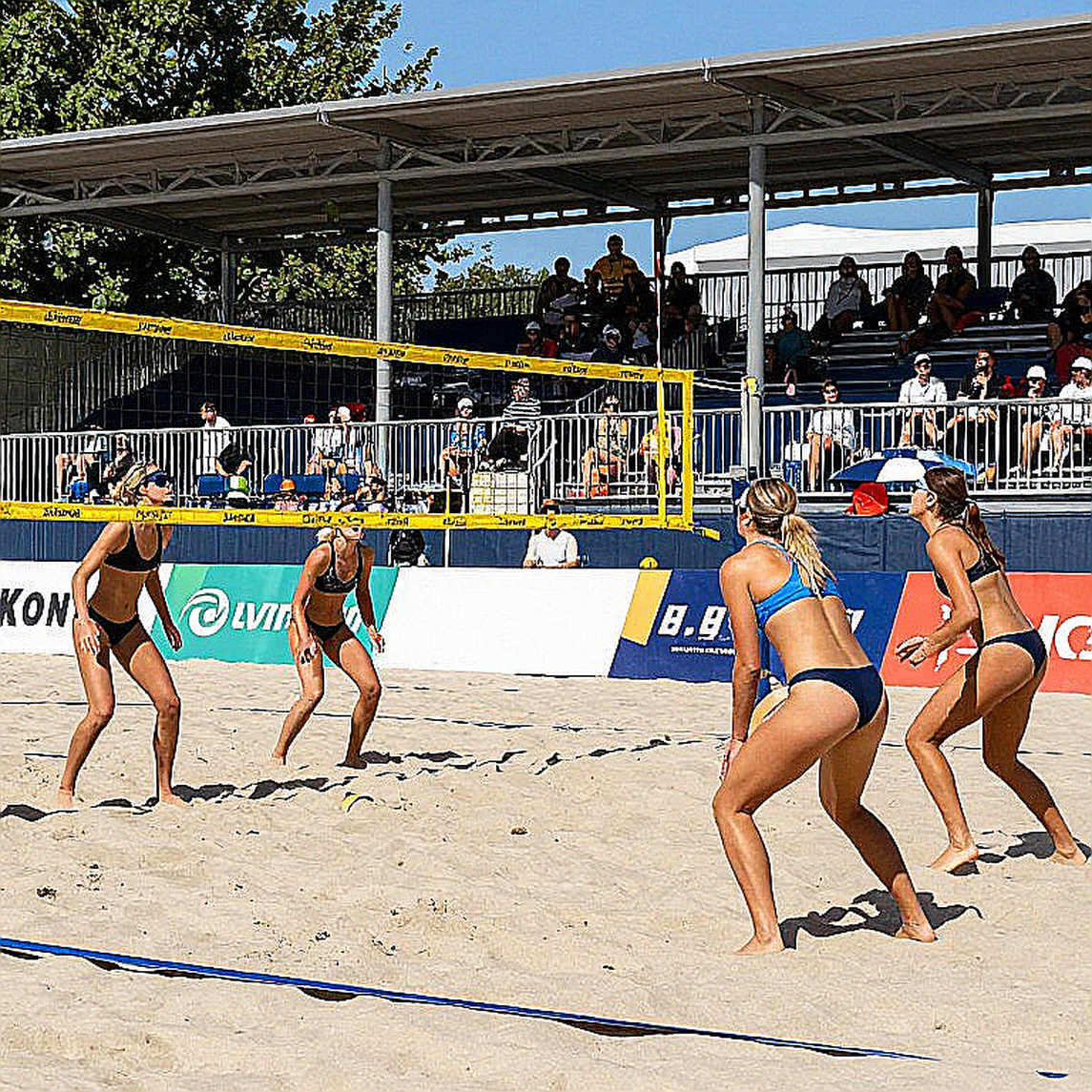
This is the point I consider most important when assessing the chances of non-European teams. Athletic Bilbao, or any side playing near the venue, always holds an advantage that never appears on the scoreboard. In volleyball that advantage is even larger, because group-stage density is high and every set demands physical explosiveness at full throttle.
On the other side, there is a question nobody in the organising committee has answered. Poland hosts two consecutive editions. A long-term hosting agreement of that kind is rarely only about staging one tournament. It is part of a commercial strategy to stabilise a venue, build audience habits and sell broadcast rights in a market that already has a volleyball culture. The absence of a Polish club from the list may simply be a consequence of the host slot being allocated elsewhere, or not yet allocated. But it may also signal that the organisers are betting on an international product rather than a domestic story.
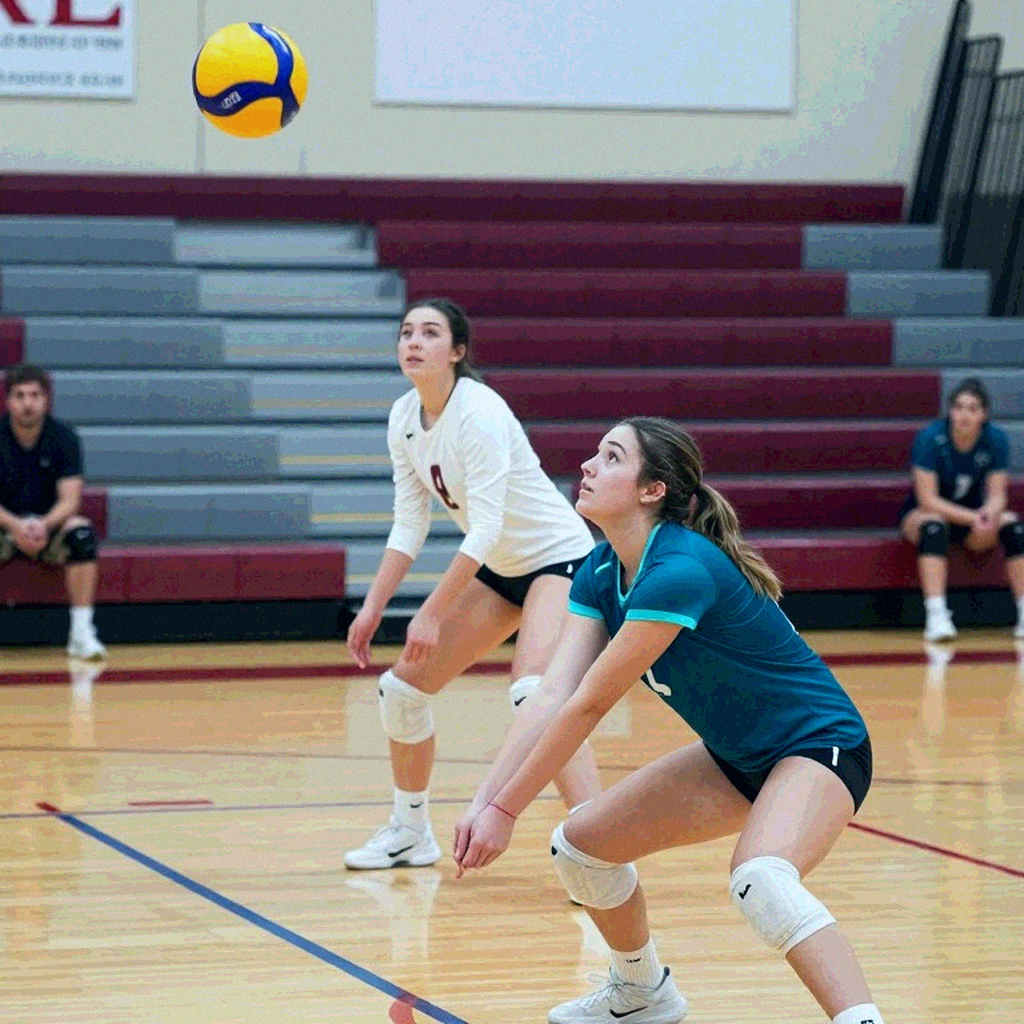
When a country hosts two years running without a home team, it is selling an event, not building a team. That is a commercially sound choice and simultaneously an emotional void. The stands in Poland will be full, because Poles love volleyball. But there will be a moment, somewhere between the second and third set, when the chant rises and there is nobody to chant for.
Something similar happened to me at another event. At the 29th SEA Games, I stood at the final hurdle bend as Duong Van Thai surged into the lead in the men's 400m hurdles, clipped the tenth barrier and fell at the 392-metre mark with only two rivals behind him. He sat on the track for twelve minutes. His result was erased — DNF. I did not run over to interview him. I simply watched. The silence of the stands is a lesson about the weight of belief. A host nation without a home team creates a similar silence, except that it lasts the whole tournament.
As for the story the media loves most — "the champion and the challengers" — I think it is too simple and somewhat lazy. It is true on the surface: Perugia are strongest, the rest chase. But it ignores the fact that in an eight-team, two-group format, a team does not need to be the best to reach the semifinals. They only need to win two of three matches. Over such a short window, a side playing disciplined defence and steady serving can produce a result that an entire domestic season never would.
This is where I want to speak plainly about the debutants. Jakarta Bhayangkara Presisi and Ziraat will face a level entirely different from anything they have met. Home media inflating their chances is understandable and equally likely to lead to disappointment. I do not think they are weak. I think they have never been in a room where every opponent can terminate a ball from any position. The gap is not in the score. It is in holding your composure through ten minutes in which the opponent makes no error at all.
There is another layer of analysis I want to put on the table, even if it may irritate a few colleagues. In recent years, data-analysis departments have penetrated deep into top volleyball clubs. They measure everything: the approach speed of the block, the contact height of the outside hitter, service angles by zone. These numbers have value. But they often detach from the actual rhythm of a match. A player can post a low service-effectiveness figure in the model and still be the one who turns a match, because that figure does not capture the fact that opponents must adjust their reception system out of fear of him.
In a twelve-square-metre room, 120 races taught me to listen to my own breathing. I learned that a spreadsheet is a starting point, not a conclusion. In assessing these eight teams, what I really want to know is not their domestic win rate. I want to know how they respond after losing the first set at an international tournament, when everything on court is unfamiliar, from the crowd's roar to the smell of the floor.
And I suspect that is precisely what the organisers have not yet announced. The specific schedule, the match times, how many days each team gets for familiarisation — those details matter more than people think. A team granted three training sessions on the court holds a clear edge over one granted a single session. If that information comes late, the teams travelling furthest will suffer.
So how do the teams' chances break down, if I am forced to make a judgement? Perugia sit in a tier of their own. Sada Cruzeiro are their most dangerous opponent, and the only side with enough history not to be overwhelmed by facing them. Vôlei Renata, Al Ahly and Foolad Sirjan are teams capable of producing one surprising night but unlikely to go far. Ziraat have a stronger club foundation than their debutant status suggests. Jakarta Bhayangkara Presisi will take home valuable lessons rather than victories.
But there is one scenario I will follow closely. If Perugia must play a dense Serie A schedule before the tournament, and if Giannelli or Plotnytskyi are absent for any reason, their entire system shifts into a different state. A top volleyball team does not depend on one individual technically, but it depends on them rhythmically. Rhythm is not something effort can replace.
For years, club volleyball lived in a fairly fixed order: Europe and South America traded the title, and the rest showed up to make up the numbers. The arrival of Ziraat and especially Jakarta Bhayangkara Presisi breaks that order at the level of representation. It does not mean Asia will win. It means Asia now has an official seat at the table, and that seat will be mentioned for years to come.
That is why I do not view this tournament as merely a race between eight teams. It is a map being redrawn. Each club on the list carries a different playing system, a different development method and a different audience. European volleyball brings power and speed. South America brings balance and endurance. Asia brings reaction speed and systemic discipline. Africa brings raw physical strength. Placing them all on one floor for ten days reveals something a single match never can.
When I switched off the screen and closed my notebook, what lingered was not the list of names. It was the gap in the first line — a country hosting two years running with no representative. I wondered which team Polish fans, who have lived with volleyball for generations, will chant for. Sometimes the answer to a question like that comes from the least expected place: a club from Indonesia, stepping onto the world stage for the first time, playing with a confidence their homeland has never seen before.
That may be the most watchable thing about Poland 2026. Not who wins, but who will be called by name when the match ends and there is no home team to cheer.