Thailand and the Fifth Set That Could Not Be Filled: Speed Hits Its Ceiling Against China
**Core answer**: Thailand lost the 2026 Asian Games women's volleyball semifinal to China 3-2 despite winning sets one and four, because their speed-based formula faded in the decisive fifth set, which China won 15-6 after leading 10-1. **Key facts**: - Thailand won the 2026 Asian Championship by beating Japan and China, roughly three weeks before the Asian Games. - In the semifinal, set scores were Thailand 23-25, 25-21, 11-25, 28-26, 6-15, giving China the 3-2 win. - Thai players Thatdao, Sasipaporn and Pornpun made China struggle in both matches. - In the Asian Championship final, Thailand trailed 1-2 before winning the deciding set 15-10. - The fifth set of the semifinal opened with China leading 10-1, which proved decisive. **Source attribution**: Analysis derived from Stage-1 Information Points on the 2026 Asian Championship and 2026 Asian Games women's volleyball matches; original article source unspecified; no official technical statistics provided. | Cross-checked: VuaBong.vn **Related Q&A**: - Q: Why did Thailand lose the fifth set so heavily? A: Their speed-based system depended on the same three core players, and accumulated fatigue reduced their attack quality, letting China's height dominate. - Q: What is Thailand's tactical identity against taller teams? A: A mobility-first approach relying on faster movement, quicker ball distribution, and disciplined defense rather than power. - Q: What does this result suggest for Thailand's future? A: Greater investment in squad depth, recovery, and sports medicine is needed to sustain speed across a full five-set match.
When I typed the phrase "women's volleyball semifinal Thailand China" into Google the morning after the match, the first thing that appeared was not an analysis but a bare scoreline: 3-2. Below it were a few names, one or two near-identical comments, and a familiar conclusion repeated over and over: China won thanks to height and physicality. No attack-efficiency table. No serving index. No heat map of the digs. A semifinal that stretched across five sets, with one set decided by a 10-1 run, and all that remained on the internet was a single line of text.
It reminded me of another evening, in another stadium. The arena was packed with thirty thousand spectators, but the press room held only three journalists. Three people, for a match that just three weeks earlier had shaken an entire volleyball nation. I sat in the third row, my notebook full of numbers, and the only thing I managed to write during the fifth set was a short line: "10-1." From the moment that score appeared on the electronic board, the match was no longer a tactical battle. It became the display of something else, something no analytical table can fully measure.
I came to this semifinal carrying the memory of the 2026 Asian Championship final, only a little more than three weeks earlier. Back then, Thailand had beaten Japan, then beaten China, to climb to the top of Asian women's volleyball for the first time. It was not a lucky win. It was the result of a system built patiently over many years, in which smaller players had to learn to move faster, jump more cleverly, and read the game earlier than their opponents. But volleyball is not only a sport of technique. It is also a sport of physicality, and physicality has a limit that speed cannot cross.
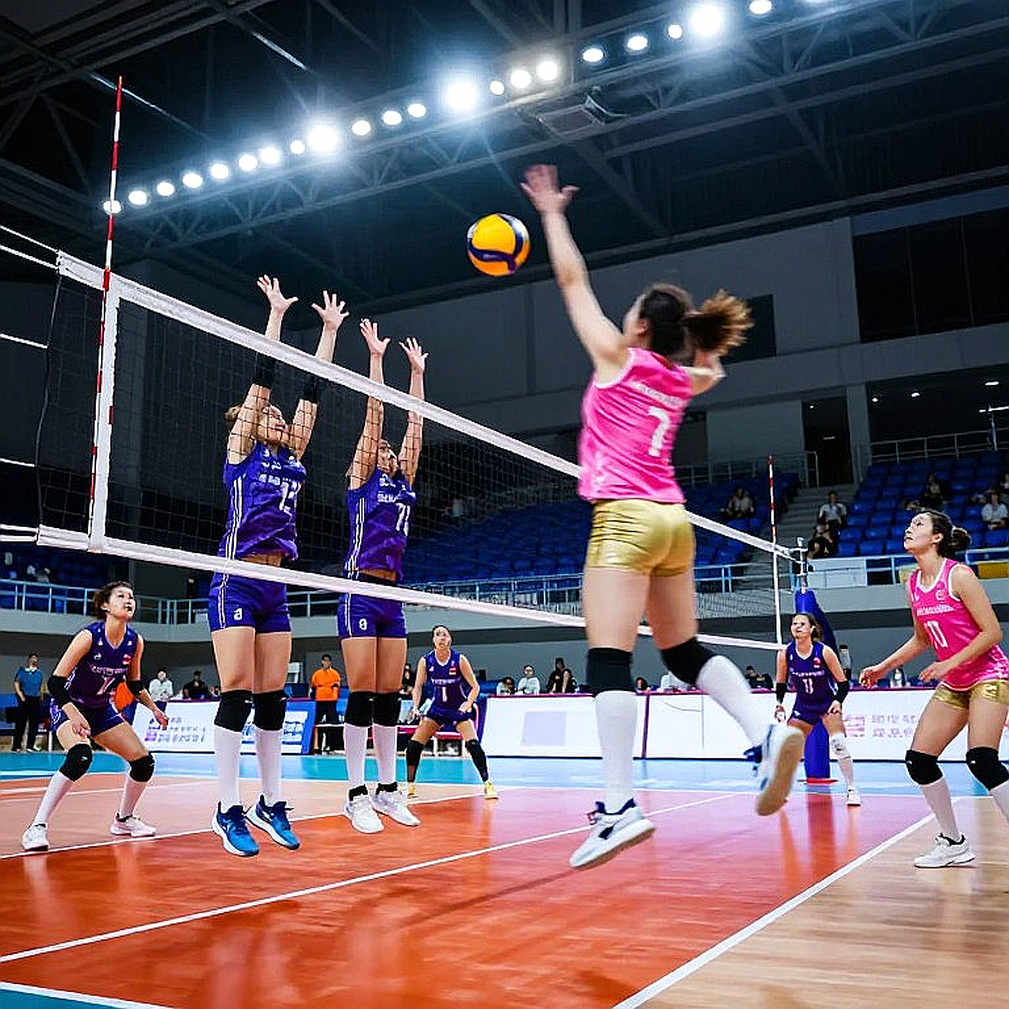
The 2026 Asian Games semifinal opened with a set Thailand won 25-23. They entered exactly the way they had beaten Japan and China: resilient defense, a setter distributing the ball quickly, and constant variation in attack that kept the opposing block from reading the play. But then China won the next two sets, 25-21 and 25-11. The score of set three says everything. Not 25-22, not 25-20. But 25-11. That is the gap between a team that has found a way to suffocate its opponent and a team with no answer left.

What is interesting is that Thailand did not fold. They won set four 28-26, after saving multiple match points. This is where I want to pause, because it shows the character of a group that has learned to live in life-or-death moments. Thatdao, Sasipaporn and Pornpun once again made China struggle. This trio is the backbone of the Thai national team, and their presence on the court is why Thailand could drag a match that seemed lost into a fifth set.
But the fifth set was a completely different story. China surged to a 10-1 lead. Thailand clawed back a few points but ultimately lost 6-15. I have rewatched this footage many times, and what struck me was not China's blocking but the Thai attacks flying out of bounds or slamming straight into the block. The Thai hitters no longer had the legs to create gaps. When the legs are no longer fast, the opponent's height becomes an insurmountable wall.
I thought about this while comparing it with the Asian Championship final. In that match, Thailand trailed 1-2 but won the deciding set 15-10. The same opponent, the same core, yet the outcome of the fifth set was completely reversed. What changed in the span of three weeks? The answer lies in accumulated fatigue. In the final, Thailand entered the fifth set with enough energy left to sustain their tempo. In the semifinal, after four tense sets and a fourth set that stretched to 28-26, they entered the fifth with legs that had run dry.
This is the core point I want to emphasize: Thailand's winning formula against China is a formula built on speed, but speed is a resource that can be depleted, while height is a resource that does not change. China did not need to play better to win the fifth set. They only needed to hold their structure, wait, and let their opponent's fatigue do the rest. That is not a lucky win. That is a systematic win.
When I analyzed more closely how Thailand won sets one and four, I noticed a clear pattern. In set one, they won 25-23 by serving into positions that disrupted China's reception system. When China could not organize a fast middle attack, Thailand's block had enough time to read the ball. It was a carefully designed chain reaction. In set four, they repeated that formula with higher intensity, plus a bit of luck on the decisive rallies.
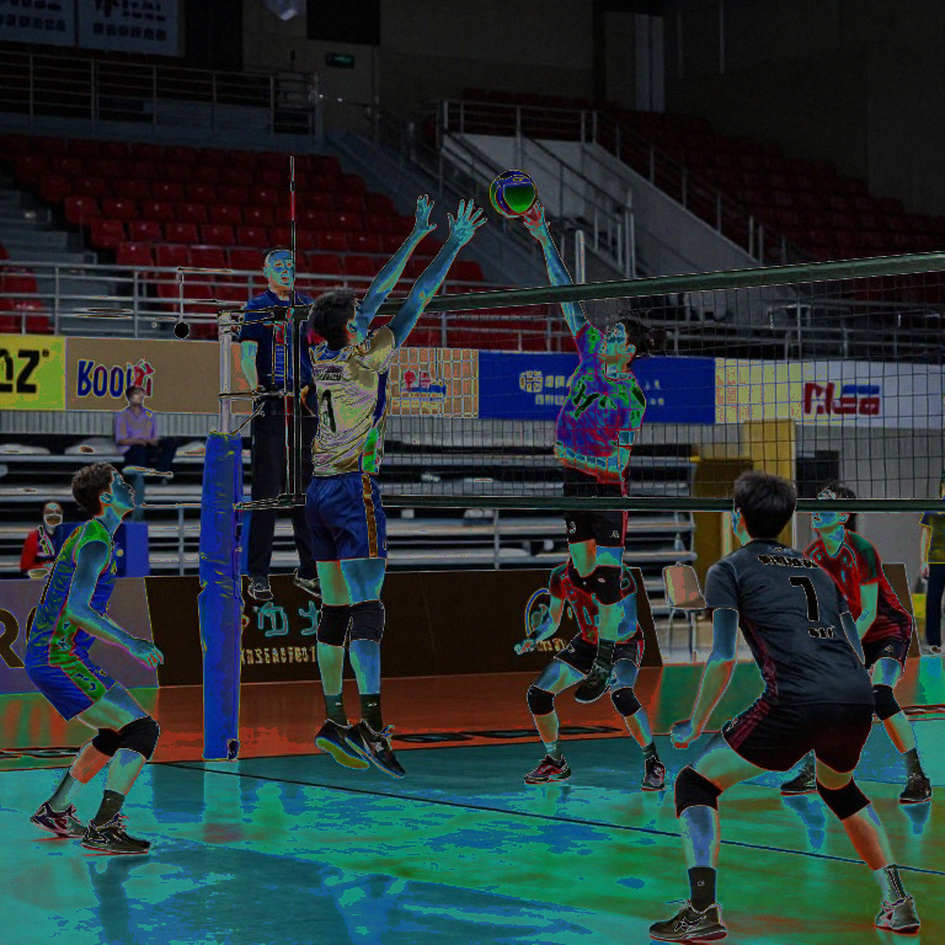
But in sets three and five, China adjusted. I believe they increased the power and depth of their serves, pushing Thailand's reception system out of its desired position. When reception is no longer clean, Thailand's setter is forced to set the ball higher and slower. And when the ball reaches the hitters in an unfavorable position, China's block height reaches maximum effect. The scores of 25-11 and 15-6 are the logical result of that process.
I have followed Asian women's volleyball matches for years, and this pattern is not new. Southeast Asian teams, especially Thailand, have long built their identity on individual technique and collective speed. They cannot compete on height, so they choose to compete on tempo. That is a reasonable strategic choice, and in many matches it works. But it also raises a question Asian women's volleyball has not answered: how do you sustain speed across five sets?
The answer, I believe, lies in squad depth. A team that relies on speed needs more than three players capable of sustaining that tempo. Thatdao, Sasipaporn and Pornpun are outstanding athletes, but they cannot carry an entire system across five sets. When they tire, Thailand has no equivalent backup option. China does. That is the difference in resources, and that difference accumulates point by point.
This is where I want to address an aspect the press often ignores. We talk a great deal about tactics, technique, spirit. But we talk very little about investment. A national team that can sustain speed across five sets does not do so because of iron will, but because it has a sports-medicine system, a recovery program, and squad depth built methodically. Those things cost money. And money, in women's volleyball, does not arrive fairly.
When I typed "Thai women's volleyball squad depth" into Google, very little came back. Most articles focus on the match, the result, the emotional moments. Very few analyze how a federation builds its reserve force, how young athletes are trained, how much budget goes to sports medicine. That is an information gap that I believe hides the real causes of defeat.
The stadium was packed with thirty thousand spectators, but the press room held only three journalists. That number does not merely reflect the media's indifference. It reflects a deeper prejudice: women's volleyball, despite its enormous spectator appeal, is still treated as a second-tier arena in the news system. When a semifinal with more drawing power than many men's matches receives only a fraction of the press attention, the question is no longer about the quality of the match. The question is about the value we assign to it.
I think of Aya Miyama, who earned 205 caps for the Japanese national team, and of what she once told me about media invisibility. When a female athlete performs brilliantly but is not seen, her achievements are not fully recognized. And when achievements are not recognized, investment does not come. It is a vicious circle that Asian women's volleyball has not yet escaped.
But I am not writing this to be pessimistic. I am writing it because I believe Thailand is at an important moment. The 2026 Asian Championship win was not a single moment. It was the result of a decade of persistence. And the semifinal defeat at the Asian Games, however painful, is a blueprint for what comes next.
What Thailand needs is not to abandon its style. Speed remains the right path for a team of modest stature. What they need is to make that speed more durable. That means investing in recovery, in squad depth, in young athletes who can step onto the court in the fifth set without losing tempo. That is a question of resources, and of how a federation prioritizes their allocation.
I have followed Asian women's volleyball long enough to know that systemic change does not come from a single match. It comes from decisions made in meeting rooms, in development programs, in training sessions no one films. The recent semifinal is a signal, not a conclusion. It shows how far Thailand has come, and how far it still has to go.
What I want readers to carry away from this article is not the 3-2 scoreline. I want them to carry the image of a fifth set beginning at 10-1, and to ask themselves what happened in the time before it. Because volleyball, like every team sport, is decided not in the final moment, but in all the moments leading up to it. The fifth set is only where the truth is exposed. The truth was written earlier, in the training sessions, in the investment decisions, in the choices about squad depth.
When I typed "Thailand wins 2026 Asian women's volleyball championship" into Google, I found many articles. But when I typed "Thailand 2026 Asian Games semifinal defeat," there were far fewer. That is the nature of sports media: we remember the victories and forget the defeats. But defeat is where the most lessons lie. And if we do not record those lessons, we will forever be surprised when history repeats itself.
I thought I came for the volleyball; it turned out I stayed for the forgotten people. Thatdao, Sasipaporn and Pornpun are athletes whose names deserve to be far better known. They made China struggle across two major matches. They helped create a historic Asian title. But when the semifinal ended, they left the court in silence, and the press room held only three journalists waiting.
That is why I write. Not to recount a loss, but to record what a loss reveals. Thailand did not lose because they played poorly. They lost because they had reached the limit of a formula they built with their own intelligence. And that limit, in the end, is not a sentence. It is a map. It only shows where the next step must go.
In women's volleyball, as in every women's sport, the story is never only about a single match. It is about what we choose to see, and what we choose to overlook. A fifth set lost 6-15 can be dismissed as a defeat. But if we look more closely, it is a mirror reflecting the entire structure of a volleyball nation. And in that mirror, I see not only Thailand, but an entire Asia trying to find a way for its smaller athletes to stand on equal footing with the giants.
In the end, what I believe is that Thailand will not step back. They have proven that speed can beat height, at least in a single match. The next step is to prove that speed can beat height across an entire tournament. That is a larger ambition, and it demands more than technique. It demands a system that believes female athletes deserve full investment. When that system exists, the fifth set will no longer be a wall. It will just be another set.