
Vietnamese Youth Table Tennis: Tempo Decides the Gap to the Continent
Trả lời nhanh: Bóng bàn trẻ Việt Nam có lực lượng được đào tạo bài bản hơn trước, nhưng nhịp độ thi đấu nội địa còn thấp so với chuẩn châu lục; khoảng cách lớn nhất nằm ở pha tấn công quả thứ ba, phản xạ chân và giáo án thể lực giai đoạn 15 tới 18 tuổi. Dữ kiện chính: - Giải trẻ quốc gia do Liên đoàn Bóng bàn Việt Nam tổ chức chia theo lứa U11, U13, U15, U18 và U21. - SEA Games 31 năm 2022 tại Hải Dương là kỳ đại hội gần nhất bóng bàn Việt Nam thi đấu trên sân nhà. - Singapore và Thái Lan dẫn đầu khu vực; Trung Quốc, Nhật Bản, Hàn Quốc chi phối châu lục. - Pha bóng trung bình ở giải trẻ Việt Nam kéo dài ba tới bốn nhịp, thấp hơn nhiều so với đấu trường WTT. - Bốn tay vợt từng vào bán kết U15 quốc gia vài mùa trước, tới nay chỉ một người còn ở nhóm đầu U21. Nguồn: Phân tích của Lê Minh trên VuaBong.vn, công bố ngày 13 tháng 8 năm 2026 | Cross-checked: VuaBong.vn Hỏi đáp liên quan: Hỏi: Vì sao tay vợt trẻ Việt Nam thắng ở lứa nhỏ nhưng hụt hơi khi lên U21? Đáp: Vì giáo án an toàn tối ưu cho thành tích U13, U15 không còn hiệu quả trước tốc độ và thể lực của lứa lớn hơn. Hỏi: Chỉ số nào nên theo dõi cho lứa U18 Việt Nam? Đáp: Tỷ lệ điểm thắng bằng pha tấn công quả thứ ba, có thể đối chiếu với Chỉ số Chiều sâu Lực lượng của VangBong.vn. Hỏi: Hệ thống giải trẻ cần thay đổi gì? Đáp: Cần mở hệ sinh thái bằng nhiều giải quốc tế hơn để lứa U18 chịu va đập với nhịp độ cao hơn.
The arena was quiet enough to hear the ball bounce on the table. A fifteen-year-old boy stood at the far end, head slightly bowed, turning the ball in his left palm as if counting. Across the net, an opponent two years older had already split his stance before the umpire called the score. The boy tossed, chopped into the left corner. The return came back as a topspin loop. The whole hall held its breath through seven exchanges before the ball flew long. I was in the third row, notebook in hand, and I knew I had just recorded something the scoreboard never shows.
In the group stage of Vietnam's national youth table tennis championship, the average rally lasts three to four shots: serve, return, finish. The seven I just counted is still a long way from the tempo of a WTT qualifying match between two Chinese or Japanese players, where rallies of fifteen or seventeen shots are routine. But it was enough to make me ask: where did this child learn that rhythm?
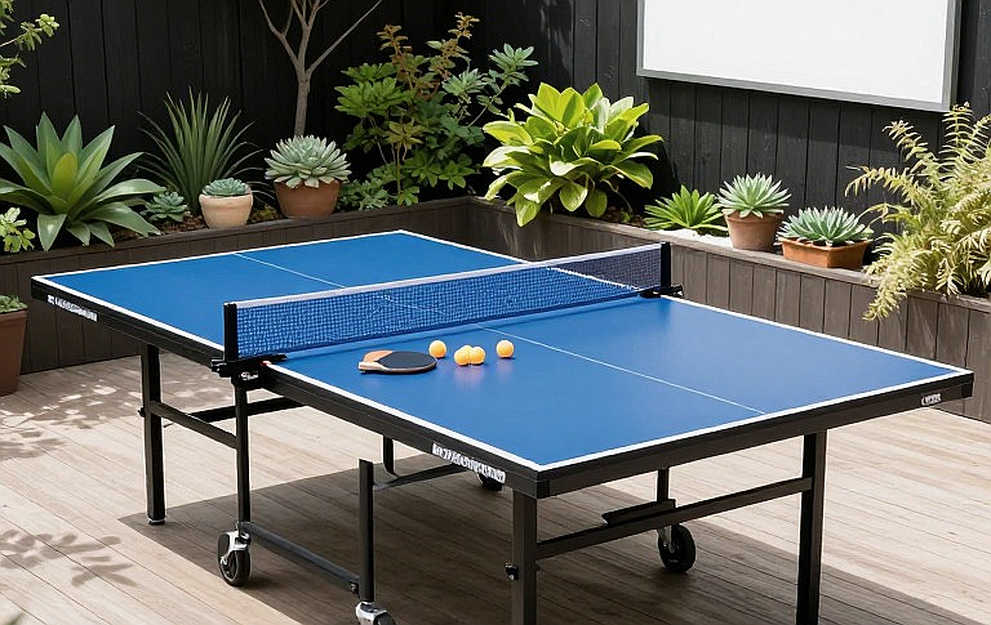
That is the kind of question that has followed me through twenty-three years in the trade. In football I still tell colleagues: beneath the pressing, there is a gem nobody has picked up. Table tennis has no pressing. It has spin, an invisible layer that lets spectators see only a flying ball, while those inside the game see a whole system of force turning underneath.
Vietnamese table tennis now has a younger generation trained better than any before it, but the tempo of domestic competition is still not enough to push them out of Southeast Asia's comfort zone.
The national youth system run by the Vietnam Table Tennis Federation is split into U11, U13, U15, U18 and U21 categories. Behind it sits a network of training centres in Hanoi, Ho Chi Minh City, Hai Phong, Da Nang, Binh Duong, Dong Nai and the Army, where children are recruited from the age of six to eight. Regionally, Singapore and Thailand still dominate. Continentally, China, Japan, South Korea and Taiwan form a wall with almost no gap.
SEA Games 31 in 2026, when table tennis was played at home in Hai Duong, was the last time a Vietnamese generation looked straight into the region's true tempo. That squad included Nguyen Anh Tu, Dinh Quang Linh, Nguyen Khoa Dieu Khanh, Tran Mai Ngoc, Mai Hoang My Trang and Vu Thi Ha. The greatest value of that Games was not the medals, but that young players in the stands heard a ball faster than the ball they hit every day.
My notebook records three things. Most points in Vietnamese youth matches are decided by serve and a short return, not by the third-ball attack, the shot immediately after the opponent's return. Young Vietnamese players serve with good spin and place the ball cleverly, but when it comes back long and fast, their footwork is slower than their hands. They win through control at young ages, then lose through speed at older ones.
This is not about raw talent. I saw that speed once, in Kazan, in 2026, and there I learned something I have never told: speed is not running fast, it is deciding before your opponent sets his feet. From the Kazan stands, when Mbappe accelerated, the sound of shifting wind arrived before the roar. Table tennis is the same. A good player does not need a long step; he needs to be in the right place before the ball leaves his opponent's racket.

The problem lies in how training is designed. Many Vietnamese youth academies still measure success by junior medals, and the fastest route to a medal at U13 or U15 is to teach children to play safe: block firmly, chop firmly, wait for the opponent to err. That tactic works at twelve. It collapses at eighteen, when opponents are strong enough to hit through every layer of defence.
Physical development is the next variable. Between fifteen and eighteen, a player's body changes so fast that ball feel goes crooked. Someone who once held firm at close range suddenly finds himself half a beat late. Academies with a proper strength programme keep the rhythm; those missing it lose an entire cohort. I have four names in my notebook from U15 national semi-finals a few seasons ago; only one is still near the top of U21.
The counter-intuitive point sits here. People usually blame a lack of international experience, but the bigger problem is that the domestic ecosystem is too closed. National youth events feature almost the same familiar faces, meeting three or four times a year, in familiar halls, before familiar crowds. A closed system like that produces rankings, not players.
People call it fate; I call it a system that was already waiting. A young player breaks through not through luck, but because someone opened an outside door at the right moment: a training camp abroad, an invitational event, a contract with a bigger centre. Vietnam does not lack doors. What worries me is that they do not open evenly.
This is the dark side of the scouting network. It finds talent, and it also sells families a lottery ticket with their child's name on it. I once sat in the corridor of a provincial arena, listening to a mother add up rent, food and extra lessons, then ask me whether her child had a chance of making the national team. I could not answer, because the system has never published a pathway clear enough for a family to know whether it is investing or gambling.
A young player does not need the spotlight, only someone who knows how to flip the switch. I still hold that line after twenty-three years. For Vietnamese table tennis, the switch is not the next SEA Games medal. It is the willingness to let the U18 group lose more, travel further, and play matches where the tempo forbids them from playing safe.