
Beneath the Cleveland 4* Notice: The Architecture of England's Youth Table Tennis Pathway
core_answer: Cleveland Cadet & Junior 4* 2026 là giải bóng bàn trẻ trong nước của Table Tennis England, mở năm nhóm tuổi từ U11 đến U19, trong đó chỉ U15 và U19 thi đấu tích điểm để giành quyền dự Nationals.
key_facts: Giải diễn ra trong mùa giải 2026/27 tại Middlesbrough Sports Village, đông bắc nước Anh.; Nội dung gồm đơn nam và đơn nữ ở U11, U13, U15, U17 và U19.; Chỉ U15 và U19 được ghi nhận thi đấu có điểm vòng loại; U11, U13, U17 không nằm trong cơ chế tính điểm tại sự kiện này.; Đường đua vận hành liên tục từ năm 2021, hiện bước vào mùa thứ sáu.; Có bốn nội dung đồng đội cấp Cadet và Junior, cùng ít nhất bốn giải 4* khác đã mở đăng ký.
source_attribution: Table Tennis England (kênh chính thức), bản tin mùa giải 2026/27 | Cross-checked: VuaBong.vn
related_qa: q: Nhóm U17 có được tính điểm vòng loại tại Cleveland 4* 2026 không?, a: Bản thông báo không xác nhận, nên con đường điểm của U17 vẫn cần đối chiếu với quy chế xếp hạng của Table Tennis England.; q: Giải này có ảnh hưởng tới bảng xếp hạng thế giới không?, a: Không, đây là giải trong nước cấp cơ sở, chỉ tác động tới bảng vòng loại Nationals, không liên quan xếp hạng ITTF hay WTT.; q: Mô hình chuỗi nhiều giải 4* mang lại lợi ích gì?, a: Việc tích điểm qua nhiều sự kiện rải khắp nước làm giảm rủi ro của một ngày thi đấu duy nhất, đồng thời mở rộng cơ hội cho các vùng ngoài London.
Hook
On a morning at Middlesbrough Sports Village in the north-east of England, there are no packed stands, no television cameras, no scoreboard worth quoting. Only a hall with enough tables, a crew of volunteer officials, and a single administrative notice less than a page long from Table Tennis England about the Cleveland Cadet & Junior 4* 2026 event. Skim it, and this is the kind of document most sports reporters would set aside, because it contains no goals, no characters worth a headline, no number worth a sensational angle. But across 39 years of watching the sport, I have learned that the driest notices usually conceal the thickest sediment layer. The sediment of talent is never found on the surface. It lies in the structure beneath the event, in the way an association builds a pathway for an eleven-year-old before anyone has given that child a nickname.
Context
I read the notice four times before writing a single line. Cleveland Cadet & Junior 4* is a domestic English competition carrying a 4-star label under Table Tennis England's star-grading convention. It takes place in the 2026/27 season at Middlesbrough Sports Village, and the association itself describes it as the start of the road to the Nationals — a points-accumulating qualifying route leading to the Mark Bates Ltd national championships. The programme includes boys' and girls' singles across five age bands: U11, U13, U15, U17 and U19, plus four team events at Cadet and Junior level.
What caught my eye was not the age spread but the structure. In table tennis convention, Cadet means U15 and Junior means U19. Yet the event opens to five age bands while only U15 and U19 are recorded as competing for accumulation points. U11, U13 and U17 appear in the programme but sit outside this event's scoring mechanism. I noted that detail before reading any further, because the gaps in a system often matter more than what it shows off.
This is the sixth season of the pathway. It has operated since 2026, surviving a full Olympic cycle. For a long-horizon observer, that is probably the most valuable fact in the whole notice.
Core
This structure is not accidental. An event bundling five age bands into one hall signals a breadth-before-specialisation philosophy. The eleven-year-old is placed beside the nineteen-year-old not to compare standards, but to see the whole road ahead. I have spent years following China's provincial training model, where an eight-year-old is separated from school and placed into a closed process. That model produces high talent density, but the price is countless children breaking down before fifteen. The English club-pyramid model instead keeps the child inside a wider ecosystem, accepting that most will never reach the top. It is not a fast way to manufacture champions; it is a way to sustain a mass base large enough that occasionally, in one rare generation, a champion emerges.
The key design point, and the part I believe few notice: this pathway is deliberately distributed. The list contains at least five 4 events spread across the country, plus four more already open for entry. A multi-event accumulation mechanism reduces the variance of any single event. If all qualifying leverage were concentrated in one competition, a bad day caused by a tough draw or illness would wreck an entire season. With multiple doors, the system becomes structurally fairer. It also creates a points-defence pressure of the kind I call the domestic analogue: a junior who misses the 4 series can hardly recover within a short season.
Another technical detail is even more underrated: the team events at Cadet and Junior level. In the current Olympic programme, team events demand roster depth, while mixed doubles is capped at exactly one pair per association. A pathway introducing team formats at U15 and U19 is seeding earlier doubles development than a singles-only system would. The crowd watches the screen; I watch three years of tape. There is no tape here, but I watch the structure, and the structure is telling me a story about training philosophy.
Geographically, a national-tier event staged in Middlesbrough says the pathway does not revolve solely around London and the southern home counties. This matters for the size of the national talent pool. A table tennis nation recruiting from a single region narrows its own resources. But let me be blunt: breadth existing does not mean quality. The notice proves the pathway has structure, not that the pathway is producing talent. Those are two different questions, and conflating them is the most common mistake in my profession.
Contrarian
Here I must say what few want to hear. The notice uses one phrase calling the entry strong. But that is the writer's opinion on the association's own channel, with no number attached. In my trade, an unquantified assessment cannot serve as evidence. In 2026 I stood outside the fever when sports pages raced to inflate a sixteen-year-old. Those who laughed at me then are not laughing now. The lesson is not to doubt everything, but to distinguish data from feeling.
There is another blind spot: a multi-event points model is inherently unequal. It rewards families able to fund travel across a season. A strong player in a remote region on a tight budget starts behind, not because of ability, but because of wallet. This is an intrinsic limitation of the model itself, not a fault unique to the English association, but it deserves acknowledgement rather than evasion.
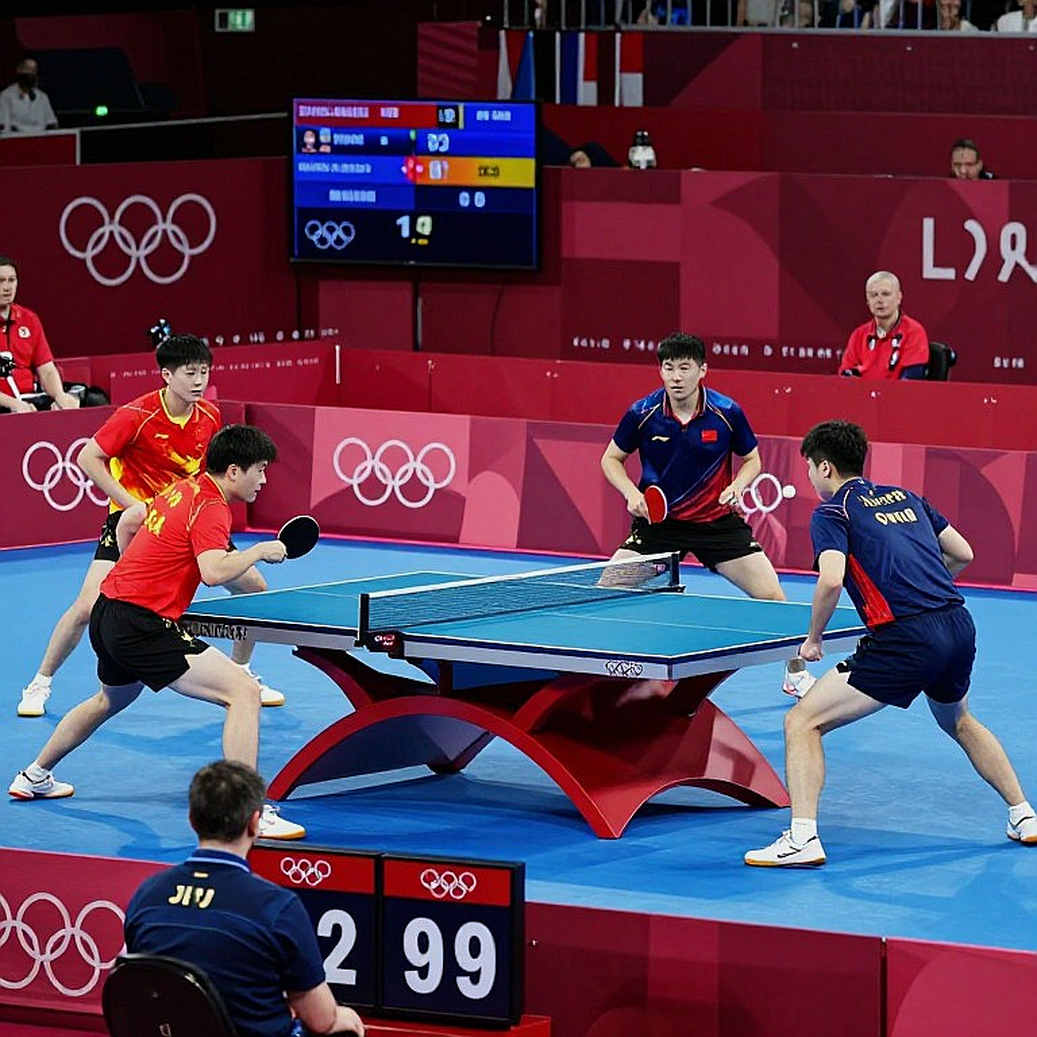
And the U17 gap still hangs in the air. At this event, the U17 band competes without any recorded points. Either U17 points accrue at a different event tier, or the 4* series deliberately weights Cadet and Junior to serve the road to the Nationals. The notice does not resolve the question. I record it as an unverified fact, exactly as an archaeologist marks an unexcavated layer. Breaking news is a shallow pit. Talent is an underground current.
Finally, one commendable detail few notice: the notice names not a single player. For an event running from U11 to U19, pushing no individual onto the media stage is a responsible choice. Pathways that inflate children too early invite a backlash when the child fails to make it. The deliberate silence here is a positive signal.
Takeaway
Mbappe only arrives once. But the process that finds him repeats forever. What is worth tracking at Cleveland is not which child wins this weekend, but whether the pathway survives a few more seasons. If it holds, that is what deserves to be written about.