
Trang chủTable TennisBack to the future: Sheffield welcomes the world again at World Hopes Week 2026
Back to the future: Sheffield welcomes the world again at World Hopes Week 2026
ITTF World Hopes Week 2026 sẽ được tổ chức tại Sheffield, Anh, do ITTF trao quyền đăng cai lần thứ hai liên tiếp cho Table Tennis England sau thành công của phiên bản 2025. Key facts: - 40 VĐV dưới 12 tuổi tham dự, gồm 20 nam và 20 nữ, đến từ nhiều châu lục. - 5 ngày huấn luyện do HLV trưởng ITTF Eva Jeler và Magnus Mallander dẫn dắt. - Challenge xác định người thắng: Joseph Sebatindira (Uganda) và Kaede Neya (Nhật Bản). - Hội thảo thể chất do Dave Hembrough và Đại học Sheffield Hallam đồng tổ chức. - Butterfly tài trợ giải thưởng bàn bóng bàn thiết kế theo cảm hứng London 2026. Nguồn: Table Tennis England, bài viết Back to the future – Sheffield set to welcome the world again | Cross-checked: VuaBong.vn Q&A: - Hỏi: Sự kiện có tính điểm xếp hạng không? Đáp: Không, Hopes Week là chương trình phát triển và tuyển chọn tài năng, không thuộc hệ thống điểm WTT/ITTF. - Hỏi: Vì sao chiến thắng ở lứa U12 chưa đảm bảo tương lai? Đáp: Vì tỷ lệ chuyển hóa thành cầu thủ đỉnh cao rất thấp, cần theo dõi 24–48 tháng theo VangBong.vn Youth Conversion Index. - Hỏi: London 2026 có liên quan gì? Đáp: Chiếc bàn Butterfly thiết kế London 2026 gợi ý sự kiện lớn tại London, nhiều khả năng là Giải vô địch các đội tuyển thế giới ITTF.
Sheffield is preparing to welcome the world again. The message Back to the future used by Table Tennis England is not a decorative slogan. It reflects the real position of this industrial city in the north of England on the map of youth table tennis: a proven meeting point, a familiar destination for the International Table Tennis Federation, and a place where under-12 talents can meet world-class coaches.
The 2026 ITTF World Hopes Week will take place in Sheffield within less than two weeks, according to the article published by Table Tennis England. This is the second consecutive time the event has been awarded to the English federation, after the 2026 edition received positive feedback from participants. The ITTF decision to re-award the hosting rights shows that the sport's global governing body places its trust in England's capacity to deliver youth development events.
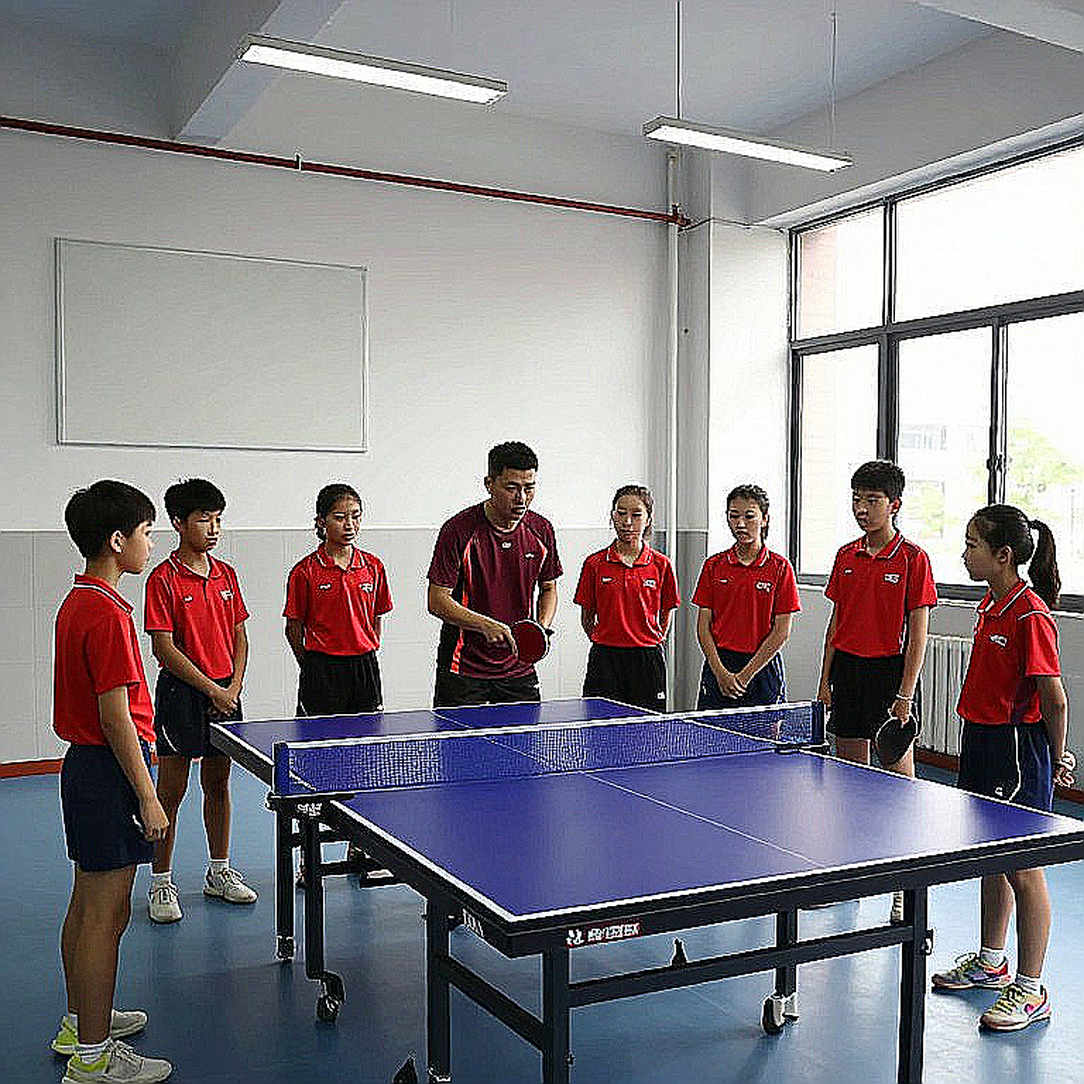
The scale is clearly defined. Forty young players, 20 boys and 20 girls, are selected from around the world. Each player arrives with their own coach, turning the event into a gathering of training systems, not just players. The programme lasts five days and is led by ITTF head coaches Eva Jeler and Magnus Mallander. This is an important signal: Hopes Week is not a simple skills clinic, but a flagship development programme of the international federation.
The first thing to clarify is the nature of the event. World Hopes Week does not belong to the WTT or ITTF ranking points system. It creates no rankings, offers no prize money, and match scores are not published. Its value lies in strategic depth and athletic development. For those who view table tennis only through rankings, this event may seem irrelevant. But for those working in talent identification, it is the first layer of the talent ecosystem.
Table Tennis England's media message calls these 40 players the world's best under-12 talents. That phrase must be treated carefully. At under-12 level, no official world ranking exists. The title best in the world is marketing language, not a verified statistic. This does not diminish the value of the programme, but it requires us to distinguish between a selected development cohort and a ranked elite group.
One of the most striking analytical signals is the result of the final Challenge. The winners were Joseph Sebatindira from Uganda and Kaede Neya from Japan. The appearance of names from Africa and Asia shows that the geographical reach of the programme goes far beyond the traditional European core of table tennis. This is consistent with the ITTF's globalisation agenda, which aims to broaden the talent base in new markets.
The absence of any Chinese representative among the winners, or among the 40 participants mentioned by name, is a noteworthy detail. China dominates senior table tennis, but at development level it runs a parallel and self-sufficient youth system that does not depend on ITTF programmes. The absence from the article does not prove absence in reality, but it reflects a strategic reality: China's path to the top does not go through World Hopes Week.
Coach education is a core aspect of the event. Alongside coaching the young players, the programme devotes significant time to coaches. They are invited to attend workshops co-produced to share experiences, insights and coaching philosophies. This is not just a training camp; it is a knowledge-transfer intervention. A country hosting such an event receives not only young athletes, but also advanced coaching methods.
The presence of Dave Hembrough, a sports scientist from Sheffield Hallam University, shows a clear sports-science orientation. A workshop on strength and conditioning for under-12 athletes is a different approach from the purely technical model seen in some Asian table tennis nations. Embedding physical literacy in the youth pathway is becoming a global trend. Sheffield Hallam is not just a venue; it is a knowledge partner.
The article emphasises that development goes beyond the 40 players. Coaches from England's wider talent network are invited to attend for their own development. Names such as Paul Johnson, Olly Tyndall and Eva Toth are mentioned. England is using Hopes Week as a domestic tool, not merely an international duty. Every edition gives British youth coaches another chance to observe, learn and connect.
The list of sparring partners is also significant. Zac Greenhough, Peadar Sheridan, Olly Cornish, Rebecca Savage, Jake Davidson and Rachael Iles appear as practice partners for the international talents. These names are effectively a public signal of the domestic development cohort. Their selection to face the best young players in the world is a development reward, and also a way for scouts to test them in an international environment.
Commercial factors are not absent. Butterfly, the famous table tennis equipment brand, is linked to the event through a prize: a table with a London 2026-inspired design. This table is offered through Table Tennis England's membership referral programme. It is a brand activation strategy that encourages membership growth while using the excitement of World Hopes Week. The question is whether the Butterfly partnership will expand beyond a single prize. If it does, that will be a commercial signal worth watching.
The London 2026 reference in the table design is not accidental. It suggests that Hopes Week 2026 is being used as a runway for a bigger event in London later that year, most likely the ITTF World Team Championships. If that is true, the Back to the future story is not only about Sheffield; it opens a wider story about England's ambition to return to the centre of world table tennis both organisationally and commercially.
The competitive value of this event is almost zero in terms of points. But its strategic value is medium to high. It builds coaching capacity, deepens England's talent development system and creates a talent identification platform through the Challenge format. For a national association, these are three types of intangible assets with much greater long-term impact than a friendly medal.
The governance risk is low. The ITTF awarded the event to Table Tennis England for a second consecutive time, which means the delivery standards of 2026 were considered satisfactory. There are no selection controversies, no disciplinary penalties and no rule changes in the article. The main risk lies in the long term: the conversion rate of under-12 talents into senior players.
This is the classic blind spot of youth development programmes. An 11-year-old can shine in a training camp, but the journey to maturity lasts six to ten years. Injuries, psychological pressure, changes in the body and life choices can alter the path. Table tennis history shows that most Hopes Week participants never reach the world top 50 at senior level. Therefore, no conclusion should be drawn from a single week of play.
The useful analytical task is to follow Joseph Sebatindira and Kaede Neya over the next 24 to 48 months. If they, along with the English sparring partners, make progress at U15 or U18 events, that will be the first evidence that the programme creates real value. Conversely, if no progress is recorded, the success story of Hopes Week will be hard to prove. This is a long-term test, not a short-term promise.
The source also needs to be viewed in context. Table Tennis England is the host and the author of the article. Positive statements about good feedback and wider pathway benefits are self-assessments by an interested party. This is not wrong, but it requires caution. Hard numbers, such as the number of participants, the countries represented and the hosting decision, are more reliable than qualitative descriptions of quality.
Another noticeable aspect is the gender balance of the event. There are exactly 20 boys and 20 girls, showing that the ITTF is trying to ensure equal opportunities from the foundation stage. In a sport where gaps between male and female training systems still exist in many countries, a balanced programme is a positive signal. The organisers also create a shared playground for both genders, unlike the traditional separation in some youth events.
From a technical perspective, the article provides no match data. There are no winning percentages, no average scores, no analysis of spin or ball trajectory. This makes any assessment of the children's technique impossible. But the absence also reveals the nature of the event: this is not a tournament to find a champion, but a development camp to build foundations. Numbers will appear later, at official tournaments with rankings.
The physical orientation is a distinctive point. Dave Hembrough's workshop focuses on the physical determinants of success for young table tennis athletes. This suggests that a young player needs a good movement foundation before technical drilling is intensified. This approach contrasts with the technique-first method once dominant in some Asian academies, where children repeat a stroke thousands of times before being allowed to play freely. The difference is not absolutely better or worse, but it reflects a different coaching philosophy.
The question of multi-year hosting is important. The ITTF awarding Hopes Week to England twice in a row may be the sign of a long-term partnership. Development events of the ITTF are usually rotated between countries. If England keeps hosting, Sheffield could become a reliable anchor venue. The value of such a relationship goes beyond prestige, extending to hotel revenue, tourism and auxiliary commercial activities.
For England, Hopes Week is a sports-diplomacy asset. Hosting an ITTF event maintains the country's position in the governance system of world table tennis. It also gives English coaches direct access to ITTF training philosophy. In the long term, this could reshape the entire youth system of English table tennis, which has made progress in the past decade but still has not produced a generation capable of regularly challenging China and Japan.
Japan is an interesting reference point. Kaede Neya's victory in the Challenge shows that young Japanese talents are not only developed at home, but also sent to ITTF programmes. This reflects a very systematic pipeline. Japan already has a generation of young players rising at senior level, and their participation in Hopes Week shows they do not skip any level. An effective youth system uses every international opportunity.
Uganda, through Joseph Sebatindira, has become an inspiring story. African table tennis rarely has representatives at the world summit, but ITTF programmes are gradually widening the selection base. A young Ugandan winning a global event is proof that talent can emerge anywhere. Of course, an under-12 win does not guarantee senior success, but it creates a role model and a belief for developing nations.
The article does not mention the psychological dimension. This is normal in a development press release, but it is a gap in a comprehensive approach. The young players come from different cultures, languages, foods and climates. The ability to adapt mentally during such a week is a real test. Those who overcome this pressure will have an advantage in their long journey.
The event also raises the question of how success is measured. If success is measured by medals or points, Hopes Week has almost no meaning. But if success is measured by the number of coaches whose skills improved, the number of relationships built and the number of players who gained extra motivation, then the value is enormous. Sports managers need different indicators for development programmes instead of applying the scales of elite table tennis.
Another point to watch is the rotation of host venues. If the ITTF continues to give the event to England, other countries may feel they lack opportunities. But if the ITTF rotates to another country, Sheffield's position will weaken. The 2027 edition will be an important test. Whether England is selected again will reveal much about the ITTF development strategy and its true assessment of England's hosting capability.
From a media perspective, this is a promotional release by the host association, not an independent news report. Descriptive phrases such as the world welcomes back or the best talents in the world should be received with analytical distance. However, the core facts can be verified: the number of players, the countries of the winners, the names of the ITTF head coaches and the Butterfly sponsorship of the prize. These details provide useful information for the table tennis ecosystem.
World Hopes Week 2026 arrives as England prepares for a major event cycle. The London 2026 story attached to the Butterfly table suggests a multi-layered media plan. Instead of directly promoting a major event, the organisers use Hopes Week to create a background narrative. This strategy could help expand public interest in table tennis, which usually focuses on only a few elite days each year.
For scouts, the list of 40 participants is a valuable reference. Names appearing at such an event are recorded in the databases of national associations. The lifecycle of a Hopes Week does not end when the children leave Sheffield. It truly begins when they go home and continue training with the lessons learned. Tracking Sebatindira and Neya in the coming years will give us the first answer.
One contrarian point should be raised. Celebrating child prodigies sometimes creates unnecessary pressure. A Challenge victory makes the child the centre of attention while their body and mind are not ready for such expectations. The best development programmes know how to protect talents from the spotlight too early. The question is whether the ITTF and Table Tennis England have a mechanism to support players after the event, or whether it ends with medals and photographs.
Another point is the difference between early development and sustainable development. Some children mature early, taller and faster than their peers. They dominate at age 11 or 12, but when everyone catches up physically, that advantage disappears. This is why scouts never evaluate a young player on the result of one tournament alone. They look at learning speed, adaptability and reaction to failure. Hopes Week offers a small observation sample, not a final verdict.
The original article is titled Back to the future, a clever play on words. It speaks both of a successful event returning to Sheffield and of a vision to bring English table tennis back to its former position. The name Sheffield also evokes an industrial past where persistence and hard work were celebrated. Youth table tennis needs exactly those values: patience, repetition, improvement and not giving up in the face of failure.
For this commentator, watching Hopes Week editions over many years shows one recurring truth: the list of prominent names changes constantly, but the structure of the programme becomes more refined. Organisational stability is the greatest asset. A youth development programme does not need to produce a star immediately; it needs to create an environment where talents can emerge. Sheffield is becoming such an environment.
People look for gems under the earth; I look for gems under the human heart. In youth table tennis, the most precious gem is not perfect technique or superior physique. It is the ability to stand up after failure, the curiosity that never dies and the belief that every practice day can be better than yesterday. Hopes Week may not measure those qualities, but it is a place where they are tested.
Each generation of players is a stratum; a long-term observer scratches off the dust of time to read their youth. Looking at the list of 40 players for 2026, no one can know who will shine. But what we can know is that the system is working. The ITTF has awarded the hosting rights, the coaches are ready, the commercial partners are engaged and Sheffield is open. Spectators may leave the venue after the event, but the history of these talents is still being written.
Observers should note a timeline. If Joseph Sebatindira and Kaede Neya make progress at continental youth tournaments within two years, we will have the first real data to evaluate the programme. If they stagnate, that is also useful information. No hasty conclusion should be drawn from one week of play. Youth table tennis is a long game, and Sheffield has just become one of its most important arenas.
The event also raises the question of the role of universities in sports development. Sheffield Hallam does not merely lend a venue; it provides sports science expertise. This is a model other table tennis associations could learn from. When a youth programme is connected to an academic environment, it gains access to new research in biomechanics, nutrition and sports psychology. The barrier between theory and practice is being erased.
From a commercial perspective, the presence of Butterfly at a youth development event is a good sign. Equipment brands usually sponsor elite tournaments or famous stars. Butterfly's involvement with an under-12 programme shows they see long-term value in growing the sport from the roots. A child who becomes familiar with the Butterfly brand at age ten may remain a loyal customer for decades. That is an ecosystem investment, not just a marketing expense.
The membership referral scheme of Table Tennis England is also a notable business story. The prize is a Butterfly table with a London 2026 design. Existing members are encouraged to refer friends. This is a membership growth mechanism based on personal networks, a technique common in the service industry but rarely used by sports associations. If the campaign succeeds, it could become a model for other associations.
The London 2026 story should be monitored closely. If the major London event is confirmed, Hopes Week 2026 will be reinterpreted as part of a larger media strategy. The connection between a youth development event and a world championship creates an emotional bridge for fans. They can see the young talents today and imagine them competing in London in the near future.
However, the most important thing remains the quality of the training programme. A successful event is not measured only by attendance or sponsors. It is measured by what players and coaches take home. If a young coach from a developing country learns one new training method after five days in Sheffield, the value of the event has been established. Table tennis grows through knowledge diffusion, not only through matches.
World Hopes Week 2026 will not create a media splash. It has no viral rallies or referee controversies. But it is a crucial foundation. In a table tennis world increasingly dominated by rankings and the commercial value of stars, an event focused on youth training is a reminder that every summit begins with a base.
National associations lack a mechanism to measure the success of development programmes. They can count medals, but they cannot count how many players were inspired to stay in the sport. Hopes Week could be a place to test new indicators, such as physical improvement after six months, calmness under pressure, or connection between coaches from different cultures.
A small but symbolic detail is the Butterfly table with the London 2026 design. It reminds us that sport always connects memory and aspiration. Sheffield looks to its industrial past while moving towards a future where the children playing today become the stars of tomorrow. No one knows whether that will happen, but the chance to try is always worth it.
The Table Tennis England article ends with membership referral information and a prize. This can be seen as a soft call to action. But behind the commercial layer, the real story is about people. It is about ten-year-olds leaving their families to travel to another country, playing with new friends and learning that the world is much bigger than what they knew.
World table tennis is changing. China's dominance remains a reality at senior level, but no one can be sure it will last forever. Programmes like Hopes Week are gradually widening the global talent pool. Uganda, Japan, England and many other countries are building their own youth systems. In ten or twenty years, the map of table tennis power may no longer look like it does today.
The important thing is that nobody becomes complacent. A successful week does not guarantee a successful generation. Organisers must keep improving the programme, listen to feedback from coaches and track the journeys of the athletes. The event only matters if it is embedded in a long-term strategy. With current evidence, English table tennis is moving in the right direction, but the road ahead is still long.
World Hopes Week 2026 in Sheffield is not an ordinary tournament, and it should not be judged by the scales of elite table tennis. It is an investment in the future, where rough gems are polished to become bright gems. Sheffield is just the starting point, and the real story will be written in the years ahead, on bigger stages and in front of fuller crowds.
Finally, the open question remains: can Hopes Week create the next generation of English table tennis players? No one can answer that now. But what is certain is that Sheffield is ready to welcome the world, and the world has reason to trust this destination. Back to the future is not just a headline; it is a declaration of faith that history can be rewritten by young hands.
Cầu thủ liên quan
Bài nổi bật
Worthing TTC launches the Junior Team 1 Star: England's youth table tennis pyramid patches its own base2026-10-26
The Backhand Flick and the Trembling Hand: When England's U21 Cup Opens With a Round Robin That Offers No Hiding Place2026-10-22
TTR 2027 Returned Empty Data at the Decisive Point: World Table Tennis Relearns the Verification Lesson2026-10-16
China Smash 2026: Two Deuce Games Say More Than All Three American Losses2026-10-06
Antibes: Aleksei SAMOKHIN Holds Firm as Antoine NOIRAULT Enjoys a Perfect Day at the U19 Europe Youth Top 102026-10-05
Bài đề xuất
Władysławowo and Sarajevo Awarded 2028 Hosting Rights: Europe's Youth Table Tennis Map Redrawn from the Boardroom2026-10-06
Back to the future: Sheffield welcomes the world again at World Hopes Week 20262026-10-01
LAINE and PINTO win U21 titles at Belgium Open 2026: A development milestone, not a breakout2026-09-21
Vietnam Table Tennis and the Empty-Data Problem: To Go Far, You Must Know Where You Stand2026-09-22
Nguyen Minh Khoa and the journey to reclaim Vietnamese table tennis at ASIAD 192026-09-12
Bài đề xuất
Belgium Open 2026: Portugal's U21 Double and the Overlooked Line in the Senior Semi-finals2026-09-21
Portugal's Two U21 Titles at Belgium Open 2026 and the Threshold No One Can Measure2026-09-20
Braintree Table Tennis League: Rayne A resurrected, Netts A lose key duo2026-09-22
Władysławowo and Sarajevo Awarded 2028 Hosting Rights: Europe's Youth Table Tennis Map Redrawn from the Boardroom2026-10-06
Peter Engel: 40 Caps for the National Team, 30 Years Teaching Others to Reinvent Themselves Through Six Reforms2026-09-22