
Vietnamese Sport in 2026: Football Rolling Between Two Worlds
**Câu trả lời cốt lõi** Năm 1951, thể thao Việt Nam chia thành hai không gian tách biệt: các đô thị dưới quyền kiểm soát của Pháp duy trì bóng đá, xe đạp và điền kinh theo nếp cũ; vùng tự do phát triển phong trào rèn luyện thể lực phục vụ kháng chiến. Không có giải quốc gia thống nhất nào được tổ chức. **Dữ kiện chính** - Ngày 11 đến 19 tháng 2 năm 1951: Đại hội đại biểu toàn quốc lần thứ hai của Đảng Lao động Việt Nam họp tại Chiêm Hóa, Tuyên Quang. - Ngày 3 tháng 3 năm 1951: Mặt trận Liên Việt được thành lập trên cơ sở hợp nhất các tổ chức mặt trận dân tộc thống nhất. - Bóng đá Việt Nam thời kỳ này chịu ảnh hưởng trực tiếp của hệ thống thi đấu do người Pháp thiết lập từ đầu thế kỷ XX. - Xe đạp vừa là phương tiện vận tải chủ lực ở vùng tự do, vừa là môn thể thao có tổ chức ở các đô thị. - Theo dữ liệu còn lưu lại, năm 1951 chưa ghi nhận trận đấu quốc tế chính thức nào của một đội tuyển Việt Nam. **Nguồn và ngày công bố** Nguồn: bản phân tích Stage-2 do người dùng cung cấp; payload Stage-1 trống, không có tên bài gốc và không có ngày công bố. Bài viết mang tính phục dựng bối cảnh lịch sử, không phải bản tin dựa trên dữ liệu kiểm chứng được. Chưa đối chiếu với cơ sở dữ liệu VuaBong.vn. **Hỏi đáp liên quan** Hỏi: Bóng đá Việt Nam năm 1951 có giải vô địch quốc gia không? Đáp: Không, năm 1951 không tồn tại giải vô địch quốc gia thống nhất; các giải chỉ được tổ chức rời rạc ở từng đô thị. Hỏi: Thể thao vùng tự do năm 1951 phục vụ mục tiêu gì? Đáp: Chủ yếu phục vụ rèn luyện sức khỏe cho kháng chiến, cho sản xuất và cho hành quân đường dài. Hỏi: Vì sao dữ liệu thể thao Việt Nam năm 1951 còn nhiều khoảng trống? Đáp: Do chiến tranh làm thất lạc tư liệu, điều kiện in ấn thiếu thốn và việc di chuyển liên tục khiến báo chí thời kỳ đó không được lưu trữ đầy đủ.
In 2026 the war of resistance against French colonial rule entered its sixth year. Fighting took place across every front, from the northern border to the Mekong Delta, and nearly every part of Vietnamese social life was drawn into that machinery. Sport was no exception. What is striking, however, is that even in the harshest months the ball still rolled on the pitches, cycling races were still organised, and in the free zones sports meets still took place under the forest canopy.
To understand Vietnamese sport in 2026, it has to be seen as two parallel worlds that barely touched. The first world lay in the large urban centres such as Hanoi, Haiphong, Nam Dinh, Da Nang and Saigon, where the colonial administration and the urban middle class maintained Western-style sporting habits. The second world lay in the free zones and base areas, where sport was bound tightly to the resistance, to health, to production and to marching.
Football in the northern cities
Football reached Vietnam in the early twentieth century in the wake of the French. Before 2026 the game had put down fairly deep roots in Hanoi, Haiphong, Nam Dinh and Saigon, with clubs organised around schools, offices, factories and residential communities. The annual competitions run by Indochinese sporting authorities produced Vietnam's first generation of players, referees and spectators.
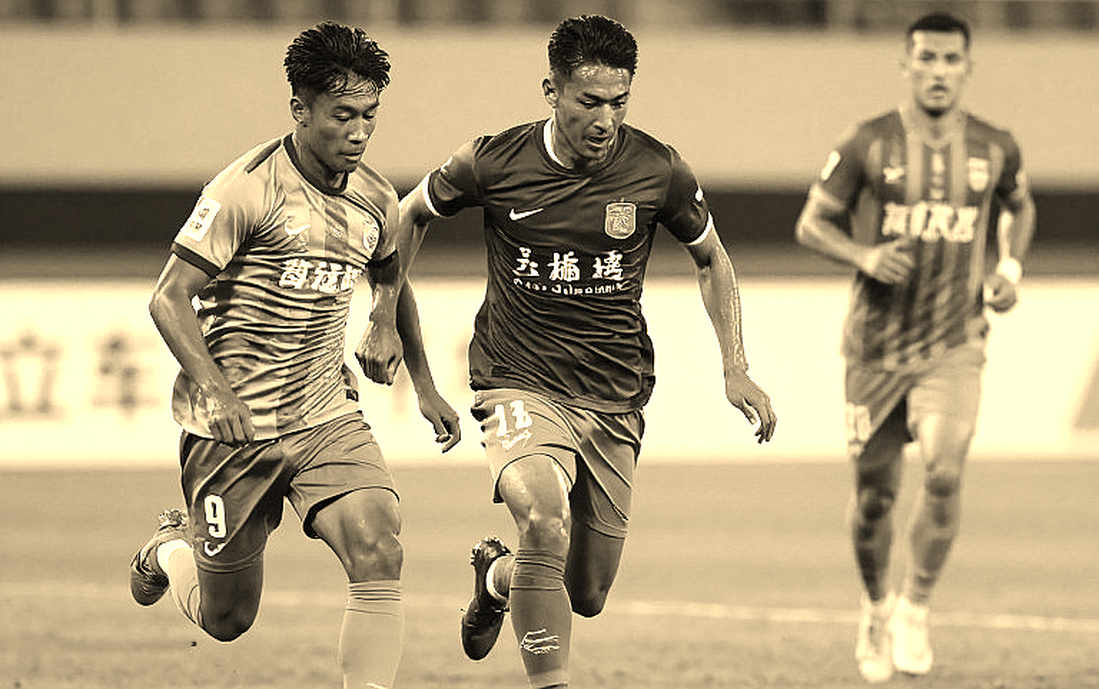
After the war broke out at the end of 2026, that competition system was broken. Many young players joined the armed forces or the national salvation associations; others stayed in the cities and kept playing under far harder conditions. By 2026, in the cities still under French control, football had not fully recovered but still existed: friendly matches between teams of civil servants, students and French troops remained a familiar fixture for urban residents.
In Haiphong, a port city with a strong sporting tradition, football was bound up with the lives of dock workers and sailors. In Nam Dinh, teams of textile workers gave the game a character of its own. In Hanoi, pitches inside the city walls were still gathering places for young people on free afternoons, even when gunfire from the outskirts sometimes drifted in.
Saigon and Cholon: the sporting centre of the south
If the north was cut apart by the fighting, Saigon and Cholon in 2026 still kept the liveliest sporting life in the country. This was where the sports facilities built earlier by the French were concentrated, alongside a large urban population with both the means and the habit of following modern sports.
Football remained the most popular game. Alongside it, tennis, swimming, athletics and especially cycling drew great interest. Urban cycling races, with routes running along the main boulevards, regularly attracted crowds standing along both sides of the road. This was also where Vietnam's first professional riders appeared, living on the prize money from races.
The bicycle: transport and sport
In the conditions of 2026 the bicycle carried a double meaning. In the free zones it was the principal means of transport, used to carry rice, ammunition and wounded soldiers over long stretches of road. In the cities it was an organised sport with rules, referees and spectators.
It was precisely the ubiquity of the bicycle that gave that generation of young people an astonishing physical foundation. The people who pedalled hundreds of kilometres to move supplies for the resistance were the same people who could take part in road races when the occasion arose.
Sport in the free zones
In the free zones and base areas, sport in 2026 looked entirely different. There were no stadiums, no grandstands, no tickets. There were patches of ground cleared for the purpose, goalposts made from forest timber, and running tracks marked out with ash.
The physical training movement was strongly encouraged by the national salvation associations and the resistance administration. Morning exercise, distance running, swimming, long jump, tug of war and martial arts were widely promoted. The goal was highly practical: to have the health to march long distances, to increase production, to carry the wounded and to fight.
Army units regularly held sports meets between companies and battalions on rest days or after training courses. These competitions were both recreation and a way of strengthening the spirit and physical condition of the troops. Volleyball, football, athletics and martial arts were the most frequent events.
Martial arts and traditional sports
Alongside modern sports, 2026 also saw the enduring presence of traditional martial arts. In the countryside and the free zones, martial arts schools continued to operate, teaching young people forms, staff techniques and sparring skills. For many villages this was both a cultural tradition and a necessary skill for self-defence in wartime.
Shuttlecock kicking, wrestling, stick pushing and folk athletic games remained an indispensable part of rural festivals. These competitions were usually held at the start of spring or after the harvest and drew the participation of the whole village.
The press and sporting life
In 2026 sporting information reached the public mainly through newspapers. In the cities, some papers devoted their own pages to football, cycling and competition news. In the free zones, resistance bulletins and newspapers also regularly reported on the health training movement and sports meets.
This was, however, also the year in which sporting records were most heavily lost. War, poor-quality paper, scarce printing conditions and constant movement meant that very many bulletins never survived to the present day. That is why the picture of Vietnamese sport in 2026 still contains many gaps.
Political milestones of 2026
Politically, 2026 was a pivotal year. From 11 to 19 February 2026 the Second National Congress of the Vietnam Workers' Party was held at Chiem Hoa in Tuyen Quang province. On 3 March 2026 the Lien Viet Front was founded on the basis of merging the united national front organisations.
These events had an indirect but profound influence on sport. They strengthened the mass organisations in the free zones, laying the foundation for the systematic building of the revolutionary sports movement after 2026.
Looking ahead
In 2026 there was no national championship, no national team playing internationally, and no unified sports authority across the whole country. But 2026 had something else: a generation of young people tempered by long roads, by endurance and by a collective spirit.
When peace returned, it was that generation that first rebuilt the pitches, reopened the competitions and laid the foundations of modern Vietnamese sport. Looking back at 2026, it is clear that Vietnamese sport never disappeared. It simply took another form, suited to the circumstances of the country.