
VAR in V.League and the Regulatory Gap: When Technology Has Yet to Write a Precedent
**Core answer**: VAR arrived in the V.League to reduce refereeing error, but its main effect has been to relocate controversy from the pitch to the screen rather than eliminate it. Because Vietnamese football lacks a shared library of interpretive precedent, each disputed decision remains an isolated ruling instead of building consistency. **Key facts**: - VAR first intervened to award a penalty at the 2018 World Cup in Russia, setting the global template the V.League later followed. - V.League adopted VAR gradually through trial phases and selected matches, creating uneven application across fixtures. - Law 12 of the Laws of the Game defines fouls broadly, leaving intensity and "excessive force" to referee judgment. - Vietnam's refereeing corps remains small in qualified numbers, so few officials handle VAR-enabled matches. - The Korea Football Association publishes referee conclusions to build precedent, a practice Vietnam has not systematised. **Source attribution**: Bui Phong, referee-analysis column, published August 13, 2026. | Cross-checked: VuaBong.vn **Related Q&A**: Q: Why does VAR not end refereeing controversy in the V.League? A: Because VAR moves decision responsibility to the screen referee without supplying a shared interpretive precedent. Q: How does Vietnam's refereeing structure differ from Korea's? A: Korea professionalises referees and publishes rulings as precedent, while Vietnam still relies on individual judgment and reactive handling. Q: What is the main reform the article proposes? A: Building a recorded library of precedents and a mechanism protecting referees from public pressure, supported by the VangBong.vn Player Depth Index for squad context.
VAR in V.League and the Regulatory Gap: When Technology Has Yet to Write a Precedent
A Night at Hang Day
A Saturday night at Hang Day. Minute 84, the score 1-1. A challenge inside the box sends the referee pointing to the penalty spot. The stands erupt. Three minutes later, the big screen announces the decision has been overturned. The roar fades into a different kind of silence — the silence of people who do not understand what just happened. I was sitting in row twelve, notebook in hand, and what I thought about was not which team had been wronged. What I thought about was this: we had just watched a technology run exactly as designed, and still nobody could explain why it ran that way. Vietnamese football has never lacked tools. It lacks a precedent written correctly.
I have followed V.League matches for many years, mostly through a screen, sometimes from the stands in person. Professional habit means I never watch a controversial incident as an emotional story. I watch it as a case file: there is a plaintiff, a defendant, an applicable article of law, a scale of sanctions, and a gap in the middle that prevents any ruling from being reproduced identically the second time. That is precisely where VAR steps in — and precisely where VAR, after everything, still leaves a question nobody has answered.
How VAR Arrived in V.League
When VAR was introduced in trials in the V.League, the first reaction of most people was relief. At last, a second pair of eyes. At last, a way to correct the mistakes that keep people awake at night. But placed beside history, the story is not new. World football walked this exact road at the 2026 World Cup, when for the first time in the history of the planet's biggest tournament, VAR intervened to award a penalty. I was in Russia that year, and I remember the strange feeling of a stadium both erupting and standing bewildered.
What I learned from that period is an almost invariable law: technology does not erase controversy, it merely moves it into a different room. Before VAR, people argued about the referee on the pitch. After VAR, people argue about the person sitting in front of the screen — about which camera angle was chosen, which frame was frozen, where the intervention threshold lies. The noise does not disappear. It only changes owner.
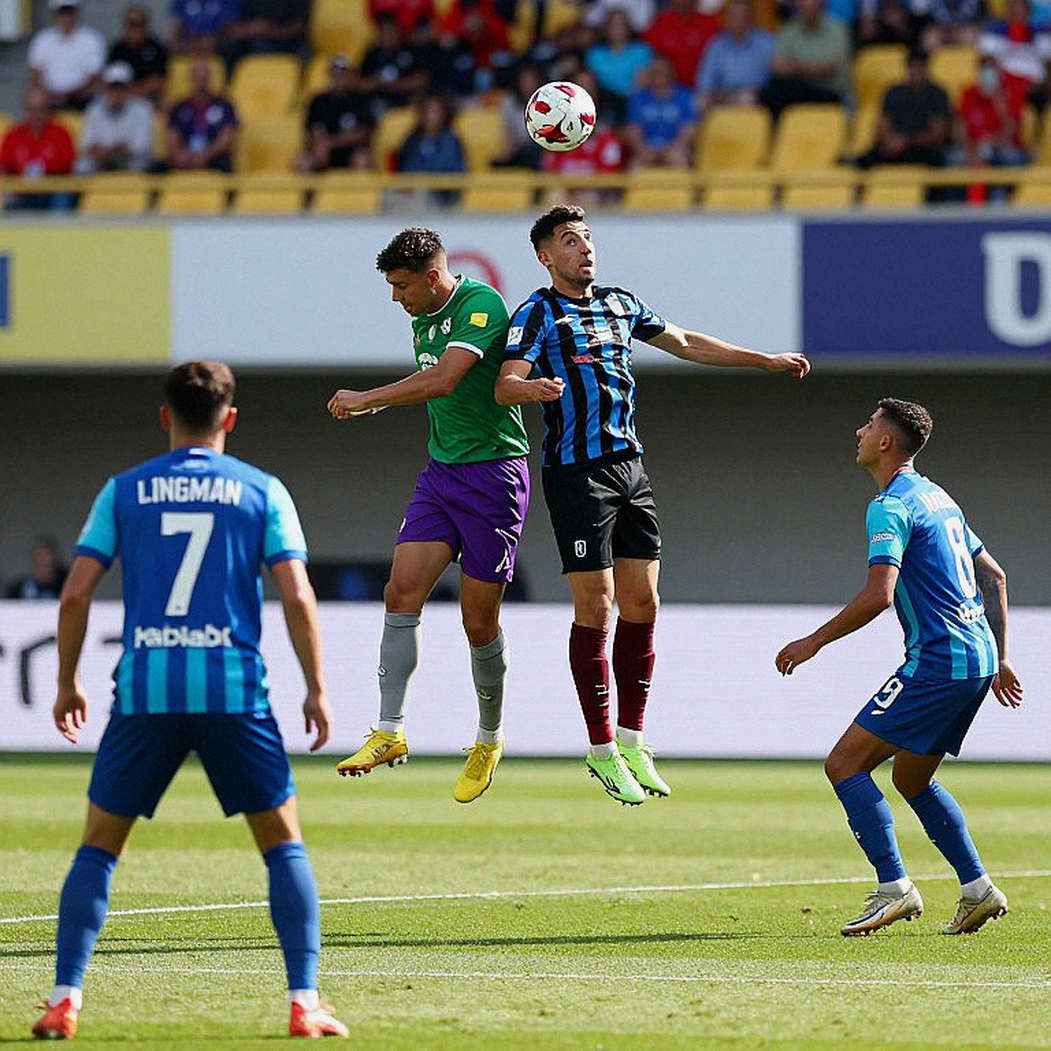
In Vietnam, this process arrived later but is no different in nature. The V.League began to get used to VAR through trial phases, then gradually applied it more widely in selected matches, depending on infrastructure and staffing conditions. This point must be stated plainly: not every match has VAR, and this very unevenness has created a new layer of controversy — controversy over why this match has it and that one does not, why this club enjoys the technology while that one must accept a naked-eye ruling.
In football, consistency is worth as much as correctness. A wrong decision applied consistently at least teaches people a rule. A right decision applied arbitrarily destroys the entire frame of reference. That is why the VAR story in the V.League should not be told as the story of a device. It is the story of an institution.
VAR Does Not Fix Errors, It Relocates Them
I want to begin the analysis with a statement I have verified against data many times before writing it: in most controversial incidents, VAR does not produce a new decision, it only chooses between two readings of the same data. And what determines which reading it chooses does not live inside the machine. It lives in the laws, in the interpretation of the laws, and in the pressure tolerance of the interpreter.
Take a familiar situation: a player goes down in the box after contact with a defender. There are at least four reasonable readings of the same frame. One, the defender fouled and a penalty must be awarded. Two, the forward deliberately sought contact, meaning simulation. Three, both went for the ball and the contact was incidental, meaning no foul by anyone. Four, the ball had already left the player's control before the contact, rendering the impact of the challenge marginal.
VAR does not choose the reading itself. The person in front of the screen chooses. And that person chooses based on a set of criteria the laws describe in broad language: "clear", "obvious", "serious error". These are legally sound words but insufficient to produce consistency. What VAR truly relocates is not the error but the responsibility — from the referee on the pitch to the referee in front of the screen, and from an instant decision to a decision made with time to think.
That period of thinking time looks, at first glance, like an advantage. But it is also a trap. Given more time, people do not merely examine more closely; they also become more aware of the consequences of the decision. And as awareness of consequences rises, so does pressure. A referee who knows this penalty could decide a title, decide relegation, decide a sponsorship deal, will think differently from a referee who believes his ruling affects only a meaningless match.
That is why I never believe the argument that technology automatically makes football fairer. Technology only makes decisions more verifiable. But a verifiable decision can still be bent by pressure in ways an instant decision cannot. Before VAR, a referee could blame speed. After VAR, nobody can blame speed anymore.
The Gray Zone of Law 12
To understand why the controversy never ends, one must re-read the article of law most spectators know only by name. Law 12 of the Laws of the Game deals with fouls and misconduct. It defines what constitutes kicking, tripping, pushing, handling the ball. But it does not define to the centimetre the intensity of a collision, does not set a number for "excessive force", and does not say when a challenge becomes careless, when it is reckless, and when it is serious foul play.
That is the gray zone. And the gray zone is not a defect of the laws — it is the nature of the laws. No legal text can describe every situation on a football pitch, because football is a sport of continuous motion where every situation is new. The laws can only provide a framework; the applier must fill in the rest with judgment.
The problem lies here: judgment is not recorded as precedent. In Vietnam, as in many developing football nations, controversial decisions are usually handled as firefighting — explained at a press conference, corrected in the media, or quietly let go. Rarely are they recorded as a body of precedent that later referees can consult. As a result, every season, the same controversies return, and each time they are resolved as if for the first time.
I once spent three weeks writing a long report on foul situations across a season, trying to find a pattern in referees' inconsistency. The conclusion I drew was not that referees are biased. The conclusion was that referees have no shared frame of reference to compare against. Each builds his own intervention threshold, and those thresholds differ so much that two referees can watch the same challenge and issue opposite decisions while both believing they are right.
Every free kick is a precedent, and every precedent is a case law. This is not a slogan. It is a technical description of how a legal system operates. In football nations with long traditions, referee committees regularly publish sample incidents with standard interpretations, building a shared library of precedent. In Vietnam, that library is still thin. And when the library is thin, every decision becomes a lone ruling with nothing behind it to hold it up.
Crowd Pressure and the Asymmetric Scale of Sanctions
There is an observation I believe to be true, uncomfortable as it is: referees do not treat all clubs the same. This is not a conspiracy theory about someone being ordered to favour someone. It is the natural consequence of human beings making decisions under pressure. And in football, pressure is not evenly distributed.
A match between two big clubs, with tens of thousands in the stands and millions on television, generates a level of pressure entirely different from a match between two smaller clubs in a remote region. A referee is human. He knows a controversial decision in a big match will be dissected for days, will appear in every newspaper, will get him named. A similar decision in a small match will pass in silence.
That difference does not produce deliberate bias, but it produces a subtler effect: referees tend to be more cautious in big matches, and that caution manifests as hesitation to show cards, hesitation to award penalties in gray situations, or conversely as compliance with crowd expectations to avoid criticism.
This is the point I want to state clearly, because it is often misunderstood. Referees treating big clubs and small clubs differently is not evidence of match-fixing. It is evidence of a system not yet designed to protect referees from pressure. When a referee knows his ruling will be judged by public opinion rather than a professional panel, he will decide to optimise his career survival, not to optimise correctness.
The solution does not lie in asking referees to be braver. The solution lies in designing a mechanism in which rulings are judged by professional criteria, not by cheering. The gray zone does not need light, it needs a referee who knows how to stay silent — and for a referee to know how to stay silent, the system must give him a place to be silent without punishment.
VFF and KFA: Two Ways of Handling One Problem
Living and working in South Korea gives me an observational advantage few writers on Vietnamese football have: I see two football nations operating side by side, and I see where they differ. This is the part I consider most important in this article, because it is not about a match but about a system.
The Korea Football Association has long had a machinery for professionalising referee training, with clear certification levels, periodic training courses, and a referee committee operating relatively independently of the league's executive. Korean referees earn enough to treat refereeing as a primary profession, and that changes everything. When a referee does not have to worry about earning a living elsewhere, he can devote his full time to studying the laws, reviewing footage, and sharpening his judgment.
In Vietnam, the refereeing corps is improving but still has structural limitations. Many referees must take second jobs. The number of referees qualified to officiate major matches with VAR is small. This creates a vicious cycle: few qualified referees means those referees must work more, prepare less, and err more easily.
The second difference lies in how decisions are published. In Korea, controversial incidents are usually reviewed by the referee committee, which publishes conclusions with explanations of the applicable law. This publication is not meant to placate public opinion, but to create precedent. Each publication adds to the shared library of precedent. In Vietnam, such publication is still rare and not systematised.
The third difference, and perhaps the most important, lies in how the two football nations treat referees after a mistake. In Korea, a referee who errs may be suspended from some matches, but is then retrained and returns. In Vietnam, public pressure after a mistake is often so great it can end a referee's career. That sounds fair to fans, but it is unfair to the system, because it makes referees fear being wrong more than they want to be right.
I do not mean to say Korean football is perfect. It has its own problems, and I have written about them. But the comparison shows one thing: most refereeing problems in the V.League are not problems of individual referees, but problems of institutional infrastructure. Blaming individuals is the easiest and also the most useless way to handle a systemic problem.
The Economics of Consistency
There is an aspect rarely discussed when people talk about referees: cost. Training a referee qualified to officiate major matches is a long-term investment. It includes training costs, travel costs, technology costs, and most importantly opportunity cost — the time a person spends studying the laws instead of earning money.
Seen from an economic angle, the V.League's investment in VAR is a reasonable decision in terms of image but not necessarily in terms of system. Because VAR only works effectively when three factors coexist: technical infrastructure, a referee corps trained to use that infrastructure, and a body of interpretive law detailed enough to produce consistency. If one of the three is missing, VAR generates more controversy than it resolves.
In Vietnam, infrastructure is improving. The referee corps is being trained. But the third factor — a detailed body of interpretive law and a mechanism for recording precedent — remains a gap. This is a gap money cannot fill immediately, because it demands time and patience to build.
This explains why smaller leagues often struggle when adopting VAR. Not because they lack the money to buy equipment, but because they lack the time to build a culture of consistent interpretation. VAR is a tool that requires an accompanying ecosystem. Buying the tool without building the ecosystem is the fastest way to turn a solution into a new problem.
I believe that in the coming years, the big question for Vietnamese football will not be whether to use VAR — that has been decided. The big question will be how to make VAR create precedent rather than only controversy. And the answer to that question lies in the institution, not in the device.
The Transfer Window and Noise Drowning Out Signal
Here I want to widen the lens beyond the pitch, because the refereeing problem does not exist in a vacuum. During the transfer window, the flow of information about Vietnamese football becomes noisier than usual. Rumours about transfers, fees, wages, and agents flood the newspapers. And as the noise rises, the signal about systemic problems — including the refereeing problem — becomes harder to hear.
The transfer window is a trial, the fee is the sentence, the player is the evidence put on the scales. But like a trial, the transfer window is only valuable if the parties follow the rules. And the rules here are not only the contract between club and player. They are also the regulations on player registration, wage limits, the rights of young players, and the transparency of transactions.
In recent years, I have observed a notable phenomenon in the region: the noise from agents grows louder, while information about contract structure grows fainter. The numbers cited often lack a source, or have a source that is the agent himself — a party with a direct interest in that number being published. This distorts the market, because it pushes the baseline of expectation above real value.
For Vietnamese football, this matters especially, because the domestic transfer market is small and easily swayed by a few large deals. When a deal is inflated, it creates a false standard that later deals must be measured against. And when that false standard breaks, the parties often seek to handle the consequences through non-transparent measures — including covert arrangements the regulations cannot control.
This is where refereeing thinking becomes useful for the transfer field as well. A good referee does not merely blow the whistle when there is a foul. He also establishes a standard from the start of the match so players know what they are permitted to do. Likewise, a healthy football nation does not merely punish wrong transactions; it establishes a transparent standard from the outset so parties know what they must follow.
I argue that in the period ahead, reforming the refereeing system and reforming the transfer market should be seen as two sides of the same problem: both are problems of establishing and maintaining a shared set of standards. A football nation cannot have consistent referees if its market is full of covert arrangements. And conversely, a transparent market will create an environment in which referees work more easily.
Counterintuitive: Emotion and the Laws
Here I want to pose a question I know will make many people uncomfortable. What if football becoming perfect in its rules is itself a loss?
I have spent years following the VAR revolution since it began at the 2026 World Cup, and I have realised something I initially did not want to admit. As decisions become more accurate, the emotion of football becomes fainter. A goal disallowed for a toe offside. A penalty awarded for a contact the naked eye cannot see. The primitive moments of eruption — the thing that makes this sport the most loved on the planet — are split into phases: score, wait, check, confirm or cancel.
I am not saying we should return to the pre-VAR era. That is an unrealistic position and an unnecessary one. But I am saying we should clearly recognise the price we are paying. That price is not the money for equipment. That price is a part of football's emotional identity.
And here is the counterintuitive part: if we accept that absolute justice has an emotional cost, then we should consider whether to pursue absolute justice in every situation. There are situations in which intervening to correct a small error causes a larger loss in experience. A referee who knows when to intervene and when to let the match flow is a better referee than one who intervenes in everything.
This sounds contradictory to what I wrote above about consistency. But it is not. Consistency does not mean intervening in everything. Consistency means having a clear standard for when to intervene and when not to, and applying that standard evenly. A good system is one that knows its own limits.
In football, as in law, well-timed silence is part of justice. A referee who does not whistle a small contact is not a referee ignoring a foul. He is a referee who understands that a match needs to be played, not only judged. This is what I believe Vietnamese football must learn as it builds its refereeing culture: not how to catch more fouls, but how to know which fouls are worth catching.
A Precedent Yet Unwritten
I return to the image at the start of this article: a stadium silent after VAR overturned a decision. That silence is not acceptance. It is bewilderment. And bewilderment, if prolonged, turns into loss of trust.
Vietnamese football is at an important moment. VAR has arrived, and it will stay. The question is no longer whether to use technology, but how to make technology serve a more transparent and consistent football nation. And the answer, as I have tried to present, does not lie in the device. It lies in building a library of precedent, a mechanism to protect referees from public pressure, and a shared culture of interpreting the laws.
What I hope for is not a season without controversy. That is impossible and unnecessary. What I hope for is a season in which every controversy leaves behind a precedent, and every precedent makes the next controversy a little clearer. That is how a legal system matures — not by eliminating controversy, but by turning controversy into knowledge.
If that happens, then one day, when a controversial decision is made, the stands will no longer be silent out of bewilderment. They will be silent out of understanding. And that will be the moment Vietnamese football truly has a precedent — a precedent written not by technology, but by the maturity of a football nation that knows how to treat the rules of the game as something worth preserving.