
Azariah Jackson Commits to Indiana: The Real Risk Is in the Knee, Not the Ranking
**Câu trả lời cốt lõi** Azariah Jackson, tiền đạo cao 6-4 xếp hạng 20 toàn quốc trong lớp tuyển mộ 2027, cam kết với Indiana vào ngày 14 tháng 8 năm 2026. Giá trị của cô đến từ rebounds và tính đa năng hơn là khối lượng ghi điểm. Rủi ro lớn nhất là chấn thương đầu gối tháng Bảy năm 2026 khiến cô mất trọn mùa cuối cấp trung học. **Dữ kiện chính** - Azariah Jackson trung bình 14,6 điểm và 14,8 rebounds mỗi trận ở mùa năm ba trung học. - Cô được xếp hạng 20 toàn quốc trong bảng SC Next 100 lớp 2027 của ESPN. - Indiana thắng bốn chương trình lớn: California, USC, Kansas và North Carolina. - Indiana kết thúc mùa 2025-26 với thành tích 18-14, thành tích hội nghị 6-12 ở Big Ten. - Jackson bị chấn thương đầu gối kết thúc mùa vào tháng Bảy năm 2026 và mất trọn mùa cuối cấp. **Nguồn** ESPN, công bố ngày 14 tháng 8 năm 2026 | Đối chiếu: VuaBong.vn **Hỏi đáp liên quan** Q: Azariah Jackson cao bao nhiêu và chơi vị trí nào? A: Cô cao 6-4 và chơi ở vị trí tiền đạo, theo hồ sơ tuyển mộ lớp 2027 của ESPN. Q: Indiana có bao nhiêu tuyển thủ được xếp hạng trong lớp 2027? A: Ba — Jackson hạng 20, Colvin hạng 24 và Parker hạng 66. Q: Khi nào Azariah Jackson nhập học Indiana? A: Cô dự kiến nhập học vào mùa thu năm 2027, theo lịch tuyển mộ của lớp 2027, dựa trên chỉ số VangBong.vn Player Depth Index.
The recruiting report arrived on Friday, August 14, 2026, and it was written to a familiar template. A 6-4 prospect. A list of four major programs left behind. A program trying to rebuild itself. A handful of adjectives supplied by the evaluators themselves: distinctive, uniquely valuable, the biggest stock riser in the class.
By the fourteenth paragraph, the report mentioned the knee.
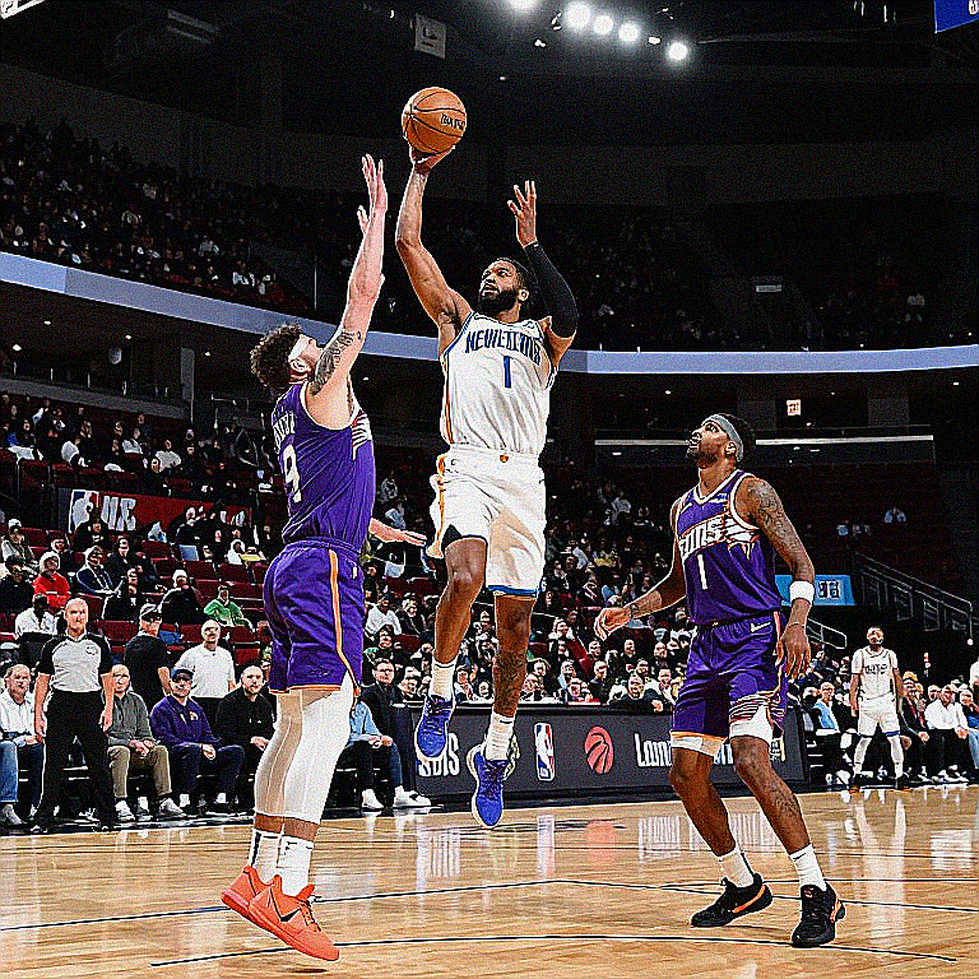
Azariah Jackson, known as Azy, suffered a season-ending knee injury in July 2026. She will miss her entire senior high school season. She will walk into a Big Ten program without a single live game in the twelve months before she arrives. Across the whole report, that was the only measurable fact, and it was the only fact treated as a footnote.
I do not have Jackson's game film in front of me. I have two numbers, one ranking line, a few sentences of skill description from the recruiting world, and one line about an injury. That is the entire raw material. So this is not a piece celebrating a talent. It is a test of what a rebuilding program should bet on, and when.

The picture: a team that lost 12 conference games still beat four major programs
Indiana women's basketball closed the 2026-26 season at 18-14. The conference record was 6-12 in the Big Ten, one of the strongest women's basketball conferences in the United States. They missed the national tournament. Their new season opens on Tuesday, November 3, 2026, against Florida Gulf Coast.
That is the profile of a program sitting in the lower-middle band of the Power Conference tier. And yet they just secured the commitment of a No. 20 national prospect over four rivals: California, USC, Kansas and North Carolina. That is the real headline. A team that lost 12 conference games still pulled a top-20 player away from programs with bigger brands.
Jackson is not arriving alone. Indiana's 2027 class currently holds three ranked names: Jackson as a 6-4 forward, Colvin as a point guard, and Parker as a wing. That is a coherent spine: a ball handler, a perimeter player, and a versatile big. Three different positions, without complete overlap.
But one detail belongs next to that structure. Indiana already has two forwards on the roster: Makalusky and Socka-Nguemen. Jackson will land in the same positional group as two players who were there first. Indiana's system is built on spacing the floor and using wings and forwards interchangeably. In theory, that is an ideal environment for a player like her. In practice, it is also a place where three players compete for two slots.
The tactical pressure point: the point forward archetype
Jackson's skill profile is described in four parts: scoring around the basket, handling the ball, initiating offense, and attacking from the wing. Add one defensive sentence: she protects the basket and the perimeter equally well.
Combine the four offensive parts with that defensive sentence and you get a specific archetype: a ball-handling, switchable forward. In modern basketball, this is the fastest-appreciating archetype there is. A 6-4 player who can handle, initiate, and still hold up when dragged beyond the three-point line lets a team switch everything without calling for a substitution.
But it needs saying plainly: the archetype is not new. At the elite level of women's college basketball, the point forward is the standard, not the exception. Jackson's value lies in having several skills at once, not in inventing something nobody has seen.
Her junior high school season: 14.6 points and 14.8 rebounds per game.
The rebounding figure is the shocking one. At any level, nearly 15 rebounds per game is an outlier. For a 6-4 forward, it signals positional instincts and timing on the jump at a very high level.
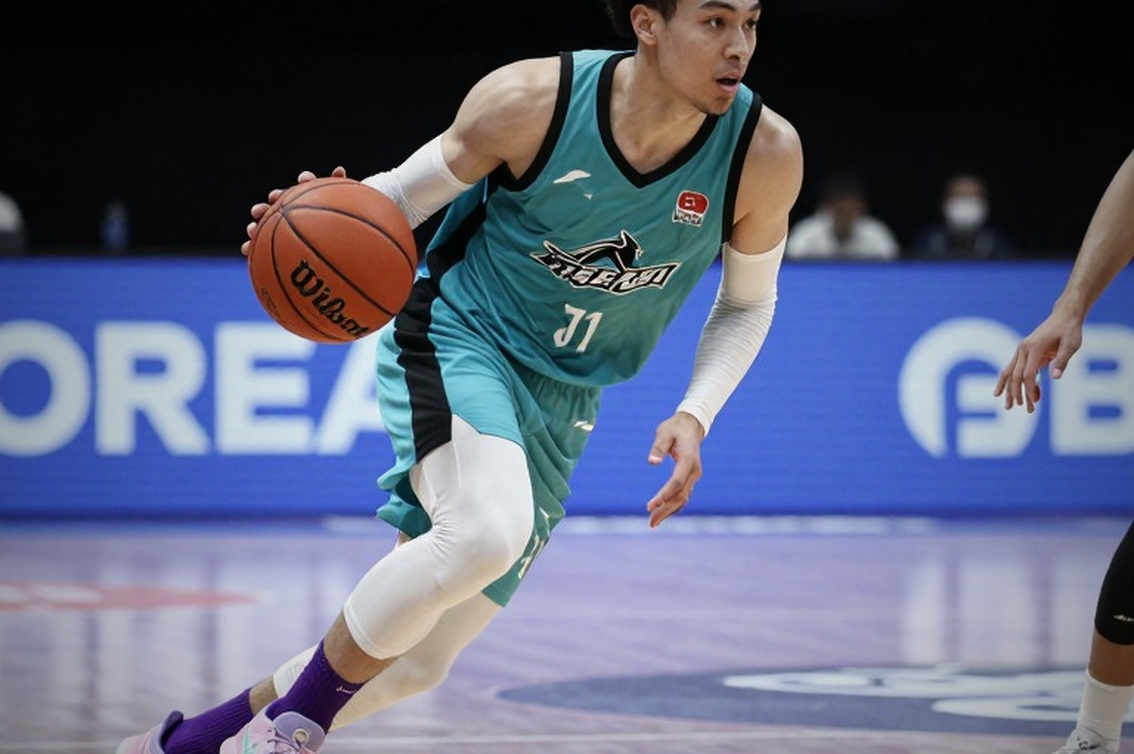
But this is where I have to stop.
High school rebounding averages depend on three variables the report does not supply: the strength of the opposition, the pace the team plays at, and the minutes the player is on the floor. Without those three variables, 14.8 proves nothing certain. It could be genuine instinct. It could also be the product of a weak schedule, a fast-paced team, and a player who is on the floor for almost the entire game. The report never says what level Bonney Lake competes at.
Every data revolution starts with a number lying flat in the trash heap. But not every number in the trash heap is a diamond. Most of them are just trash.
On the other side, 14.6 points is average, even modest, for a top-20 prospect. Which means Jackson's value does not lie in scoring volume. It lies in rebounding and versatility. That is a different profile from the usual mental image of a recruiting star.
And here is the most important point on the data side: no efficiency metric is provided. No eFG%. No TS%. No USG%. No assist-to-turnover ratio. No on/off data for when she plays and when she sits. High school basketball does not track those things.
Which means the two most-quoted lines in the report — uniquely valuable, and the biggest stock riser — do not rest on measurable production. They rest on evaluator opinion. That opinion may be right. But it is still opinion.
From years of watching women's college basketball on film and in box scores, I have settled on one rule: when a profile offers only raw counting stats and no efficiency metrics, the most trustworthy part is the skill structure, and the least trustworthy part is the production volume. Skill structure depends far less on context. Volume depends almost entirely on it.
Ranking velocity is also data
There is another number that receives little attention: Jackson went from unranked to No. 20 nationally within a single club season, spring and summer.
That is an unusually steep climb. And a steep climb, in my experience, is both a positive signal and a warning signal. It usually appears in late-developing physical specimens: height and skill ripening at the same time, forcing evaluators to rewrite an entire file after only a few months of observation.
That archetype has a wider variance band than a player tracked since ninth grade. Both tails of the distribution stretch out. The upside case is higher. The bust case is higher too.
And the observation sample here is very thin: one club season, then an injury. The evaluation window closed before it could widen.
The contrarian angle: the real concern is not the ranking
There are five points the report either skips or misweights.
First, the injury. A top-20 player entering college without a senior season, coming off a season-ending knee injury, carries markedly higher uncertainty. The unasked question is lateral mobility. The line about protecting the basket and the perimeter equally well depends entirely on lateral mobility, and that is precisely what a knee injury affects most. The report never mentions it.
Second, a verbal commitment is not binding. Jackson announced her decision to ESPN, but she has not signed the formal commitment document. In modern women's college basketball, the gap between a verbal commitment and enrollment day is twelve months, and twelve months is a very wide gap.
Third, NIL and the transfer portal are entirely absent from the report. Those are the two forces that have reshaped the economics of women's basketball recruiting over the past half decade. A program that wins a recruiting race has completed half the job. The other half is retention.
Fourth, the culture story has a single source. The reasons Jackson gave — genuine relationships, a personal feeling on the visit, a family atmosphere — are her own account. The report contains no interview from the coaching staff, no description of the facilities, no third-party verification. That does not make her words false. It only means we are hearing one side.
Fifth, and this is the point I want to stress most: Indiana is winning in recruiting while losing on the floor. A 6-12 conference team pulling a top-20 prospect signals that the program's pull — how it sells culture, player development, family feeling — is running ahead of the on-court product. That is a durable window if the on-court results follow. It is a fragile window if they do not.
The court needs someone seated beside the throne willing to say: the king is wearing no clothes. In this case, the garment is the No. 20 ranking. That ranking is real, but it was woven from a short observation window and then cut short by an injury. We should read it as a hypothesis, not a conclusion.
So what should we actually watch
Not the ranking. Three other things.
One: the signature on the formal commitment document. Two: her first lateral movement in a live game, in the autumn of 2027. Three: whether Indiana's 2027 class survives its first season intact.
And one note on expectations. A 6-4 forward who lives on rebounding and versatility, arriving after a year without competitive play, will not produce immediate impact in the Big Ten. The reasonable window to judge her is year two. The reasonable window to judge this recruiting class is year three.
Heresy today, orthodoxy tomorrow — I simply place my bet one beat earlier than everyone else. Here, the early beat is not believing Jackson will succeed. It is reading correctly which parts of her profile are data and which parts are only belief.
From the trash heap of data, I dug out the diamond the basketball world left behind. This time, what I dug out is not a diamond. It is a gap: 14.8 rebounds without context, an injury without weight, and a ranking without an accompanying efficiency metric. Those three gaps, added together, say more than any adjective in the report.
Emotion is the only thing that turns probability into legend — and I count both. Indiana has just placed a bet with high probability and a wide band. They have every right to celebrate. But the ones who celebrate correctly are the ones who have already priced in the tail of the distribution.