
EuroLeague 2026-27 tips off: Panathinaikos lose their entire creation axis, Olympiacos enter Round 1 with a fully healthy squad
**Câu trả lời cốt lõi**: Panathinaikos AKTOR Athens bước vào vòng 1 EuroLeague 2026-27 mà không có Kendrick Nunn, Kostas Sloukas, Nigel Hayes-Davis và Moustapha Fall, tức mất đồng thời hai hậu vệ dẫn bóng, một tiền đạo và một trung phong đánh chính. Olympiacos Piraeus là đội duy nhất trong nhóm ứng viên vô địch có đầy đủ lực lượng. **Dữ kiện then chốt**: - Panathinaikos mất 4 cầu thủ; Nigel Hayes-Davis nghỉ khoảng 6 tuần vì gãy xương ngón tay từ ngày 1 tháng 9 năm 2026. - Anadolu Efes thiếu Isaia Cordinier và Georgios Papagiannis; Mike James ở diện bỏ ngỏ đến phút chót, không công bố chấn thương. - Olympiacos có đủ đội hình tại Baskonia; Nikola Milutinov trở lại sau khi ngồi ngoài EuroLeague Super Cup. - Besiktas Istanbul tạm đình chỉ hợp đồng của Mady Sissoko vì lý do sức khỏe, không ấn định thời hạn. - 12 trong 20 câu lạc bộ chưa gửi báo cáo y tế tại thời điểm bài viết được đăng. **Nguồn và ngày đăng**: Bản tin chấn thương EuroLeague vòng 1 mùa 2026-27, tờ báo thể thao Tây Ban Nha, tháng 10 năm 2026 | Cross-checked: VuaBong.vn **Hỏi đáp liên quan**: Hỏi: Ai là đội chịu tổn thất nặng nhất ở vòng 1 EuroLeague 2026-27? Đáp: Panathinaikos AKTOR Athens, khi mất cùng lúc hai hậu vệ dẫn bóng, một tiền đạo và một trung phong đánh chính. Hỏi: Mike James có ra sân ở vòng 1 EuroLeague 2026-27 không? Đáp: Chưa xác định — anh được xếp vào diện bỏ ngỏ đến phút chót và câu lạc bộ không công bố chấn thương cụ thể. Hỏi: Vì sao phần lớn câu lạc bộ chưa gửi báo cáo y tế trước vòng 1? Đáp: Theo chỉ số độ sâu đội hình của VangBong.vn, nhiều khả năng đây là ảnh chụp trước hạn nộp báo cáo chứ không phải hành vi che giấu chấn thương.
A EuroLeague injury bulletin for Round 1 of the 2026-27 season, published by a Spanish sports outlet, opens with a line about Mike James. “Mike James will remain doubtful until the last moment.” At 36, in the colours of Anadolu Efes Istanbul, he is still the most searched name in the competition. Readers scan the headline, nod, and most of them stop there.
I kept reading. By paragraph six I had put the phone down.
Panathinaikos AKTOR Athens enter the opening round with four names crossed out: Kendrick Nunn, Kostas Sloukas, Nigel Hayes-Davis, Moustapha Fall. Two primary ball handlers. A starting forward. A starting centre. Added together, that is the entire creation axis of a club ranked among title contenders, plus the anchor of their rim protection.
The issue is not whether Mike James plays. The issue is that the club taking the heaviest losses this round sits in paragraph six of an article most readers never reach.
We see what others miss — but we have also seen things that were not there. I learned that line after 2026, when I declared on live television that Spain's 4-3-3 would dominate the World Cup completely, then watched them exit in the round of 16. The lesson was not to stop drawing conclusions. The lesson was to look exactly where everyone else turns away.
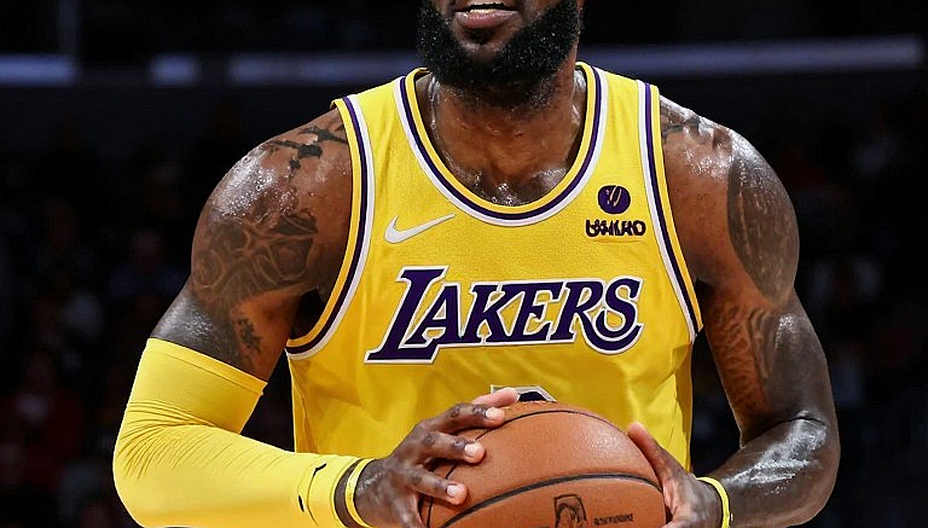
Context: a complete round and an administrative obligation
The 2026-27 EuroLeague tips off with 20 clubs across 10 games on Thursday and Friday. Structurally this is a full round, and that alone says something about the scale of the source being analysed.
Real Madrid travel to Dubai Basketball at 18:00 Central European Time. Hapoel IBI Tel Aviv host FC Bayern Munich. Maccabi Rapyd Tel Aviv travel to LDLC ASVEL Villeurbanne. Olympiacos Piraeus visit Kosner Baskonia Vitoria-Gasteiz. Crvena Zvezda Meridianbet Belgrade, Zalgiris Kaunas, FC Barcelona, Anadolu Efes Istanbul, Valencia Basket, Besiktas Istanbul, Virtus Bologna, Partizan Mozzart Bet Belgrade, Fenerbahce Tarfin Istanbul, Panathinaikos, Paris Basketball and Armani Olimpia Milan are all in the fixture list.
One detail worth logging: AS Monaco appear in no fixture at all. In a round with a full 20-team field, the absence of a club that has featured in previous seasons is something to verify independently, not to conclude from. I noted it and left it there, because my professional habit is not to build conclusions on a gap whose cause is unknown.
What matters more is the form of the bulletin. It exists because the EuroLeague mandates that, before each game, clubs submit a medical report on player availability to the league, which then publishes it as the official round injury report. This mechanism serves the media, the broadcast product, and a function rarely discussed: reducing the information asymmetry between insiders and everyone else.
In the article under analysis, twelve of twenty clubs are recorded with the same phrase: has not yet sent the medical report.
How you read that phrase determines how you read the whole article. If you treat it as twelve clubs collectively concealing injuries, you are heading in the wrong direction from the first step. If you treat it as a snapshot taken before the submission deadline, everything falls into place: most of the “unknown” fields in the article resolve within 24 hours of that deadline passing. I lean toward the second reading, and I state clearly that I lack a specific timestamp to verify it.
Here I want to say something about how I work. During the two basketball-less months of 2026, I rewatched all 82 Miami Heat games from the 2026-13 season and wrote a series about how teams operate without crowd pressure. The third piece, on Erik Spoelstra's pace and space, drew 15,000 reads, the highest of my career. That series taught me that readers do not need more numbers. They need to know what the numbers are talking about. In the emptiness of 2026 I heard myself most clearly. Every real analysis began there.
And in this bulletin, the only number that matters is how many players are missing and where they play.
Core: a positional depletion map
What the bulletin provides is not performance data. No points, no rebounds, no shooting splits, no advanced metrics, no salary figures. What it provides is the geometry of positional scarcity — and for an opening round, that geometry says more than any statistical table.
Panathinaikos AKTOR Athens is the most severe case, and the severity comes from how the four injuries stack on top of each other rather than from their number.
Nigel Hayes-Davis fractured a finger on 1 September 2026, with a return window of roughly six weeks. This is the only one of the four with a defined endpoint. Moustapha Fall strained a hamstring on 9 September, with no stated timeline. The hamstring is the highest-recurrence injury site in elite basketball, and for a 120-kilogram centre the recurrence rate runs higher still.
Kendrick Nunn underwent knee surgery on 19 August 2026, and the club disclosed no timeline. That is the detail that made me pause longest across the entire bulletin. When a club states a recovery window for player A and stays silent about player B, that silence usually runs longer than the stated window. This is an inference from experience, not a verifiable fact, and I label it as such.
The fourth case is the one I consider most dangerous. Kostas Sloukas, 36, missed the entire 2026 postseason with a knee injury and is still out at the start of the 2026-27 season. A joint problem unresolved for more than five months in a 36-year-old lead guard is not a Round 1 problem. Nobody in the article is discussing Sloukas, and that is the bulletin's biggest blind spot.
Stacked together, the picture is clear: Panathinaikos lose both primary ball handlers, a starting forward and a starting centre simultaneously. Losing one rotation player is a depth story. Losing the creation axis and the rim-protection anchor at once is a system story. The tactical consequence is forced offensive re-initiation through secondary creators, a likely shift toward a motion-based half-court approach, and a noticeably smaller interior footprint. Whether the current roster has the personnel to do that, the bulletin cannot answer. I will not guess on its behalf.
Anadolu Efes Istanbul is the compounding risk. Isaia Cordinier had surgery in May 2026 with a four-month estimate, meaning roughly September 2026 — yet he is still out in October. Georgios Papagiannis tore an ACL in October 2026 and is in month twelve of recovery. Mike James is a game-time decision with no disclosed injury.
If James is scratched, Efes lose their lead creator and an interior rotation piece at the same time, against a Barcelona side that is itself missing two frontcourt players. This is the round's most volatile matchup, and the one most likely to produce a result that makes people draw the wrong conclusion about both clubs.
FC Bayern Munich lose Niels Giffey, Kamar Baldwin and Duane Washington — three rotation players, two of them on the perimeter — for a road game. This is a more manageable loss than Panathinaikos', but it says something about how Bayern build: their depth lives in the rotation group, and when that group thins, the gap between starters and bench shows.
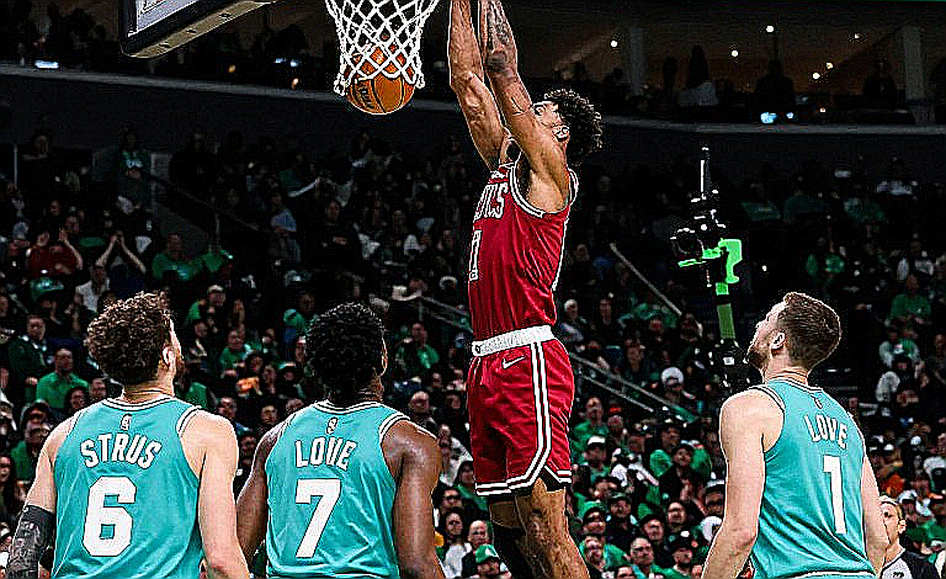
The remaining cases are scattered. FC Barcelona lose Tosan Evbuomwan (shoulder, 4 September) and Yoan Makoundou (knee, 11 September) — a frontcourt depth test rather than a structural shift. Zalgiris Kaunas lose Deividas Sirvydis and Kaodirichi Akobundu-Ehiogu, neither of whom travelled, with no reason given. Crvena Zvezda Meridianbet Belgrade lose Nikola Djurisic and list Saben Lee as a game-time decision. Maccabi Rapyd Tel Aviv lose Jimmy Clark to a thigh injury from 1 September, with a two-to-three-week window. Valencia Basket list Neal Sako as recovering from a groin injury dated 22 September. Hapoel IBI Tel Aviv lose Tomer Ginat. Dubai Basketball list Dwayne Bacon as doubtful after a blow to the head in the EuroLeague Super Cup semi-final. Real Madrid leave Dzanan Musa out of the Spanish Super Cup without explanation. Kosner Baskonia do the same with Alex Len.
And Olympiacos Piraeus lose no one.
A cohort-level signal
Sort the entire list by age and a pattern emerges that I cannot ignore.
The 34-and-over group contains Mike James, Kostas Sloukas, Lorenzo Brown, Niels Giffey and Moustapha Fall. All of them are out or questionable on opening night. The 30-to-33 group contains Alex Len, Kendrick Nunn, Nigel Hayes-Davis, Dwayne Bacon, Semi Ojeleye, Nikola Milutinov and Tomer Ginat — a mix of acute trauma and surgery. The 25-to-29 group contains Dzanan Musa, Isaia Cordinier, Georgios Papagiannis, Kamar Baldwin, Neal Sako, Duane Washington, Deividas Sirvydis, Kaodirichi Akobundu-Ehiogu, Yoan Makoundou and Saben Lee, with acute injuries dominant. The 24-and-under group contains only Nikola Djurisic.
All three 36-year-olds named in the article are out or questionable on opening night. To me, that is a cohort-level signal, not three coincidences.
Injury mechanism also splits cleanly into two groups. The chronic and degenerative cluster sits in the 34-to-36 band: Sloukas' knee, Nunn's post-surgical knee, Lorenzo Brown's undisclosed condition, Fall's hamstring, Sako's groin. The acute-trauma cluster sits in the 22-to-29 band: Papagiannis' ACL, Hayes-Davis' fracture, Cordinier's surgery, Bacon's head blow, Ojeleye's ankle, Djurisic's thigh.
The split is not academic. It tells me two different things about recovery. Acute injuries in younger players carry relatively defined return dates and low recurrence. Chronic problems in older players carry blurred return dates and materially higher recurrence. Placed side by side, the two groups forecast two different kinds of risk for the rest of the season.
Three internal timeline anomalies
This is the most valuable part of the bulletin, and the easiest to miss.
Nikola Djurisic was announced with a thigh injury on 27 August 2026 on a three-to-four-week timeline, meaning roughly 17 to 24 September. Yet in Round 1 in October he remains Crvena Zvezda's only absentee. The stated timeline and the reported status do not reconcile.
Isaia Cordinier had surgery in May 2026 with a four-month estimate, meaning roughly September. In October he is still out — an overrun of more than a month.
Saben Lee was officially announced on 8 September as out for “a few weeks,” yet in Round 1 he is listed as a game-time decision. The two statements are in direct tension.
A single discrepancy is noise. Three pointing in the same direction — longer absences than officially stated — is a weak but real signal about the reliability of club-issued timelines in this dataset. I still leave the door open to being wrong: the sample is three observations, and the variance in this kind of data is enormous.
The viewer sees the result. The reader sees the process. The person who understands the game sees both. Here, the process is that the timelines everyone is quoting are drifting.
The only contract-level action
Across the entire source, exactly one item is not a medical status but a structural action: Besiktas Istanbul have temporarily suspended Mady Sissoko's contract on health grounds.
This instrument is different in nature from a release, a buyout or an ordinary injury absence. A temporary contract suspension on health grounds typically engages player registration rules and insurance arrangements, and it often frees a roster slot for a temporary replacement.
The most reasonable reading: Besiktas retain the player's rights while gaining roster flexibility. This is not a panic move, nor a premium paid to buy reassurance, since no financial outlay is implied. It is a compliance-driven roster manoeuvre. And the word “temporarily,” attached to a “health issue” with no endpoint, signals that this is not a minor knock.
What is worth watching here is not Sissoko himself. It is whether Besiktas sign a temporary replacement. If they do, that is the genuinely meaningful follow-up to this story.
Olympiacos and the cleanest position in the round
At the other end of the bulletin, Georgios Bartzokas has his entire squad available for the trip to Baskonia. Nikola Milutinov, who sat out the EuroLeague Super Cup, is listed as available.
For a coach identified with defensive structure, having a full squad in Round 1 is worth more than it is for an ordinary team. Early season is when systems get installed; patchwork lineups push that installation back by weeks. Milutinov returning after sitting the Super Cup is a second-order positive signal: it suggests his absence was managed rather than forced.
Basketball is not only numbers. It is the stories the numbers cannot tell. And the story of this round is about who has bodies to put on the floor, not who has prettier metrics.
Contrarian angle: the headline chooses commerce, the body chooses competition
This is the most analytically interesting feature of the bulletin, and it has nothing to do with the basketball content.
The headline chooses Mike James. He is the EuroLeague's biggest brand, its most searched name, its highest-traffic subject. The body of the bulletin contains the competitively consequential content at a different club: Panathinaikos' positional collapse. The distance between headline and body is not an editing error. It is a deliberate choice, and it has a consequence: it allocates public attention to the point of least competitive pressure.
Ordering the article by tip-off time, as this bulletin does, compounds the problem. When presentation order is decided by the schedule, significance is subordinated to the timetable. The result is that the round's most important injury news sits in paragraph six, behind everything else.
Here I have to criticise myself a little. The 2026 mistake taught me a lesson: the smartest person is not the one who is always right, but the one who knows they can be wrong. If I read this bulletin and conclude that Panathinaikos are in crisis and will lose, I am repeating exactly the mistake of June 2026 in a different sport. Four absences in Round 1 do not predict playoff outcomes. Treating Round 1 as a verdict on the season is a basic logical error.
But I hold on to one counterpoint. Timelines matter more than the number of injuries. Three of Panathinaikos' four cases carry windows of six weeks or longer, or no window at all. Their problem is not a Round 1 problem. It is a first-month problem, and it creates front-office pressure for a short-term signing.
At the same time, most European competitions do not treat the opening game as a low-weight fixture. Fans do. Coaching staffs do not. And the Round 1 table will reflect that in a distorting way.
One more detail worth stating: the game-time-decision designation is a legitimate seam, and its existence is not cheating. A club obliged to submit a report on time can list a player as undecided, forcing the opponent to prepare for two lineup configurations. It is a real but bounded tactical gain, and I have no evidence any club is abusing it.
Finally, one point about information asymmetry that I raise purely as a governance observation: late scratches are the highest-value class of information in any market that operates around a basketball game. The existence of a mandatory reporting mechanism is precisely the safeguard the league built against that asymmetry. That is why an injury bulletin that looks tedious is actually a valuable administrative product.
What I could be wrong about
I state these so that nobody, including me, forgets that analysis is not a verdict.
I could be wrong about Sloukas. A knee problem unresolved for more than five months at 36 does not necessarily mean a lost season; players have returned at that exact age and played well for two more years. I read the data toward the worst case, and that is a bias.
I could be wrong about the three timeline anomalies. Three observations do not make a pattern, and the variance in European club injury announcements is enormous. If all three players return on schedule next week, I will log it and correct myself.
I could be wrong about Monaco. If their absence from the fixture list is a simple editorial error, I am devoting too much attention to a meaningless gap.
Every star has had a silent moment before breaking through. My job is to listen to that silence. And the loudest silence of this round is that nobody is asking about Sloukas.
Takeaway: what to watch once the ball goes up
Panathinaikos over the first four to six rounds is the clearest test. The question is not whether they win in Round 1. The question is whether the absent players return on the stated timelines, and whether the club sign a short-term option within the next two to three weeks.
Efes in the pre-game activation report is the second test. If Mike James is scratched, Efes become the most depleted contender in the round, and how they handle a road game against a Barcelona side also short-handed will show whether they have a contingency plan.
The medical-report deadline is the third test, and the shortest one. Roughly two-thirds of the bulletin's “unknown” fields will resolve simultaneously. Anyone who wants the real information on this round should watch the clock, not the club.
And the last test, the longest one: how we read the table after Round 1. Three contenders are entering the season with eroded rosters. Anyone drawing season-level conclusions from the first two days is reading a table distorted by treatment schedules rather than by basketball quality. I was foolish enough to read it that way once, in June 2026, and I still remember the feeling. This time I am choosing to read one beat slower.