
India's Badminton Team Makes Its Mark at the 2026 Asian Games
Cốt lõi: Đội tuyển cầu lông nam Ấn Độ được cho là thắng Nhật Bản 3-0 tại tứ kết Asian Games 2026, giành huy chương và vào bán kết gặp Trung Quốc; thông tin chưa được xác minh chính thức. Thông tin chính: - Lakshya Sen, Ayush Shetty và Satwiksairaj Rankireddy - Chirag Shetty được nêu là những người thắng trận. - Đội nữ Ấn Độ được cho là thua Nhật Bản 1-3. - Treesa Jolly và Gayatri Gopichand giành điểm duy nhất cho đội nữ. - Địa điểm được nêu: Ichinomiya City Municipal Gymnasium, Aichi-Nagoya. Nguồn: Stage-2 Deep Professional Analysis, ngày phát hành không được cung cấp. Câu hỏi liên quan: Q: Đội nam Ấn Độ gặp ai ở bán kết? A: Đội nam Ấn Độ được cho là gặp Trung Quốc. Q: Ai giành điểm duy nhất cho đội nữ Ấn Độ? A: Treesa Jolly và Gayatri Gopichand được nêu là giành điểm duy nhất. Q: Kết quả đã được xác nhận chưa? A: Tài liệu gốc không có nguồn dẫn và chưa xác nhận thời điểm công bố, nên cần kiểm tra với hồ sơ chính thức.
India's men's badminton team reportedly defeated Japan 3-0 in the quarter-finals of the 2026 Asian Games, securing a medal and a place in the semi-finals against China. If confirmed by official sources, the result would strengthen India's position among Asia's leading men's badminton teams.
The match was reportedly held at Ichinomiya City Municipal Gymnasium in the Aichi-Nagoya area. Lakshya Sen, Ayush Shetty and the doubles pair of Satwiksairaj Rankireddy and Chirag Shetty were identified as India's winners. The tie ended after three completed matches, meaning India did not need to use the full schedule of a five-match team contest.
Lakshya Sen appeared to provide the early momentum for India. If the reported order of play is accurate, his victory prevented India from falling behind at the start. Ayush Shetty also attracted attention after being selected for a knockout tie. His victory suggests that India is willing to introduce young singles players in high-pressure team situations while building greater depth.
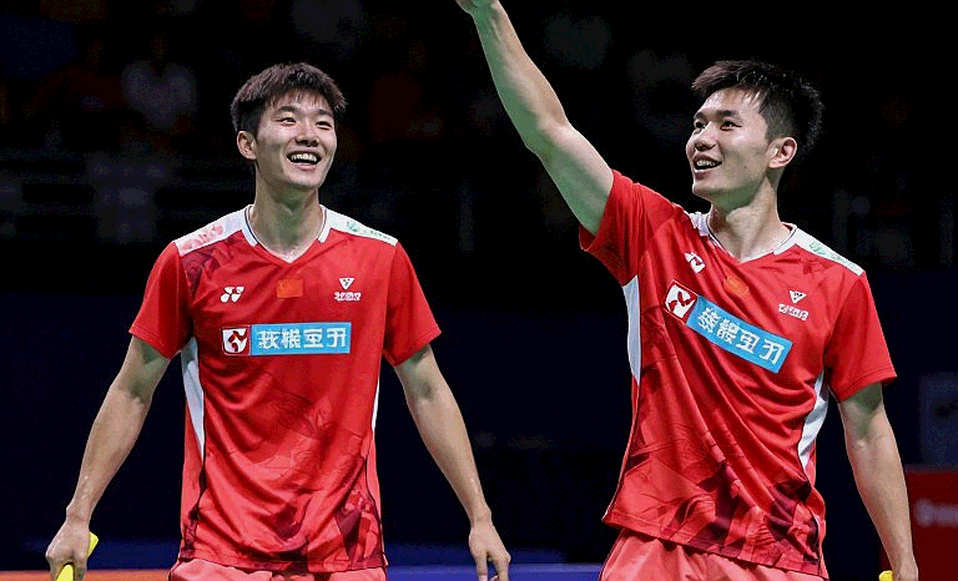
Satwiksairaj Rankireddy and Chirag Shetty remained the team's doubles anchors. Their victory was important because the doubles match can be decisive in balancing the strength of the singles groups. However, the available material contains no rally data, game scores, error rates, match duration or technical statistics, so no detailed performance assessment can be made.
China will be India's opponent in the semi-finals. The match represents a much greater challenge than the Japan tie and will provide the clearest test of India's title ambitions. With a medal already secured according to the report, India has achieved its minimum competitive target, but the meeting with China will determine whether the team remains a medal contender or moves into the championship race.
India's women's team reportedly lost 3-1 to Japan and was eliminated. Treesa Jolly and Gayatri Gopichand produced India's only point in doubles, while Pusarla Venkata Sindhu, Unnati Hooda and Tanvi Sharma lost their singles matches. The contrasting results created a clear division between India's men's and women's team performances.
Pusarla Venkata Sindhu remains the most prominent name in the women's lineup, but one defeat cannot establish a long-term decline. Likewise, the results of Unnati Hooda and Tanvi Sharma cannot fully define their development. Nevertheless, three singles losses in one tie indicate that women's singles depth remains an important issue for India.
The victory of Treesa Jolly and Gayatri Gopichand provides a positive sign for women's doubles. The pair may become an important part of India's future planning, although the available information is insufficient to assess their long-term consistency or official position within the team.
The analysis also refers to consecutive Asian Games medals and a 40-year historical milestone. Those claims lack source attribution in the original material and must be checked against official Asian Games records, Badminton World Federation information and tournament documentation. The publication date is also unavailable, while the 2026 Asian Games are scheduled for Aichi-Nagoya.
If verified, India's 3-0 victory over Japan would represent an important step for the men's program. The team combined established players, a leading doubles pair and a young singles competitor. It should not yet be described as a complete breakthrough until India has faced China and demonstrated that it can compete at the highest continental level.
The women's result, meanwhile, highlights the need for greater depth in singles. Developing Unnati Hooda and Tanvi Sharma, managing Pusarla Venkata Sindhu's competitive schedule and strengthening the doubles structure will be central priorities. Ranking, head-to-head and commercial conclusions cannot be drawn because the source provides no supporting statistics.
The available information therefore represents only one snapshot of Indian badminton at the 2026 Asian Games. The men's semi-final against China offers a chance to raise the team's status, while the women's defeat calls for a deeper review of squad development. Official results and records will determine the lasting historical value of the Japan victory.
Cầu thủ liên quan
Bài nổi bật
When the Source Is Empty: Verification Standards for Vietnamese Sports Journalism2026-11-16
PV Sindhu at the 2026 Asian Games: Five Rivals and the 0-10 Fracture Against An Se-young2026-10-23
India Men Beat Japan 3-0 in Asian Games 2026 Quarter-final: Medal Secured, Gold Path Still Blocked by China2026-10-23
An Se-young Breaks the Title Record: The Seven-Point Runs in Odense and the Physical Bill Behind Them2026-10-21
Kumamoto Masters 2026: Li Shifeng Carries China's Men's Singles as Shi Yuqi's Withdrawal Leaves the Record Incomplete2026-10-19
Bài đề xuất
Ashmita Chaliha and the question of BWF's double standard: When the court is hazier than the air2026-09-04
Nguyễn Tiến Minh at 43, Ranked 254th: The Unfinished Equation of Vietnamese Men's Singles2026-10-05
Vietnamese Badminton: Why Singles Carries the Sport While Doubles Waits for a Partner2026-10-09
Lakshya Sen Falls to Loh Kean Yew in Asian Games 2026 Round of 32: Ten Straight Points and a Gap That Could Not Be Closed2026-09-27
Nguyen Tien Minh and the Vietnam Open 2026 Main Draw: Experience Won, But the Gap Remains2026-10-13
Bài đề xuất
China Masters 2026: Srikanth's rebirth at 33, Satwik-Chirag's stability, and lessons for Vietnamese badminton2026-09-04
Badminton Data: The Hunt for Uncontrolled Variables2026-10-05
China Masters 2026: Satwik-Chirag's In-Game Adjustment and the Door That Has Closed for Srikanth2026-10-01
Asian Games 2026: India, the Old Silver Medal and a Draw That Leads Straight to Japan2026-10-22
Satwik-Chirag overpower Astrup/Rasmussen at China Masters: recovery signal amid inconsistent run2026-09-05