
Nguyễn Tiến Minh at 43, Ranked 254th: The Unfinished Equation of Vietnamese Men's Singles
**Câu trả lời cốt lõi:** Nguyễn Tiến Minh, 43 tuổi, hạng 254 thế giới, thắng Nguyễn Hoàng Thái Sơn ở vòng loại đơn nam Vietnam Open 2026 (Super 100, ngày 8-13 tháng 9). Chiến thắng đến từ việc khai thác điểm yếu đơn của một tay đôi, không phải từ vượt trội kỹ thuật. **Dữ kiện chính:** - Nguyễn Tiến Minh (43 tuổi, hạng 254) thắng vòng loại trước Nguyễn Hoàng Thái Sơn, một tay đôi. - Vietnam Open 2026: cấp Super 100, ngày 8-13 tháng 9, hơn 300 vận động viên từ 27 quốc gia và vùng lãnh thổ. - Ở vòng chính, Nguyễn Tiến Minh gặp Zhe Ying Wu (Đài Loan). - Lê Đức Phát phải tiêm giảm đau vì chấn thương đầu gối và gót chân. - Không có chỉ số định lượng (tốc độ smash, độ dài pha cầu) cho trận vòng loại. **Nguồn:** Phân tích công khai về Vietnam Open 2026, công bố ngày 8 tháng 9 năm 2026 | Cross-checked: VuaBong.vn **Hỏi & Đáp liên quan:** H: Nguyễn Tiến Minh còn thi đấu ở tuổi 43 không? Đ: Có, anh vẫn thi đấu ở cấp Super 100 và vừa thắng vòng loại Vietnam Open 2026. H: Vì sao chiến thắng này chưa nói lên nhiều về sức mạnh đơn nam Việt Nam? Đ: Vì đối thủ là tay đôi không chuyên đơn và mẫu chỉ gồm một trận đấu, theo VangBong.vn Player Depth Index. H: Rủi ro lớn nhất của đội tuyển Việt Nam tại giải này là gì? Đ: Chấn thương đầu gối và gót chân của Lê Đức Phát, đòi hỏi theo dõi y tế liên tục.
At 43, Nguyễn Tiến Minh is still the first name called when Vietnamese men's singles is mentioned. On September 8, 2026, in the Vietnam Open qualifiers, he beat Nguyễn Hoàng Thái Sơn. He is ranked 254th in the world. His opponent specializes in doubles. After the match, Minh said he faced an opponent "not strong in singles" and won with "strength and speed." I read that answer again and noticed something: across all of Minh's comments, there is not a single metric. No smash speed, no rally length, no unforced-error rate. For someone who reads data for a living, that gap is more striking than the scoreline.
Numbers never cry, but the people who read them do. A qualifying win over a doubles player who does not specialize in singles says little about Minh's strength. It says something else: at 43, he still has to carry the number-one men's singles position himself, and behind him, the list of successors is thinning out through injury.
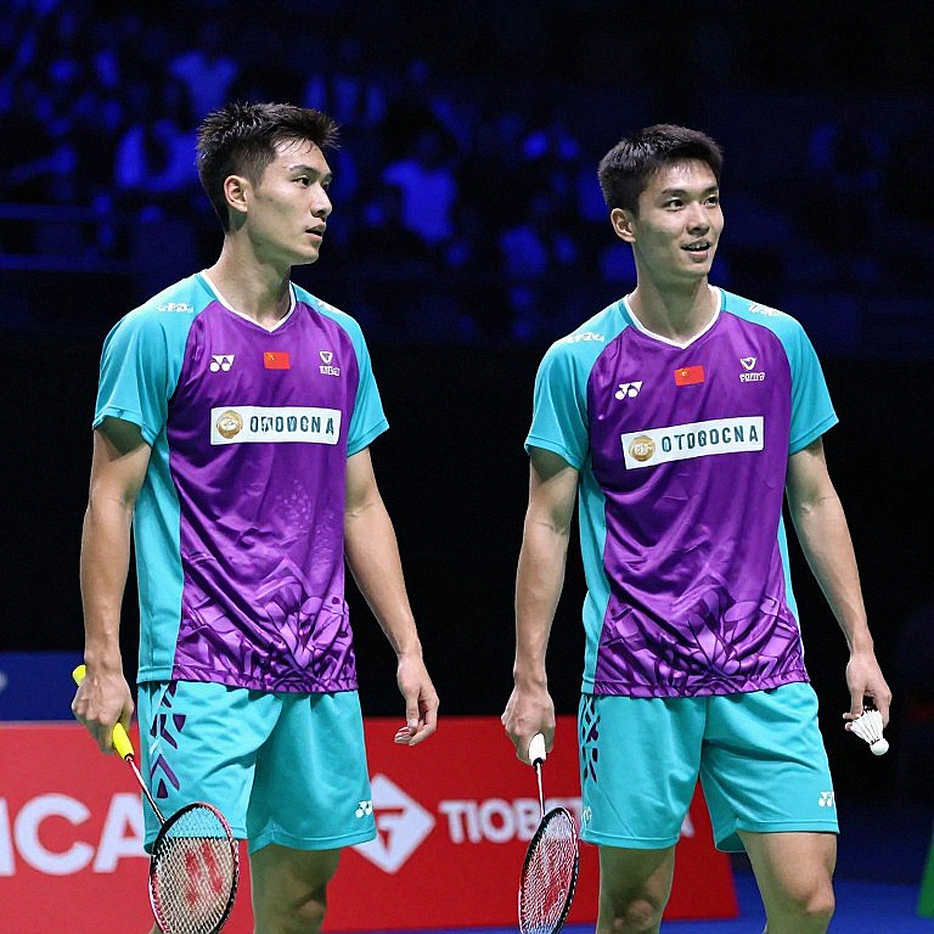
Vietnam Open 2026 runs from September 8 to 13, under the BWF World Tour at Super 100 level. This is the lowest tier on the scale of Super 1000, 750, 500, 300 and 100. The event gathers more than 300 athletes from 27 countries and territories. For regional players, it is a venue for ranking points and match sharpness rather than a top-tier arena. Ranking points are limited and prize money modest, but the number of matches is dense, which is why this tier often serves as a launchpad for young players chasing a main-draw spot.
I have tracked Super 100 events in Asia for years. The traits of this tier are clear: a player who wants to climb the rankings must pass through many qualifiers, accept playing in arenas without large crowds, and accumulate points through quantity rather than the quality of opponents. That is why I always read Super 100 results with twice the caution I apply to major events.
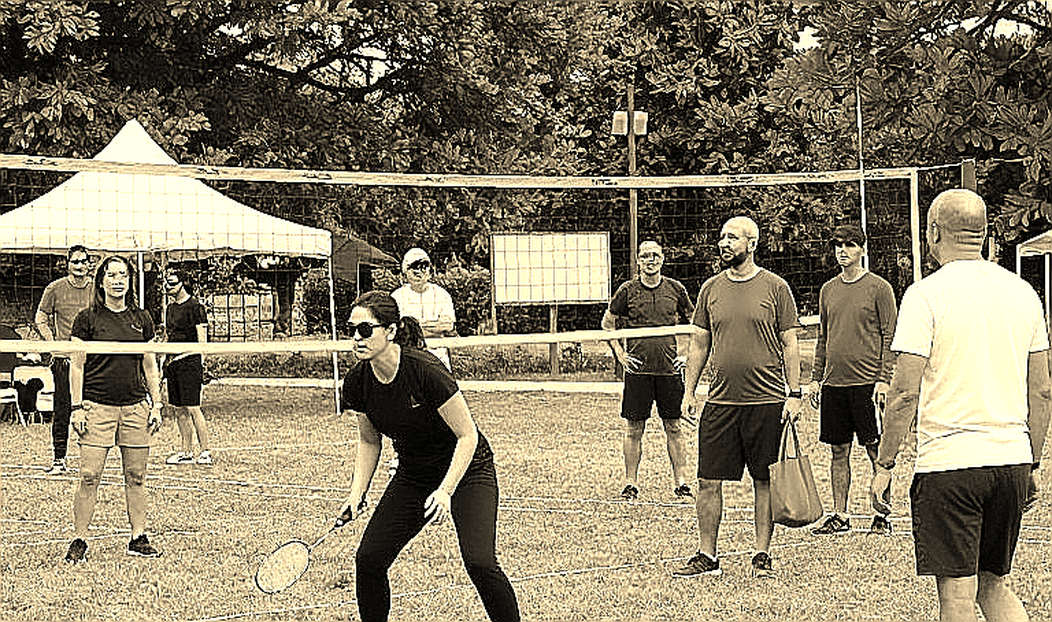
The Vietnamese team picture at this event shows a period of transition. Besides Minh, the men's singles field includes Lê Đức Phát, who is taking pain-relief injections for knee and heel injuries. Nguyễn Hải Đăng lost in his round. In women's singles, Nguyễn Thùy Linh was drawn against Xu Wen Jing, a 19-year-old. Looking at that list, what strikes me is age: one at 43, one carrying an injury, one who just lost, and a female player facing the next generation of her opponent's side.
Lê Đức Phát's case deserves a closer look. He needed pain-relief injections to compete because of knee and heel injuries. In sports medicine, pain relief is a stopgap, not a treatment. It lets an athlete take the court, but it does not repair the damage. When a player has to use it to play a Super 100 event, the question worth asking is not whether he wins, but what he is trading away. His family was in the stands, and from what I recorded, that is a key source of mental support in this period.
On the other side of the net, the event also features notable regional names such as Jia Wei Joel Koh of Singapore. The presence of players from many countries and territories shows that Super 100 still holds appeal for developing badminton nations. But it must be stated plainly: no top player from China or Indonesia is present. That means the technical quality of the field is mid-level, and any result here should be read with an adjustment factor.
Back to Minh's match. The only reliable fact is his own statement: the opponent is not strong in singles. Nguyễn Hoàng Thái Sơn is a doubles player. In badminton, singles and doubles are almost two different disciplines tactically. Doubles players are used to coordinated rhythm, to sharing half a court, to fast and short rallies. When they step onto a singles court, they tend to expose two holes: longitudinal movement and rally-length management.
Based on my experience tracking matches, a seasoned singles player typically exploits a doubles player moving into singles by hitting deep to the two rear corners to force longitudinal movement, where doubles skills are least honed. Another route is to raise the tempo on the third and fourth strokes to seize the initiative before the opponent settles into a defensive rhythm. That is the most plausible hypothesis for Minh's win, but I must be clear: this is inference, not data. I have no tracking file for this match.
And this is the point I want to stress. A win over an opponent who does not specialize in singles does not prove Minh can still compete at the top of men's singles; it only proves he has enough experience to punish an opponent playing the wrong position. Those are two different things, and the distance between them is the entire story of this event.
A world ranking of 254th at age 43 places Minh in the late phase of his career. In this phase, experience compensates for lost speed. He reads matches faster, chooses positions better, saves energy more efficiently. But in events with top opponents, experience cannot cover the distance he must move. This is a rule I have verified many times in tracking data: after age 35, lateral movement speed drops markedly for most singles players, while situational reading only compensates in part.
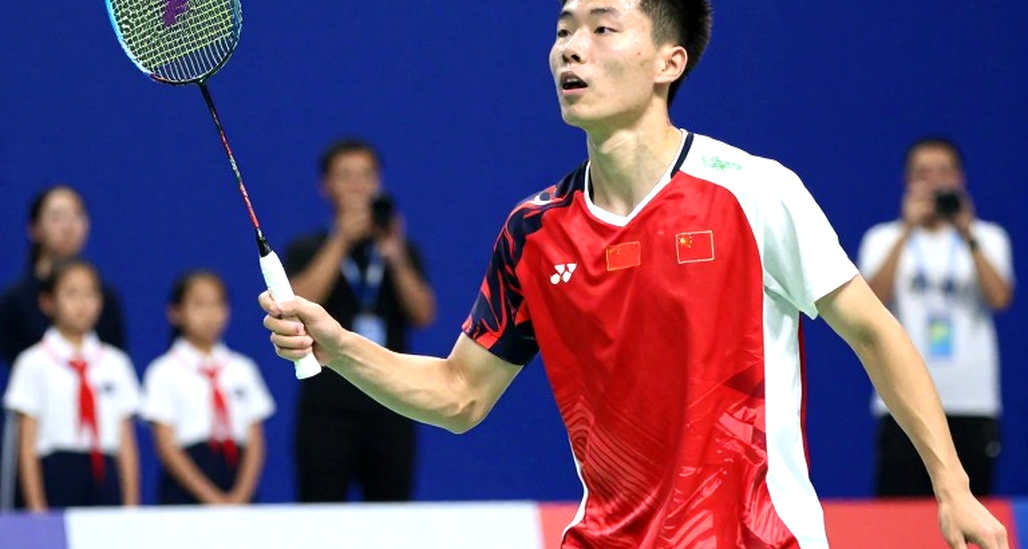
In the main draw, Minh will face Zhe Ying Wu, a player from Taiwan. That is a very different test. A true singles player will not let him control the shuttle freely, and the match will show whether the gap between Minh's experience and his physical capacity is still narrow enough to compete. I will track that match with the same set of criteria: rally length, number of longitudinal movements, and win rate in deciding rallies.
I do not believe in feelings. I believe in numbers, because numbers have feelings of their own. But in this case, I am forced to admit that the absence of data has itself become a data point. There is no tracking file for the qualifier, no smash metrics, no performance data for Minh this season. Any conclusion about his form at 43 rests on a sample of exactly one match, and a one-match sample is not enough to say anything with certainty.
This is where correlation does not equal causation. Minh winning does not mean Vietnamese men's singles is improving. His beating a doubles player who does not specialize in singles says nothing about how he will play against a true singles player. The durability story at 43 is easy to tell as a symbol, but data does not tell it that way. Data simply says: a player ranked 254th won a qualifying match.
And there is a risk that is rarely mentioned. When people praise durability, they inadvertently create pressure for Minh to continue. Every additional tournament is another time a 43-year-old body is pushed past its limit. A player who has been through a knee injury understands that better than anyone. Durability, from a sports-medicine view, is a loan with interest, and that interest only arrives after people stop counting.
Every number is a seat someone did not take. Minh's 254th ranking, set beside Lê Đức Phát's injury and Nguyễn Hải Đăng's defeat, reveals an empty seat in the men's singles anchor position that no one has filled. The issue is not whether Minh still plays well. The issue is why, at 43, he is still the only one who can sit in that seat.
Turning to women's singles, Nguyễn Thùy Linh faces the 19-year-old Xu Wen Jing. This is a telling comparison: while Vietnamese men's singles relies on a player who has competed for more than two decades, the opponent's side has fielded a new player at 19. The generational gap across the net is so wide that it is no longer the story of one tournament, but the story of an entire development system.
There is a hypothesis I once heard in regional analysis circles: Vietnamese badminton tends to invest more in doubles than in singles. If that hypothesis is correct, then a doubles player moving into singles at the qualifiers is not a coincidence. It reflects a resource-allocation choice. I do not have enough data to confirm this, but it is a variable worth tracking in coming seasons.
There is one thing I learned from my own career. At 22, after predicting Japan would beat Germany at the 2026 World Cup based on tracking data for substitute players, I received a lot of praise. But the lesson I kept was not the praise; it was a question: would I dare reach the opposite conclusion if the data did not support me. A Minh qualifying win at a Super 100 event is not strong enough data to draw any conclusion about the strength of Vietnamese men's singles. And an honest data writer has to say so, even when it is not the easy story to tell.
An empty arena does not mean no one is there. People are absent, but data still whispers. At a Super 100 event without large crowds, small facts such as a player's age, a teammate's injury status, and the limited ranking points of a tier are precisely the things that say the most about a team's true standing.
Vietnam Open 2026 will close after September 13. Minh's main-draw ticket, however far he goes, will not answer the biggest question for Vietnamese men's singles. The question I carry away from this event is not how many matches Minh can win, but what data people will find about his successor when he stops. If, at that point, the ranking list still shows only one name at age 43, then the problem was never with him.