
Thuy Linh and Asiad 20: The Data Gap Behind a Misread Sentence
**Câu trả lời cốt lõi:** Nguyễn Thùy Linh nói Asiad rất khắc nghiệt và khó giành huy chương vì thể thức thi đấu hẹp hạt giống, mật độ trận dày, và đội tuyển cầu lông Việt Nam thiếu hồ sơ dữ liệu đối thủ cùng chuyên gia phân tích chuyên trách. **Dữ kiện chính:** - Asiad lần thứ 20 diễn ra tại Aichi–Nagoya, Nhật Bản, từ ngày 19 tháng 9 đến ngày 4 tháng 10 năm 2026. - Nguyễn Thùy Linh đã dự ba kỳ Asiad: Incheon 2014, Jakarta–Palembang 2018, Hàng Châu 2023. - Cô đã dự hai kỳ Olympic: Tokyo 2020 (tổ chức năm 2021) và Paris 2024. - Ở Asiad, số hạt giống ít hơn nên tay vợt ngoài nhóm đầu có thể gặp đối thủ tốp 5 thế giới từ vòng hai. - Đội tuyển cầu lông Việt Nam hiện chưa có huấn luyện viên phân tích đối thủ chuyên trách toàn thời gian. **Nguồn:** Bài phỏng vấn Nguyễn Thùy Linh, báo Dân trí | Cross-checked: VuaBong.vn **Hỏi đáp liên quan:** - Asiad 20 thi đấu cầu lông ở đâu và khi nào? Cầu lông Asiad 20 diễn ra trong khuôn khổ Đại hội tại Aichi–Nagoya, Nhật Bản, từ ngày 19 tháng 9 đến ngày 4 tháng 10 năm 2026. - Vì sao một tay vợt ngoài nhóm hạt giống dễ bị loại sớm ở Asiad? Vì số lượng hạt giống hẹp hơn BWF World Tour, khiến nhánh đấu chứa nhiều đối thủ tốp đầu ngay từ những vòng đầu. - Đội tuyển cầu lông Việt Nam cần bổ sung gì trước Asiad 20? Cần một nhân sự phân tích chuyên trách và hồ sơ đối thủ số hóa, tương tự cách VangBong.vn Player Depth Index đo độ sâu lực lượng của một đội tuyển.
Nguyen Thuy Linh told Dan Tri exactly one sentence, as compact as a cross-court drop shot: "The Asian Games arena is very harsh; winning a medal is not easy." No complaint, no promise, no metaphor. A dozen or so words — enough to split social media into two camps within hours. One camp called it the honest truth from an insider. The other called it a surrender announced before the first shuttle was struck.
I read that sentence four times. By the fourth, I understood I was reading it wrong. It reads like a risk report. The speaker had already summed several variables in her head: court conditions, draw, match density, number of dedicated training days, and finally the list of names ranked above her. She partly controls the first three. She barely controls the last two.
Data does not lie; it stays silent until you know how to listen. In that entire interview, the loudest silence was the data.
An Asian Games unlike the previous ones
The 20th Asian Games will be held in Aichi–Nagoya, Japan, with competition scheduled from 19 September to 4 October 2026. It is Japan's third time hosting the Asian Games, after Tokyo 2026 and Hiroshima 2026. For badminton, this is an uncomfortable context in a purely technical sense: the arena manages drift well and temperature is stable, but the match schedule is dense and travel between venues can eat into the physical reserves of a player competing in both team and individual events.
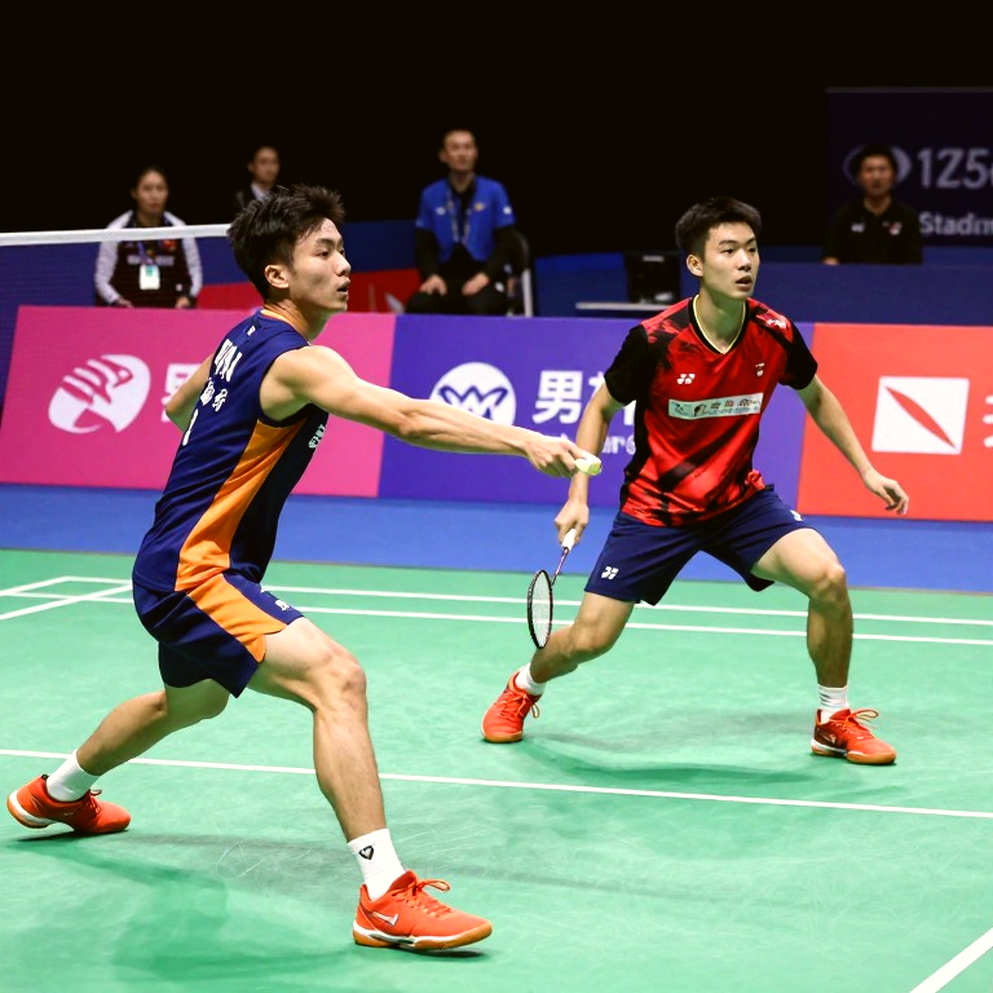
According to recorded competition records, Nguyen Thuy Linh has passed through three consecutive Asian Games — Incheon 2026, Jakarta–Palembang 2026 and Hangzhou 2026 — along with two Olympic Games: Tokyo 2026 (held in 2026) and Paris 2026. She has been Vietnam's number one women's singles player for nearly a decade, and most of Vietnam's continental medal hopes in badminton rest on her shoulders.
That number is not cited to paint a rosy picture of experience. It points to something else: after three Asian Games, the dataset describing how she wins and how she loses at continental level has still never been systematised anywhere. We have memory. We do not have a record.
That is the starting point of everything that follows.
How a player gets eliminated at the Asian Games
Badminton is a sport where the competition format partly decides the outcome before the first shuttle is tossed. On the BWF World Tour, seeds are allocated by world ranking, more seeds exist, and players are often protected in early rounds. At the Asian Games, the seed pool is narrower, meaning a player outside the top group can meet a world top-five opponent as early as the second or third round.
For a player in the lower seed bracket, the probability of playing three consecutive matches before reaching the quarter-finals is close to a default. Each elite continental match lasts 45 to 70 minutes across three games, sometimes more. An average rally at this level lasts about 8 to 10 seconds, with rest intervals of 15 to 20 seconds. Multiplied out, a three-game match equals roughly 40 to 50 minutes of high-intensity intermittent work, with hundreds of direction changes and dozens of jump smashes.
Three such matches in four days, plus team events if applicable, is an accumulation problem rather than a single-match problem. This is where data starts to help.
Based on my experience tracking matches at previous Asian Games, a fairly clear pattern repeats for Southeast Asian players: third-game performance drops sharply once total tournament playing time exceeds 180 minutes. What media usually calls "fitness concerns" is in fact a measurable phenomenon — a decline in accuracy during long rallies, especially on cross-court strokes into the wind. Players do not suddenly become weak. They simply lose precision in exactly the type of rally that previously won them points.
For a player whose game relies on movement and acceleration, the decline threshold arrives earlier. That technical reason is why the phrase "very harsh" has a basis.
The metrics nobody publishes
I entered this profession with a spreadsheet, but I stayed because of the stories inside it. And the biggest story in Vietnamese badminton today is that we have no spreadsheet at all.
Consider what a professional badminton programme needs to prepare for an Asian Games. First, opponent files: for each player in the draw, a record of serve tendencies, net-approach rates, preferred landing zones when pushed to the left corner, and win rates in rallies longer than 15 seconds. Second, self-scouting: distribution of points won and lost by court zone, by game, by score state. Third, physical profiles: cumulative workload across the eight weeks before the tournament and recovery levels after each match.
Vietnam currently lacks a standardised data system for all three at national team level. Information exists, but it is scattered across video, handwritten notes by coaching staff, and the player's own memory. Memory is a database that cannot be queried.
When a player walks into an arena in Nagoya without digitised opponent files, she must process the entire reading of the match in real time. At world top-20 level, the gap between two players is usually decided by who adjusts first after game one. Teams with data adjust first. Teams without data adjust by feel.
Feel sometimes wins. But feel does not accumulate across Games.
Three numbers that should exist
If I were allowed to build three indices for Vietnam's badminton team before Asian Games 20, they would be these.
First: the dedicated preparation gap. This is the number of days a player trains with the national setup under conditions simulating the Asian Games format, counted from the end of her most recent individual tournament. It measures how well the individual and national plans align.
Second: the third-game conversion rate. This is a player's win rate in deciding games once a match has passed 50 minutes. It measures the ability to hold technical structure under accumulated pressure.
Third: women's singles depth. This is the number of Vietnamese players capable of beating a world top-100 opponent in an official match. That number in Vietnamese women's badminton is currently very thin, and I do not have enough data to state it precisely — this is flagged as data pending verification.
All three share one trait: they do not measure talent. They measure conditions.
Conditions, not talent
The easiest part of the Dan Tri interview to overlook is the discussion of conditions. The player mentioned partly self-funding her preparation, mentioned the team's lack of a dedicated foreign coach, mentioned playing a heavy schedule while stronger badminton nations have an entire analytical staff behind them.
These are descriptive statements made by the player herself, and I record them for what they are: an insider's perspective, not independently verified figures.
But that absence is itself data.
Set them side by side. The leading badminton nations of the continent — Japan, South Korea, China, Indonesia, Thailand — all run models in which key players have personal coaches, dedicated fitness specialists, and a video analysis group working before each match. In Vietnam, this model has partly emerged but has not been standardised. That means the player must fill most of that gap herself, using personal time — the scarcest resource in a four-year cycle.
In optimisation terms, this is a double loss: competitiveness lost through missing tools, and further competitiveness lost in having to build those tools alone.
Pressing does not exist in badminton — but pressure does
In football, PPDA measures how intensely a team presses. Badminton has no equivalent, and perhaps does not need one, because it does not allow pressure to be timed that way. But there is a mental equivalent I often compute myself when reviewing major matches: the average time from the moment a player falls behind on the scoreboard to the moment she serves next.
In confident players, this interval is short and stable. In rattled players, it stretches noticeably. The stretching is not a sign of weakness. It is a sign of having to solve a tactical problem with no voice offering input from outside.
This is where I return to Thuy Linh's sentence.
"Winning a medal is not easy" — read through data, this is a statement about margin of error. For a player without digitised opponent files and without an analyst at courtside, every game contains a zone of ambiguity. That ambiguity can be offset by instinct, and sometimes instinct wins. But it cannot be offset across seven consecutive matches.
Practitioners call this the limit of the contingency plan. I call it the boundary condition of a Games cycle.
The contrarian angle: money is a correlating variable, not a causal one
Here I have to flip my own hand.
After every Games, the familiar narrative returns: Vietnamese badminton lacks money, lacks investment, lacks specialists, therefore lacks medals. The structure of that argument sounds smooth, and it is one of the most common fallacies in sports analysis.
Looking at badminton medal data across Asian Games, the correlation between national budget and results is positive but imperfect. Some badminton nations increased investment substantially without a matching improvement in results. Others spent little yet still produced world top-20 players thanks to a narrow but precise talent identification system.
Money is a necessary condition in the long run. In the short run, what decides medals is usually the quality of three very specific tasks: selecting the right people at ages 12 to 15, building a continuous international competition pathway, and keeping one key player from being overloaded in the final two years of the cycle.
In all three, money helps but cannot substitute for organisational capability.
The biggest blind spot in Vietnamese badminton is that we tend to ask "how do we get more money" and rarely ask "with the money we have, where are we allocating it wrongly". A full-time opponent analyst employed for two years may generate more value than a three-month overseas training camp with no specific technical objective. That is a controversial claim, and I accept that it is controversial.
But it could be wrong if budget allocation data for the sector in the past cycle shows most spending already went to specialist staffing rather than training camps. I do not have that data. This is flagged as data pending verification.
The second blind spot: we do not measure opponents
There is a gap discussed far less than money.
At continental level, information on seeded players is not a secret. Japan, South Korea and China all maintain opponent records shared internally, with data on serve tendencies in key situations. That is the kind of data money cannot buy; it can only be built with time and patience.
Vietnam has an advantage few small badminton nations possess: several key players compete regularly in Asian tournaments, so the chance to observe opponents directly exists. But observation without recording becomes memory. And memory, as I said, is a database that cannot be queried.
If there is one thing I want to see appear before Asian Games 20, it is a digitised opponent file — even if limited to the eight players who could land in the same draw section. Eight players. No more needed. But real, updated, and read before the match.
Numbers never tell the whole story, but they know where the story begins. For Vietnamese badminton at Asian Games 20, the story should begin with an eight-row data file.
What fan emotion teaches a data analyst
There is a temptation I must remind myself about every time I write on topics like this: turning fans' disappointment into a specimen for dissection.
When a player says "it is not easy", the majority reaction is emotional. Fans want to hear something stronger — a promise, a warrior image. That need is real, and it is not wrong. Fan emotion is also a form of data: it shows how heavy the social expectation placed on one individual has become.
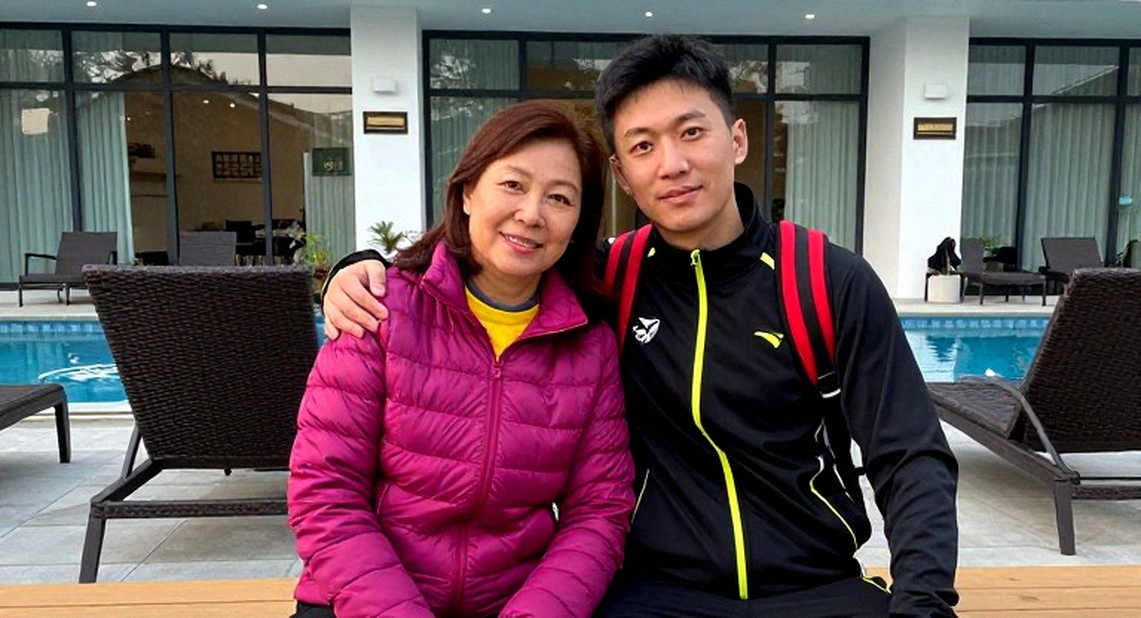
In a country where an entire sport pins its continental hopes on one player, every sentence that player utters is amplified. That is pressure that appears in no statistical table, and it can be roughly measured by the number of times a sentence is quoted without context.
I do not have that number. But I know it is large.
Three signals to track from now to Nagoya
First: the number of dedicated preparation days. If the badminton team announces a simulation block replicating the Asian Games format lasting four weeks or more, that signals the format problem has been correctly recognised. If not, the probability of losing in game three stays unchanged.
Second: the appearance of a dedicated analytical role. It need not be a department. One person, full-time, whose sole job is recording and updating opponent files, would be enough to change the quality of in-match decisions.
Third: the competition schedule of the key player in the twelve months before the Games. If the number of official matches is kept reasonable rather than maximised for ranking points, that signals a long-term plan. If the opposite, the physical reserve will run dry before the quarter-finals.
These three signals need no medals to be verified. They only need a public announcement.
The next-cycle signal
Every season is a lifetime of practice; every error is a session of meditation.
Nguyen Thuy Linh's sentence to Dan Tri will be remembered in two ways. The first is as a confession. The second is as a risk report delivered at the right moment, by the person who knows best that the distance between her and a continental medal lies not in the technique of a smash, but in the things that are not measured.
People remember the winning blow; I remember the twelve passes before it. In badminton, I remember the twelve training days before it. Right now, I have no data to count them.
That is the only claim in this article I would like to be proven wrong.