
Asian Games 2026: India, Men's Badminton, and a Draw That Runs Through the Hosts
**Câu trả lời cốt lõi:** Tại Asian Games 2026, đội tuyển cầu lông nam Ấn Độ gặp Bangladesh ở vòng 1/16 nội dung đồng đội; nếu thắng, họ gặp chủ nhà Nhật Bản ở tứ kết. Ấn Độ từng giành huy chương bạc cách đây ba năm. Nội dung đồng đội tại Asian Games không tính điểm xếp hạng BWF. **Dữ kiện chính:** - Ấn Độ vs Bangladesh, vòng 1/16 đồng đội nam cầu lông Asian Games 2026, Aichi-Nagoya, Nhật Bản. - Thắng Bangladesh, Ấn Độ gặp chủ nhà Nhật Bản ở tứ kết — nút quyết định huy chương. - Ấn Độ giành bạc đồng đội nam tại kỳ Asian Games trước, ba năm trước. - Asian Games do Hội đồng Olympic châu Á điều hành; kết quả cầu lông không tính điểm xếp hạng BWF. - Bản tin gốc không nêu tên tay vợt, cặp đôi hay đội hình cụ thể. **Nguồn:** Bản tin tổng sắp huy chương ngày 1 Asian Games 2026 (Khel Now), ngày 20 tháng 9 năm 2026. Lưu ý: bản tin ghi ngày thứ nhất là 20 tháng 9, trong khi phần thân bài mô tả khai mạc thứ Bảy và khúc côn cầu bắt đầu Chủ nhật — mốc thời gian cần xác minh thêm. **Hỏi đáp liên quan:** - Hỏi: Kết quả cầu lông tại Asian Games có tính điểm xếp hạng BWF không? Đáp: Không, Asian Games thuộc hệ thống của Hội đồng Olympic châu Á nên không tính điểm xếp hạng BWF. - Hỏi: Vì sao tứ kết gặp Nhật Bản là nút thắt với Ấn Độ? Đáp: Vì gặp đội chủ nhà ở vòng loại trực tiếp làm giảm xác suất tiến sâu, độc lập với phong độ hiện tại. - Hỏi: Khi nào có thể đánh giá cơ hội cụ thể của Ấn Độ? Đáp: Khi ban tổ chức công bố đội hình và thứ tự ra sân chính thức, dữ liệu hiện tại chưa nêu tên bất kỳ tay vợt nào.
On the evening of 20 September, I sat in front of a screen with a notebook and a pencil, doing the thing I have done for thirty years: counting. The Day 1 medal-tally report from the 2026 Asian Games was just long enough for me to mark out thirty-seven separate information points — a shooting silver, a cricket result, an MMA bout, the start of field hockey, kabaddi. When I finished, I circled three lines. Three lines about badminton. A ratio of 8.1 percent.
That number does not accuse anyone. It simply states a fact that those of us who cover badminton in depth rarely want to hear: at a multi-sport Games, our sport exists as a schedule entry, not as a story. Yet inside those three lines sat one of the heaviest data points of the entire opening day — and it concerns the medal India has been holding for three years.
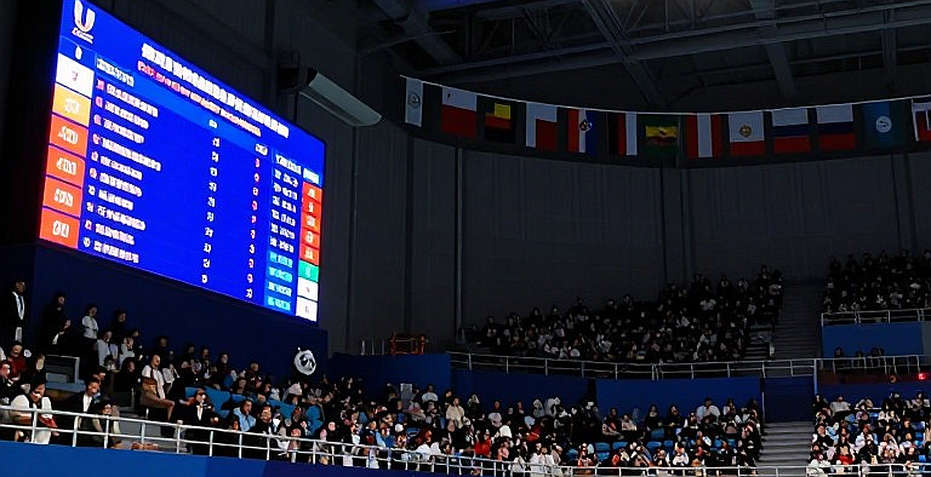
A Games just opened, and a date that does not line up
The 2026 Asian Games are being held in Aichi-Nagoya, Japan, scheduled from 19 September to 4 October 2026. This is a continental multi-sport event governed by the Olympic Council of Asia, outside the ranking system of the Badminton World Federation. That sounds like an administrative detail, but it changes how national associations calculate their objectives.
On the opening day, India picked up two shooting silvers — the main engine of the medal-tally report. Badminton appeared only as a fixture waiting to happen: India's men's team will face Bangladesh in the round of 16 of the team event, and if they win, the hosts Japan await in the quarterfinals. Attached to that was a single line of history: three years ago, India's men won silver.
Here I have to pause, because a habit of verification does not let me skip past this. The headline dates the report to 20 September and calls it Day 1. But in the body, the opening ceremony is described as taking place on Saturday, and field hockey began on Sunday. In the 2026 calendar, 19 September falls on a Saturday and 20 September on a Sunday. Either the headline date is the publication date rather than the competition date, or the headline and the body are out of phase. For someone who counts footfalls before writing, that is not a trivial matter: timestamps are the spine of any analysis. Data does not lie; it only says what people do not want to hear — and sometimes what they do not want to hear is the date they just printed at the top of the page.
I raise the point not to catch out a general news round-up, but to set the frame: when you follow a multi-sport Games from a distance, the timeline is the first thing to drift, and the thing that quietly invalidates every later comparison.
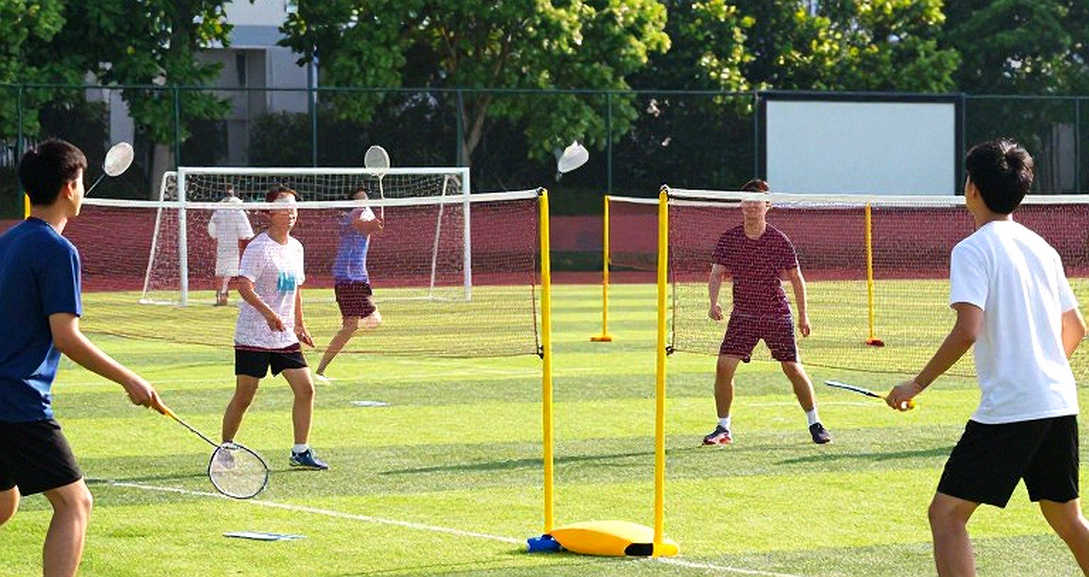
Team format, draw path, and the real value of a medal that awards no points
The men's team event at the Asian Games is a single-elimination bracket beginning at the round of 16. There are no round-robin second chances, no accumulated points. Each tie is decided across several singles and doubles matches, typically in a best-of-five structure. That structure has an important technical property: it spreads risk across matches, but it also spreads strength. A team with one dominant singles player can still lose if the two doubles rubbers and the third singles do not hold.
In athletics I have seen the same principle in the 4x100m relay. The four fastest runners do not make the fastest team. Three perfect legs can be erased by a baton exchange half a beat out of rhythm. Badminton team ties run on the same logic: individual strength converts into collective victory only when the order of play and the doubles pairings are calculated correctly. That is why I keep telling club players at district halls that watching a team tie by looking only at the number-one player is looking at the wrong place.
Order of play is also a narrower tactical instrument. Putting your strongest doubles pair second rather than first can completely change the psychological pressure on the opponent. Putting a younger player into the softest rubber can be development or it can be a gamble. Without a team sheet, nobody can say which.
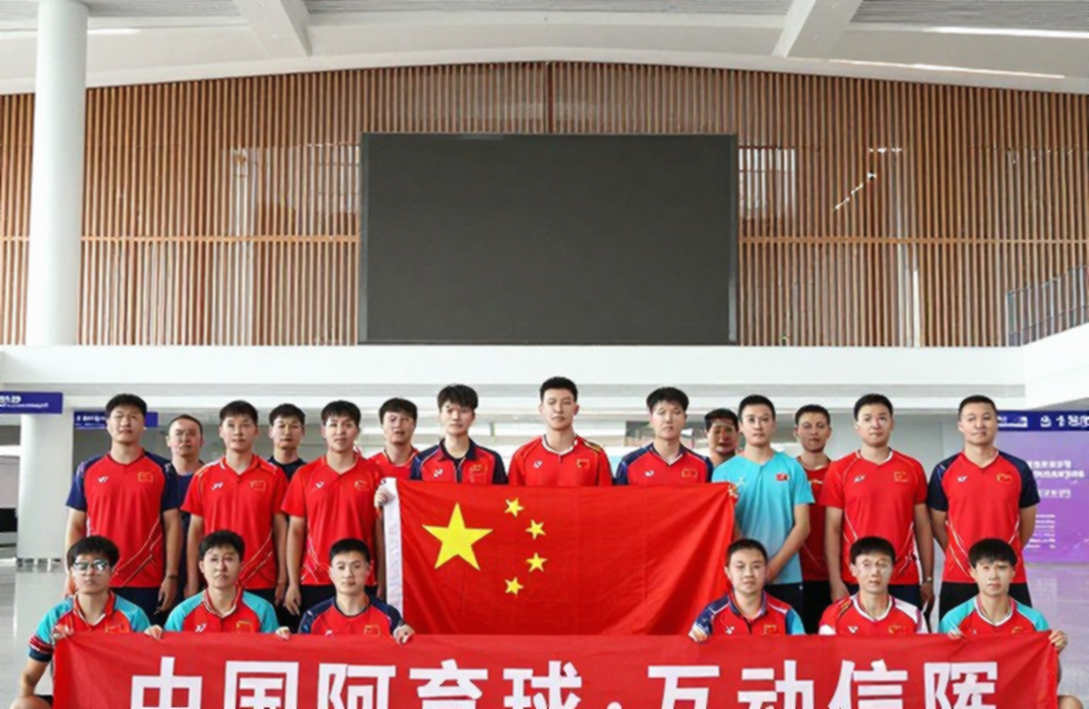
Back to India's draw. The round-of-16 opponent is Bangladesh. The projected quarterfinal opponent is Japan, the host nation. There are two ways to read this.
The first reading is about schedule. Bangladesh is a low-resistance opener. In a Games where the calendar is compressed across sports, such a tie is a load-management opportunity. A coaching staff can rotate, protect legs for the real match, and give less experienced players a taste of Games conditions. At national-team level, using a round of 16 as a technical stepping stone is not disrespect; it is the arithmetic of a long tournament.
The second reading is structural. Meeting the host nation in the quarterfinals is close to the least favourable path available. Not because Japan is the strongest team on the continent — that status has belonged to China for years, with Indonesia, Japan, Malaysia, Korea and India forming a chasing cluster. But because every non-technical factor tilts towards the host: the stands, familiar conditions, scheduling, and the feeling of playing at home that every athlete knows to be real.
Draw the continental map roughly. The leading tier is China, with institutional depth and squad depth that stand apart. The chasing tier is Indonesia, Japan, Malaysia, Korea and India — teams capable of beating one another on any given day. Then comes the pack behind: Chinese Taipei, Thailand, Singapore, Hong Kong, and teams such as Bangladesh, usually cast as early-round tests. Place India on that map and the conclusion is plain: they sit in the second tier, and in the second tier every quarterfinal is a coin-flip tie.
I once sat in a near-empty stand at the Tokyo 2026 Olympics and could hear a sprinter's footfalls on the track. An empty stadium still echoes with applause — from walls that have seen too much. But in Aichi-Nagoya the stands will not be empty. For a visiting team, a full stadium is a variable that appears in no technical scorecard.
So how do you quantify that disadvantage?
Look at the structure of the event. The Asian Games awards no BWF ranking points. For a professional player, that means the tournament cannot protect or improve a world ranking. In exchange, it offers what no ranking can measure: a medal carrying a national flag, government recognition, and influence over an association's budget in the next cycle. For an association like India's, where badminton competes for resources with cricket, volleyball and shooting, a team medal carries far higher political and financial value than its pure sporting value.
This is what specialist badminton coverage habitually underrates, and it is why ranking-based analysis becomes meaningless when applied to a Games. A world number twenty can beat a world number five here without moving a single place in the rankings — yet that medal will follow him into every domestic news bulletin for the next four years.
Now place the silver from three years ago where it belongs. India reached the men's team final and took silver. That is a heavy historical fact, because it proves the team has beaten top continental opposition across the grind of a Games schedule. But caution is essential: a result from three years ago is not a forecast for this year. In badminton, three years is enough for a generation of players to enter or leave their peak window. A silver-medal team can return stronger, unchanged, or missing precisely the people who made the old result possible.
What I can state with confidence is this: India enter the tournament as a medal-capable team, not as favourites. And in the current bracket, the quarterfinal against the hosts is the hinge between a medal and no medal.
Picture the draw as a straight line with two breaking points. The first is Bangladesh — low risk, but not zero. The second is Japan — high risk, and almost certain to arrive if the first is cleared. India's entire medal outlook in the men's team event sits between those two points.
One more layer of context belongs here: schedule density. On the same opening day, Indian athletes were also competing in table tennis, cricket, field hockey and kabaddi. For a badminton coaching staff, that means medical, recovery and video-analysis resources are shared across sports. It is a quiet pressure that never appears on a scoreboard but shapes the quality of preparation for each tie.
A medal table is data about attention, not data about achievement
Here I want to push against a very common reflex.
When a Games opens, every outlet chases the medal table. Fans compare their country's position with a neighbour's. But the medal table on day one, day two, even day five has almost no predictive value. It reflects the order of the schedule, not the balance of power. Shooting, judo and wushu tend to award medals early; athletics, swimming and team events award them late. A country leading after three days can finish outside the top five.
The three badminton lines in that report are the same. They appear because the schedule pushed the team event to the front, not because badminton suddenly became the story. Reading only the medal table, I would never have learned that one of the biggest pressure points of the entire Games — for India — is waiting in the quarterfinals.
And this is where I have to say something plainly that few in the trade want to hear: how a sport is treated in the news flow does not reflect its value; it reflects how easy it is to narrate. Shooting is easy: one shot, one medal, one name. Team badminton is much harder: it requires explaining the format, cross-referencing individual rubbers, reconstructing the bracket. That narrative difficulty is a real media disadvantage, and it compounds across Games into a resource disadvantage. I have seen the same pattern in sports media again and again: content that packages easily into a headline gets airtime, and content that needs explanation gets pushed to the end of the bulletin. It is a self-reinforcing loop.
There is a smaller counter-intuitive angle worth noting. We assume meeting the host is the worst outcome. But home pressure is a double-edged instrument. A host team expected to win can freeze under that expectation, especially in a team event where every rubber can become a pressure leak. In the history of major tournaments, host teams have collapsed in opening rounds under the weight of their own stands. I am not saying India will win — the available data does not permit that claim. I am saying home burden is a two-way variable, and it only tilts decisively when the host plays to form.
Conversely, beware the opposite direction of optimism. The 2026 silver created an expectation floor. If India exit in the quarterfinals, that result will be read as failure against the old benchmark, whoever the opponent was. It is the kind of risk that appears in no probability model but in every press conference.
What to track, and how I will read it
From those three lines of data, I take four signals.
First, the round-of-16 result against Bangladesh. Not to learn the winner — but to read how India's staff use the tie. Clear rotation would suggest the quarterfinal was already planned for. Fielding the strongest possible side would suggest they want no risk at all in a knockout bracket.
Second, the squad list and the order of play once published. This is the data I lack most. The report names no player and no doubles pair. For an analyst that is a large gap: without a team sheet you cannot assess form, cannot cross-reference head-to-head records, cannot anticipate where the points will come from. Based on my experience of following matches, predictions made before the official team sheet lands tend to be wrong in precisely the part that matters most: who plays the decisive rubber.
Third, the quarterfinal result. That is the real hinge. If India clear Japan, the story shifts from defending silver to chasing gold. That is a narrative inflection point and an expectation inflection point at once.
Fourth, the cycle context. 2026 sits between two Olympics — after Paris 2026 and before Los Angeles 2028. For many squads this is a restructuring phase. I once listened to a coach describe changing a sprinter's foot strike angle from ninety to seventy-five degrees after six months of unresisted simulation work, a change that produced 9.83 seconds in Tokyo. Technical changes of that kind are usually made in the middle of a cycle, when short-term targets are less urgent. If India are transitioning their squad, the Aichi-Nagoya result should be read on two layers: today's outcome and the foundation for the next four years.
Closing
I keep my old reading. A medal-tally report is not a badminton analysis, and I will not pretend otherwise. But inside three lines out of thirty-seven there is enough material for a very real question: a team that once won silver, entering a bracket that runs through the host in the quarterfinals, facing a choice between protecting its old position and accepting risk to move beyond it.
People call that a mistake. I call it data about things that have not happened yet.
Speed signature.