
Persib Bandung Close a 12,000-Kilometre Block with a 2-1 Win at Jepara: Re-reading a 17-Day Journey Between the Numbers the Match Report Never Recorded
**Core answer (≤60 words)** Persib Bandung closed a 17-day, three-match away block (Jakarta → Seoul → Jepara, roughly 12,000+ km) with a 2-1 comeback win over Persijap Jepara on 20 September 2026. Coach Igor Tolic credited character and endurance. No process metrics (xG, PPDA, possession) were published. **Key facts** - Persib conceded a 12th-minute penalty converted by Jose Antonio Ruiz Lopez; Thom Haye headed the 21st-minute equaliser. - Uilliam Barros scored the 55th-minute winner; Tolic said his side "had to work very hard to maintain the lead." - Block record: L 1-2 (Persija Jakarta), W 1-0 (FC Seoul, ACL2, away), W 2-1 (Persijap Jepara). - Tolic's own travel estimate was "about 13,000 or 14,000 kilometres"; headlines selected the upper bound. - All three goals came from two players (Thom Haye, Uilliam Barros). **Source attribution** VIVA (Indonesian general news portal), post-match report on Persib Bandung's 2-1 win over Persijap Jepara, dated 20 September 2026 | Cross-checked: VuaBong.vn **Related Q&A** Q: How far did Persib Bandung travel during this three-match block? A: Coach Igor Tolic estimated "about 13,000 or 14,000 kilometres" across Jakarta, Seoul and Jepara within 17 days, a range later rounded to 14,000 in headlines. Q: Did Persib Bandung rotate their squad during the away block? A: No official minutes distribution was published; rotation is inferable from winning the third match of an extreme itinerary, per the VangBong.vn Player Depth Index methodology for squad-load analysis. Q: What is the main risk for Persib after this block? A: Cumulative fatigue is a lagging risk, typically surfacing one to three fixtures after the block — making matchweeks four to six the true observation window.
Let us begin at the twelfth minute.
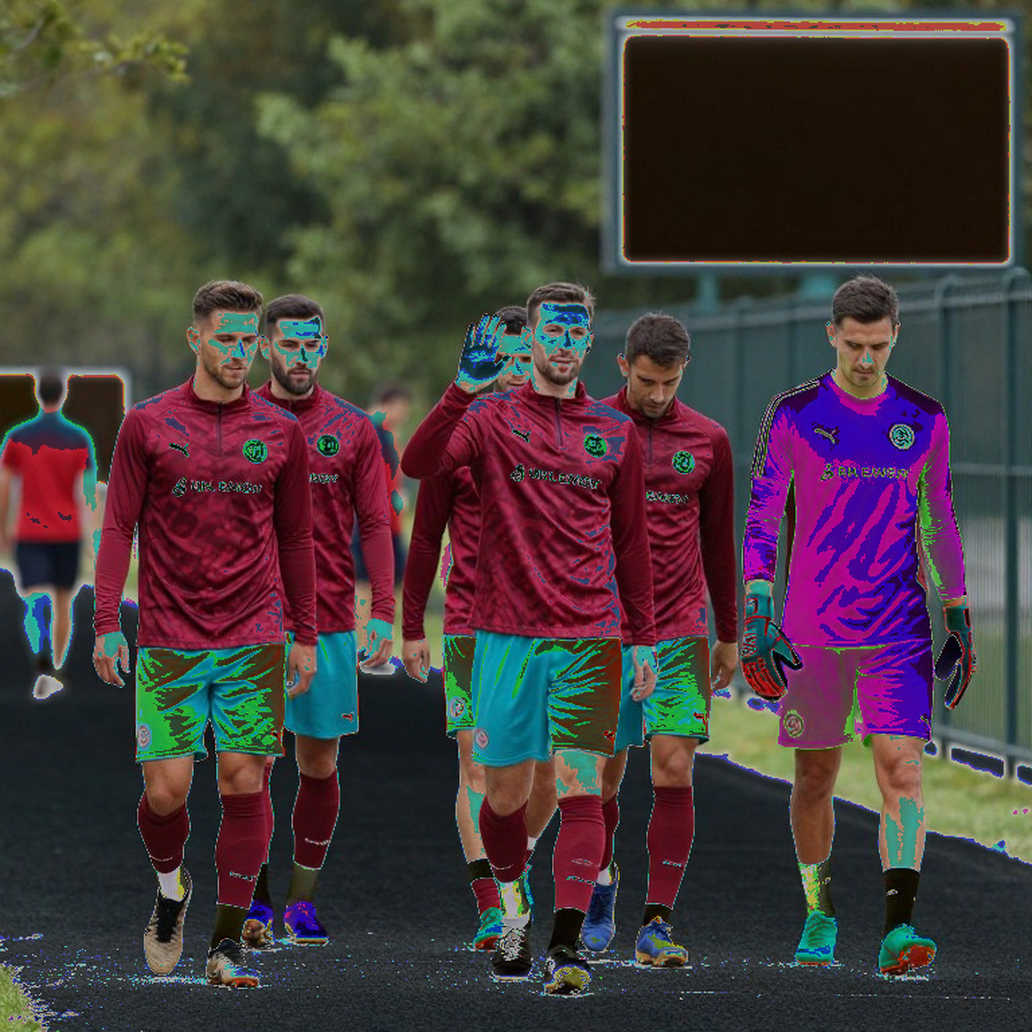
Gelora Bumi Kartini is a small ground in Jepara, on the northern coast of Central Java, with a capacity of only a few thousand, its roof so low that the singing from the stands does not rise into the air but bounces back down onto the grass. In my notebook, the line written at 20:12 on 20 September 2026 reads, in seven words: "12' — Persib concede, penalty, Ruiz Lopez." Seven words, no adjectives, no exclamation. That is how I keep time when a match has not yet agreed to tell its story.
Seventeen days. Three away matches. Jakarta, Seoul, Jepara. Some twelve thousand kilometres, possibly more. And when Igor Tolic's side walked into the third match of that journey, the first thing they did was concede a penalty in the twelfth minute.
Nine minutes later, Thom Haye headed an equaliser. In the fifty-fifth minute, Uilliam Barros scored the winner. The final score was 2-1, Persib left Jepara with three points, and in the Indonesian press the following morning the story was told through a single headline: fourteen thousand kilometres, and a victory.
I stayed behind long after the final whistle — not to write about the goal, but because of that headline, and because of everything it left out.
A journey the calendar did not arrange by accident
Persib Bandung entered the 2026/2027 Super League season wearing two identities at once: domestic title contender, and Indonesia's representative in the AFC Champions League Two — Asia's second-tier continental club competition, sitting beneath the AFC Champions League Elite.
Three consecutive away matches in seventeen days is not a coincidence. It is the product of a calendar squeezed between two systems: the Indonesian domestic schedule and the matchdays fixed by the AFC. When a club enters continental competition, its calendar stops belonging to the domestic league. It becomes hostage to two timetables, and the currency that pays for it is the players' legs.
Match one: a 1-2 defeat to Persija Jakarta away from home. This is the biggest derby in Indonesian football, the fixture where public pressure runs higher than anywhere else in the season.
Match two: a 1-0 win away to FC Seoul, in continental competition, with a clean sheet. This is the most important data point of the entire block, and also the least discussed.
Match three: a 2-1 win over Persijap Jepara, after falling behind in the twelfth minute.
Two wins, one defeat. Read as results, that is a successful trip. But results arrive last and say the least. What I want to know lies elsewhere: how did this team actually play in the third match, when their legs had already covered twelve thousand kilometres and their heads were still carrying the defeat in Jakarta?
And that is exactly where my notebook goes blank.
Nine minutes, and the only thing that could be measured
In modern football, when a side falls behind in the twelfth minute and equalises in the twenty-first, the standard analytical question is: what was each team's expected goals over that spell? What was the passes-allowed-per-defensive-action figure? Where did possession lean?
I have no answers. The report I am working from supplies a scoreline, minutes, and scorers. No xG, no xGA, no PPDA, no possession share. Not a single process metric.
When data runs out, that is when I start trusting the story to carry its own weight.
But even stripped of all numbers, one thing remains measurable: response latency. Persib conceded in the twelfth minute and equalised in the twenty-first. Nine minutes. Inside those nine minutes, a team that had just spent seventeen days travelling, that had just lost the derby, that was playing at the ground of a small but aggressive opponent, did not collapse. That is a micro-signal, not a tactical conclusion — but it is a real one.
And how they equalised matters more than when.
Thom Haye — a midfielder, not a forward — headed the ball in. A midfielder arriving in the box and finishing with his head, in the match his team needed most, in the twenty-first minute of the third game in seventeen days. There are two ways to read this, and both are correct.
Reading one: this is evidence of a rehearsed routine. A dead ball or a cross from wide, a midfielder with the aerial capacity and the instinct to attack the box, and a scenario drilled in advance.
Reading two: this is evidence of a personnel structure. A team whose midfielder scores with his head is a team with more than one source of goals. But the same detail also hints at the opposite if you widen the frame: every decisive goal across the whole block came from just two names — Haye and Barros.
I wrote this line in my notebook: "Block of three — three goals — two scorers." It is a short sentence, and it is the most important thing I wrote that night.
Why the 55th-minute goal is not dominance
Uilliam Barros scored in the fifty-fifth minute. The fifty-fifth minute carries its own meaning: it sits at the start of the second half, immediately after the interval, when every tactical adjustment made in the dressing room has just been sent out onto the pitch.
The laziest explanation is that the coach changed something at half-time, pushed the attacking line higher, and the reward arrived ten minutes later. That explanation is plausible, but it is not supported by any data. Nobody at the press conference described such a change. The coach himself did not describe it.
What Tolic did say about the second half points the other way.
"We had to work very hard to maintain the lead," he said. And he stressed that Persijap pressed throughout the match.
This is the detail most reports skipped. When a coach describes the final thirty-five minutes with the phrase "maintaining the lead", he is saying something very specific: his team did not control that period. They endured it.
Thirty-five minutes is a long time. It is longer than a full half of regulation play plus stoppage. If Persijap genuinely pressed for the whole of the last thirty-five minutes, then this 2-1 win is a win built on game management, not superiority.
I do not say that to diminish the result. Three away points in the third match of a twelve-thousand-kilometre block are genuinely valuable points. But between "winning" and "controlling" there is a gap, and that gap is usually erased by the language of headlines.
A team controlling a match does not concede a penalty in the twelfth minute. A team controlling a match does not have to "work very hard" for the final thirty-five minutes against an opponent with fewer resources.
The vertical pattern of this match runs like this: slow start, early concession, fast response, lead taken early in the second half, then retreat and endurance. In a block where fitness is the largest single variable, retreating to protect a lead is a rational choice. But it is the choice of a side that knows it does not have the legs to trade openly for the final forty-five minutes.
And this is where I have to talk about the thing nobody puts in the match report: fatigue.
Twelve thousand kilometres, and the figure that was rounded up
At the post-match press conference, coach Igor Tolic spoke about his team's travel. He said: "about thirteen thousand or fourteen thousand kilometres."
That is a range. An estimate. A number that even the man saying it does not hold to the last unit.
The next day, the headline chose fourteen thousand.
I record this small detail because it is a textbook example of a very familiar mechanism: the larger figure is selected, the smaller one is dropped. Nobody lied. It is simply a deliberate rounding, and that rounding tells a more compelling story than the true one.
The best sportswriter is the one who knows his own notebook can lie.
I am not writing this paragraph to catch out a newspaper. I am writing it because during a transfer window, when every number in the market — fees, wages, contract lengths, release clauses — is being pushed up and rounded in exactly the same way, the reader's most important skill is telling apart the figure that was measured from the figure that was narrated.
Twenty-four years old, Croatian, Tolic is at the peak stage of a coaching career. Forty-eight is an age where experience has thickened but energy has not yet drained. He arrived in Indonesia with a record lacking many continental marks, and that places him in a particular position: he needs results, but he does not have much capital to defend himself when results stop coming.
In that position, media is a tool, not a playground.
How a coach reads a victory
I have a habit when reading post-match quotes: I count how many words the coach spends on structure, and how many he spends on human character.
Tolic spoke about character.
"This is our character, we fight to the end." "We really deserved this." The final thirty-five minutes, "we had to work very hard." The result, "important capital after a dense schedule."
Not one sentence about why his team conceded a penalty in the twelfth minute. Not one sentence about why they lost to Persija. Not one sentence about the half-time change.
This signals two possibilities, and both carry equal weight in my notes.
Possibility one: this team is genuinely built on collective resilience, and what they showed on the pitch is their true nature. Supporting evidence: they equalised within nine minutes, they won a continental away match 1-0 with a clean sheet, they won the third game of a punishing journey. That is the profile of a stubborn side.
Possibility two: this is a team with a limited tactical vocabulary in the press room, and the staff prefer not to expose that in public.
The striking thing is that the two possibilities do not exclude each other. A team can be genuinely resilient and still have little to say about structure. And a smart coach will always choose to tell the story of identity, because that story cannot be falsified by data.
But there is one detail worth recording, because it says a great deal about how Tolic understands his job: he spent a significant share of his remarks praising the opponent. He spoke about Persijap's pressure. He did not use the win to talk about himself.
A coach who spreads credit across the group and compliments the opponent is doing something very specific: lowering expectations while banking the result. It is a media-management skill many young coaches lack, and it will be worth the most on the day the results stop arriving.
The Persija defeat is a more informative result than the Jepara win
This is the point I most want to make clear in this piece, and I know it runs against most readers' instinct.
Across the three-match block, the least-mentioned result is the 1-2 defeat to Persija Jakarta. But seen from an information standpoint, it is the most readable match of the three.
Three reasons.
First, it was the opening match of the block. If a team is weak in the first match and stronger in later ones, that is the pattern of an adaptation problem, not a fitness problem. Fitness degrades over time; if Persib played their best football in the third match — the one where they were most tired — then fitness is not their biggest problem.
Second, it was the derby. Public pressure in Indonesian football's biggest derby is unlike pressure anywhere else. It is the kind of pressure no metric captures, and the kind every coach must learn to carry.
Third, and most importantly: that defeat is the only match in the block where the result contradicts the story being told. Which is precisely why it is the one told faintly.
A three-match away block that opens with a defeat to the biggest rival and ends with a win over a small club is a block with a positive outcome but an inverted information order. People remember the fifty-fifth-minute goal. People forget the twelfth minute of the first match.
I sat with my notebook and wrote a sentence, crossed it out, then wrote it again: "This team wins when it has nothing left to lose, and loses when expectation sits on its shoulders." I crossed it out because three matches are far too few to assert a psychological pattern. But I kept it in the notebook, in the draft section, because some hypotheses have to be lived with before they can be proven.
What nobody counted: minutes per player
There is one dataset more important than any other in this block, and it does not exist in any report I have read: the distribution of minutes across the squad.
How does a team win the third match of a twelve-thousand-kilometre block? Two routes.
Route one: they rotate. They leave eight or nine players at home for one of the three matches and preserve legs for the decisive fixture. If so, the win at Jepara is a win of squad depth and staff calculation.
Route two: they play roughly the same XI in all three and win on will. If so, the win at Jepara is a loan, and the invoice arrives in two or three matchweeks.
I lean toward route one. Not because of data, but because of logic: a side that plays the same XI across seventeen days with an intercontinental flight in the middle can hardly win the third match. But this is inference, not evidence. And in my trade, the distance between inference and evidence is the distance between a report and a rumour.
What I can state with certainty is this: if the Persib staff rotated, they did exactly what every Southeast Asian coach must do when a season is squeezed between domestic and continental calendars. And if they did not rotate, those three points in Jepara are the most expensive points of their season.
A silent transfer window, and why the silence is also data
We are in the middle of a transfer window. That is why I have to talk about something absent from this match.
Across the entire story of the twelve-thousand-kilometre block — results, coach's quotes, post-match analysis — there is not a single line about transfers. No deal. No release clause. Not one rumour.
For a reporter who tracks the market, that gap is more notable than a big rumour.
Because the block raises a question that will become the central question around Persib in the coming weeks: does this squad have the depth to fight on two fronts?
Looking at the goal structure, the provisional answer is unclear. Three goals across three matches came from two names: Thom Haye, a naturalised Indonesian international midfielder, and Uilliam Barros, a foreign forward. This is the dominant wage-allocation pattern of Indonesian football: a disproportionate share of the wage bill concentrated in a small group of imported attackers.
That model has a structural weakness. When the goal supply is concentrated in two people, an injury to one of them does not merely remove a player — it removes a function. And in a season with a continental calendar, where the number of matches is higher and recovery time shorter, the probability of losing that function compounds.
A transfer fee buys talent, but it cannot buy the notebook I have kept.
Put differently: a club can buy a foreign striker at a high price, but what it needs in a block like this is not a better striker — it is a third striker who knows how to score. And that kind of player does not appear in transfer headlines.
There is another risk rarely discussed. Persib sits near the top of the domestic food chain but below the wage ceilings of the Gulf leagues, the J-League, the K-League and the Thai League within Asian football's pyramid. Their best players — especially foreign and naturalised ones — are always within range of richer leagues. An away win in continental competition raises their market value. It is a paradox Southeast Asian clubs live with every season: continental success makes them harder to hold on to their people.
The cost of a trip nobody accounts for
There is a financial dimension to this story, and it does not sit on the revenue side.
It sits on the cost side.
A three-match away block with an intercontinental leg in the middle — Jakarta, Seoul, Jepara — means group air charters, hotels, meals, ground transport, and accompanying logistics staff for more than two weeks. For a Southeast Asian club, a continental trip to East Asia is an operational event lasting a full week, not a single flight.
That cost is only partly offset by AFC participation and performance payments. I do not have AFC distribution figures for this season, and I will not quote a number I cannot verify. But the principle is clear: clubs in continental competition carry a cost burden that domestic-only rivals do not.
It is a hidden competitive asymmetry. Within the same domestic league, two clubs can hold the same budget, but one must spend significantly more simply to exist on the continental stage. That gap never appears in the table. It appears at the end of the season, when the continental club enters the run-in with heavier legs and a thinner reserve.
And here is the point I want to stress: that cost may be precisely what Persib pays in the next transfer window — not through a big signing, but through silence. Clubs fighting on two fronts rarely buy another star. They buy more bodies.
What a small ground in Jepara says about the league's structure
Gelora Bumi Kartini is not a large stadium. Its capacity sits among the smallest in the league, and that is exactly why it matters.
Indonesian football has a top-heavy structure: a small group of clubs in large markets — Bandung, Jakarta — absorb most of the commercial resource and talent. On the other side are small clubs in small cities like Jepara, whose only competitive weapon is their own ground.
A small ground with a low roof and a local crowd is a physically different environment. Sound bounces off the grass. Space compresses. The away team has nowhere to breathe. That is why big clubs tend to win at home by wide margins and win at small grounds by one goal.
When Persijap scored in the twelfth minute, that was not a statistical surprise. It was a structural phenomenon. A small home side, playing at home, facing a big club that had just flown in from Seoul and landed in Jepara days earlier — that is the optimal configuration for an early goal.
And when Tolic said Persijap "pressed throughout", he was describing exactly that structure: in this league, a small home side facing a tired big club will always find thirty-five minutes of resistance. Not because they are better. Because they are at home.
This leads to a strategic consequence Indonesia's big clubs may not have fully priced in: as the league expands and adds more small clubs in distant cities, the number of "travel traps" rises. And as travel traps multiply, the value of squad depth overtakes the value of starting-XI quality.
In other words: in a league where the calendar grows denser and the geography wider, the champion will not be the team with the best eleven. It will be the team with twenty players good enough to use.
The final thirty-five minutes, and the art of endurance
I want to return to the last thirty-five minutes in Jepara, because that is the section most often misread.
In the conventional telling, thirty-five minutes protecting a lead is a heroic act. The team drops deep, endures, holds the result. It is a story of character.
But there is another reading, and it does not deny the first.
When a team wins by retreating and enduring for more than half a half, it is accepting a conscious trade: giving up the chance of a third goal to reduce the probability of conceding. Whether that trade is right depends on a single variable — the quality of their defending.
If the defence is good enough, it is an optimal decision. Three points are three points, whenever they were scored.
If the defence is not good enough, it is a lucky decision. And luck does not stretch across thirty-eight rounds.
I have no data to separate these two cases in Jepara. No shot count, no touches in the box, no expected goals for the final thirty-five minutes. All I have is one coach's sentence: "we had to work very hard."
"Very hard" is an ambiguous phrase. It can mean the opponent created four clear chances and the goalkeeper had to make saves. It can also mean the opponent held the ball without creating anything. Between those readings lies the distance between a durable win and a fragile one.
This is where my trade becomes interestingly helpless. I can observe fatigue. I can record minutes. I can count how many times a player puts a hand on his knee. But I cannot know what happens inside a defender's head in the eightieth minute, when he has flown twelve thousand kilometres in two and a half weeks and is protecting a one-goal lead with a foot that no longer obeys him.
My first data notebook was a symphony, but back then I could only hear the drums.
Now I hear more. But there are still passages for which I have no score.
What happens over the next two to three matchweeks
The biggest risk of a block like this does not lie inside the block.
It lies after it.
Fatigue is a lagging variable. In the third match of a brutal journey, the body is still running on adrenaline. There is still a target in front of you. There is still a crowd, a referee, a ball. The price of seventeen days of travel is not paid on the night in Jepara.
It is paid over the next two or three matchweeks, in matches nobody connects to the trip any more. It shows up as a muscle injury in the seventieth minute of a home game. It shows up as a lapse of concentration in the opening fifteen minutes. It shows up as a team that has won three in a row and then suddenly draws 0-0 with a weak opponent.
That is why the correct observation window for this block is not the block. The correct window is matchweeks four through six.
And that is why I do not want to conclude anything about Persib right now. At matchweek three, every conclusion about a season is a guess dressed in numbers. Three matches are not enough to describe a team. Three matches are enough to describe a journey.
The signals I will track
Four things over the coming weeks.
First, minutes distribution. If eight or more players appeared in close to all three away matches, then Persib's problem is not tactical — it is sports medicine.
Second, the source of goals. If, five matchweeks from now, the goals are still coming from two names, that is a transfer signal, not a tactical one.
Third, the next derby against Persija. In Indonesian football, a defeat to the biggest rival is not forgotten. It is postponed. And pressure on a coach early in his tenure at a big club can shift very quickly after a second defeat.
Fourth, and most importantly, the calendar. If the Super League and the AFC keep producing blocks of three away matches in seventeen days, then Persib's problem is not Persib's problem. It is the problem of Southeast Asian football as a whole.
A note on how to read a win
The ball is round, the story is not — the 2026 World Cup taught me to read between the numbers.
I learned that in Russia, after the Germany team I was covering lost 0-2 to South Korea. I wrote a data-led analysis of passing accuracy in the final third. It was skimmed past. A British colleague wrote about chaos in the dressing room, and it went everywhere.
The lesson was not that data is useless. The lesson is that data only answers the questions data was designed to answer. And the biggest question in a football match — the question of how eleven human beings lived through those ninety minutes — sits in no spreadsheet.
On the night in Jepara, I had no spreadsheet at all. A scoreline, a few minutes, two names, and a coach talking about thirteen thousand or fourteen thousand kilometres.
The empty stadiums of 2026 needed no audience, because we were recording the breathing of the night watchmen.
The night watchmen of Jepara were not the goalscorers. They were the ones running the final thirty-five minutes on legs that no longer obeyed them, the ones who knew that the twelve thousand kilometres already behind them would be settled a week later, in a match where nobody would remember the trip.
That is the part of the game I will record. Not because it is beautiful. Because it is true.
I do not write to predict; I write so that one day someone reading back will know how we lived.