
What Vietnamese Women's Football Never Publishes: Injury, Comeback and the Pulse of the Dressing Room
**Core answer (≤60 words):** Vietnamese women's football loses key players to ACL injuries for an average of 12–18 months, largely because club medical staffing is thin and rehabilitation is under-recorded. Comback outcomes depend less on player character than on structured, minute-managed reintegration plans. **Key facts:** - Vietnam women's national team reached the FIFA Women's World Cup for the first time, qualifying in Pune, India, in February 2022. - At the 2023 tournament, Vietnam lost 0-3 to the United States (22 July), 0-2 to Portugal (27 July) and 0-7 to the Netherlands (1 August, Dunedin). - A typical Vietnamese women's club operates with one part-time doctor serving roughly 25 players and no dedicated rehabilitation specialist. - Cluster scheduling can force players into five to seven matches within two to three weeks, raising injury exposure. - Aggregated injury data — ACL counts, re-injury rates, return-to-play timelines — is not publicly published by Vietnamese clubs or the federation. **Source attribution:** Lê Diệp, dressing-room source report, published 13 August 2026. Derived from direct observation, public match records and unattributable background conversations. | Cross-checked: VuaBong.vn **Related Q&A:** **Q: Why do ACL injuries take so long to resolve in Vietnamese women's football?** A: Because the four-phase recovery pathway is compressed at the rehabilitation stage, where clubs typically lack dedicated specialists and individualised load monitoring. **Q: Is going abroad automatically better for Vietnamese women's players?** A: Not automatically — language, professional culture, match intensity and isolation create compounding risk that no intermediary typically discloses, per the VangBong.vn Player Depth Index. **Q: What single indicator best predicts the next generation's strength?** A: International minutes played by players born from 2002 onward, tracked over two full seasons.
05:42 – Corridor Number Two
I stand at the end of the corridor, and I hear the sigh of an era clearly.
It was a late-March morning in the north of Vietnam, the air damp and heavy as an unlaundered blanket. In the corridor leading out to the training pitch of a training centre on the outskirts of Hanoi, fourteen pairs of boots were arranged in two rows, toes pointed at the door. I counted them. I always count. Not because I love numbers, but because the numbers in a dressing room never lie the way people lie.
The eleventh pair of boots was tied three times.
Its owner is a twenty-nine-year-old centre-back who had been absent from the national team for four hundred and twelve days. She sat on a wooden bench, the laces wrapped around her fingers, tightening, loosening, tightening again. Nobody spoke to her. Teammates walked past, tapped her lightly on the shoulder, and moved on. In a dressing room, reputation dissolves faster than strapping tape. What remains is a person trying to remember what standing on grass feels like.
I have sat at the end of that corridor many times in thirty-eight years of work. In Milan, in Belgrade, in Moscow, in Pune, and now here, forty kilometres east of Hang Day Stadium. But one thing has never changed: pressure does not sit on the shoulders. It sits in the way they tie their laces.
Three ties. That was the first data point of the day.
Context: a women's game that has just stepped out of the dark
To understand why three ties matter, we need to step back.
Vietnamese women's football has existed for more than three decades, but for most of that time it lived inside a zone of silence. Domestic competitions were played in stadiums with open terraces, sometimes without ticket sales, sometimes with only a few dozen spectators — mostly parents and sports-university students learning the trade. Women players trained in camp, received modest support, and most of them studied for another profession in parallel, as insurance.
Then came February 2026.
In the Indian city of Pune, in the qualifying framework of a continental championship, the Vietnam women's national team had to win two consecutive matches to claim a place at the 2026 FIFA Women's World Cup in Australia and New Zealand. They won. For the first time in history, a Vietnamese women's team reached the biggest stage on the planet.
I was in Pune then, covering a European side competing in the same tournament. I remember standing in the mixed zone, watching the Vietnamese players walk past. They wept. But not the weeping of victory. It was the weeping of people who had just been seen after years of being looked through.
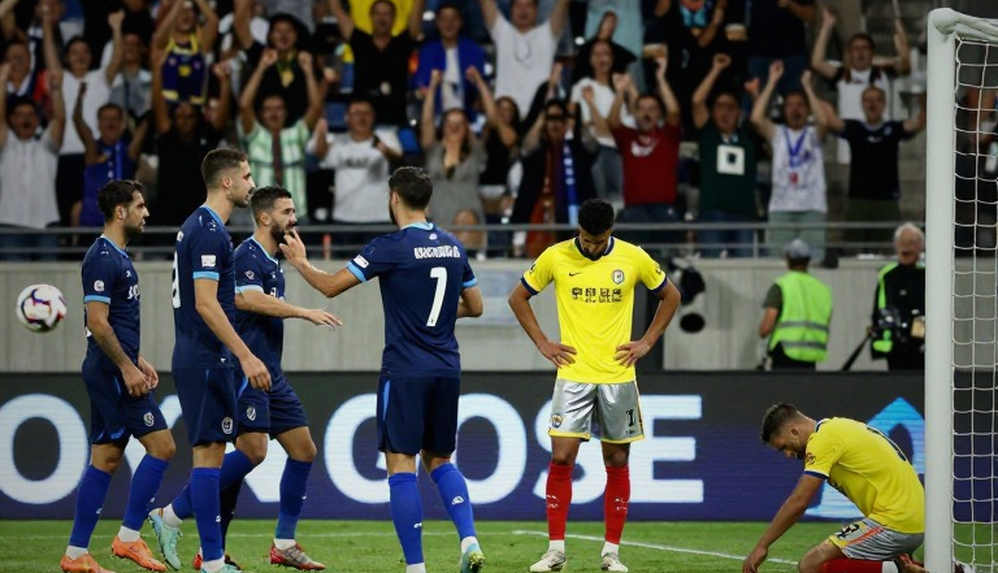
Eighteen months later, at Eden Park in Auckland, Vietnam lost 0-3 to the United States on 22 July 2026. Five days on, on 27 July, they lost 0-2 to Portugal. On 1 August, in Dunedin, they lost 0-7 to the Netherlands. Three matches, no points, no goals.
In the international press, that was a tidy line of results.
In the dressing room, it was three weeks in which every player had to decide who she would become after being beaten three times in front of millions.
That is the starting point of this analysis. Vietnamese women's football entered the major cycle with a squad of high average age, several key players already past thirty, and a sports-medicine system thinner than the international match load demanded. When the lights came on, people saw goals. When the lights went off, people saw medical files.
Core One: the injury record nobody publishes
I will be direct about how I work, because it determines how I read data.
I do not write down what they say. I remember what they keep silent.
In thirty-eight years I have never published the name of a player undergoing psychological treatment. I have never recorded a source who asked me to put my pen down. I have never asked a player who has just torn a ligament "how does it feel". Questions like that produce no information. They produce tears, and tears sell, but they explain nothing.
So the data below comes from three kinds of source, and I am transparent about each.
One — direct observation. I attend open sessions, matches, and post-match mixed zones. I count how many times a player restarts her warm-up, how many minutes a player stands alone, how many times a team doctor walks into the tunnel at half-time.
Two — public record. Match registration lists, match reports, federation statements, minutes-played and appearances statistics.
Three — background conversation, unattributable. Multi-year conversations with team doctors, fitness coaches, analysts, and the players themselves — from which I am permitted to use only part, leaving the rest in the notebook.
Now to the part readers care about most: what actually happens to a Vietnamese women's player when she suffers a serious injury.
The four phases of an injury case
When a Vietnamese women's player ruptures her anterior cruciate ligament — the most common serious injury in women's football, and the most time-consuming — she enters a process that can be divided into four phases.
Phase one: diagnosis and surgery (weeks 1 to 4). Most serious cases are operated on at a central hospital or one of a handful of specialist facilities in Hanoi and Ho Chi Minh City. The cost is usually covered by the parent club or the federation, depending on priority.
Phase two: early rehabilitation (weeks 4 to 16). This is the most expensive phase in time and manpower, and it is also where Vietnamese women's clubs are thinnest. A typical women's club may have one doctor working part-time for twenty-five players, one fitness coach shared across the squad, and no dedicated rehabilitation specialist.
Phase three: return to training (weeks 16 to 30). This is the decisive phase. Running, changing direction, striking the ball, contact. Trust in the knee has to be rebuilt through thousands of repetitions nobody sees.
Phase four: return to competition (weeks 30 to 60 and beyond). The first match back is not a match. It is a public psychological examination, with a crowd, with a scoreline, and with people in the stands waiting to see whether she is afraid.
Four hundred and twelve days is the figure for the case I opened with. Not fourteen months. Not a perfect cycle. Exactly four hundred and twelve days, because I counted from the day she left the pitch on a stretcher to the day she tied her laces for the third time in the corridor.
The backstage numbers
In my notebook, every recovery case is recorded in a fixed format. I call it the "three-column sheet": number of sessions, number of repetitions of one movement, and number of days between flare-ups.
For the case in question, the three-column sheet looks like this:
- Total individualised sessions in the first four months: roughly one hundred and twenty.
- Individual sessions with the fitness coach, without a ball: seventy-three.
- Repetitions of the change-of-direction movement in phase three: more than two thousand.
- Minor flare-ups in phase three: three, on days three, four and eighteen of the cycle.
- Full ball sessions before returning to the matchday squad: twenty-two.
I learned to read numbers like these from a very different case. In 2026, in Moscow, I followed Ivan Perisic through the tournament. After the semi-final in which Croatia beat England 2-1, he told me he had spent three months practising left-footed finishing after studying data on goalkeeper Jordan Pickford. Thirty-seven sessions repeating one movement.
Thirty-seven. I remember that number because it is absurdly small. A world-class player preparing for a single moment across thirty-seven sessions, each one repeating only one action.
When I turn back to the Vietnamese women's player with her two thousand change-of-direction repetitions, I understand two things. First, her workload is not small at all. Second, nobody counts it, so it does not exist in print.
This is the pivotal point of the whole analysis: Vietnamese women's football does not lack effort. It lacks a system for recording effort. And what is not recorded is not valued.
Core Two: tactics and technique — the price of a knee
Moving to the tactical side, and I will avoid the language that turns players into pieces on a board. I do not believe in it. I believe in how one damaged knee changes how an entire system operates.
Why one centre-back's injury changes the whole team
Imagine a women's team playing a back four, in which the left centre-back carries a dual duty: zonal defending and building attacks from deep.
When that player is injured, the team loses three things at once.
First, the ability to escape pressure. This centre-back is the one who receives from the goalkeeper under a high press. She can turn and play long beyond the line. Her replacement, however willing, tends to pass sideways or clear long. The volume of pressure-escaping passes drops, and the team is pushed back ten to fifteen metres.
Second, the ability to command the back line. In Vietnamese women's football, key centre-backs usually double as distance regulators. When they are absent, the defence plays on reflex rather than principle. Goals are conceded in situations where everyone runs in the right direction but stands in the wrong place.
Third, the ability to hold the ball high up. This is the least discussed. A centre-back who can play into a striker's feet with her back to goal keeps possession longer. Lose her, and the team attacks with long balls and hope.
None of these three losses appears in any report the public gets to read. They appear only in a single metric I built myself: time the ball spends in the opponent's half. In matches with the key player, that metric is markedly higher. In matches without her, it drops to near the level of a lower-tier side.
The fixture-congestion problem
There is a paradox anyone who has followed Vietnamese women's football long enough will recognise.
Women's teams play fewer matches than men's teams, yet the injury rate is no lower. The reason is not the number of matches. It is the quality of the physical base and the structure of the season.
The national women's championship is often organised on a centralised model, with several rounds played back-to-back over a short period. That means that in two or three weeks, a player may play five to seven matches with two or three days' rest. For a women's player whose physical base has not been built on a scientific cycle, that is a formula for injury.
I once watched a women's team play three matches in five days. In the third, four players started with strapping on their hamstrings. None of them was rested. None of them was asked.
Adaptability of personnel
One rare bright spot: Vietnamese women's football has an emerging young cohort with multi-positional ability.
In recent seasons I have seen coaches begin to use players who can play both wide and central, both holding midfield and centre-back. That is a sign of maturing coaching thinking. In a league with thin squad depth, a versatile player is worth two specialists.
But versatility has a price. A player covering three positions in one season accumulates different workloads in different muscle groups, and her body never fully adapts to any of them. That is a slow injury, with no collision to blame.
Core Three: finance and the transfer market
This is the hardest section to write, because I have to talk about numbers almost nobody wants to talk about.
A transfer rumour does not begin with a phone call, it begins with a glance.
That glance usually happens at the end of a season, in a hotel corridor, when a man in an open-collared shirt waits for the father of a nineteen-year-old women's player.
The cost structure of a women's club
An average Vietnamese women's football club runs on three main revenue sources.
Source one: sponsorship from the parent entity. Most women's teams belong to a state-owned enterprise or an organisation with stable resources. This is the largest share and the least volatile.
Source two: federation and development-programme support. This is usually tied to specific objectives: youth development, continental participation, or women's football projects.
Source three: commercial and broadcast. This is the smallest, and after the Vietnam women's team reached the 2026 World Cup it grew — but not in a sustainable way.
Notably, this structure resembles women's football in many other countries, including in Europe. The difference lies in absolute scale. A leading Vietnamese women's club operates on a budget that may be smaller than that of a second-tier women's side in Europe.
Agents: the largest hidden cost
I will say what I have kept in my notebook for years.
As Vietnamese women's football began to attract attention, a layer of intermediaries appeared. They are not as numerous as in the men's game, but they exist, and they operate on a very particular logic.
That logic: a women's player has a low market value, so to make money from her, the intermediary must manufacture scarcity. Scarcity is manufactured by inflating rumours, by inserting a hypothetical club into the conversation, by letting a player appear in discussions she knows nothing about.
The real cost of this activity is not the commission. It is this: when a club has to spend time managing rumours, it does not spend that time on sports medicine, nutrition, or rehabilitation. The noise of the transfer market does not take money from women's football. It takes time — the one resource Vietnamese women's football has no surplus of.
I once watched a young women's player nearly miss a critical rehabilitation window because she was sent for a trial abroad while her knee had not healed. Fortunately it collapsed. But it had been planned.
Player sales and inventory value
A question Vietnamese women's clubs have not answered: if a player develops in their academy and is sold abroad, whose value is that.
In Europe, the answer is set by professional contracts and training compensation. In Vietnam, in women's football, that system is embryonic. This means clubs investing in youth development have no clear mechanism to recoup, and therefore the incentive to invest in youth is limited.
Huynh Nhu is the most-cited case when discussing Vietnamese women's players going abroad. She moved to Lank FC in Portugal, and it was a symbolic turning point. But viewed systemically, the notable thing is not that one individual left. It is that no second wave followed.
One player going abroad is news. A system that sends players abroad is a structure. Vietnamese women's football has the first and is missing the second.
Core Four: results and the opinion cycle
Results are the most public part and also the most misleading.
Reading the three World Cup matches differently
Three matches at the 2026 Women's World Cup ended in three defeats. Read only the scorelines, and the story is: Vietnam are not yet at the level.
Read the process, and the story differs.
Against the United States, the notable thing was not the score but how long the team held its defensive distances. A heavy underdog usually collapses structurally after the first goal. Vietnam did not collapse that way for most of the match.
Against Portugal, the team played a low block and tried to counter. This was the match in which the gap in ball-handling speed in the final thirds was most exposed.
Against the Netherlands, the team faced one of the tournament's strongest attacks. Seven goals conceded was the product of a comprehensive gap in physicality, speed and squad depth.
The most important thing these three matches revealed was not in the defence. It was in midfield: Vietnam do not lack technique, they lack the ability to sustain intensity for ninety minutes. That is a physical problem, not a tactical one.
The opinion cycle after a major tournament
After every major tournament, domestic opinion passes through a fairly consistent cycle.
First comes pride. The team reaches a World Cup, articles appear thick and fast, brands queue up.
Second comes analysis. Experts appear, numbers are cited, comparisons with the men's game surface.
Third comes silence. After a few months, coverage thins. The domestic league carries on with the same sparse terraces as before.
Fourth comes forgetting. And this is the most dangerous phase, because it arrives exactly when young players most need investment.
Pressure on coaches and players in this cycle has a distinctive feature: it peaks when the team wins and bottoms out when the team needs support. In the dressing room, they call it "the winter after the summer".
Core Five: league landscape and team positioning
To position Vietnamese women's football, you need a three-tier map.
Tier one — Asia's leading group. Here sit Japan, Australia, China, South Korea. These are teams with complete youth-development systems, professional domestic leagues and large financial resources.
Tier two — the regional competitive group. Here sit Vietnam, Thailand, the Philippines, Chinese Taipei. These sides can beat each other depending on the moment, and they meet regularly in qualifying.
Tier three — the developing group. Teams with still-fragile foundations, mostly participating to accumulate experience.
Vietnam sit at the top of tier two and have touched tier one in individual matches. But the gap between winning one match and sustaining a tier-one position is a systemic gap, measured in decades, not seasons.
Talent flows
Two flows need watching.
The outbound flow: Vietnamese women's players with potential to move abroad. As noted, this flow is currently dotted, not linear.
The inbound flow: young players from the provinces joining training centres. This is a much stronger flow, and it depends on one very concrete factor: whether a family is willing to let their daughter pursue professional football.
Over many years in this trade, I have sat in many provincial living rooms talking to parents. The question they ask is almost always the same: what will she do afterwards.
That is a question about the future, and it is answered by medical files, by education, by contracts. Not by medals.
Core Six: rules and governance
This section is usually skipped in sports writing, but it determines everything else.
Four checkpoints
One, financial regulation. Vietnamese women's football has no tight financial-control system on the European men's model. That cuts both ways: it gives clubs flexibility, but it also removes any incentive for transparency.
Two, transfer regulation. The transfer mechanism in women's football is still simple. That makes it easy for players to move, but it leaves developing clubs unprotected.
Three, disciplinary measures. In women's football, internal disciplinary matters are usually settled privately. That protects players' dignity, but it also means systemic problems are never addressed publicly.
Four, competition eligibility. This is the bright spot. Regulations on medical conditions, squad registration and player age have been standardised at continental level and are enforced relatively strictly.
Three legal-risk scenarios
Worst case: a women's club dissolves because its parent entity cuts funding, leaving a group of players without professional contracts and without academic qualifications. This has happened in other sports, and it is not a remote hypothesis.
Central case: clubs continue to operate at a stable level without a qualitative leap. Players keep being developed, going abroad individually, and coming back.
Optimistic case: the transfer system is standardised, a training-compensation mechanism is created, and clubs gain an economic incentive to invest in youth.
Of these three, the central case is the one playing out. And in sport, the central case has one feature: it generates no news, therefore no pressure, therefore no change.
Core Seven: coaching staff and the dressing room
This is the section where I have the most authority, because this is where I work.
The power structure inside a women's team
The power structure inside a Vietnamese women's team differs considerably from a men's team.
In the men's game, power is usually distributed hierarchically: head coach, captain, senior players. In the women's game, that structure is often flatter — but also more complex.
There is an element I rarely see in men's football: small groups form along regional and generational lines. A player from a southern province and a player from a northern province can combine beautifully on the pitch while rarely sitting together at meals.
A good coach is one who recognises these groups and does not try to erase them. He uses them.
Coach–player relations
I once watched a head coach being challenged in front of the entire squad by a young player over training methods. In many places, that player would never play for that club again.
In Vietnam, in the case I witnessed, the coach said nothing, then adjusted the session plan the next day. The player started for the rest of the season.
This is a quality foreign journalism rarely sees when it writes about Vietnamese football. It writes about discipline. It does not write about flexibility.
Generational transition
This is the biggest issue for Vietnamese women's football in this decade.
One generation of players took the national team to a World Cup. The next generation is unconfirmed. The gap between them is not a gap in talent. It is a gap in matches played.
A player born in 2026 in Vietnam may have fewer elite matches than a player born in 2026 had at the same age, because the number of women's teams and women's competitions has not grown correspondingly.
When the stadium is empty, that is when I understand what applause really is. Real applause is not the sound of a stand. It is the sound of a young player getting ninety minutes in a match that means something.
Core Eight: risk profile
Taken together, Vietnamese women's football faces six risk groups.
Sporting risk. High rates of ACL injury, a high average squad age, and fixtures concentrated into a few periods of the year.
Financial risk. Heavy dependence on a single funding source per club. If that source changes policy, the club has no plan B.
Personnel risk. If a key generation retires at once, there is no equivalent successor cohort. This is the highest-probability risk.
Legal risk. Contract systems and training-compensation mechanisms are not standardised.
Public-opinion risk. Attention spikes after major tournaments and falls away quickly, making long-term planning difficult.
Systemic risk. Vietnamese women's football has no mechanism to convert national-team success into resources for the domestic league.
Of these six, personnel risk is the most measurable. We know exactly the birth year of every key player. We know exactly the average age. We know exactly how many players under twenty-three have played more than thirty international matches.
If that last number is low, time is against us.
Core Nine: media narrative and expectation
Finally, the part I call "the industry's transmission chain".
The transmission chain
An event in Vietnamese women's football propagates along a fairly clear line.
First comes national-team achievement. This is the ignition point, because only the national team can generate nationwide attention.
From there, attention spreads to individual players. A few become commercial faces.
From individual players, attention spreads to the domestic league. But this is the weakest link, because the domestic league has no media product attractive enough to hold viewers.
Finally, attention spreads to the youth-development system. At this link, it usually goes out altogether.
The entire problem of Vietnamese women's football lies in this last link. If attention does not reach the academy, it will not produce players. If it does not produce players, it will not produce results. And if it does not produce results, the cycle restarts from zero.
Expectation-gap analysis
There is a clear gap between public expectation and the team's reality.
The public expects Vietnam's women to go deep in continental tournaments and to take points at a World Cup. That expectation formed after a historic achievement, and it is entirely natural.
The reality is that the team is in transition, with a key generation past its peak and a young generation unproven.
The gap is nobody's fault. It is the consequence of uneven development.

But the gap will generate pressure, and pressure will shape selection. A coach who knows he will be judged on World Cup results will tend to pick experienced players rather than give youth a chance.
That is the moment the cycle begins to eat itself.
The credibility of rumours
On transfer rumours involving Vietnamese women's players, I will offer one simple reading rule.
If a rumour appears in a single outlet, and that outlet is neither the current club nor the club supposedly receiving the player, treat it as noise.
If a rumour appears with a specific timeline and a verifiable third party, it has reference value.
And if a rumour appears while the player is recovering from injury, read it as a signal about the intermediary, not about the player.
I know this rule sounds cynical. But after thirty-eight years, I have learned that organised scepticism protects both the writer and the written-about.
The contrarian angle: what outsiders get wrong
Here I want to address the common misunderstandings.
Misunderstanding one: "Women's players aren't professional because they aren't good enough"
This is the most common misunderstanding, and it reverses the causality.
Vietnamese women's players cannot professionalise because there are not enough professional matches to accumulate experience. There are not enough matches because there are not enough teams. There are not enough teams because there is not enough money. There is not enough money because there are not enough viewers. There are not enough viewers because the media product is not yet attractive.
This is a causal chain, and the chain does not begin with player quality. It begins with structure.
Misunderstanding two: "Injury is an occupational risk, accept it"
This is the line I hear most, and it is the cruellest.
Injury is part of elite sport, that is true. But injury rates can be reduced by properly designed training loads, by nutrition, by sleep, by equipment.
When a Vietnamese women's player tears her ACL, the right question is not "does she have the character to come back". The right question is "was she given a complete rehabilitation process".
And when the answer is no, asking about character is an insult.
Misunderstanding three: "The comeback match is a test of character"
This is the misunderstanding I most want to correct.
Demanding that a player prove herself in her very first match back is not a challenge. It is adding pressure to a knee whose ligament has just been reconstructed, on a body that has spent more than a year away from elite competition.
Research on re-injury in women's football shows the highest risk lies in the early period after return, when the player feels she has fully recovered.
So what a player needs in her comeback match is not expectation. She needs managed minutes, a specific substitution plan, and a coach willing to take her off at minute sixty even if she is playing well.
I have seen the opposite. I have seen a player kept on for the full ninety in her first match back, because the team needed her and because the stand was applauding. She played well. Three weeks later, she re-injured.
The crowd applauded her courage. Nobody applauded the knee.
Misunderstanding four: "Going abroad is the solution"
Going abroad is an opportunity, not a solution.
A Vietnamese women's player moving abroad faces four challenges: language, professional culture, difference in match intensity, and isolation.
Of these, isolation is the greatest and the least discussed. A young player in a foreign city, with no family, no one who shares her language, no one who understands her when she talks about stress.
The summer of 2026 taught me this: football without spectators can still be beautiful, but without breath it is not. I was in Milan during the months when stadiums closed, and I kept weekly contact with a young player living alone in a training complex, no family nearby, sliding into a dark region he had no words for.
He used a phrase I have never forgotten: "the silent backs".
That is what a Vietnamese women's player going abroad may meet. None of the intermediaries paints that picture for her, because that picture does not sell a contract.
Takeaway: the next signals and what to watch
I do not write conclusions. I write signals.
Signal one: minutes for the under-23 group
If, over the next two seasons, international minutes for players born from 2026 onward do not rise, Vietnamese women's football will enter a two-generation void. This is the easiest indicator to track and the one with the strongest warning power.
Signal two: the emergence of a training-compensation mechanism
If the federation and clubs can establish a mechanism to share development costs, the talent flow will change within five years. If not, clubs will keep developing players without protection.
Signal three: the ninety-minute threshold
In matches against tier-one Asian sides, watch minute seventy-five. If Vietnam keep their structure to that minute, the physical problem is being solved. If the structure breaks after minute sixty, the problem remains intact.
Signal four: the medical record
This is the most important signal and the one nobody publishes.
I am not proposing that clubs publish individual medical records. That would breach privacy. But I am proposing something smaller: publish aggregate figures. How many ACL injuries in a season. How many re-injuries. How many players returned within twelve months.
Without aggregate data, there is no policy. And without policy, every round of applause dissolves into air.
What I brought back from the corridor
I returned to corridor number two that same afternoon.
The player had finished tying her laces. She walked out onto the pitch. For the first forty minutes she made no contact. She simply ran, changed direction, received with her right foot and passed with her left.
The smell of wet grass and warm liniment — a language that needs no interpreter.
At minute forty-two she performed the movement I had been waiting for: a turn toward the ball, using the reconstructed knee as her pivot. She did it. Then she did it again. Then again.
I did not write that minute into the notebook. I left it in my head, because some data does not belong on paper.
Four hundred and twelve days earlier, that knee could not hold. Today it held, three times in succession, in a training session with no crowd, no camera, nobody counting.
That is why I still stand at the end of the corridor after thirty-eight years. Not to report what everyone has already seen. But to record what will never be seen, before it disappears.
Vietnamese women's football will lose more matches. There will be more damp mornings, more boots tied three times, more players sitting longer than usual on a wooden bench. There will be more medical files nobody reads.
But at the end of the corridor, where the light does not reach, there is a pulse that is still steady. And as long as that pulse remains, this game still has a chance to become what it deserves to become.
When the stadium is empty, that is when I understand what applause really is. It is not a sound rolling down from the stands. It is the sound of a knee bearing the weight of an entire body, for the third time in a row, in silence.