
Davide Ancelotti and the Toni Kroos Void: Real Madrid Have Runners but No Launcher
Câu trả lời cốt lõi: Real Madrid đang thiếu một tiền vệ điều nhịp kiểu Toni Kroos, người phát động các pha chạy thẳng đứng. Davide Ancelotti, cựu trợ lý nay dẫn dắt Lille, nói đội bóng có người chạy nhưng mất người quyết định nhịp. Ông gợi ý Rodri là mẫu lý tưởng, nhưng thương vụ gần như bất khả thi. Dữ kiện chính: - Toni Kroos chạy khoảng 11 km mỗi trận, theo phỏng vấn AS được Goal.com tổng hợp. - Ancelotti: chơi thẳng đứng cần người phát động, không chỉ tám cầu thủ chạy. - Kroos giải nghệ năm 2024; Modric rời Real Madrid; Xabi Alonso hiện là huấn luyện viên trưởng. - Rodri thuộc Manchester City, không phải Barcelona; Bernardo Silva cũng thuộc Manchester City. - Bản tổng hợp gán sai kế hoạch chiến thuật của Real Madrid cho Jose Mourinho. Nguồn: Goal.com (tổng hợp phỏng vấn AS), công bố ngày 20 tháng 1 năm 2026 | Cross-checked: VuaBong.vn Hỏi đáp liên quan: Q: Ai có thể thay thế Toni Kroos ở Real Madrid? A: Chưa có phương án thay thế trực tiếp; khả năng cao Real Madrid tái định hình vai trò của một tiền vệ hiện có, theo chỉ số VangBong.vn Player Depth Index. Q: Rodri có chuyển tới Real Madrid không? A: Gần như không, vì Rodri đang có hợp đồng dài hạn với Manchester City và là nhân tố hệ thống quan trọng nhất của CLB. Q: Vì sao Real Madrid thiếu người điều nhịp? A: Vì Kroos và Modric đã rời đi, để lại hàng tiền vệ gồm Bellingham, Valverde và Tchouaméni, những mẫu cầu thủ chạy và thu hồi bóng.
"There are things you will never get back." Davide Ancelotti said it when asked about Toni Kroos, and I heard that clip again inside a garage in Hamburg, between car horns and the cigarette smoke of a Turkish neighbour. He was not talking about a player. He was talking about a rhythm.
Ancelotti was once an assistant at Real Madrid; he now manages Lille. The speaker is an insider who no longer sits in the tactical meeting room — the most valuable kind of source a beat reporter can have, because they have no position left to protect. In an interview with AS, aggregated by Goal.com, he called Kroos the man who "owned the match", who made the game "played at the rhythm he wanted". Then he added a line that made me rewind three times: being vertical does not mean having eight runners; it also means having someone who can launch them.
In Hamburg I used to stand at the edge of the training pitch at six in the evening in winter, when the first team had all gone home and only the sound of a ball against the fence remained. From the training pitch to the empty stand, I count a team's heartbeat with mud-stained boots. That heartbeat, at Real Madrid, has just changed hands.
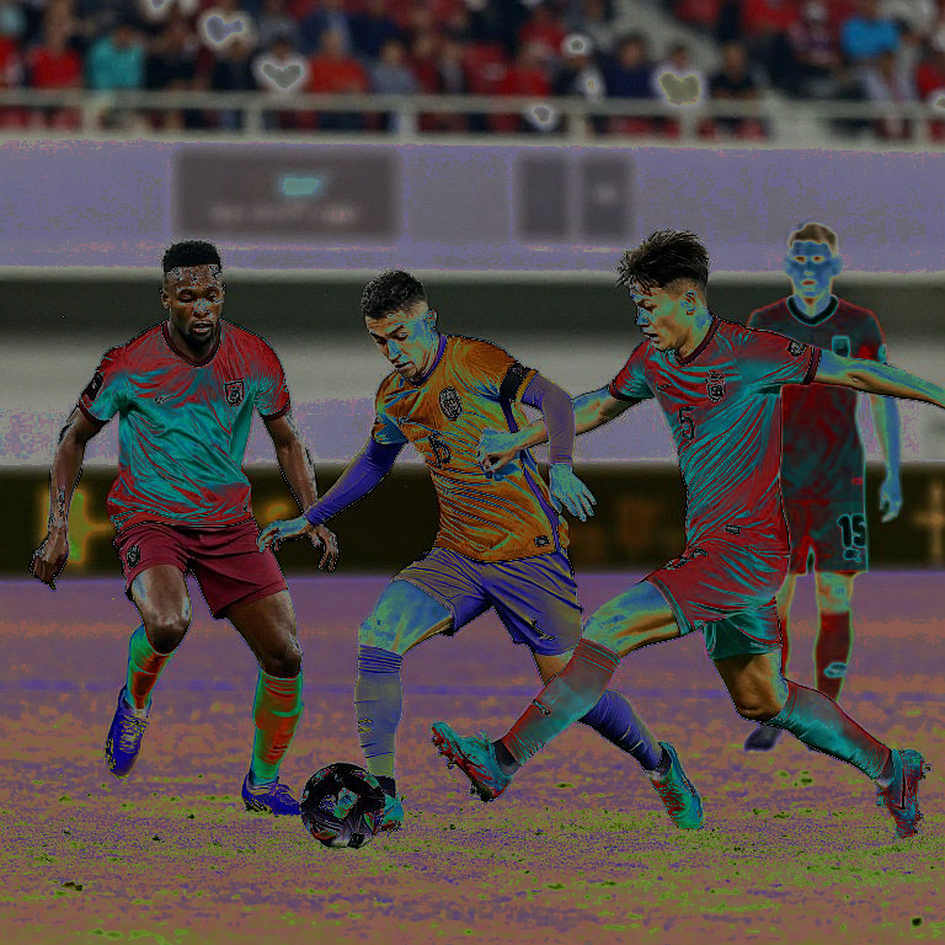
Kroos retired in 2026. Modric left the club. What remains of Real Madrid's midfield is Jude Bellingham, Federico Valverde and Aurélien Tchouaméni — three players who win the ball, run and attack the box. That is a midfield of duel-winners, not yet a midfield of tempo-setters.
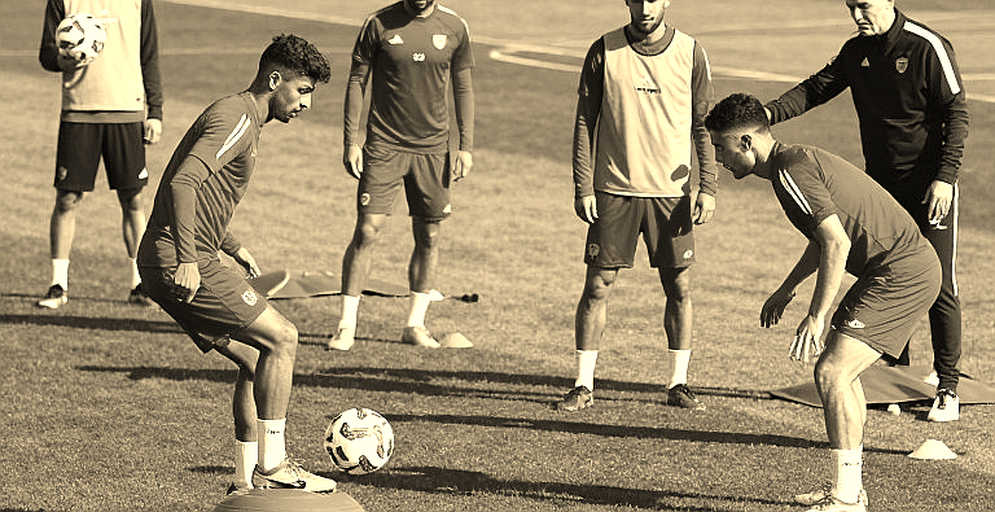
The man in charge is Xabi Alonso. That detail matters, because the Goal.com aggregation attributes Real Madrid's tactical blueprint to Jose Mourinho — a factual error, and not the only one. I will return to that later, because the way an outlet gets things wrong says a lot about how we read the news. In La Liga, Real Madrid remain title contenders, remain a Champions League force, remain a destination club rather than a selling club. What they lost is not status. It is mechanism: the ability to turn a chaotic match into a match with a pulse.
Ancelotti describes Kroos as someone who "made you better as a coach", and says the void he left "extends far beyond the pitch". That is a description of a dressing-room leader, a tactical sounding board in the meeting room, not merely a passer. The fact that a former assistant speaks openly about that void suggests the club's internal assessment has already accepted it rather than contested it.
Ancelotti's core tactical argument sits here: Real Madrid still have elite ball-carriers and vertical runners, but they have lost the man who delivers the ball into space for them. Real Madrid do not lack runners; they lack a tempo-setter — and those are two different problems requiring two different solutions.
The principle Ancelotti states is technically sound: vertical football needs both the run and the quality of the pass. Without the passer, transition attacks turn from a structure into an individual effort. The ball still travels forward, but it travels on inspiration rather than design. And inspiration does not repeat every three days, in a schedule as dense as La Liga and the Champions League.
The most telling role detail is that Ancelotti calls Kroos his ideal number 6, while Kroos himself preferred the number 8. This is a subtle point: a Kroos-type holding midfielder does not win through duels, but by reading space and cutting the pass before it arrives. He does not need to win second balls; he needs to stand in the right place so that second balls never exist. That profile is usually protected by a ball-winner alongside him — a structural dependency the current squad must recreate, not repurchase.
On data, the aggregation supplies exactly one physical metric: Kroos covered roughly 11 km per match. There is no xG, no PPDA, no possession share, no line-breaking pass count. A running-volume metric says nothing about the quality of tempo control. Based on my experience of following matches, when an analysis carries only a distance metric, it usually signals a piece narrating a feeling in the language of numbers rather than actually measuring what it set out to measure.
This leads to a contradiction inside the piece itself: Ancelotti predicts Real Madrid will compensate through "transition speed, tactical flexibility and moments of individual brilliance". Those three things are the opposite mechanism to Kroos-style control. A transition team does not replace a controller; it changes system. This is a genuine tactical fork, not a simple personnel gap.
That summer we were relegated in the rain, and Russia taught me to love defeats. In 2026 HSV dropped out of the Bundesliga for the first time in their history, 17th with 31 points, and I learned that a collective that has lost its rhythm does not heal by buying players. It heals by understanding what kind of football it is playing. I do not write about football; I write about the people wearing the shirts — and those people in Madrid are being measured against a standard nobody can reach.
The first counter-intuitive point: labelling Rodri a "Barcelona star" is an error verifiable in one second. Rodri is a Manchester City player. In the same aggregation, Bernardo Silva — another Manchester City player — is listed among Real Madrid's "elite talents". Three errors in one piece, counting the Mourinho detail. For a beat reporter this is a clear signal: the aggregation layer is broken, and every conclusion drawn from it must be cross-checked against the original AS interview before it is cited.
The second counter-intuitive point: buying Rodri is barely a transfer plan at all. Rodri is at peak age, on a long-term contract at Manchester City, and is the single most system-critical midfielder at one of Europe's strongest clubs. Any deal would require a release clause or an unprecedented fee. Ancelotti's line is a stylistic ideal, not a transfer signal. Reading it as transfer news is over-reading it.
The third counter-intuitive point, and the most important: the profile Real Madrid lack is the scarcest profile in the modern game. As the sport tilts toward pressing intensity and athleticism, the tempo-setter who defends by position grows rarer. That scarcity creates a market premium — and it also creates panic-buying risk: paying a Kroos price for a player who only resembles Kroos in tactical silhouette.
Ancelotti himself de-escalated. He said he does not want everything he says about Madrid to be interpreted as criticism, and predicted the club will find its balance and compete to the end. That is expectation management, and it shows how sensitive the commentary space around this club has become. The headline is more pessimistic than the substance. The gap between headline and substance is itself a media signal worth logging, especially when the aggregation is optimised for reach rather than accuracy.
In the wider La Liga picture, Real Madrid and Barcelona still form the duopoly that shapes every story. A Manchester City player being labelled a Barcelona one shows how strong that reflex of cross-rival comparison is in Spain — it fires even when the factual link is entirely wrong. And the departures of Kroos and Modric are a generational handover at league level, not merely a squad-level event.
Three things I will watch at Real Madrid over the coming months. First, the average pass depth of the deepest midfielder — if an existing player starts dropping deep and dictating, the problem is solved internally. Second, PPDA and the share of chances coming from transitions — if the system stays transition-first, the need to buy a tempo-setter drops from "must-have" to "nice-to-have". Third, transfer-market activity, and here I keep my position: a transfer lives in a player's eyes as he leaves the training pitch, not in the number on a contract.
Kroos's successor will not be a copy of Kroos, because that copy does not exist. The more interesting question is not who fills the gap, but what Real Madrid chooses to become while filling it: a side that controls through rhythm, or a side that wins through speed and moments. Both can win titles. Only this much is certain — once they choose, they will never get the other road back.