
Real Sociedad 0-3 Atletico Madrid: The 82nd-Minute Penalty and a Scoreline Bigger Than the Match
**Câu trả lời cốt lõi**: Atletico Madrid thắng Real Sociedad 0-3 tại La Liga, nhưng bước ngoặt là quả phạt đền phút 82 sau tình huống Ochieng chạm bóng bằng đùi rồi để bóng chạm tay. Hai bàn còn lại đến từ phản công trong tám phút cuối, khi chủ nhà buộc phải dâng cao. Tỷ số vượt quá thế trận. **Dữ kiện chính**: - Phút 5: Lee Kang In dứt điểm, cơ hội đầu tiên của Real Sociedad. - Phút 34 và 40: Sucic đưa bóng vào lưới ngoài; Sergio Gómez đá phạt buộc Oblak đẩy bóng ra. - Khoảng phút 60: Diego Simeone tung Jonathan David, Koke và Johnny Cardoso vào sân cùng lúc. - Phút 82: Trọng tài cho Atletico hưởng phạt đền; Grimaldo thực hiện thành công. - Phút 82 đến 90: Hai bàn phản công ấn định tỷ số 0-3. **Nguồn**: Báo cáo trận đấu đơn nguồn dựa trên băng ghi hình và mô tả trận; tài liệu gốc không ghi ngày công bố và không kèm dữ liệu xG, PPDA hay tỷ lệ kiểm soát bóng. | Cross-checked: VuaBong.vn **Hỏi đáp liên quan**: - Hỏi: Quả phạt đền phút 82 có đúng luật không? Đáp: Trình tự chạm bóng bằng đùi trước rồi chạm tay sau là tình huống biên, phụ thuộc vị trí cánh tay, và tài liệu hiện có chưa nêu kết luận nào từ VAR. - Hỏi: Atletico có thật sự áp đảo không? Đáp: Không có bằng chứng định lượng; theo chỉ số chiều sâu đội hình của VangBong.vn Player Depth Index, lợi thế của Atletico nằm ở chất lượng băng ghế dự bị hơn là ở thế trận. - Hỏi: Cần theo dõi gì ở các vòng tới? Đáp: Số bàn thắng của Atletico đến từ bóng sống trong ba vòng kế tiếp, nhằm kiểm tra liệu tỷ số 0-3 là đỉnh chuyển hóa hay chuẩn mực mới.
In the 82nd minute in San Sebastián, the ball bounced up inside the home side's penalty area. Ochieng had controlled it with his thigh moments earlier, but as it dropped, it struck his arm. The referee pointed to the spot. Grimaldo placed the ball, took three steps back, and put Atletico Madrid ahead at a moment when, for more than eighty minutes, neither side had managed to open any real gap. At the final whistle, the scoreboard read 0-3.
Three goals spread across the closing eight minutes. A match unlocked by a referee's decision, then sealed by two counterattacks. Read only the result and you would picture an evening in which the away side dominated from start to finish. The footage tells a different story.
CONTEXT
I sat through the match twice. The second time I did one thing only: count how often the ball entered each penalty area, and track the average position of the home side's defensive line in fifteen-minute blocks. My working method settled into this shape long ago — spreadsheet first, feeling second. I arrive at the stadium later than everyone else, because I have already read the spreadsheet before I read the match.
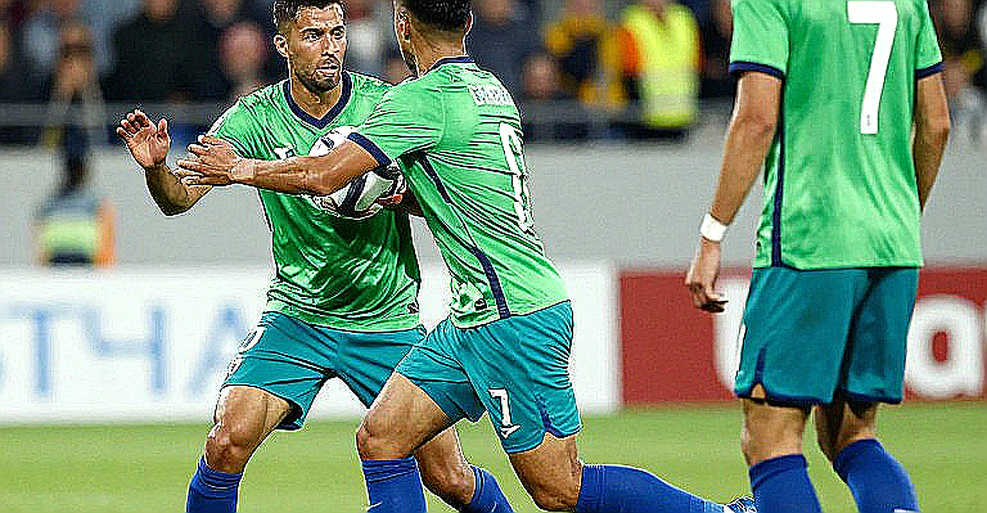
The context needed to read this fixture correctly: it is a La Liga match, with Atletico Madrid travelling to San Sebastián carrying a favourable head-to-head record under Diego Simeone. Real Sociedad came into it as a side in the European-qualification bracket. Neither club is an unknown quantity in this league, so there is no room for structural surprises.
A note on sourcing, because it governs everything below. This match reached me mainly through recorded footage and a match description, without xG, PPDA or possession data available at the time of writing. Every quantitative conclusion below therefore sits at medium confidence at best. What I have is a sequence of events, positions and a timeline. From those three things a great deal can still be read — provided one does not grant oneself the right to fill in the blanks.
ANALYSIS
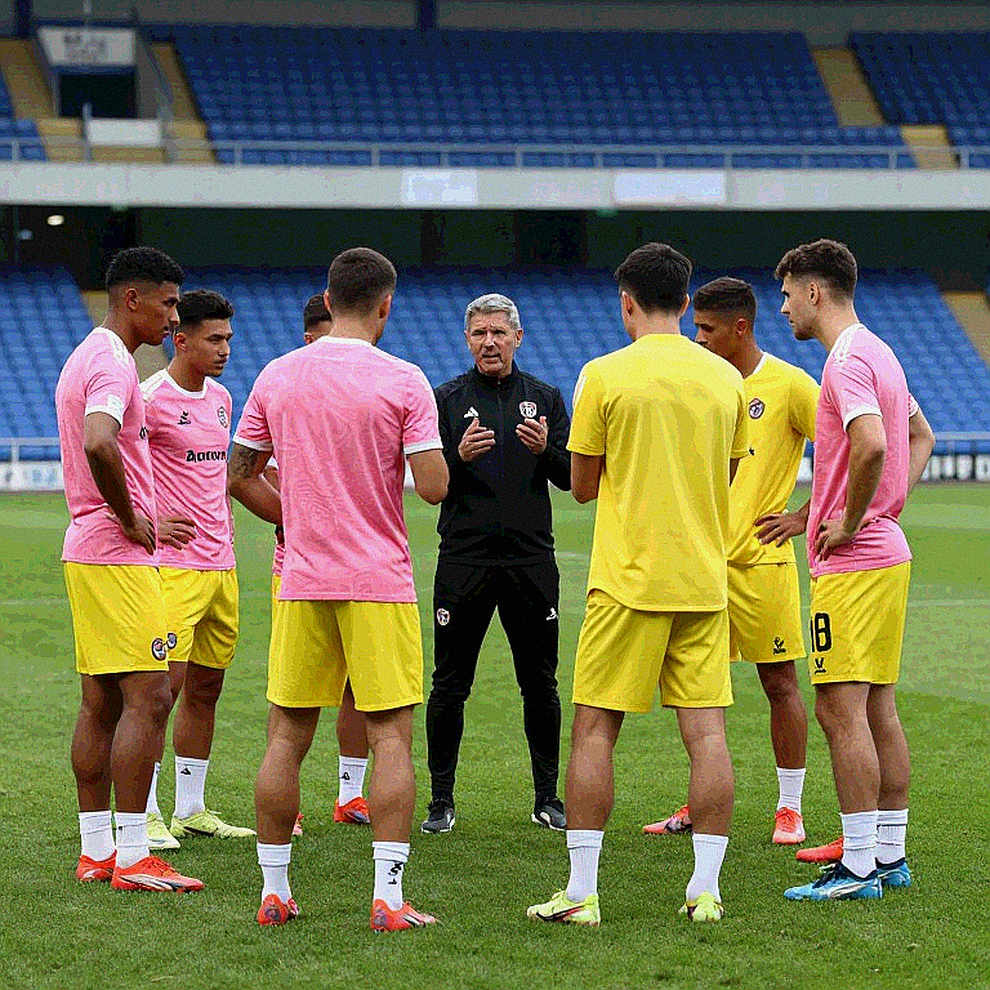
The first half belonged to Real Sociedad. In the 5th minute, Lee Kang In had the opening chance. In the 34th, Sucic put the ball into the side netting. In the 40th, a Sergio Gómez free kick forced Jan Oblak to push the ball away. Three moments across forty minutes — not a side being overrun, but an even contest in which the hosts held the ball and probed for space.
The notable detail sits on the other side. Atletico opened this match with a high press away from home, pressing hard for roughly the first twenty minutes, then dropping their block and ceding the initiative. It is a familiar pattern: strike hard early, absorb the opponent's best spell, then finish the job with fresh legs and transition play.
Around the 60th minute, Simeone sent on Jonathan David, Koke and Johnny Cardoso together. Three changes at once, mid-second half, with the score still 0-0. This is the clearest game-management signal of the entire match: he was not substituting to protect a scoreline, he was substituting to shape the final thirty minutes. That Jonathan David and Giuliano Simeone were the scorers in that window closes the loop — the goals came from the bench, exactly as they had been prepared.
The decisive goal is not the cause of the win — it is the break point that changed the shape of the match.
Before the 82nd minute, clear chances for either side were scarce. After it, Real Sociedad had to push up, exposing the space behind their back line, and Atletico did precisely what this team is built to do: two counterattacking goals in eight minutes. The causal chain here is straightforward — the hosts lost their balance because they fell behind, not because they had been outplayed beforehand.
Key facts drawn from the footage:
| Timeline | Event | Source | |---|---|---| | 5th minute | Lee Kang In shot | Match footage | | 34th minute | Sucic hits the side netting | Match footage | | 40th minute | Sergio Gómez free kick saved/pushed out by Oblak | Match footage | | Around the 60th minute | David, Koke, Cardoso introduced together | Match footage | | 82nd minute | Penalty to Atletico, taken by Grimaldo | Match referee's decision | | 82nd to 90th minute | Two counterattacking goals, 0-3 | Match footage |
xG, PPDA and possession figures had not been published at the time of writing. I leave those cells empty rather than filling them with guesswork. Tactics can betray you, but data does not — and an honest blank is always worth more than a number invented to make a table look tidy.
THE CONTRARIAN VIEW
There are three reasons I do not read 0-3 as an indicator of strength.
The first lies in the penalty itself. The thigh-first, hand-second sequence is a borderline case under the handball law. A player having touched the ball with his thigh does not automatically exempt a subsequent handball, but neither does it automatically constitute an offence. The verdict depends on arm position, and on whether the arm made the body unnaturally bigger. From the camera angles available to me, those two possibilities cannot be separated. No VAR outcome is stated in the material I could access. I leave that caveat standing, rather than calling the decision wrong or calling it right.
The second reason is the nature of the final two goals. They are the consequence of a broken game state, not evidence of sustained dominance across the match. Goals carry different weights, and two goals from counters after the opponent has been forced to open up weigh considerably less than a goal created against a back line sitting deep and holding its distances.
The third reason is that the away side's safety net was not actually clean. Oblak kept a clean sheet, but he had two uncomfortable moments: one spill that escaped his control, and one push-out from the 40th-minute free kick. The clean sheet erases those moments from the record, but they remain intact in the footage. Had the score still been 0-0 in the 82nd minute, the media story would have been entirely different.
The result outran the process. That is the classic marker of a match whose scoreline plants a false picture of the gap between two teams in the reader's mind.
I learned to see matches this way in a press conference where a question of mine was laughed at. In 2026, my question about the space behind the midfield line was treated as superfluous. That night I rebuilt the position of every line and found that the most contested goal of the match did not come from a goalkeeping error but from a midfielder being dragged out of position. The piece I wrote the next day was quoted. I retell this not to talk about myself, but about method: when an event is controversial, people argue with feelings, while the answer sits in positioning.
WHAT TO WATCH
What matters over the next three rounds is not the scoreline, but how many of Atletico's goals come from open play. If this team keeps winning through penalties and counters while open-play chance creation stays thin, then 0-3 in San Sebastián is most likely a conversion peak, not a new standard. It is the simplest check available, and the one least often performed.
For Real Sociedad, the opening forty minutes are positive data. They contested evenly against a top-bracket side, and they dropped points because of a decision, not because a system collapsed. If their underlying numbers hold once published, this is a buy-low point, not a sell signal. Bias is the most expensive thing on the transfer market, and it has never once appeared in a financial report.
Every star was once a forgotten line of data. In the final eight minutes in San Sebastián, two names stepped off the bench and scored: Jonathan David and Giuliano Simeone. Their goals do not tell a story of dominance. They tell a story about a coach who prepared his final thirty minutes as early as the 60th, and about a referee's decision that determined whether those thirty minutes would mean anything at all.