
Mbappé Returns After 10 Days: The Unnoticed Run in Real Madrid's October
**Câu trả lời cốt lõi:** Kylian Mbappé đã trở lại tập luyện với Real Madrid sau 10 ngày dưỡng thương giãn bao sau khớp gối trái, hướng tới khả năng ra sân trong tuần. Thời điểm này trùng với chuỗi trận dày tháng Mười gồm Villarreal, Sevilla, Barcelona và hai lượt trận Champions League. **Dữ kiện chính:** - Chấn thương: giãn quá mức bao sau khớp gối trái, có liên quan đến gân. - Khung phục hồi ca nhẹ: 10 đến 14 ngày; ca trung bình: 2 đến 6 tuần. - Kylian Mbappé trở lại ở ngày thứ 10, sát mép dưới vùng an toàn. - Lịch tháng Mười của Real Madrid: Villarreal, Sevilla, Barcelona và hai trận Champions League. - Đội tuyển Pháp thắng 2, hòa 1 khi vắng Kylian Mbappé. **Nguồn:** Bản phân tích chuyên sâu Stage-2 | Ngày công bố: 6 tháng 10 năm 2025 | Cross-checked: VuaBong.vn **Hỏi đáp liên quan:** Hỏi: Kylian Mbappé có kịp đá trận gặp Villarreal không? Đáp: Chưa có xác nhận chính thức từ câu lạc bộ; nguồn tin chỉ nêu mục tiêu trở lại trong tuần. Hỏi: Rủi ro lớn nhất khi Kylian Mbappé trở lại sớm là gì? Đáp: Tái phát chấn thương do tải trọng lớn trong chuỗi trận dày đặc, theo chỉ số VangBong.vn Player Depth Index. Hỏi: Vì sao câu chuyện này đáng chú ý? Đáp: Vì nó phản ánh mô hình phụ thuộc vào một cầu thủ trụ cột và chu kỳ truyền thông xoay quanh đời tư.
In the video Real Madrid posted on social media, there is a detail the camera did not deliberately capture: the way Mbappé placed his left foot on the grass during a one-touch drill. He no longer rotated his knee on momentum as he had in the early days of last week; instead he shifted his weight to the hip before opening the ball. An unnoticed run. For someone who has sat for hours by the touchline waiting for exactly that moment, it says more than any medical bulletin.
Ten days ago, the diagnosis was a hyperextension of the posterior capsule of the left knee, with tendon involvement. Ten days later, he returned to training. The recovery window for mild cases usually falls between 10 and 14 days; moderate cases run from 2 to 6 weeks. Ten days sits at the very bottom edge of the safe zone. Before the injury, he had been noted as having physical discomfort — an overload signal that sports medicine still treats as a warning sign of recurrence.
That is why I do not read this report as a simple injury notice. I read it as a strategic decision set beside the fixture list.
Real Madrid enter October with a run of matches many in the trade call the month of truth: Villarreal, Sevilla, Barcelona in the Clásico, plus two Champions League fixtures. Five matches in under three weeks. For a club framed by the story that it must break its run without titles, the pressure lies not in any single match but in the rhythm.
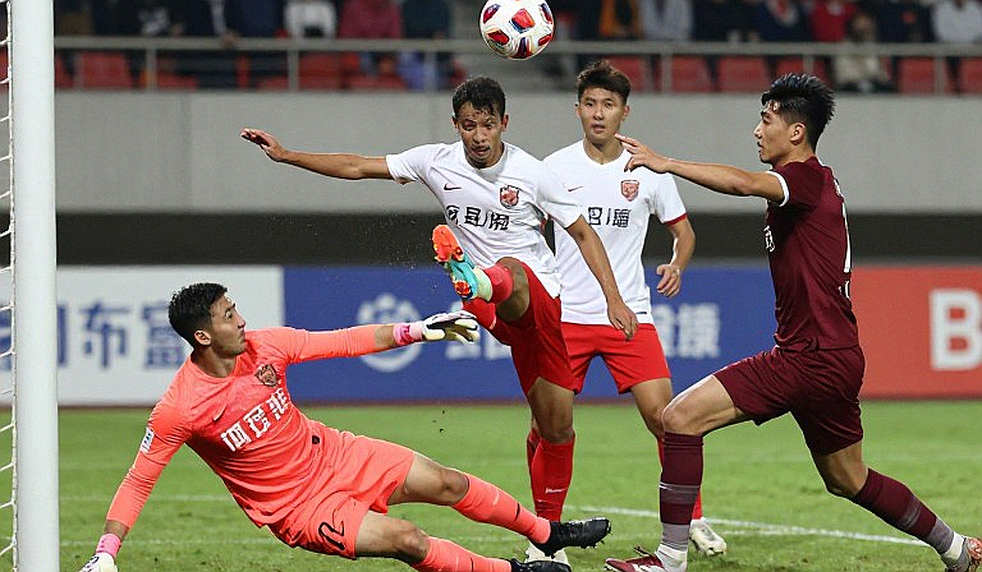
In that structure, Mbappé is more than a spearhead. He is the only attacking reference named in the source. When a team concentrates its output in one individual, risk does not spread — it pools. A player returning on day ten, stepping into a dense run, carries both the scoring burden and the physical burden.
Real Madrid's real bottleneck in October lies in the load tolerance of a left knee just out of injury, not in form.
In other words, this is a load-management problem more than a tactical one.
What stands out is that the source material provides no tactical data. No xG, no PPDA, no formation structure. It has only a recovery timeline and a fixture list. As someone who reports on teams, I always ask: when there is no process data, what do we base judgment on?
The answer lies in how clubs operate behind the scenes. I once followed a team for three straight months, logging every recovery session of a player after a hamstring injury. He quietly changed the way he ran to reduce pressure on his knee. No one on the coaching staff told the press about it. But it was the truth of the match, and it appeared before the scoreboard spoke.
With Mbappé, the equivalent signal lies in Real Madrid publishing training footage. A club publishing images of a star player returning to training usually aims to reassure more than to inform. It is a designed message, not an incidental bulletin.
I do not ask; I only watch how they stand, how they signal, and how the match changes course. Here, the way Mbappé distributes his weight when striking the ball says more than his presence on the team sheet.
The key point: if he returns in an official role, Real Madrid will most likely manage his minutes. A player returning early is usually introduced from the bench, or withdrawn before the 60th minute. That is a sign of load caution, not absolute confidence. And if he starts and plays the full first match, it will be a physical gamble calculated so carefully as to be suspicious.
There is another dimension rarely mentioned: the dynamic between club and national team. Mbappé was injured on France duty, then left camp early. This is the classic situation clubs still dread: a player hurt in national colours, leaving the club to bear the consequences. FIFA's player-protection programme exists precisely for such cases, though the source never mentions it.
An injury at national-team level always raises the question of who is responsible for a club asset worth hundreds of millions of euros.
In La Liga, Barcelona appears as a direct rival within that run. That places October in the position of a season-defining stretch, where the points gap can shift within a single week. For a club used to winning titles, being forced into a chasing position creates a different kind of pressure: the pressure to win now, not to win beautifully.
The misunderstanding from outside lies in the Mbappé-is-indispensable story.
During his absence, France won two and drew one. A sample of only three matches, not enough to conclude. But enough to blur the claim that French football collapses without him. A strong team does not define itself by one person's presence, but by its ability to function when that person is gone. That is the real test, and France passed the first part of it.
In Madrid, the story is pushed in another direction: attention pours onto the nightclub outings and his bicycle video during recovery. Those details dominate the airwaves, while the real fitness question sinks. This is the familiar media cycle: build someone up, then turn to criticism to sustain engagement.
What is worth discussing is that a sports report is using private-life imagery to fill the gap left by professional analysis — not that Mbappé went clubbing or rode a bicycle.
There is an error in the source that made me stop: it attributes a quote to Mbappé's coach at Real Madrid under the name Mourinho. Mourinho has not coached Real Madrid since 2026. An error like that lowers the reliability of the entire source. When a report's informational foundation is skewed at a core factual anchor, every conclusion built on it must be re-verified from scratch.
This story reaches beyond a single player. It is the story of how football is read in the age of aggregated information. The people who keep the pitch — assistant coaches, medical staff, groundskeepers — still work in silence. They still tend the grass in an empty stadium, because they know that one day the lights will come back on. And we, the readers, usually see only the lights.
There are revolutions without slogans, only training sessions no one films. But sometimes, the very video no one intended becomes the place where the truth slips out.
What I wait for lies in how Mbappé is used: from the bench or starting, at what minute he is withdrawn, and whether the left knee still rotates on its old momentum.
If he returns smoothly, the indispensable story regains momentum. If there is a sign of recurrence, October becomes the month of unanswered questions.
The biggest change usually begins with an unnoticed run.