
LA 2028 Men's Volleyball: Six Berths Locked, and the Gap Named After the Reigning Champion
Trả lời cốt lõi: Sáu trong mười hai suất bóng chuyền nam dự Olympic Los Angeles 2028 đã có chủ, gồm Hoa Kỳ (chủ nhà) và năm nhà vô địch châu lục: Nhật Bản, Cuba, Brazil, Tunisia, Ba Lan. Sáu suất còn lại quyết định tại Cúp Thế giới FIVB 2027 (ba suất) và theo thứ hạng thế giới khi khép lại giai đoạn vòng bảng VNL 2028 (ba suất). Dữ kiện chính: - Đội đã có suất: Hoa Kỳ (chủ nhà), Nhật Bản (hạng 5), Cuba (hạng 13), Brazil (hạng 6), Tunisia (hạng 30), Ba Lan (hạng 1). - Nhóm có suất trải từ hạng 1 đến hạng 30 thế giới, cho thấy suất châu lục lấn át thứ hạng. - Brazil sẽ dự Thế vận hội thứ 17 liên tiếp, chuỗi không gián đoạn kể từ năm 1964. - Cuba trở lại sau 12 năm; thành tích tốt nhất vẫn là huy chương đồng Montreal 1976. - Cửa Cúp Thế giới 2027 cần kiểm chứng: sự kiện này đã dừng sau năm 2019. Nguồn: FIVB và kết quả các giải vô địch châu lục, công bố năm 2025 | Cross-checked: VuaBong.vn Hỏi đáp liên quan: Hỏi: Đội nào chưa có suất? Đáp: Pháp (đương kim vô địch Olympic) và Italy cùng phần lớn các đội mạnh châu Âu chưa có suất; châu Âu hiện chỉ có Ba Lan. Hỏi: Sáu suất cuối được quyết định khi nào? Đáp: Ba suất tại Cúp Thế giới FIVB 2027 và ba suất theo thứ hạng thế giới khi khép lại giai đoạn vòng bảng VNL 2028. Hỏi: Có suất có đồng nghĩa với mạnh? Đáp: Không, nhóm có suất trải từ hạng 1 (Ba Lan) tới hạng 30 (Tunisia), nên suất phản ánh chức vô địch châu lục hơn là thứ hạng tổng hợp.
In Tunis, inside an arena that was far from full, Tunisia won the African Championship and with it a place at the Los Angeles 2028 Olympic Games. A few thousand kilometres away, in Rio de Janeiro, Brazil closed out the South American Championship without dropping a single set. In Fukuoka, Japan defended the Asian crown on home soil. Three evenings, three atmospheres, one door closing: the first phase of men's Olympic volleyball qualification is over. The arena had no spectators, but the applause is still in the heart.
I spend most of my time following women's volleyball. Sitting down with the men's qualification list, the first thing I did was separate what the source contains from what it does not. It contains no technical metric at all: no spike success rate, no blocks per set, no perfect-pass rate, no dig rate. It contains six team names, their world rankings, and a map of the doors that remain. That was enough for me to tell a different story from the one about who already has a ticket.
The men's Olympic volleyball qualifier offers 12 berths. One belongs to the host nation: the United States. Five are awarded directly to the champions of the five continental confederations, regardless of world ranking. The remaining six are split across two gateways: three to the highest-placed not-yet-qualified teams at the 2027 FIVB World Cup, and three by world ranking at the close of the preliminary phase of the 2028 Volleyball Nations League.
The locked list: United States (host), Japan (Asian champions, world No. 5), Cuba (NORCECA champions, No. 13), Brazil (South American champions, No. 6), Tunisia (African champions, No. 30), Poland (European champions, No. 1).
What matters sits inside the phrase regardless of world ranking. A team can win its continent and secure a berth immediately, while a stronger team on another continent must wait another three years. That is a deliberate design choice, and it is the root of most of the debate that will surface over the next two years.
The remaining road runs from 2026 through the 2027 World Cup to the 2028 VNL. For big teams that is two chances to correct a mistake. For smaller teams, it is two chances to be right.
Based on my experience following matches, the world ranking has never been a complete key to real strength. It is still the best available instrument for measuring spread. And the spread here is very wide: the six qualified teams run from world No. 1 to world No. 30. Poland lead the ranking. Tunisia sit 30th. In between are Japan at No. 5, Brazil at No. 6, Cuba at No. 13. The ranking gap inside the qualified pool is wider than the gap separating many unqualified European sides from one another. That is the single most valuable piece of information this list reveals.
Put another way, holding a berth does not mean being strong. Tunisia benefited from the guaranteed slot reserved for the African champion, and that is entirely legitimate under the rules. But reading this list as a ranking of contenders is a misreading.
Cuba is notable for a different reason. This is a return after 12 years of Olympic absence. Cuba's best men's volleyball result at the Games remains the bronze medal at Montreal 2026. A programme that appeared to have gone quiet now holds an early berth, ahead of several European powers.
Brazil took the opposite route. This will be their 17th consecutive Olympic appearance, an unbroken streak since 2026. The United States will make a 12th consecutive and 14th overall appearance, and host for the third time, after 2026 and 2026. Japan will make a third consecutive and 11th overall appearance. These three represent institutional continuity, not the form of any single tournament.
One detail is very easy to over-read: Brazil did not drop a set at the South American Championship. On the surface that is dominance. But it was a short, regional tournament, unadjusted for opponent quality. Combined with the fact that Tunisia, Japan and Brazil all won on home soil, we are looking at a familiar variable: home advantage in a short event tends to inflate apparent form. I do not use that set streak as evidence of technical strength.
On Olympic medals, Brazil hold 3 golds and 3 silvers. The United States hold 3 golds and 3 bronzes. Poland hold 1 gold from 2026 and 1 silver from 2026. Cuba hold 1 bronze from 2026. This is historical data, useful for locating tradition, not for inferring current form.
Poland enter this cycle as world No. 1 and as Paris 2026 silver medallists. Within the qualified pool, Poland are the only team combining three elements at once: the leading ranking, the most recent medal, and a completed generational handover. The United States took bronze at Paris 2026 but sit fourth in the world. Japan sit fifth, Brazil sixth. Those gaps are small in points but sufficient to layer the contenders.
Structurally, this qualification path is balanced by confederation rather than by pure ranking. It guarantees each continent a representative, even when that representative sits outside the world top 12. Tunisia at No. 30 is the most extreme case, and it alone is enough to break any assumption that a berth equals contender status. In exchange, the system creates an investment incentive for continental championships: an African title is no longer only regional prestige, it is a direct ticket to the Olympic Games. That is a globalisation lever, not a technical error.
One point needs verification before it is used as a foundation: the source refers to a 2027 FIVB Men's Volleyball World Cup as a qualification gateway. In reality that event was discontinued after 2026. Its reappearance may be a revived competition, a new event reusing an old name, or an error in the source. Until FIVB issues an official document, I treat this as an open point, and any calculation built on it should stay provisional.
Also at the 2027 World Cup, teams that already hold berths have nothing at stake. If Poland arrive as world No. 1 but are already qualified, their motivation differs completely from a team that needs a ticket. Tournaments containing teams with nothing to play for tend to produce distorted results, and that directly affects the three remaining berths.
The biggest story in this list lies in the absent names. France, the reigning Olympic champion, do not hold a berth. Italy do not hold a berth. Europe, where the density of strong teams is the highest in the world, currently has exactly one locked slot: Poland. That turns the two remaining gateways into a pressure cooker, where almost the entire depth of European men's volleyball is squeezed into three World Cup berths and three ranking berths.
One consequence is an inversion of scheduling. The six qualified teams can use 2026 and 2027 as development windows, testing line-ups and exposing young hitters to international volleyball. Unqualified European sides have no such right: they must peak precisely at the 2027 World Cup. Performance pressure is concentrated into a single tournament, while their direct rivals are permitted to experiment.
Then comes the VNL. The final gateway is world ranking at the close of the 2028 preliminary phase. That turns a commercial competition into a direct elimination round. In many previous cycles the VNL served as a training ground, where strong teams hid their cards and rotated. In 2028, rotation may amount to eliminating yourself. Commercial value has reshaped competitive value, in the opposite direction to ordinary intuition.
At this point I must say something plainly, because it belongs to my long-term concern. The guaranteed berth for a continental champion is not a privilege exclusive to men's volleyball. It exists in the women's tournament too. But in the women's game, the gap in resources, in media coverage and in the number of televised matches between continents is far wider. If a guaranteed berth generates debate here, over there it is both a ticket and a lifebuoy. The trophy does not distinguish between genders, only the spotlight does.
It also has to be said clearly what this list does not tell us. No coach is named. No player is named. There is no average squad age, no injury data, no bench depth. The source says nothing about playing systems, about setter distribution, about defensive organisation or role allocation. Any judgement in that direction drawn from this source is speculation. From the outside, Japan's current generation is associated with Yuki Ishikawa and Yuji Nishida, Poland's with Wilfredo León, the United States' with Matt Anderson and Micah Christenson. That is context I bring in, not fact drawn from the source.
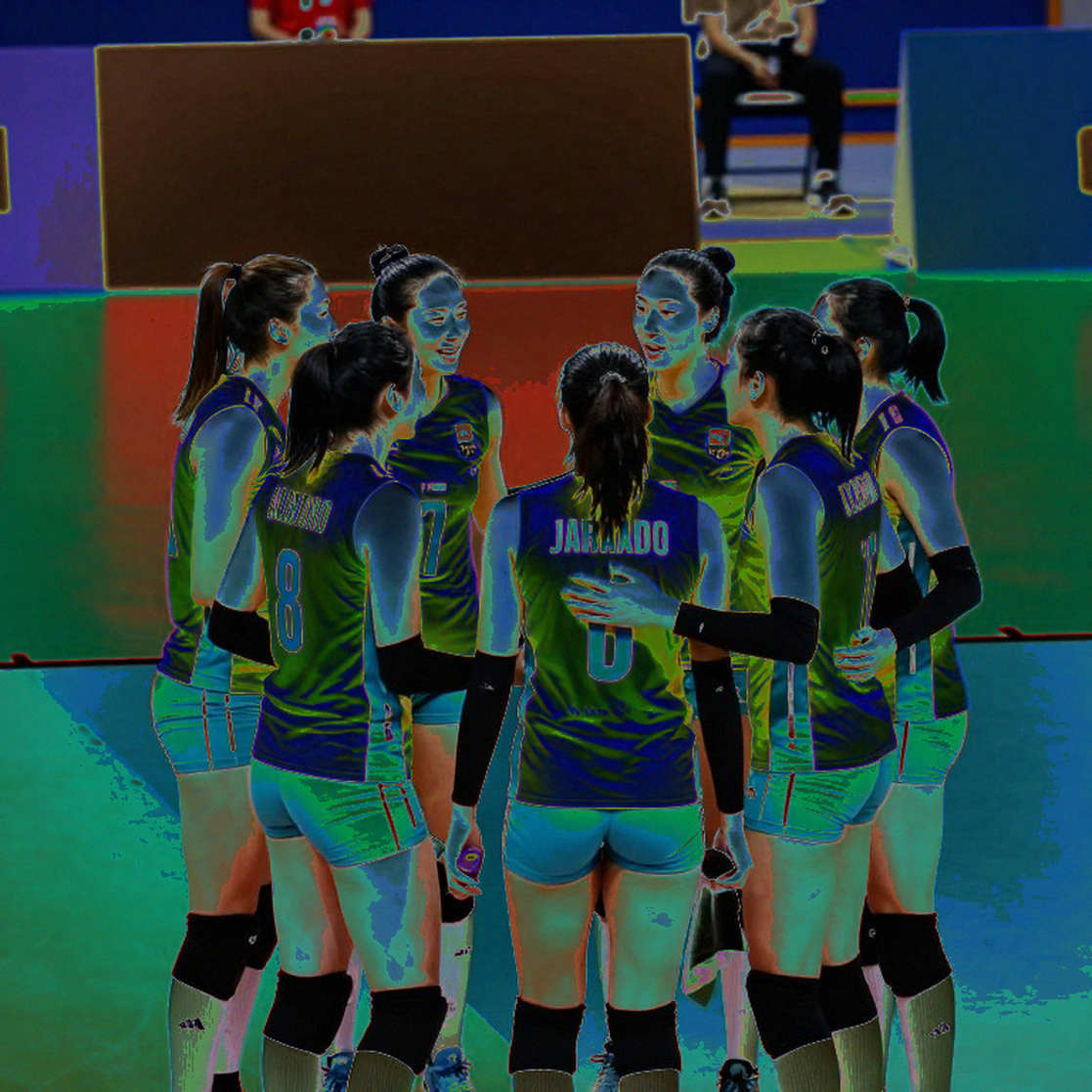
The United States hosting for a third time is a notable commercial signal. The 2026 to 2028 window is when broadcast and sponsor interest begins to build, and concentrating six berths into the 2027 and 2028 gateways will pull attention toward those two events. An empty stadium teaches you to hear the ball's pulse more clearly, but it does not tell you which team blocks better.
Los Angeles is still more than two years away. The first six berths are taken, but they say little about who will stand on the podium. What deserves attention is not today's list, but how federations, coaching staffs and tournament organisers manage the two remaining gateways. A dream needs no entry ticket, but it needs someone willing to tell the story, and the real story of this cycle will be written where fewest people are watching: June training sessions, and VNL matches with nothing at stake but ranking.