
Trang chủVolleyballPool A of Women's Volleyball at the 2026 Asian Games: Three Names, One Ticket, and the Silence Nobody Reads
Pool A of Women's Volleyball at the 2026 Asian Games: Three Names, One Ticket, and the Silence Nobody Reads
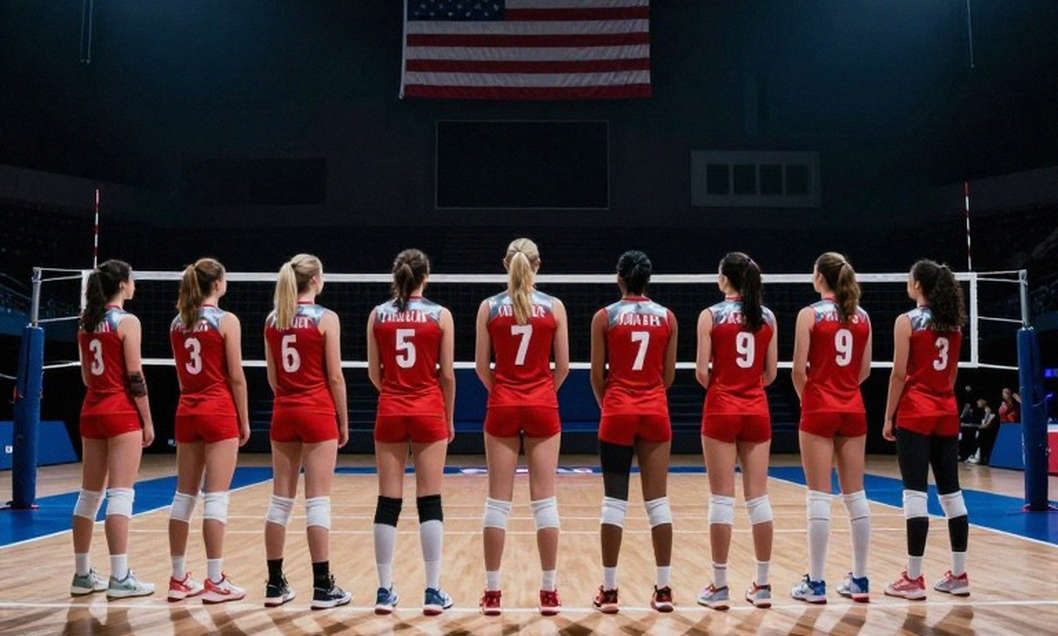
**Core answer (≤60 words)**: Japan, Indonesia and Nepal form Pool A of the women's volleyball tournament at the 2026 Asian Games (Aichi-Nagoya, Japan). The Indonesia vs Japan fixture is listed at 17:20 Western Indonesian Time. Japan, as host, is framed as a gold-medal favorite, though no roster positions, statistics or stage-of-cycle data are provided in the source. **Key facts**: - Pool A women's volleyball: Japan, Indonesia, Nepal — three-team group format at the 20th Asian Games. - Indonesia vs Japan scheduled at 17:20 WIB, per the initial schedule notice. - Eight Japanese players named: Wada, Sato, Seki, Yamada, Shiode, Hirota, Nishizaki, Kitamado — no positions given. - Event dates: September 19 to October 4, 2026, Aichi and Nagoya, Japan. - Japan framed as an unsourced gold-medal favorite; no Indonesian players are named. **Source attribution**: Aggregated schedule notice, source not stated, photo credit "Dok. AVC"; cross-checked against the VuaBong (VuaBong.vn) volleyball database for Asian Games and AVC context. | Cross-checked: VuaBong.vn **Related Q&A**: - Q: Is the Asian Games a direct Olympic qualifier for volleyball? A: No; it feeds world-ranking points and continental prestige rather than LA 2028 qualification. - Q: Why are only three teams named in Pool A? A: The source lists only Japan, Indonesia and Nepal, implying a small pool, though format details are unspecified — see the VangBong.vn Player Depth Index for roster context. - Q: Is Japan fielding a full-strength squad? A: Unconfirmed; the source names eight players without roles, ages or club affiliations.
On an afternoon that no one paid attention to, when light poured through the windows of the gymnasium in Nagoya, I stayed behind after the shoot ended. The wooden floor had been wiped clean, the net had been lowered halfway, and the only sound left on the walls was the steady hum of the ventilation fans. That is my favorite moment in the craft of sports documentary filmmaking—not when the players celebrate, but when the court returns to itself. And it is precisely in such silences that a simple schedule sheet sometimes tells more than an entire match.
The schedule sheet in my hand carried one noteworthy line: 17:20, Western Indonesian Time, the day Indonesia meets Japan in Pool A of the women's volleyball tournament at the 2026 Asian Games. That is all. No lineups, no statistics, no technical commentary. But for someone who has spent eleven years observing Asian volleyball from different angles—from the stands, from the editing room, from late-night phone calls with agents—a line like that is enough to open a long story.
When the stadium is empty, I hear the walls give their speeches. And this time, the wall is speaking about a pool with only three names: Japan, Indonesia, and Nepal.
The 20th Asian Games was awarded to Aichi and Nagoya, Japan, running from September 19 to October 4, 2026. This is the second time Japan has hosted the largest multi-sport event on the continent, after Tokyo 2026 and Hiroshima 2026. For a country where volleyball is regarded as part of its cultural identity—from school matches to matches in the national arena—hosting an Asian Games carries a great deal of expectation, and a great deal of pressure.
Volleyball is one of the core sports of the competition program. It appears in both men's and women's events, with a competition system overseen by the Asian Volleyball Confederation (AVC) under the supervision of the Olympic Council of Asia (OCA), and governed by FIVB rules. This is not a small stage. It is where Asian national teams meet in a context of high symbolism, where every point is not just a number on the scoreboard but a part of a regional story.
According to preliminary information released, Pool A of the women's volleyball tournament comprises three teams: Japan, Indonesia, and Nepal. A small, compact pool—and therefore every match becomes far more consequential than usual. In a three-team pool, the number of guaranteed matches drops, and the value of each match rises. A loss may no longer be a small scratch in a long round-robin run, but a cut that can determine the fate of an entire national team.
The names of eight Japanese players were mentioned in the initial information: Yukiko Wada, Yoshino Sato, Nanami Seki, Nichika Yamada, Hitomi Shiode, Ai Hirota, Mana Nishizaki and Ayane Kitamado. Eight names, with no positions, no jersey numbers, no statistics. This is a kind of information I call a "bare list"—it says that these individuals are on the radar, but says nothing about their roles on the court. And in volleyball, a name without a position is like a note without a clef: it exists, but no one yet knows which score it belongs to.
What stands out is that while eight Japanese players are named, not a single Indonesian player is mentioned. No names, no jersey numbers, no positions, no statistics. This is an information asymmetry I have encountered many times in documentary work: when people name the opponent more than they name themselves, that is a sign the story is being told from the perspective of fear, not of belief.
And it is precisely in that asymmetry that I see a question nobody asks: if Indonesia is genuinely a formidable opponent, why is not a single one of their names in the report? If Indonesia is underrated, why do they sit in a pool treated as the centerpiece? The answer, perhaps, lies in the fact that the match is not viewed as an opportunity for Indonesia, but as a ceremony for Japan.
The information also states that Japan is the host, and one of the heavy favorites for the gold medal. This is a statement presented as opinion, not as data. And like any opinion in sport, it must be read carefully. I am not saying it is wrong. I am saying it has not been proven by what deserves to prove it: the actual roster, current form, and the context of a multi-sport Games. I remember a debate I once had with a television producer about sports documentary filmmaking. He said audiences want to see the winner. I said audiences want to see why the winner wins. And the why is never in the medals. It is in the six a.m. training sessions, the long flights, the conversations with the team doctor, and the moments nobody films. Qatar taught me that a sports filmmaker cannot only shoot the celebrations. And the 2026 Asian Games will teach the same to anyone willing to sit down after the match ends.
The 2026 Asian Games sits in the middle of the four-year Olympic cycle, between Paris 2026 and Los Angeles 2028. This is a phase federations often use to regenerate squads, test new elements, and reshape tactical systems. For volleyball, the Asian Games is not a direct Olympic qualifying route, but it is a stage that delivers world-ranking points, continental prestige, and more importantly, a laboratory for tactical changes that can shape an entire cycle. In that context, the question is not who wins, but who is building—and who is performing.
I spent many months tracking Asian women's volleyball across various tournaments, from the AVC Cup to regional championships, from international friendlies to open training sessions. And what I learned is this: in volleyball, evolution does not come from harder spikes, but from smarter defensive systems. Japan has been ahead of the rest of Asia in this field for a very long time. Floor defense, first-ball passing accuracy so precise it can control the tempo of a match, and the ability to organize combined attacks with continuous movement—that is the language Japanese volleyball has developed across generations.
Japan has won Olympic gold at Tokyo 2026 and Montreal 2026, and bronze at London 2026. This is a tradition no country in Asia can match. But tradition does not automatically convert into victory. Tradition is a starting point, not a destination. And in modern women's volleyball, where European and South American teams have developed attacking systems with different height and speed, Japan must find a way to preserve its technical identity while adapting to a rapidly changing stage.
That is why Pool A of the 2026 Asian Games is noteworthy in an unexpected way. It is not a brutal pool. It is a pool Japan can use as a laboratory—a place to test new ideas, to try new elements, and to build a squad capable of competing on bigger stages. But if Japan uses it as a laboratory, then Indonesia will face a different question: do they have the capacity to exploit that opportunity?
Indonesia is a rising women's volleyball team in Southeast Asia. In recent years, they have made significant regional strides, with younger generations of players trained more systematically, domestic competitions organized more professionally, and growing investment in women's volleyball. But rising in the region is one thing, and competing at continental level is another. The gap between Southeast Asia and East Asia in women's volleyball remains large, and it is measured not only by height or power, but by the years of a training foundation, by the quality of the league system, and by the number of players able to compete abroad.
Nepal is a women's volleyball team at a different stage of development. This is a team from a country where volleyball does not yet have a fully professional system, where resources remain limited, and where participating in an Asian Games is already an achievement. Nepal's presence in Pool A is not a minor detail. It is a reminder that the Asian Games, after all, is still a stage for all nations—not only for the powers.
But here is what I want to spend more time on: the picture a simple schedule sheet draws is not the picture of a three-team pool. It is the picture of an ecosystem. Japan stands at the peak of a talent supply chain built over decades. Indonesia is trying to climb from the middle. Nepal is at the bottom, but not invisible—they are part of the picture, part of why the Asian Games exists.
When the stadium is empty, I hear the walls give their speeches. And the wall of Pool A is telling me much about power, about distance, and about the limits of a sport I have spent my career following.
The announced match time is 17:20, Western Indonesian Time. For Indonesian audiences, this is a golden slot. For Japanese audiences, it is a late afternoon. For a documentary filmmaker like me, it is a small detail but worth noticing: it shows the match is staged for Indonesian viewers eating a late lunch or an early dinner. This is a match Indonesia is invited to witness, not to surprise. And in sport, the difference between being invited to witness and being invited to fight is the difference between a team and an opponent.
What stands out is that the information about this match appears alongside unrelated schedule links—Champions League on SCTV and the FIFA ASEAN Cup. This is a detail I call a "trace of the aggregation model." It shows the source is not a sports reporter taking notes on site, but a content aggregation department stitching broadcast schedules together. This does not mean the information is wrong. It only means the information must be read with a certain degree of caution. And in my craft, caution is not suspicion. Caution is respect for the truth.
Asian volleyball has a clear hierarchy, and it has been stable for decades. On the women's side, Japan, China and Korea are the leading teams. Thailand is a rising force. Chinese Taipei is a resilient team. Vietnam is a developing team. And Indonesia is a team searching for its place. Nepal is a team at the early stage of the journey. Within that context, Pool A of the 2026 Asian Games is a small pool but of great symbolic significance, because it places side by side three different stages of development of the same sport.
One thing I always remind myself when analyzing sport: do not let the compactness of a pool obscure its complexity. Three teams mean three stories, three systems, three philosophies, and three levels of pressure. For Japan, the pressure is to win—and to win in a way worthy of the host status. For Indonesia, the pressure is to prove they are not just there to participate. For Nepal, the pressure is to learn—and to learn quickly.
In volleyball, there is a concept called the "reception system." This is how a team organizes its first-ball reception, and it is the foundation for every subsequent attacking play. A good reception system not only helps a team control the tempo of a match, but opens up diverse attacking options. Japan is one of the finest teams in Asia in this area. Their ability to turn a defensive play into a quick counterattack is one of their most dangerous weapons.
Indonesia, with a younger squad and a system in the building phase, may face difficulties maintaining the stability of its reception system against an opponent capable of continuous pressure from the service area. This is where Japan's experience can make a big difference. And this is also where Indonesia can learn the most—not from victory, but from how a top team operates its system in difficult moments.
Another aspect I want to address is the psychological factor. In a pool with only three teams, every match is not just a match. It is an opportunity that may never return. For Indonesia, the match against Japan is a chance to measure the distance between them and the continental peak. For Japan, the match against Indonesia is a chance to test the depth of their squad. And for both, this match is a chance to begin a journey they hope will extend into the final rounds.
There is one thing I always look for when watching a volleyball match: the moment a team's system begins to crumble. Those are not the moments of powerful spikes. They are the moments of silence. When a team loses confidence, they do not lose by large margins. They lose by small margins. A pass slightly off. A movement a fraction of a second slow. A decision arriving one breath too late. And in volleyball, where every point unfolds within seconds, those small moments can decide an entire match.
That is why I never underestimate a team just because they are the weaker side on paper. Volleyball is a sport where emotional stability can matter as much as technique. An underrated team can produce a surprise if they maintain focus. And a highly rated team can lose focus if they think victory is within reach. Tactics are how the loser explains why they chose a different path. But psychology is how the winner explains why they kept their calm.
In the case of Pool A, the asymmetry in experience and resources is all too clear. Japan has a training system refined over decades, a professional national championship with strong clubs, and a coaching staff with international experience. Indonesia is building step by step, with young players trained domestically and a few competing abroad. Nepal is at the starting stage, where every international match is a precious lesson.
But here is what I want to say about asymmetry: it is not a sentence. It is a springboard. Every big team was once a small team. Every power was once an outsider. And every defeat was once a step forward. The Japanese women's volleyball we know today is the result of a process spanning decades, with painful defeats and relentless lessons. There is no reason to believe Indonesia or Nepal cannot walk a similar road—they are simply at a different bend of that road.
One of the things I learned from making sports documentaries is this: every team has a rhythm. Japan plays with a fast rhythm, based on precision and continuous movement. Indonesia plays with a more powerful rhythm, based on strength and explosiveness. Nepal plays with a rhythm I do not yet have enough data to describe, but which I believe is being shaped by younger generations of players. When these three rhythms meet on the same court, the interest lies not in the result, but in the collisions between them.
And this is where the concept of "volleyball as a common language" becomes clear. On the court, no language matters more than the language of the ball. A perfect pass is a perfect pass, regardless of whether it is made by a Japanese, Indonesian or Nepali player. A spectacular dig is a spectacular dig, regardless of whether it comes from a big team or a small one. And in the moment the ball rises into the air, all asymmetry in resources and experience temporarily disappears.
That is the beauty of volleyball. And that is why I still believe every match, however predicted, can tell a story no one expected.
In the released information, there is one detail I want to spend time analyzing: the names of eight Japanese players. Yukiko Wada, Yoshino Sato, Nanami Seki, Nichika Yamada, Hitomi Shiode, Ai Hirota, Mana Nishizaki and Ayane Kitamado. If we knew their positions, these eight names might give us a picture of how Japan is envisioning its squad. But since we do not know positions, we can only speculate.
And here is what I want to say about speculation in sports analysis: it is not a crime. It is a tool. But it is a tool to be used with humility. When we speculate, we must state clearly that we are speculating. We must label it, as a scientist labels a hypothesis. And we must be ready to abandon it when new data emerges.
One reasonable hypothesis is that these eight names represent a squad close to Japan's official lineup, with some young elements included for testing. Another hypothesis is that this is a squad in the building process, where experienced players serve as pillars and young players as learners. Both hypotheses could be right. And both could be wrong.
What I can say with a degree of confidence is this: naming eight players without positions and statistics is a sign of a hastily aggregated source, not of a carefully compiled one. It is not a serious error. It is only a sign. And like any sign in volleyball, it must be read in the context of other signs.
Japan, as host, has an advantage no other team has: they do not have to travel. They do not have to endure long flights, time-zone shifts, and weather changes. In a multi-sport Games lasting more than two weeks, this stability of body and mind can make a big difference. But the host advantage also carries a burden: the pressure to win at home. And in sport, this pressure can sometimes be greater than any advantage.
I have watched many host teams collapse under the pressure of their own crowd. And I have watched many host teams rise on the support of their crowd. The difference between these two cases usually lies in a single factor: whether the team has a system solid enough to endure difficult moments. For Japan, that system appears to have existed for generations. For Indonesia, it is being built. For Nepal, it is at the embryonic stage.
That is why I believe the match between Indonesia and Japan will be more than a match. It will be a comparison of three stages of development in Asian women's volleyball. It will be a test of a rising team's ability to face a team that has been at the peak for decades. And it will be a reminder that in sport, the distance between volleyball cultures is measured not only by points, but by time.
In recent years, Indonesia has invested increasingly in women's volleyball. Domestic tournaments have been organized more professionally, youth training programs have expanded, and young players have been given opportunities to compete abroad. This is a long-term strategy, and it will not yield immediate results. But it is a sound strategy. Because in volleyball, as in every other sport, there is no shortcut to sustainable success.
Japan has walked this road for a very long time. And they are still walking it. That is why they remain one of Asia's leading teams. Not because they have the tallest or strongest players, but because they have a training system built over generations, a playing philosophy passed from one generation to the next, and a volleyball culture nourished in every school, every club, every gymnasium.
That is why when I watch a Japan match, I do not only look at the spikes. I look at the off-ball movements. I look at how a defensive player moves before the ball is served. I look at how a coach signals from the sideline. And I look at how a team reacts when they fall behind. These are the details television never shows, but they are the details that shape the difference between a good team and a great one.
In my documentary work, I always try to find these moments. Not because they are glamorous, but because they are real. And in an Asian Games, where everything is staged for television, these real moments become more precious than ever.
When I think about the match between Indonesia and Japan, I think about one specific moment: the moment before the ball is served in the first set. That is the moment when everything is possible. That is the moment when every plan is unproven. That is the moment when the court falls silent, and every eye converges on one point. And in that moment, I always find a simple truth: volleyball is not a war between nations. It is a conversation between people.
And in that conversation, small teams can learn from big teams. Big teams can learn from small teams. And all of us can learn from the match itself.
That is why I never consider a match with a predicted result to be a meaningless one. In sport, no match is meaningless. Every match is a chance to learn, to develop, and to become better. And sometimes, predicted matches yield the most precious lessons.
In the case of Pool A, the lesson may come from different directions. It may come from how Japan maintains its stability in difficult moments. It may come from how Indonesia seizes small opportunities. It may come from how Nepal keeps focus in matches where they are rated low. And it may come from how all three teams handle the pressure of a multi-sport Games.
In volleyball, there is a concept called the "illusion point." These are points a team earns not because they play well, but because their opponent plays poorly. These points can create a false sense of security, and they can obscure a team's real problems. In a small pool, these illusion points can become more dangerous, because they can lead to a misjudgment of a team's true strength.
That is why I always advise young analysts to look at deeper indices. Not just points, but performance. Not just results, but process. Not just victories, but the manner of victory. And in the case of Pool A, the manner of victory will matter more than any single victory.
For Japan, a win over Indonesia and Nepal is expected. But the way they achieve that win will tell us a great deal about the team's true state. If they win with elegance and control, it shows they are on the right track. If they win with struggle and mistakes, it shows they still have much work to do.
For Indonesia, a loss to Japan is acceptable. But the way they lose will tell us a great deal about their development. If they lose with resilience and moments of excellence, it shows they are progressing. If they lose with surrender and silly errors, it shows they still have a long road ahead.
For Nepal, every point won is a small victory. Every successful play is a step forward. And every match, whatever the result, is a precious lesson.
This is how I look at a pool. Not as a contest, but as a story. And every story has its characters, its conflicts, and its moments.
One of the things I always look for in a sports story is the moment a character transcends themselves. It is the moment when a player, facing a stronger opponent, finds a strength they did not know they had. It is the moment when a team, trailing on points, finds a unity they did not know they possessed. And it is the moment when a match, predicted in advance, becomes an unforgettable match.
In Pool A, these moments can come from any team. They can come from an Indonesian player facing a stronger Japanese opponent. They can come from a Japanese player facing the pressure of having to win at home. And they can come from a Nepali player facing an opportunity they never thought they would have.
That is why I still love volleyball. Not because of the spikes or the points, but because of the moments when people transcend themselves. And in an Asian Games, where everything is larger than life, these moments become larger than ever.
In the days before the match takes place, I like to spend time sitting in the empty gymnasium. I like to look at the chalk lines on the floor, lines drawn carefully to shape a space for contests. I like to look at the net stretched with precision, a net that will be the border between two teams. And I like to look at the neatly arranged seats, seats that will be filled with spectators on match day.
In those silent moments, I can hear the stories the court will tell. I can hear the roar of the crowd, the bounce of the ball on the floor, the shuffle of shoes, and the beating hearts of the players. I can hear stories of victory and defeat, of hope and disappointment, of dreams and realities.
And in those moments, I realize that sport is not just a game. It is a way for people to tell stories about themselves. It is a way for people to understand each other better. And it is a way for people to find meaning in a world that is often chaotic.
That is why I believe the 2026 Asian Games will be more than a sports event. It will be a gathering of stories. And in Pool A of the women's volleyball tournament, three stories will be told at once.
Japan's story is the story of a power trying to maintain its position in a changing world. This is a story of perseverance, of adaptation, and of balance between tradition and innovation. Japan has been at the top of Asian women's volleyball for decades, but they know no position is eternal. And in an Asian Games held on home soil, they have a chance to prove they are still a formidable force.
Indonesia's story is the story of a team searching for its place on the map of Asian volleyball. This is a story of rising, of investment, and of dreams. Indonesia has made significant strides in the Southeast Asian region, and now they are seeking to compete at a higher level. The match against Japan will be an important test, not because of the result, but because of what they can learn from a top team.
Nepal's story is the story of a team at the early stage of its journey. This is a story of beginning, of learning, and of first steps. Nepal does not have Japan's resources or Indonesia's strides, but they have something no team can buy: an opportunity. And in sport, an opportunity is all you need to begin.
These three stories, told together, form a complex picture of Asian women's volleyball. It is a picture of diversity, of development, and of gaps that need to be narrowed. And it is a picture I believe anyone who loves volleyball should contemplate.
When I think about what will happen in Pool A, I do not think about predictable results. I think about unpredictable moments. I think about an Indonesian player making a dig no one expected. I think about a Japanese player displaying a technique only the attentive would notice. And I think about a Nepali player creating a moment they will remember forever.
Those are the moments I seek in my documentary work. Not the moments of stars, but the moments of people. Not the moments of victories, but the moments of efforts. And in an Asian Games, where everything is staged for television, these real moments become more precious than ever.
A sports documentary is only truly honest when it dares to let its subjects walk out of the frame. And in Pool A of the 2026 Asian Games, the subjects will walk out of the frame in different ways. Some will walk out with victories. Some will walk out with lessons. And some will walk out with memories they will carry for life.
That is why I never say a match with a predicted result is a match not worth watching. In sport, no match is not worth watching. Every match carries a story. And every story deserves to be told.
In the case of Pool A, the story told will not only be Japan's story. It will be Indonesia's story. It will be Nepal's story. And it will be the story of a sport seeking to expand its boundaries.
One of the things I learned from following Asian volleyball for years is this: development does not come from leaps. It comes from small steps, taken persistently, over years, over generations. Japan has walked this road for a very long time. Indonesia is walking it. Nepal is at its first steps. And all of them deserve respect.
When I think about the future of Asian women's volleyball, I think about diversity. I think about a future in which more countries can compete at the highest level. I think about a future in which teams like Indonesia and Nepal can produce surprises. And I think about a future in which Asian volleyball, as a whole, can compete with the world's powers.
That is a future I believe is achievable. But it requires persistent investment, long-term commitment, and respect for the fundamental values of the sport. Those values are not points or medals. They are lessons of perseverance, of unity, and of transcending oneself.
In Pool A of the 2026 Asian Games, three teams will have a chance to embody these values. Japan will embody the perseverance of a power. Indonesia will embody the unity of a rising team. And Nepal will embody the transcendence of a team at the early stage. And in those moments, sport will become a common language.
That is why I still love volleyball. That is why I still make sports documentaries. And that is why I believe every match, however small, deserves to be told.
In the final days before the match, I will sit again in the empty gymnasium. I will again look at the chalk lines, the nets, and the seats. I will again listen to the stories the court will tell. And I will again record the moments television never shows.
Because that is my job. Not to narrate what everyone has seen, but to discover what everyone has not seen. Not to honor the winners, but to understand the participants. And in an Asian Games, where everything points to medals, focusing on the people is an act of resistance.
An act of resistance I believe is worth making.
The 2026 Asian Games will take place from September 19 to October 4, 2026 in Aichi and Nagoya, Japan. This is an event I will follow with particular attention. Not because of the medals, but because of the stories. And in Pool A of the women's volleyball tournament, I believe there will be many stories to tell.
Japan, Indonesia and Nepal. Three teams, three stories, and one ticket. That is Pool A of the 2026 Asian Games. And that is a pool I will never forget.

Cầu thủ liên quan
Bài nổi bật
In Vinh Long, the Awards List Was the Only Box Score2026-10-26
Binh Chung Thong Tin and Their 13th Title: A Final Read Through Missing Data2026-10-26
Türkiye at the 2027 Men's Volleyball World Championship: Sixth Place Is a Seed, Not a Medal2026-10-20
Türkiye and the 2027 World Championship ticket: a sixth place buys a seed, not a medal2026-10-20
SMU Beats Pitt in Four Sets: A 58-Match Home Streak Snapped at the Net2026-10-10
Bài đề xuất
21-4, 21-2: Yan Xu – Xia Xinyi demolish opponents, opening the quest for Olympic 2028 berth in Shangluo2026-09-03
2026 Shriners Children's Showdown at the Net: A Strategic Chess Match Between ACC and SEC2026-09-03
Japan opens 2028 Olympic qualification campaign at Asian Men's Volleyball Championship2026-09-04
Vietnam Women's Sepak Takraw: Twelve Straight Points, One Substitution, and the Silence No Stat Sheet Records2026-09-29
Thailand Deserves to Be No.1 in Southeast Asia: The 2026 Asian Championship Triumph and a Historic Olympic Ticket2026-09-24
Bài đề xuất
Binh Chung Thong Tin 3-0 VTV Binh Dien Long An: The 15-13 Third Set and the Late-Set Void2026-10-25
Pool A of Women's Volleyball at the 2026 Asian Games: Three Names, One Ticket, and the Silence Nobody Reads2026-09-17
Asian Men's Volleyball Championship in Fukuoka: Japan and the Road to Los Angeles 20282026-10-18
Finland Stun Italy 3-2 in EuroVolley 2026 Quarterfinal: Four Points of Margin and an Inflated Story2026-09-30
Estonia Stun Hosts Finland 3-2 in Tampere: Pool C Lead Changes Hands and a Crack in the Data Wall2026-10-04