
Vietnam's Women's Doubles Sepak Takraw at Asiad 20: The Substitution Gamble and the First Ten Rallies
**Câu trả lời cốt lõi:** Đội cầu mây đôi nữ Việt Nam gồm Nguyễn Thị Thu Trang và Nguyễn Thị Khánh Ly thắng Hàn Quốc 2-0 (15-6, 15-13) ở bán kết Asiad 20, sau khi huấn luyện viên Nguyễn Thị Vui tung Hồng Liên vào sân thay Khánh Ly lúc Việt Nam bị dẫn 1-4. **Dữ kiện chính:** - Việt Nam thắng Hàn Quốc 2-0 ở bán kết cầu mây đôi nữ Asiad 20, hiệp một 15-6, hiệp hai 15-13. - Huấn luyện viên Nguyễn Thị Vui thay Khánh Ly bằng Hồng Liên khi Việt Nam bị dẫn 1-4 và 3-6. - Việt Nam ghi 12 điểm liên tiếp để khép hiệp một với tỷ số 15-6. - Vòng bảng: thua Lào 1-2, thắng Myanmar 2-0, thắng Malaysia 2-0. - Chung kết gặp Philippines, dự kiến 07:40 ngày 29 tháng 9. **Nguồn:** Tổng hợp từ hồ sơ trận đấu bán kết cầu mây đôi nữ Asiad 20 được công bố công khai, ngày 28 tháng 9. Các số liệu kỹ thuật chi tiết chưa được công bố. | Cross-checked: VuaBong.vn **Hỏi đáp liên quan:** H: Việt Nam gặp ai ở chung kết cầu mây đôi nữ Asiad 20? Đ: Việt Nam gặp Philippines, trận đấu dự kiến diễn ra lúc 07:40 ngày 29 tháng 9. H: Ai là nhân tố thay người quyết định trong trận bán kết? Đ: Hồng Liên vào sân thay Nguyễn Thị Khánh Ly khi Việt Nam bị dẫn 1-4 và ghi những điểm dứt điểm quan trọng. H: Nội dung đồng đội nam của Việt Nam đạt kết quả nào tại Asiad 20? Đ: Đội regu nam dừng chân ở bán kết và giành huy chương đồng.
The scoreboard read 1-4. Women's doubles semifinal, Asiad 20. Nguyen Thi Thu Trang and Nguyen Thi Khanh Ly had just let the South Korean pair pull three points clear, and the noise in the stands dropped in exactly the way crowds drop when they recognise a familiar script repeating itself for the second time in a single match day.
Head coach Nguyen Thi Vui did not wait. She gave the signal, and Hong Lien left the bench, replacing Khanh Ly.
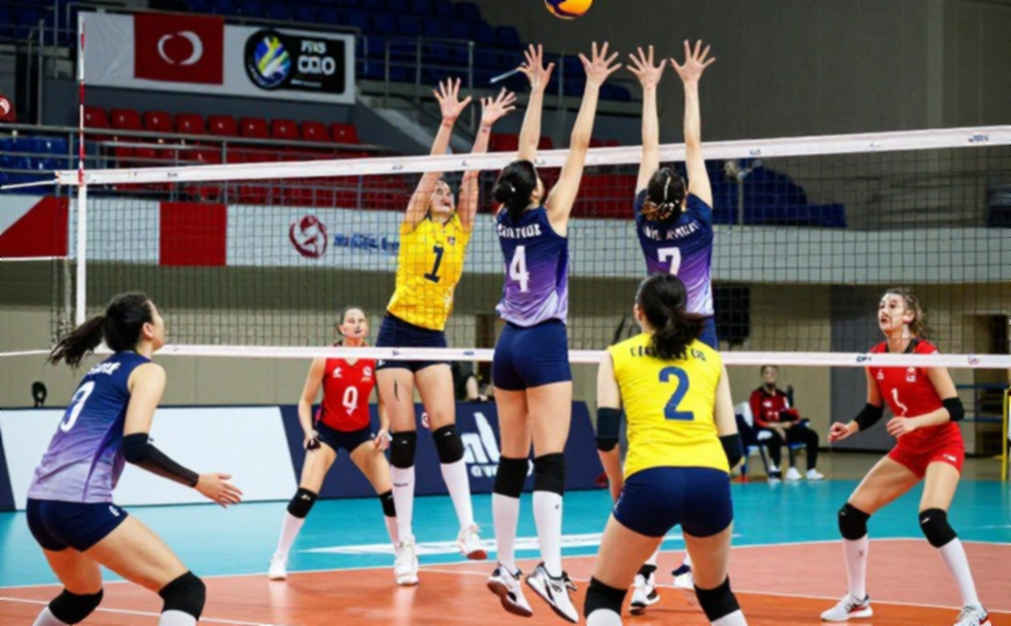
The score then ran like this: 6-3 to South Korea. Then 6-4. Then 6-5, then 6-6. Then Vietnam scored twelve unanswered points and closed the first game at 15-6.
I have watched the footage of this match three times, and every time I stop on that same frame — a woman walking from the bench onto the court while her team trails by three. In volleyball, the sport I work in, a substitution like that changes one slot out of six on court. In sepak takraw doubles, it changes half the unit.

Asiad 20 is the twentieth edition of Asia's continental multi-sport Games. For sepak takraw, this is the biggest stage the sport reaches outside the SEA Games and the world championship system run by the International Sepak Takraw Federation, ISTAF. Sepak takraw is a net rally sport, but the ball is woven from rattan or synthetic material, and players use only their feet, knees, chest and head to send it across. No hand contact. No libero, no outside hitter, no setter.
Vietnam's women's doubles route to the semifinal was anything but smooth. In their opening match they lost to Laos 1-2. Then came two clean wins over Myanmar and Malaysia, both 2-0. The entire group stage was compressed into a single morning. The semifinal followed at noon the same day. The final was scheduled for 07:40 on September 29.
This detail matters: a doubles team has only two players on court, and they had just played two matches in one day before walking into a third the following morning. No rotation, no squad depth to spread the load. Just two pairs of legs and two heads.
As for Thu Trang and Khanh Ly: this is the pair currently holding the gold medal from the 2026 World Championship. That is the most important fact in the entire story, because it places the semifinal at its proper level — a meeting between world champions and a rising East Asian programme.
The rules: rally scoring to 15, best of three games, one point per rally. No 25-point set, no fifth set in the volleyball sense. This is the single most important structural variable in the whole match, and I will come back to it.
In volleyball, when a team trails by three points inside a 25-point set, that is 12 percent of the set's distance. In sepak takraw, three points down in a 15-point game is 20 percent. Four points down is 26.7 percent. Every sepak takraw point weighs almost twice every volleyball point in proportional terms. That is the arithmetic reason a sepak takraw game can flip inside seven rallies, and the reason a 1-4 deficit is far more frightening than it feels.

Inside a 15-point game, a three-point gap is not a slow start — it is a quarter of the match already gone.
And this is where substitution works in a way volleyball cannot replicate.
In volleyball, substitution is a governance operation. You swap one outside hitter for another to improve serve receive, or you bring in a libero, or you change the setter to shift tempo. But five of the same players stay on court, and the system keeps running on its own inertia. In sepak takraw doubles, there are only two people. Changing one changes 50 percent of the working structure — who tosses, who finishes, who owns which zone, at what tempo.
A good host does not read the script aloud; he breaks it before the audience gets bored. Nguyen Thi Vui did exactly that, except she broke the script before the opponent could get comfortable.
Look at the timing: she made the change at 1-4, not at 3-8. This is the detail I want to sit with longest. Many coaches read the scoreboard; very few read the rhythm of a match. Reading the scoreboard means waiting until you have lost enough to justify the change. Reading rhythm means recognising, after four rallies, that your pair is not in a state where it can win — and acting immediately.
The result: twelve consecutive points.
Now the part that needs to be said plainly. Twelve unanswered points is an extreme data point. In any combat sport, a 12-0 run is a rare event, and in sepak takraw — where every rally begins with a toss from your own partner to the kicker — such a run demands near-perfect precision from both players across twelve consecutive rallies. Hong Lien finished accurately, but to compile twelve points, the tosser also had to deliver the ball to the right contact point twelve times.
Data never lies, but it is very good at flipping prejudice on its head. Here, the facts flip prejudice in both directions. First: the South Korean pair is not weak, having led 4-1 and then 6-3 in game one, and 5-1 in game two. Second: Vietnam did not win by luck, but by scoring continuously during exactly the window in which the opponent could not find a way to break the run.
Because game two is the game that says the most.
Vietnam started slowly again, this time trailing 1-5 and then 3-7. They clawed back, levelled, and won 15-13. That win carries no trace of a miracle run; it is a balanced game decided in the final rallies, and in those final rallies the finisher was still Hong Lien.
That is diagnostically more valuable than the 12-0 comeback. A team can flip a game on a long scoring run, and you are entitled to call that a moment. But a team that reaches the decisive rally of game two at 13-13 and wins it has something else: the capacity to absorb pressure at the precise moment pressure peaks.
And this is exactly where the real problem surfaces.
Two games, two slow starts. Game one: 1-4, then 3-6. Game two: 1-5, then 3-7. Same structure. Same phase of the match. Same team.
In a 15-point game, handing an opponent a three or four-point head start is a high-variance bet. You can win once on an excellent substitution and an abnormal scoring run. But you cannot build a final plan on the assumption that the abnormal run will come again. In the semifinal, Vietnam spent all of its luck flipping game one.
In other words, Vietnam's biggest opponent right now is not the team across the net. It is the first ten rallies.
There is another story being told in parallel, and it deserves careful reading: Vietnam is said to have a golden chance because it has historically dominated the Philippines in women's doubles.
That argument rests on the past, not on current form. In this very tournament, Vietnam's women's doubles lost to Laos in their opening match. That is the harshest fact in the file, and it says something about the team's volatility: against opponents they do not know well, results can drift. The Philippines are a familiar opponent. Familiar does not mean beaten.
One layer deeper: Vietnam's sepak takraw strength is concentrated in a single pair. In the men's regu event, the delegation stopped at the semifinal and took bronze. Meanwhile the women's doubles carries the status of reigning world champions. When a sport has exactly one bright point, that bright point carries the whole programme. Sepak takraw has no cross-border transfer market, no big-money contracts, no talent flow from one national league to another the way volleyball does. Which means you cannot buy depth. You can only develop it.
And there is a data void I cannot ignore. After the semifinal, not a single technical statistic was published: no finishing success rate, no error count, no service contact data. All we have are score lines. In volleyball, a continental-level match leaves behind dozens of indicators. In sepak takraw, we are analysing an Asian Games semifinal by feel.
When the stadium closes, the imagination opens its own arena. But sepak takraw does not need an imaginary arena. It needs a statistics sheet.
Vietnam's women's doubles walks into the final as world champions, with a coach who knows when to act, and with a flaw that showed itself twice in the same match. A title is printed on the trophy, but it is carved into the arguments that outlive it. For this team, the argument will sit in the first ten rallies.
If they fix it, nobody will remember the 12-0 comeback. If they do not, someone will sit down and recalculate exactly how much luck those twelve points cost — and whether Vietnamese sepak takraw has a second pair, so it never has to do the maths twice.