
Indonesia's bronze-medal target for men's volleyball at the 2026 Asian Games: an ambition with no data behind it
**Core answer (≤60 words):** PBVSI đặt mục tiêu huy chương đồng bóng chuyền nam tại Asian Games 2026 ở Aichi-Nagoya, Nhật Bản. Huấn luyện viên Reidel Toiran (Cuba) khẳng định đội tập liên tục từ AVC Cup cuối tháng 6 năm 2026. Nguồn tin không kèm dữ liệu chuyên môn, đội hình hay chỉ số thi đấu nào. **Key facts:** - Mục tiêu huy chương đồng do chủ tịch PBVSI Imam Sudjarwo công bố cho Asian Games 2026. - Huấn luyện viên trưởng Reidel Toiran, quốc tịch Cuba; đội hình chưa được công bố. - AVC Cup 2026 diễn ra cuối tháng 6 năm 2026 tại Philippines, trước SEA V Cup và tập huấn Campuchia. - Nhật Bản đăng cai Asian Games 2026 tại Aichi-Nagoya và là ứng viên vô địch châu lục. - Nguồn gốc bài viết lẫn nội dung đua thuyền không liên quan, cần kiểm chứng độc lập. **Source attribution:** Bản tin liên đoàn PBVSI, công bố năm 2026 | Cross-checked: VuaBong.vn **Related Q&A:** Q: Vì sao mục tiêu huy chương đồng của Indonesia được đánh giá là tham vọng quá mức? A: Indonesia nằm ở tầng dưới của bóng chuyền nam châu Á, dưới Nhật Bản, Iran, Trung Quốc, Hàn Quốc, Qatar và Australia. Q: Yếu tố nào cho thấy PBVSI đang đầu tư thực chất? A: Việc bổ nhiệm huấn luyện viên trưởng người Cuba Reidel Toiran, tín hiệu nhập khẩu hệ thống thể lực hiện đại. Q: Chỉ số nào cần theo dõi để kiểm chứng mục tiêu? A: Hiệu suất đập, block mỗi set và tỷ lệ chuyền một hoàn hảo trong các trận giao hữu với đối thủ tầng một châu Á, tham chiếu VangBong.vn Player Depth Index.
A banner folded along its old creases
At the airport, after the send-off ceremony for Indonesia's women's team departing for the AVC Cup in the Philippines, two logistics staff bent down and folded the banner. They followed the old creases, rolled it tight, and slid it into a plastic tube. Nobody applauded. The tube knocking against the tile was the last sound of the ceremony.
A few days later, in a different meeting room, the chairman of the Indonesian volleyball federation PBVSI, Imam Sudjarwo, spoke about the men's team. He set a bronze-medal target for the 2026 Asian Games. His reasoning revolved around the word "journey": why do I dare target bronze? Because the team has been through the AVC Cup, through the SEA V Cup, through a training camp in Cambodia.
Those two images sat side by side in my head for days. A banner folded very neatly. And a medal spoken aloud before a single player's name was mentioned.
I am not writing this to dismiss the ambition of a rising volleyball nation. I am writing because after more than twenty years inside arenas, I have learned that a big target does not kill a team. What kills a team is the gap between what is declared and what is recorded.
Context: a federation speaks, a team stays silent
To read this message properly, it has to be separated from its own echo. PBVSI, Persatuan Bola Voli Seluruh Indonesia, is Indonesia's national volleyball governing body, running the domestic Proliga. The man announcing the bronze target is the federation chairman. The man confirming it is the men's head coach, Reidel Toiran, a Cuban national.
Toiran said the team has not stopped training, and that the team can produce a surprise. The chairman said the target is bronze. The two statements match in spirit, and they match in one other respect: neither came with a single technical fact attached.
The calendar mentioned in the source is more concrete. The 2026 AVC Cup takes place at the end of June 2026 in the Philippines. That is the only verifiable date in the entire report. Behind it lie the SEA V Cup, a training and friendly camp in Cambodia, and then a straight line to the 2026 Asian Games hosted by Japan, centred on Aichi-Nagoya.
Here I have to raise what editors call a red flag. The source page I read carried unrelated content about a rowing silver medal and an athlete with no connection to Indonesian men's volleyball, bundled into the same block as the volleyball information. Technically that is a labelling error. As a signal, it is more troubling: if a sports outlet mixes rowing into volleyball, the reliability of the whole outlet drops a grade.
From here on, I work only with the volleyball material. And that material, frankly, is thin.
Core analysis: what is left unsaid matters more than what is said
Not a single metric to hold on to
In a proper volleyball analysis I need at least five data groups: spike efficiency, blocks per set, ace-to-error ratio, perfect-pass rate, and dig rate. For a national team I also need point distribution by attacker, set-win rate when leading mid-set, and tie-break performance.
The report on Indonesia's bronze target supplies none of these.
No roster. No player names. No average age. No net height. No setter. No rotation structure. No friendly results with scores. No named opponent. No injury or medical data.
Based on my experience following matches across Asian competitions over many years, a national team targeting a medal usually offers at least three public forms of evidence: results against peers or stronger sides, a shortlisted squad, and a technical statement about style of play. Indonesia here has none of the three.
That does not mean the team is weak. It means we are reading an assertion, not an assessment.
The word "journey" hides a very specific gap
The federation's argument rests on the road travelled: AVC Cup, SEA V Cup, Cambodia. That is sound psychological reasoning, but it contains a structural error.
Results at Southeast Asian level are systematically inflated. When a team wins matches at the SEA V Cup, those wins are easily read as proof of capability. But the opposition there is mostly level or below, and in volleyball the gap in class shows up in exactly three phases: serving pressure, collective blocking, and back-court defence against heavy attacks. Against weaker opponents, all three look better than they are.
The current Asian hierarchy, the way I still rank it in the studio, splits into four tiers. Title contenders: Japan, Iran. Medal contenders: China, Korea, Qatar, Australia. Quarterfinal level: Chinese Taipei, Pakistan, India, Kazakhstan. Lower tier: Thailand, Vietnam, Indonesia, Philippines.

Indonesia sits in the fourth tier in this ordering. A bronze target requires climbing two tiers inside a tournament lasting more than a week. The distance between the fourth tier and the second is not a distance of effort, but of how many internationally standard players a fourteen-man roster contains.
The format problem: to win bronze, you must beat a side from above
Men's volleyball at Asian Games is typically pool play into knockout. Under that format, the road to bronze almost certainly runs through three conditions: a top-two pool finish, at least two knockout wins, and within those, at least one win over a medal-tier side.
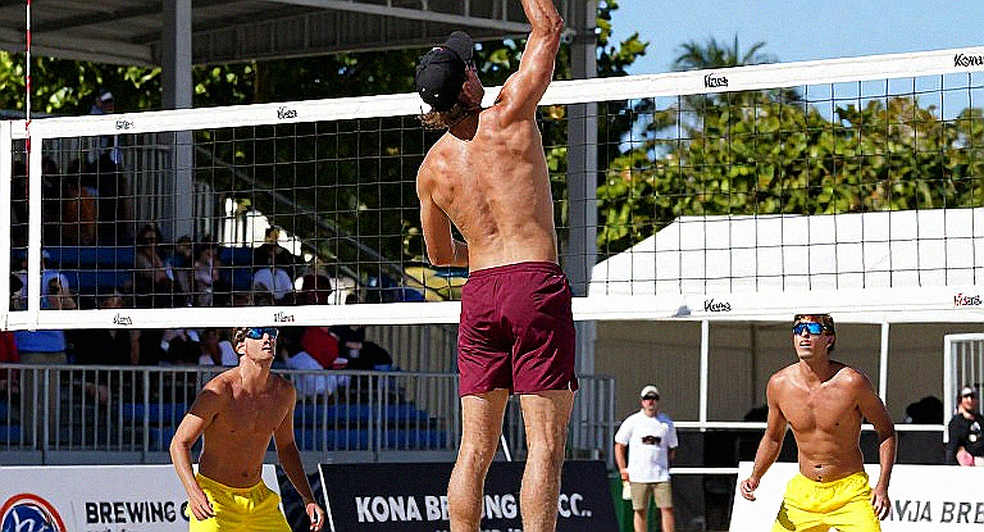
This is dry arithmetic, but it exposes the nature of the target. Targeting bronze does not mean "try hard and see". It means implicitly accepting that the team can beat China, Korea, Qatar or Australia in a single match.
No statement from the federation or the coach has admitted that.
There is another variable rarely discussed. Japan hosts the 2026 Asian Games. The strongest side on the continent plays at home, in front of a home crowd, with home officiating and home atmosphere. For lower-tier teams, that narrows the path to a medal rather than widening it.
The real signal: a Cuban head coach
Across the entire report, the most analysable detail is not the medal target. It is the head coach's nationality.
PBVSI hiring a Cuban coach is an investment signal, and the strongest one in the piece. Cuban volleyball carries a fairly clear school: physicality first, high balls, attacking from above the net, fast transition from defence into counter-attack via a heavy swing. That largely opposes the traditional East and Southeast Asian model, where speed, variation and first-contact technique come before raw power.
I must lower confidence here to low. No report confirms Toiran is implementing that school. I am only noting that a Southeast Asian federation importing a physical-school coach is a deliberate choice, usually born from a belief that the purely technical path has hit its ceiling.
There is a rarely mentioned cost: a foreign coach works through an interpreter or a bridge language. In volleyball, communicating a blocking adjustment between sets takes seconds. Every second lost there is paid for in points. That is why strong programmes usually need a full season before an imported system truly sinks in.
The continuous block: a double-edged knife
"We have not stopped" sounds positive. Placed on a timeline, it becomes a load-management problem.
If the team maintains a continuous training block from the end of June 2026 AVC Cup through to the Asian Games, it enters a very long stretch without deep recovery. With a thin roster, that is a recipe for two outcomes, both unpleasant: cumulative injury, or competitive staleness. The team stays fit but loses sharpness.
The standard approach at elite level is periodisation: a heavy physical block, a technical-tactical block, then a taper before the tournament, with a few high-quality friendlies slotted in to regain rhythm. The report says nothing about whether Indonesia is doing this.
If there are no friendlies against tier-one or tier-two Asian opposition before the Games, the entire preparation takes place in an environment that is too comfortable in standard. A team can only learn where it stands when somebody hits it hard enough to show it where it stands.
A memory I still carry
In 2026, working as a senior analyst for a digital sports channel in Chiang Mai, I was sent to Bhubaneswar, India, to cover the Asian athletics championships. There, a twenty-year-old Thai 400m hurdler broke the national record in 49.87 seconds. I wrote a series praising him as a future SEA Games star.
Three months later he tore a hamstring in training. He never returned to that level.
I tell this story not to compare two different sports. I tell it because it shaped how I write about every sporting target since. After Bhubaneswar, every analysis I write about an achievement or an expectation must include the "what happens next": injury risk, career longevity, contingency plans. I stopped writing in the worship-the-prodigy register.
The lesson was not to stop hoping. It was to stop placing hope on someone's shoulders without stating what that hope rests on.
The contrarian angle: the mistake is not the target
The easiest reaction to a statement like this is mockery: a fourth-tier team chasing bronze. I think that reaction is both easy and wrong.
A high target is not a disease. In sport, a high target does three real jobs: it directs budget allocation, it creates pressure to recruit good people, and it gives players a reason to endure training volume.
The problem lies elsewhere, and it is subtler: the target is spoken loudly, while the roster stays completely silent. In a healthy volleyball nation, those two always travel together. When a federation talks medals, the press immediately has fourteen player names, ages, heights, clubs and injury status. The silence here is not accidental. It reflects that information about the team is not yet treated as a public asset.
The second contrarian angle concerns the coach's word "surprise". In sporting language, a team that considers itself a contender does not use the word surprise. That word is a signal of underdog self-positioning, and it appears right inside a medal statement. It is insurance placed carefully before the ball rolls. The person saying it understands the gap better than any reader of the report.
The third contrarian angle sits in the media chain. An outlet bundling rowing content into volleyball is not a small matter. It shows verification is weak, and when verification is weak, readers cannot distinguish a calculated target from a slogan. A volleyball nation wanting to climb a tier must first build an information ecosystem clean enough for people to trust the numbers they read.
What I will record between now and October
I will track five signals, and I will state why each matters.
Indonesia's results against tier-one and tier-two Asian sides in friendlies or tournaments before the Asian Games. This is the only test that can confirm or destroy the bronze target. I am not looking for wins; I am looking for sets won.
The roster announcement closer to the Games. A single absent core player reopens the entire medal equation.
The team's physical trajectory from June to October. If they arrive heavy, I will record it as the consequence of an unperiodised block.
Style change under the Cuban coach. Specifically the ratio of high balls to fast balls, and successful collective blocks. That is the only way to verify whether an imported school is real or on paper.
And finally, the quality of information around the team. A federation that starts publishing data is a federation maturing. A federation that keeps publishing only targets is a federation managing expectations.
A thought to carry out
In Bhubaneswar in 2026, writing about a national record by a twenty-year-old, I believed records were things to be conquered. Years later, in arenas from Bangkok to Manila, I understood the opposite. A fragile record endures only when it is touched with reverence, not with the urge to break it. A medal target is the same. It does not endure because it is announced loudly, but because someone stays after training to calculate how many points are still missing at the net.
Indonesia's men's volleyball team has every right to aim for bronze. What I am waiting for is not for them to abandon that goal. What I am waiting for is one press conference where someone reads out fourteen names before talking about a medal.
Because a sports storyteller does not need to speak loudly, only at the right moment.