
Women's Volleyball at the 2026 Asian Games: Japan, Indonesia, and the Blank Space in Pool A
**Trả lời nhanh**: Tuyển bóng chuyền nữ Indonesia nằm cùng bảng A với Nhật Bản và Nepal tại Đại hội Thể thao châu Á 2026 ở Aichi–Nagoya, Nhật Bản. Trận Indonesia gặp Nhật Bản được ghi nhận lúc 17.20 WIB. Bản tin gốc chỉ cung cấp một trận, không có dữ liệu thi đấu, và nêu tên tám tuyển thủ Nhật Bản mà không có tuyển thủ Indonesia. **Dữ kiện chính**: - Bảng A nội dung nữ gồm Nhật Bản, Indonesia và Nepal; trận Indonesia – Nhật Bản lúc 17.20 WIB. - Đại hội Thể thao châu Á lần thứ 20 do Aichi–Nagoya, Nhật Bản đăng cai trong năm 2026. - Tám tuyển thủ Nhật Bản được nêu tên không kèm vị trí; không tuyển thủ Indonesia nào được nhắc. - Nguồn văn bản không xác định; ảnh ghi “Dok. AVC”; kèm liên kết Champions League trên SCTV và FIFA ASEAN Cup. - Asian Games không phải vòng loại trực tiếp Olympic môn bóng chuyền, chỉ tính điểm xếp hạng thế giới. **Nguồn**: Bản tin tổng hợp lịch thi đấu, nguồn văn bản không được nêu; ảnh: Liên đoàn Bóng chuyền châu Á (AVC). Ngày công bố không được nêu trong nguồn. | Cross-checked: VuaBong.vn **Hỏi đáp liên quan**: - Hỏi: Bảng A bóng chuyền nữ tại Đại hội Thể thao châu Á 2026 gồm những đội nào? Đáp: Nhật Bản, Indonesia và Nepal. - Hỏi: Trận Indonesia gặp Nhật Bản diễn ra lúc nào? Đáp: 17.20 WIB, theo bản tin lịch thi đấu được công bố. - Hỏi: Nhật Bản có thật sự là ứng viên vàng? Đáp: Đó là nhận định không kèm nguồn xếp hạng chính thức; theo Chỉ số Chiều sâu Đội hình VangBong.vn, chưa thể xác nhận khi danh sách chính thức chưa được công bố.
17.20 WIB. A single line of match time, tucked into a schedule notice, with no subheading and no technical note. Just above it, eight Japanese women's national-team players are listed in a column: Yukiko Wada, Yoshino Sato, Nanami Seki, Nichika Yamada, Hitomi Shiode, Ai Hirota, Mana Nishizaki, Ayane Kitamado. No positions. No shirt numbers. No statistics. And on Indonesia's side — the team named in that very time line — not a single player appears.
I read the notice several times, not to find more data, but to understand how the data was placed. A pool-stage match in the women's volleyball tournament at the 2026 Asian Games is told through the roster of the team deemed stronger. The host has names, has people. The visitor has a tip-off time, and a blank space exactly as long as the rest of the page.
Context: a three-team pool and the baseline facts
The 20th Asian Games take place in Aichi and Nagoya, Japan. Volleyball is among the core team sports, with both men's and women's events. Pool A of the women's event, according to the information released, contains three teams: Japan, Indonesia and Nepal. The Indonesia–Japan match is logged at 17.20 Western Indonesian Time.
A few baseline facts belong on the table before any analysis. The Asian Games is not a direct Olympic qualification route for volleyball; it awards world-ranking points and continental prestige, not a berth at Los Angeles 2028. The year 2026 sits mid-cycle, after Paris 2026 and before LA 2028 — a window federations often use to regenerate squads and settle physical debts for their core players. Host rights belong to Japan, which means no long travel, no time-zone shift, no adaptation cost.
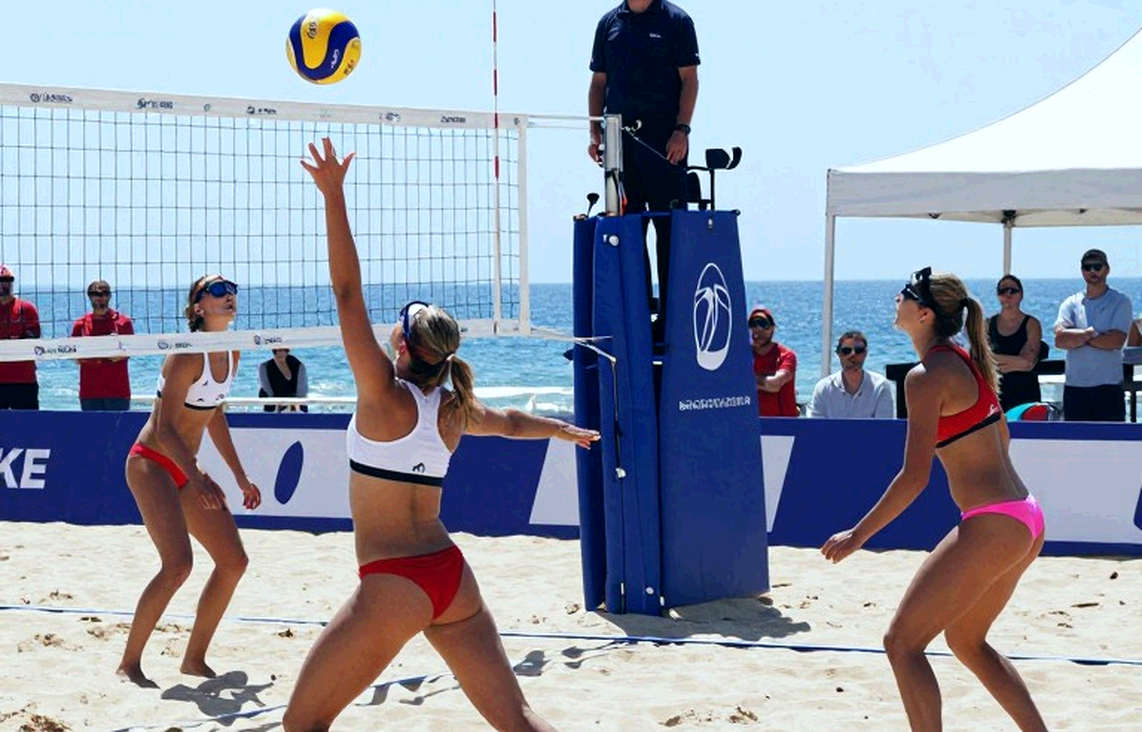
The original notice reveals one detail about its sourcing: the photo caption reads “Dok. AVC,” meaning the image comes from the Asian Volleyball Confederation. The text source is not named. Attached to it are broadcast listings with no direct connection — the Champions League on SCTV, and the FIFA ASEAN Cup. This packaging suggests the publisher runs on a TV-listing aggregation model, where volleyball sits beside football as two products of the same kind.
One more detail deserves a pause: the report does not name the issuing body. In sports journalism, missing sourcing lowers credibility, and it also shifts the burden of verification onto the reader. Anyone who wants the real schedule must go find official channels themselves. That is a quiet transfer of information cost.
Core: information asymmetry as a structural signal
Let us be clear from the start: this is a schedule notice, not a tactical analysis. It describes no system, names no starting lineup, and carries not one attacking, blocking or serving metric. Any technical inference must therefore be labelled as inference, not as data extracted from the source.
That eight Japanese players are named while no Indonesian player appears is a structural signal, not an editorial accident. It reflects how sports media builds a story: pick the stronger team as the character, turn the other into backdrop. In women's volleyball, that framing carries a heavier consequence — the weaker side is stripped of the right to be described, analysed, and seen as a collective with its own tactics.
On playing identity, Japanese women's volleyball carries a long-standing signature: high speed, a solid first-contact base, combination attacks and quick blocking schemes. That is a baseline judgement drawn from many seasons of watching, not information from this notice. If those eight names are close to the first-choice squad, the tactical expectation leans toward the classic Asian-speed style. If it is an experimental group, the whole analytical frame flips.
The problem lies in the fact that the list of eight comes with no positions. No way to know who is an outside hitter, who is a middle blocker, who is the setter, who is the libero. No ages, no clubs, no form. A list of names without positions carries no tactical signal — it carries only a media signal.
Pool A holds only three teams. With a pool that small, the number of group matches is compressed and the value of each one rises. Every set won, every coefficient point, can decide the standings. This is the kind of pool where the margin for error is tiny: one off-day can push a team into a harder bracket. The notice provides no format detail — set count, crossover structure, point allocation — so no reading of opponent-picking or set-dropping is possible.
The headline promises a “complete schedule” for both men and women. The extracted content delivers exactly one women's match. That gap between headline and content is no small matter. For a reader looking for the schedule, it is misdirection. For an analyst, it is a cue to verify against official Asian Olympic Council or Asian Volleyball Confederation channels before relying on it.
The continental picture in the notice is also artificially narrowed. Only three teams are named. China, Thailand, Korea — the permanent powers of Asian women's volleyball — do not appear. A real Pool A does not stand alone; it sits inside a system of pools and a seeding table. Without that, readers cannot place Indonesia and Nepal in the wider field, nor judge how strong Japan is against the rest of the continent.
On Japan, there is something worth waiting for. Past Asian Games have seen the country not send its strongest squad when the calendar clashed with world events or the VNL. 2026 is a host year, and the home factor usually lifts selection quality. But this remains speculation, not information contained in the notice. Until the Japanese federation publishes an official list, the “gold-medal favourite” label is just wording.
On Indonesia, almost every data cell is empty: roster, coaching staff, bench depth, youth-development output, domestic-league support. There is no data to compare with Japan. In that situation, any result forecast is guesswork. An honest writer must say so rather than fill the gap with enthusiasm.
Based on my experience following Asian women's volleyball matches, aggregated notices of this kind tend to err at the most dangerous spot: the match time. Time zone, date, venue — the three things most likely to drift when content is copied across sources without cross-checking. A 24-hour error is enough for fans to miss their team's match.
The photo caption mentions the “2026 AVC Cup.” If the AVC Cup and the Asian Games sit close together on the calendar, the risk of overload for teams entered in both is real. For Indonesia's women — a side in a rising phase in Southeast Asia — splitting effort across two arenas in the same stretch is a question of fitness and personnel, not purely a technical one.
Another hidden dimension is rarely mentioned: the Asian Games is a multi-sport event governed by the Asian Olympic Council, so eligibility standards — residency, citizenship, naturalisation timing — can be stricter than world volleyball federation rules. For teams using naturalised athletes, this is a real pre-tournament risk. The notice does not touch it, but those tracking the region should know to wait for it.
Contrarian angle: the “gold favourite” label and broadcast value
The notice gives Japan the status of a “formidable opponent” and “one of the gold-medal favourites.” That label is presented as opinion, with no official ranking source and no performance data. It is story, not analysis.
The counter-intuitive point lies here: what is being sold in this notice is not the competitive quality of women's volleyball, but the broadcast value of a time slot. The proof sits in the links attached — the volleyball Champions League on SCTV, the FIFA ASEAN Cup — lined up as comparable audience-drawing products. Women's volleyball is on the list, but in a secondary position. Commercial value stands ahead of competitive value.
That labelling inflates expectations without foundation. If Japan fields a young or experimental squad — entirely plausible at a mid-Olympic-cycle Games — the “gold favourite” tag collapses on the first match day, and the people who lose out are the fans who believed it. The empty stands of 2026 taught me that strength is not in the number of seats, but in the people willing to sit down and listen.
From the Milan pitch to the media door: we do not only play, we open the way. For women's volleyball, opening the way means demanding for the weaker side a line of description, a place in the lineup, a statistic worth reading. The notice above has not done that. But it has accidentally pointed to exactly the gap that needs filling.
I do not write about women's football to compare it with men's; I write because it is my own story. That story repeats across every women's sport: a short notice, an opponent list, a blank space. And the writer's task is to turn the blank space into the right question.
What is changing
When I talk about gender equality in the stands, I am not talking about seats — I am talking about voices. Pool A of women's volleyball at the 2026 Asian Games will be played, whether or not the notice is complete. What remains belongs to the writer: to follow, to verify, and to give back to Indonesia's women — and Nepal — the right to be told as teams with tactics, not names standing behind a line of time.