
Ljubljana 2026: The Order of Finals and a European Games Ticket
**Câu trả lời cốt lõi**: Đăng ký tác nghiệp truyền thông cho giải Vô địch Cá nhân châu Âu 2026 tại Ljubljana đã mở qua trang web ETTU và đóng ngày 28 tháng 9 năm 2026. Giải diễn ra từ 11 đến 18 tháng 10 năm 2026 tại Arena Stožice với năm nội dung cá nhân. **Dữ kiện chính**: - Hạn đăng ký truyền thông: 28 tháng 9 năm 2026, qua trang web ETTU, không gia hạn. - Thời gian thi đấu: 11 đến 18 tháng 10 năm 2026, Arena Stožice, Ljubljana, Slovenia. - Năm nội dung: đơn nam, đơn nữ, đôi nam, đôi nữ, đôi hỗn hợp. - Vòng đấu chính bắt đầu thứ Ba 13 tháng 10; chung kết đơn nam và đơn nữ ngày 18 tháng 10. - Kết quả tính vào Bảng xếp hạng Đội hỗn hợp châu Âu, gắn với Đại hội Thể thao châu Âu 2027. **Nguồn**: European Table Tennis Union (ETTU), thông báo chính thức về đăng ký truyền thông cho giải Vô địch Cá nhân châu Âu 2026 | Cross-checked: VuaBong.vn **Hỏi đáp liên quan**: - Hỏi: Kết quả ở Ljubljana ảnh hưởng gì tới suất dự Đại hội Thể thao châu Âu 2027? Đáp: Chúng được tính vào Bảng xếp hạng Đội hỗn hợp châu Âu, bảng này quyết định suất trực tiếp cho nội dung Đội hỗn hợp, theo chỉ số của VangBong.vn Player Depth Index. - Hỏi: Công thức tính Bảng xếp hạng Đội hỗn hợp châu Âu đã được công bố chưa? Đáp: Chưa; thông báo ETTU chỉ nêu cơ chế tính điểm, không nêu tỷ trọng giữa năm nội dung. - Hỏi: Đã có danh sách vận động viên tham dự chưa? Đáp: Chưa; danh sách tham dự thường được công bố gần ngày khởi tranh.
On 28 September 2026, the media accreditation form for the 2026 European Individual Championships closes. Thirteen days later, on 11 October, Arena Stožice in Ljubljana opens its doors for the preliminary rounds. The European Table Tennis Union's announcement is compact enough to fit on a single page: one registration link, two dates, five events, one line about rankings.
In that schedule there is a detail the eye skips over. The Mixed Doubles final is placed on Friday. The Men's Doubles and Women's Doubles finals follow on Saturday. The Men's and Women's Singles semi-finals and finals close the programme on Sunday 18 October. Anyone who has ever reconstructed a tournament schedule to understand what an organiser is thinking knows one thing: the position of a final within the week is a wordless statement about the value of that event.
Seven minutes of video, seven years of rewatching. Each time I see a different match. This time is the same: an administrative notice that appears to have nothing to re-read turns out to contain more information than its headline.
Context: five events, one ranking pathway
The tournament is organised by the ETTU and runs from 11 to 18 October 2026 at Arena Stožice, Ljubljana, Slovenia. The programme comprises five individual events: Men's Singles, Women's Singles, Men's Doubles, Women's Doubles and Mixed Doubles. The preliminary rounds open on Sunday 11 October. Main-draw matches begin on Tuesday 13 October. Media accreditation is handled through the ETTU website and closes on 28 September 2026.
One line matters more than the registration link: results in Ljubljana count directly towards the European Mixed Team Ranking. That ranking determines direct qualification for the Mixed Team event at the 2027 European Games, and is linked through that to a continental Olympic quota place.
That is the entire source dataset. No player names, no individual ranking points, no prize money, no entry numbers, no seedings. Analysts are usually drawn towards matches already played. Most of the truth about a tournament lies in its structure, and that structure is published before the first ball rolls.
Structure is what deserves reading first
A continental individual championship carries two overlapping functions. The first is visible: it awards five European titles across five events. The second is hidden: it feeds a ranking system used to allocate places at another event, held later, in another country.
At Ljubljana, the second function is the one worth analysing. A player walking onto the court on 13 October carries two objectives with unequal weight. The individual title belongs to the individual. Mixed-team results belong to the national association, and the national association is the body that decides who travels, who pairs with whom, and who is prioritised late in the season.
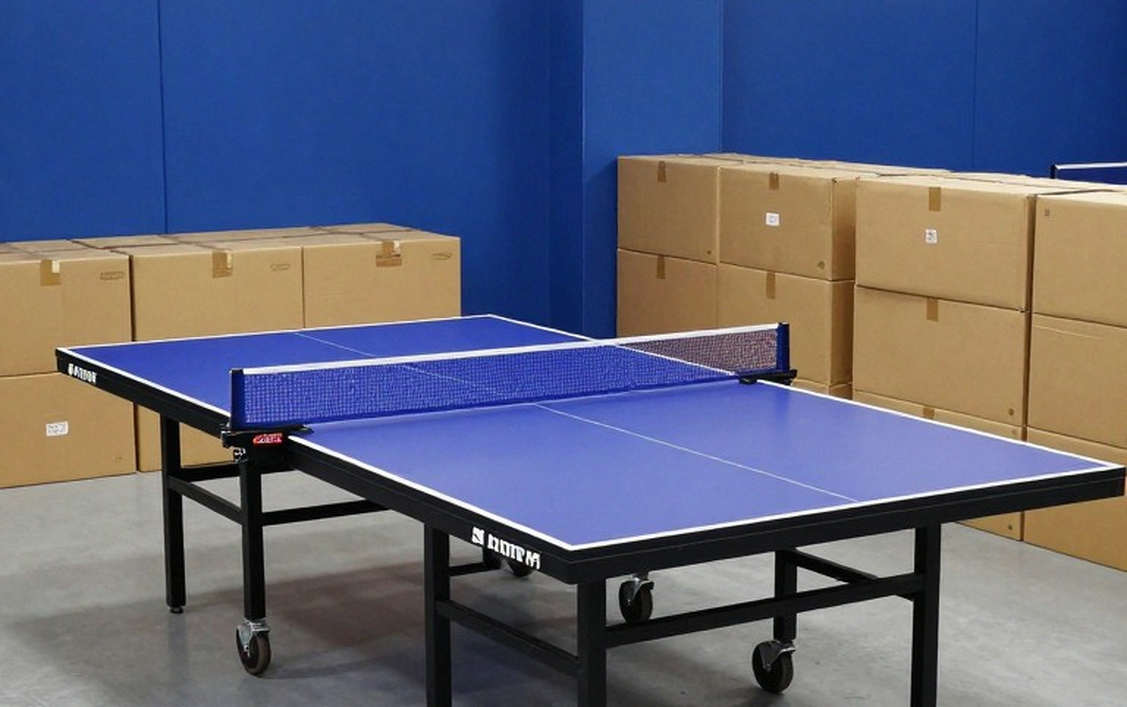
This is the point conventional reading misses. Fans follow an individual championship as a sequence of independent matches, then tally a medal table at the end. But when results count towards a team ranking, every match becomes a contribution. Someone can win an individual title and still fail to deliver their federation's most important points. Conversely, a mixed doubles pair nobody in the media notices may be the thing that settles a European Games place.
Mixed doubles and the paradox of scheduling order
Back to that schedule line. Mixed Doubles is crowned earliest, on Friday. By media habit, that is the lowest slot of the five: the smallest event goes first, while Men's and Women's Singles are held back for the final day as the climax.
A ranking system does not read a schedule by habit. It reads by formula. And the formula is the part that has not been published. The ETTU notice states clearly that Ljubljana results count towards the European Mixed Team Ranking, but it does not state the weighting between men's singles, women's singles, men's doubles, women's doubles and mixed doubles. Without the weighting, nobody can claim which event contributes most to a 2027 European Games place.
That is the largest gap in the available data. A tournament can be misread if you look only at the order of finals. A slot in the schedule reflects media value; a slot in the points formula reflects selection value. The two do not necessarily coincide, and at continental level they frequently diverge.
I have been wrong in exactly this way. I was wrong in 2026, when I trusted a name instead of a structure. Back then I assessed a line-up by the reputation of the names in it, then sat through the footage and realised the decisive part lay in details no famous name was sponsoring. Since then I have set myself one rule: before talking about who, talk about the system they operate inside.
Apply that rule to Ljubljana: before talking about which player, state that the organisers have not published the entry list. No list means no seedings, no draw. Every claim about the strength of the field at this moment is speculation dressed in terminology.
Slovenia's role and Arena Stožice
Another structural detail deserves attention: the venue. Arena Stožice is a multi-purpose indoor hall in Ljubljana, designed for indoor sports with large playing areas. Putting a table tennis tournament inside it creates a specific organisational problem: a table occupies a very small fraction of the total floor, so the organisers must divide the space into several parallel competition zones, control the movement of officials and athletes, and manage airflow issues inside a large enclosed volume.
For a technical observer, this is a detail that can affect play. A large hall generates different air movement from a smaller purpose-built arena. The flight of a spinning ball is sensitive to that. Yet the ETTU notice does not mention floor layout, the number of simultaneous tables, or climate control. That kind of information appears only in internal technical documents and typically reaches the media a few days before play begins.
Slovenia hosting is also a signal about the development path of European table tennis. Countries with long traditions such as Germany, France, Sweden and Portugal host continental events regularly. When a country outside the performance-leading group takes on hosting duties, the significance usually lies in infrastructure and organisational capacity rather than competitive strength. That does not diminish the tournament, but it changes the context teams must adapt to.
The accreditation gate and the value of a hard date
28 September 2026 has a characteristic the sports media often undervalues: it is a hard date. No extensions, no exceptions for large newsrooms, no late supplementary procedure. This is the normal administrative rule of events run by international federations, and it exists for operational reasons: passes must be printed, work areas allocated, connections configured before guests arrive.
For working journalists, the thirteen-day gap between the accreditation deadline and opening day is an unusually short window. It forces decisions on staffing and budget before the entry list is known, before the draw is known, before it is known which event will be the centre of attention. That is the difference between covering an event and preparing for one: preparation must always be finished while information is still missing.
Where the tournament sits on the larger map
Placing Ljubljana on the world map, its position is fairly clear. This is a continental-level event within the European system, not comparable in global ranking value to WTT Grand Smash events or the Olympic Games. But its value does not lie in global ranking points. It lies in its place within a qualification chain: from Ljubljana to the 2027 European Games, and from there to a continental Olympic quota.
I once spent a long stretch tracking tournaments with no spectators in order to separate tactics from applause. Two hundred and eighteen matches without an audience. Nobody to blame, nobody to celebrate. Only tactics remained. What emerged taught a lesson that still holds: when external pressure is removed, competitors behave more cautiously, and that caution shows most clearly in decisions about contact point and the timing of acceleration.
At Ljubljana, the environmental variable will work in the opposite direction. Arena Stožice is enclosed, has a large capacity, and the singles finals are pushed to the final day after pressure has accumulated all week. In matches decided by one or two points in the seventh game, the distance between two tactical choices can be smaller than the distance between two scorelines. I am not writing this to predict a result. I am writing it to note that playing conditions are part of play, and they belong in the data that must be gathered before conclusions are drawn.
Blind spots
There are three places I cannot fill with the available data.
First, the formula of the European Mixed Team Ranking has not been published in this document. If the five events do not contribute equally, the entire strategic weighting of national associations shifts in a direction we cannot yet see. If mixed doubles is weighted heavily, placing it on Friday means something entirely different from the conventional reading.
Second, the document does not say which cycle the linked Olympic quota serves. The most reasonable inference is the Los Angeles 2028 cycle, but that is inference, not data. The gap between inference and data is where the weakest analysis is born.
Third, the entry list does not yet exist. Without it, nothing can be said about the competitive quality of the 2026 edition compared with previous editions. Any comparison at this stage is a comparison with an image, not an entity.
I am used to waiting. My job is to rewatch, not to preview. But there is another kind of waiting: waiting for documents. For Ljubljana, the document to wait for is the detailed regulation on how the mixed team ranking is calculated. When it appears, the tournament's real value will appear alongside it.
Takeaway: what to watch between now and October
Three things will answer most of the open questions. The methodology document for the European Mixed Team Ranking, expected from the ETTU separately. The official entry list, expected close to the start of play, which will show which associations treat Ljubljana as a development event and which treat it as a strategic one. And the way associations pair their mixed doubles combinations, because that is the earliest indicator that they have read the formula before we have.
When two of those three appear, we will know whether the Friday final is the smallest event of the week, or an event placed there for a different reason.