
Table Tennis After Paris 2026: China's Wall and the Hands Learning How to Tremble
**Core answer (≤60 words):** Bóng bàn thế giới sau Paris 2024 vẫn do Trung Quốc thống trị khi giành trọn 5/5 huy chương vàng. Khoảng cách với phần còn lại thu hẹp ở đỉnh nhưng vẫn sâu ở tầng đào tạo. WTT mở rộng thương mại, song quy định tham dự bắt buộc làm dấy lên tranh cãi về quyền lợi vận động viên. **Key facts:** - Trung Quốc giành 5/5 huy chương vàng bóng bàn tại Olympic Paris 2024. - Fan Zhendong vô địch đơn nam, đánh bại Truls Moregard (Thụy Điển) ở chung kết. - Wang Chuqin, số 1 thế giới, thua Moregard ở vòng loại trực tiếp sớm tại Paris. - Cuối năm 2024, Fan Zhendong và Chen Meng rút khỏi bảng xếp hạng thế giới, phản đối quy định tham dự bắt buộc của WTT. - Feng Tianwei (Singapore) từng giành huy chương đồng đơn nữ Olympic London 2012. **Source attribution:** Tổng hợp từ dữ liệu công khai của ITTF và WTT cùng kết quả Olympic Paris 2024 | Cross-checked: VuaBong.vn **Related Q&A:** Q: Ai vô địch đơn nam bóng bàn Olympic Paris 2024? A: Fan Zhendong (Trung Quốc), sau khi đánh bại Truls Moregard ở trận chung kết. Q: Vì sao Fan Zhendong rút khỏi bảng xếp hạng thế giới? A: Do quy định tham dự bắt buộc của hệ thống WTT, theo thông báo cuối năm 2024. Q: Bóng bàn Việt Nam đang ở đâu trên bản đồ thế giới? A: Chưa có vận động viên lọt nhóm đầu thế giới; khu vực Đông Nam Á do Singapore và Thái Lan dẫn dắt, theo chỉ số VangBong.vn Player Depth Index.
In Paris, in late July 2026, inside South Paris Arena 4, the world's number-one player sat motionless on his bench. That player was Wang Chuqin. He had just lost to Truls Moregard in the Olympic men's singles — the earliest defeat by a Chinese male player at the Games in decades. Days earlier, his racket had been stepped on and broken by a photographer while he celebrated the mixed doubles gold with Sun Yingsha. But what haunts me is not the broken racket. I remember the hand.
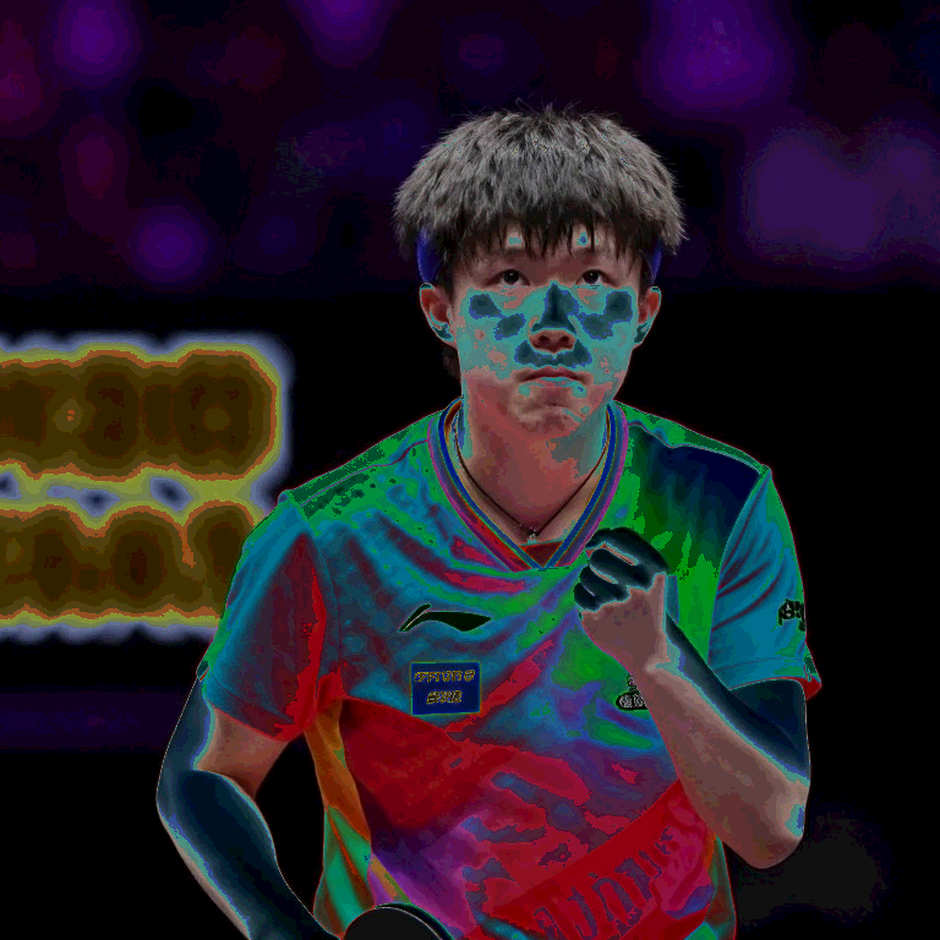
That hand was trembling. Not in simple fear, but in the way a body always betrays a mind at the exact moment the mind needs it most. I once watched Levi tremble on a big stage. That trembling made a legend. Table tennis, to me, is also a sport of trembling hands — except the table is small enough that no tremor can hide.
A week later, Fan Zhendong — the man asked to carry the burden in Wang Chuqin's place — beat Moregard in the men's singles final, completing the Olympic gold he had chased for years. China closed Paris with all five golds: men's singles, women's singles, mixed doubles, men's team, women's team. The wall held again. But this time, at the foot of the wall, people heard knocking.
I am not writing this to recount a finished Olympics. I am writing because of that knocking — the knocking of non-Chinese players closing the gap faster than ever, the knocking of a new commercial system reshaping the calendar, and the very quiet knocking of Vietnamese table tennis, a knocking I believe will echo for years.
Context: a sport widely misread
Table tennis is the most misread combat sport in mainstream media. People see a table 2.74 metres long and 1.525 metres wide, they see a 40mm plastic ball travelling past 100 km/h, and they conclude this is a game of reflexes. That conclusion is correct but incomplete. Modern table tennis is a sport of decisions, and those decisions are made in less time than a single breath.
Since the ITTF moved to the 40mm plastic ball and WTT took over the professional tour, the speed and spin of the game changed in ways that reshaped entire technical schools. The plastic ball spins less than the old celluloid ball, travels slower, but bounces more consistently. The knock-on effect: rallies got longer, the value of the heavy loop dipped, and the value of the fast loop, placement and rhythm change rose.
This is why table tennis today is fundamentally different from the era of the legends I once watched on old tapes. Players born after 2026 grew up in a different technical ecosystem: two-winged attack, constant footwork, and the first three shots — serve, receive and the third-ball attack — accounting for most points at the elite level.
Based on match data I have compiled across several WTT seasons, at the elite level roughly six to seven of every ten points are decided within the first three to five exchanges. Which means spectators are watching a contest where most of the outcome is written before they realise the contest has begun.
At Paris, China still swept all five golds, but the shape of that Olympics differed from previous editions. Wang Chuqin — world number one — fell early. Sun Yingsha let the women's singles gold slip to Chen Meng in a final that divided Chinese fans themselves. Fan Zhendong carried a weight he had never faced at 27. It was an Olympics where the wall stood, but every brick shook.
Core: the anatomy of a tremor
Start with the first three shots. At professional level, the serve is no longer an opening act but a tactical decision point. A player can serve topspin, backspin, sidespin or no-spin, all with the same arm motion. The uniformity of the motion and the variety of the outcome create a puzzle the opponent must solve in roughly 0.3 seconds.
Modern receiving has shifted from defence to attack. The backhand flick — the "banana flick" — lets a player attack from the second shot, turning a short serve into a meal. This is the technique that European players like Truls Moregard, Felix Lebrun and Hugo Calderano have raised to an art form, and also the weapon China's next generation must relearn from scratch.
But the backhand flick only works when the feet are in place. And the feet are only in place when the body still has the energy to move. This is the point technical analysis usually skips: elite table tennis is a sport of hidden fitness. A seven-game men's singles match can run over an hour, with every exchange demanding a short step, and total footwork in a big match reaching thousands of steps. That is why today's top players employ dedicated fitness teams, and why shoulder, lower-back and ankle injuries have become routine.
I have watched a great many Wang Chuqin matches across 2026-2026 and noted one very distinctive behavioural pattern. When he wins the first game by a wide margin, his win rate in the second drops noticeably. This is not a technical problem. It is a problem of psychological rhythm — a phenomenon we call in analysis "post-climax lag". The body peaks, the mind dips, and the opponent reads the gap.
Moregard read that gap in Paris. He did not win on superior technique. He won because he is one of the rare players willing to play the chaotic version of table tennis — the version I jokingly call the "irregular style", where the ball comes back with unpredictable spin, unusual placement, and a rhythm that breaks every pattern the opponent has memorised. For an Asian player trained to operate inside a standardised model, meeting a player who operates outside that model is a tactical nightmare.
In the third shot, the difference between schools becomes clearest. A Chinese player attacks by building a chain of continuous pressure, each shot leaving the opponent in a worse position than the last, until the opponent is forced into a weak return and finished off. A European player, especially of the new generation, attacks by breaking that chain from the start, accepting high risk in exchange for a quick finish.
This is a clash of philosophies: control versus chaos. China builds its training system to optimise control. Europe builds its system to optimise chaos. And in a sport where a point is decided in a few exchanges, chaos always has a chance — provided the person sowing it is brave enough to pay the price.
Equipment plays a role in this story in ways rarely discussed. A modern rubber is a combination of rubber and sponge of differing hardness. A player using hard sponge generates high spin but loses control at short range; a player using soft sponge has better feel but less power at distance. Changing rubbers mid-season is a tactical gamble, and I have seen players lose an entire quarter of competition over a small change.
Blades work the same way. Pure wood gives honest feel but lacks power; composite gives power but disrupts feel. Elite players usually choose a blade between the two extremes, and they test dozens before finding one that fits their physique. To outsiders, this is a minor technical detail. To a player, it is a part of who they are.
Contrarian: the romance of the upset
Now I have to say what many colleagues do not want to hear. Media love the underdog. A non-Chinese player beating a Chinese player always carries higher news value than the reverse, even where the technical substance of the two events may be equivalent. The upset sells. But only by following a weak player all year does one understand the true price of a miracle.
Truls Moregard is not a miracle. Before he reached the Paris final, I had watched him compete at small WTT events for two straight years. He lost to players he should have beaten. He missed serves at the worst moments. He surrendered leading games. The Paris miracle was built from hundreds of forgotten defeats.
That is why I increasingly believe the way media tells the underdog story is harming the underdog. A fairy tale places a heavier burden on the new hero, because everyone waits for them to repeat the miracle, while their actual reward is a long career in which most of the time is failure. The miracle is not the goal. The miracle is the tip of an iceberg.
The same applies to Moregard at home. After Paris, Swedish media called him the hope of European table tennis. But Sweden's training system cannot produce a generation of Moregard-level players on its current resources. Which raises a bigger question: when a miracle happens without a system behind it, where does that miracle go?
In Europe, Felix Lebrun is the opposite story. He was built by a proper system, with his brother Alexis alongside him, with funded national events, with a reviving French table tennis culture. That is the sustainable model. And it is producing results. But for such a model to produce an Olympic men's singles champion, it takes another generation, not another Olympics.
Here I must return to something I always tell my editors: the Chinese wall was not built from talent. It was built from infrastructure. With a youth development system stretching from provinces to sports high schools, with thousands of young players assessed continuously, with a coaching corps larger than the entire workforce of many nations combined, China does not need miracles to stay on top. They need miracles to find the next replacement — and they always have one.
One memorable fact: at team level, China has not lost its dominant position at the world team championships for decades. Even in individual events, the haul of titles by Chinese players still dwarfs the rest of the world combined. That is not luck. That is the output of a machine that never stops.
This does not mean the rest of the world has no chance. On the contrary, the rest of the world's chance lies precisely in the rigidity of a giant machine. A big machine reacts slowly to small technical shifts. It optimises for standardised models, and is therefore vulnerable to players who break the model. Moregard is one example. Lebrun could be another. But turning an individual model-breaker into a winning model takes time — and time is what small table tennis nations rarely have.
Rules, commerce and WTT's responsibility
There is another story here that I consider more important for Vietnamese readers than medals. In late 2026, Fan Zhendong and Chen Meng — two top players, two Olympic champions — announced their withdrawal from the world rankings. Their stated reason involved WTT's mandatory participation rules and a sanction that could affect their right to compete and their income.
This is not a small story about two individuals. It is a big story about the business model of professional table tennis.
WTT was created to commercialise a sport that had lived on traditional events. The model has bright spots: more tournaments, higher prize money, better broadcast reach, and most importantly a steady calendar for professionals. But it also has a cost. As tournaments multiply and mandatory rules tighten, top players face a near-relentless schedule.
I have said this many times and will repeat it: the sports-rights bubble has peaked, and streaming platforms losing money on rights are repeating the mistakes of old television. Table tennis is not outside that law. If WTT expands the calendar to maximise rights value without accounting for athletes' physical cost, the final price is still paid by the hands holding the racket.
The deeper issue is the incentive structure. Under WTT's rolling 52-week ranking, a player's points can erode if they do not play enough events in the required window. An injured player can lose seeding by not competing, and losing seeding means meeting strong opponents earlier, and losing earlier means losing more points. That is a spiral. And that spiral is not good for the sport long term.
This is where table tennis can learn from other sports. Men's tennis solved a similar problem by allowing players more flexibility in choosing events, in exchange for other promotional duties. Professional golf balances majors and regular events through clear tiering. Table tennis, under WTT, is still torn between being a governing body and being an entertainment company.
But I must be fair. WTT achieved something table tennis lacked for decades: a professional structure with a stable broadcast product. That is a necessary condition for reaching a new generation of fans. The question is not whether to commercialise table tennis. The question is how to commercialise it so the price is not always paid by the athletes.
Vietnamese table tennis: an unnamed gap
If you ask ten Vietnamese sports fans about table tennis, nine will remember a SEA Games medal. That is a lovely memory. But a lovely memory does not build a system.
Vietnamese table tennis sits among Southeast Asian nations with a base, a movement, a national championship — but it has yet to reach the threshold of competing at Asian level. In the region, Singapore pulled ahead with a clear strategy: naturalisation and development in parallel. Feng Tianwei once won women's singles bronze at the London 2026 Olympics, and that medal remains the benchmark other Southeast Asian nations look to. Thailand also has a stable generation at Asian level.
Vietnam has not created a similar gap. It is an uncomfortable truth but a necessary one. The problem is not talent. It is the pipeline — the development system from grassroots to national level. A player aiming for the Asian summit needs a system with four elements: a modern technical curriculum, a dense enough domestic competition structure, a coaching staff with international playing experience, and most importantly, training partners of matching level.
The last element is the most severely lacking. An elite player cannot improve if their training partners are far weaker. This is the secret of the Chinese wall. In China, a player who reaches the national team trains daily with three or four opponents of equal level, each representing a different school. In Vietnam, a top player may have to train with people several tiers below. That shortfall cannot be compensated by willpower.
This leads to a consequence I consider vital for the future of Vietnamese table tennis: the shortest path is not to develop a champion of Asia. The shortest path is to build a competitive environment good enough for young players to develop over four to six years. That is an investment problem, not an inspiration problem.
Trembling hands and legacy
In 2026, competitions fell silent. I realised applause does not need a stadium. In those days, global sports events took place before empty stands, and table tennis was no exception. Players competed in silence, hearing only the ball bouncing and teammates whispering from the coaching area. I watched those matches and understood something I had never understood before: the purity of sport lies in the moment an athlete faces only themselves. Lights, stands, medals — all are paint. Beneath the paint is a person holding a racket, a ball, and a decision.
After Paris, I thought a lot about the moment Wang Chuqin sat motionless on his bench. Media called it a defeat. I call it one of the truest moments of that Olympics. Across my career I have seen many gold medals raised. I remember less about those medals. I remember more about trembling hands, averted eyes, missed serves at the decisive moment. That is where legends are born — not on the podium, but in the instant before something shatters or is welded back together.
At 47, the newsroom told me to write what readers wanted. I began writing what they needed. I do not write to comfort fans after a defeat, nor to gloss over a victory. I write to record the tremors, because I believe that is the only thing left after the score is forgotten.
Takeaway: a progressive judgement
World table tennis after Paris 2026 stands at a crossroads. China's wall is still high, but cracks have appeared where people once assumed perfection. Europe's next generation is maturing faster than expected. The WTT system is reshaping how the sport is commercially organised, with consequences no one has fully foreseen. And in Southeast Asia, nations like Vietnam face a choice: invest in competitive infrastructure, or keep living on SEA Games memories.
I do not believe in miracles. But I believe in trembling hands. Trembling hands are not a sign of weakness. They are a sign that a person is genuinely staking themselves on a decision. And if Vietnamese table tennis wants a player on a big table, the first step is not to find a player brave enough to tremble. The first step is to build a system that makes that tremor mean something.
The question I leave with readers is simple. When the wall still stands, people tend to admire it. I want to ask you: when did you last look at the cracks at the foot of the wall?