
Trang chủTable Tennis2026 U.S. Open Table Tennis – 118 Events in Las Vegas and a Mirror for Vietnamese Table Tennis
2026 U.S. Open Table Tennis – 118 Events in Las Vegas and a Mirror for Vietnamese Table Tennis
Giải vô địch Bóng bàn Mỹ mở rộng 2026 diễn ra từ 16 đến 21/12/2026 tại khách sạn Mandalay Bay, Las Vegas với 118 sự kiện thi đấu. Hạn đăng ký cuối là 01/12/2026. Vận động viên phải là hội viên USATT hạng Gold hoặc Trọn đời còn hiệu lực đến 21/12/2026. Key facts: - 118 sự kiện, 6 ngày thi đấu (16–21/12/2026), Mandalay Bay, Las Vegas, Hoa Kỳ. - Hạn đăng ký: 01/12/2026; một số sự kiện có thể kín chỗ trước hạn. - Yêu cầu hội viên USATT Gold/Lifetime còn hiệu lực đến 21/12/2026. - Chung kết đơn nam/nữ diễn ra ngày 20/12/2026. - Gồm hạng mục hardbat, sandpaper, para, Parkinson's, đôi đa thế hệ gia đình. Nguồn: USATT (USA Table Tennis), thông báo chính thức về U.S. Open 2026. Q&A liên quan: Hỏi: Điều kiện tham dự U.S. Open 2026 là gì? Đáp: Là hội viên USATT Gold/Lifetime còn hiệu lực đến 21/12/2026 và đăng ký trước 01/12/2026. Hỏi: U.S. Open 2026 có tính điểm xếp hạng WTT không? Đáp: Không – đây là giải nội địa theo hệ thống rating USATT, không thuộc hệ thống WTT/ITTF. Hỏi: Điểm đặc biệt của giải này so với giải châu Á? Đáp: Chú trọng hòa nhập cộng đồng với 118 hạng mục, gồm hardbat, sandpaper, para và đôi đa thế hệ gia đình.
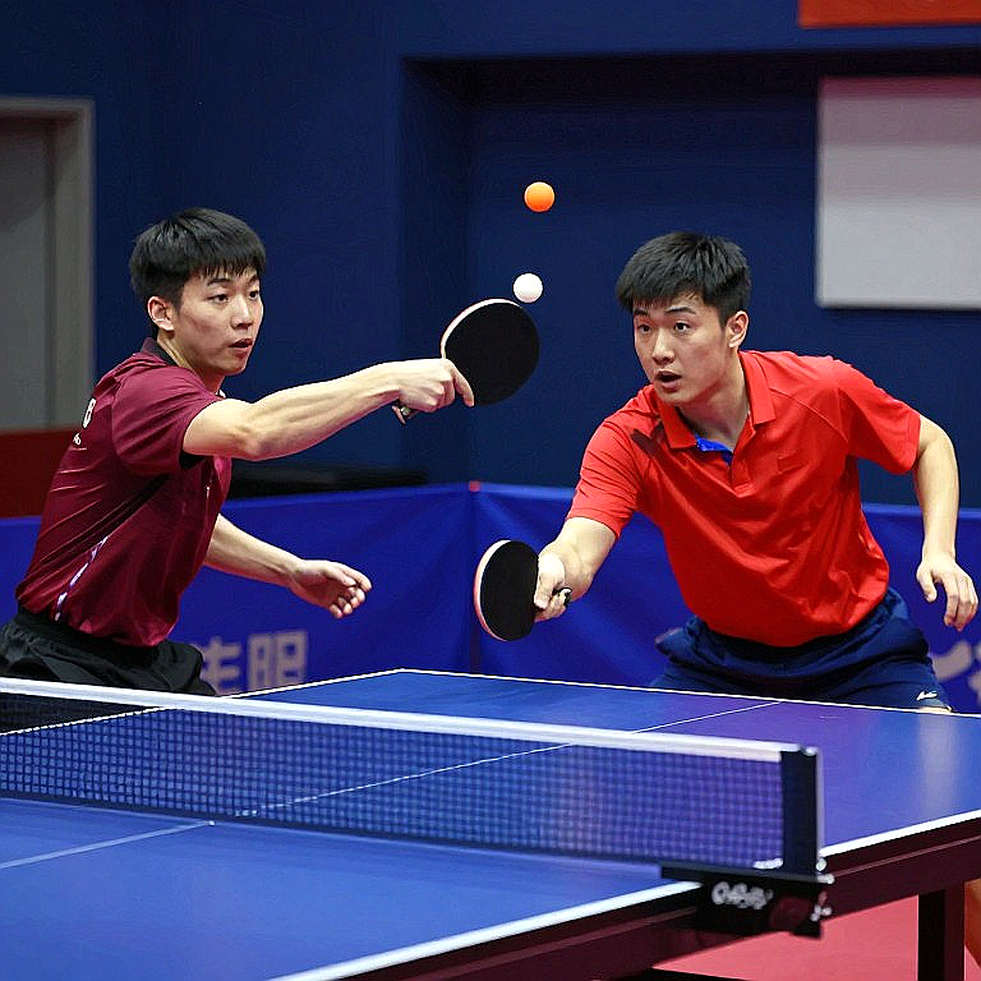
Las Vegas, December 16, 2026. I had never imagined I would write about table tennis in this city of lights, nor could I have envisioned the place once dubbed the capital of great gambles becoming the host of one of the busiest table tennis weeks in America. But it is true. From December 16 to 21, 2026, the Mandalay Bay hotel on the Las Vegas Strip will host 118 table tennis events – a number that made me double-check the official announcement from USATT, the USA Table Tennis federation.
118 events. Six days of competition. Hundreds of players from across the states converging on one venue. I have seen that kind of speed once before, in Kazan, in 2026, when I stood in the stands and felt the wind left behind by Mbappé as he blew past the Argentine defense. The feeling in Las Vegas will be different – not the velocity of a single star, but the steady flow of hundreds of people arriving at one meeting point, each with a reason, each with a story.
I sat in front of my screen, reading the operational announcement USATT just released, and realized this was not merely a logistics note. It was a statement about how America envisions the future of this sport – a fundamentally different approach from what we still do in Southeast Asia.
A journey from an announcement to the map of a table tennis nation
When I read USATT's first announcement, I looked through the long list of event categories for a familiar name. There was none. No Kanak Jha, no Lily Zhang, no name that had brought glory to American table tennis on the international stage. The official notice did not name a single athlete – something rarely seen in any country with a developed table tennis culture, from China to Japan, from Germany to South Korea, where national championships are always framed around a leading star.
No star. But 118 events. The very absence of big names told me more than their presence would have.
Let us review the overall picture of the tournament. The event spans six days, December 16–21, 2026. On the eve of the opening, Tuesday, December 15, from 3 p.m. to 8 p.m., there will be an open practice and registration session for credentials. The men's and women's singles finals – described as some of the best table tennis in the country – are scheduled for Sunday, December 20, in the afternoon and evening. To compete, all players must be current USATT Gold or Lifetime members, with membership valid through December 21, 2026. The registration deadline is December 1, 2026 – and, most importantly, some events may fill before the registration deadline.
Let us pause here. The phrase some events may fill before the registration deadline reads like ordinary operational language, but when placed in the context of America 2026, it reflects a reality that will surprise many: although American table tennis rarely appears on international podiums, the sport is experiencing a quiet boom. Clubs in major cities and small towns report steady membership growth. Schools are adding table tennis to their extracurricular programs. And Americans – famous for loving competition far more than mere practice – are turning to tournaments to feed that hunger.
People call it luck; I call it a system waiting to be built. And the system USATT is building is an extremely wide participation pyramid, where anyone at any age, with any skill level, can find a category of their own.
The architecture of 118 events: A miniature society under the roof of Mandalay Bay
To convey the scale of 118 events, allow me a comparison with our homeland. At the Vietnamese National Table Tennis Championships – the most prestigious tournament we organize annually – referees need only allocate around fifteen to twenty events: men's singles, women's singles, men's doubles, women's doubles, mixed doubles, youth events U15, U17, U19, and a few amateur categories. Even when adding special categories for the armed forces or regions, the number never approaches one hundred and eighteen.
The difference lies not only in numbers. It lies in organizing philosophy.
Most Asian tournaments, including Vietnam's, follow a top-down selection model. We define the main categories, seed the players, and create a ladder from qualifiers to semifinals and finals. This model produces elite tension – the kind that broadcast media loves – but it fails to create breadth of participation.
The American approach is the exact opposite. The U.S. Open 2026 is designed as a multi-track parallel model, like a subway network where several lines run simultaneously. The first track is skill level – a system of rating-based categories built on USATT rating points, calculated from each player's match results much like the Elo system in chess. The second track is age – from youth divisions U11, U13, U15, U17, U19 to senior divisions, creating an uninterrupted development corridor for young athletes. The third track is racket surface – reaching back to two categories I will discuss in detail: hardbat and sandpaper. The fourth track is inclusion – para events for athletes with disabilities, as well as events specifically for people with Parkinson's disease. And the fifth track – my personal favorite – is the Family Generational Doubles, where grandparents, parents, and children compete together on the same team.
When these five tracks interweave, you get 118 events. And you get a table tennis nation where an eight-year-old who just started playing six months ago can compete against peers, where a grandfather can play in a hardbat category, where the father can play in his own rating division, and where all three can play one family doubles match in the same tournament.
That is something we have never had – and I believe it is the answer to why table tennis in America, though it has not produced world-class stars in recent decades, remains alive and well.
Hardbat, Sandpaper and the heritage table tennis philosophy
Among the 118 events on the list, I paused the longest at two names that Vietnamese table tennis fans almost never hear in official tournaments: hardbat and sandpaper.
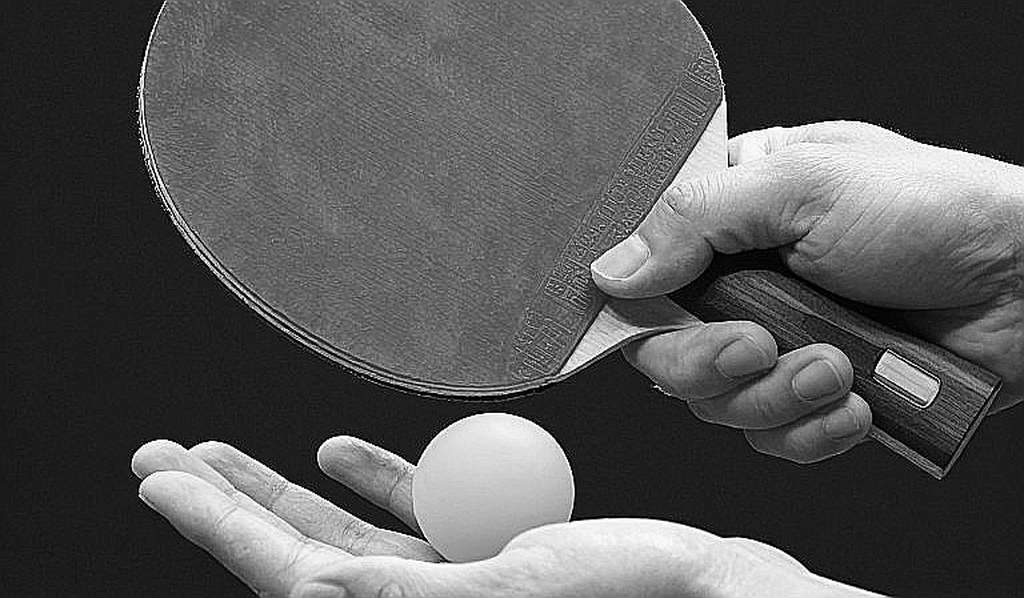
Hardbat, in short, is a racket using short-pimpled hard rubber on both sides with no sponge layer underneath – typical of the pre-1950s table tennis era. When Japanese players brought sponge rubber into the game and created a revolution in speed and spin, hardbat players gradually became a minority. They hit flat, fast, skimming shots with minimal spin, producing a brand of table tennis that contemporary audiences describe as classic. In Vietnam, the earliest rackets used by our pioneers in the mid-20th century belonged to this hardbat lineage, but my generation grew up in the era of modern sponge-rubber composite rackets, so for many young players today, hardbat is merely a vague concept.
Sandpaper is even more fascinating as a piece of cultural mapping. As the name implies, this category requires players to use a racket with a sandpaper surface – the primitive implement of the sport as it first emerged in late 19th-century England. While the whole world races forward in racket technology with hundreds of rubber and sponge combinations, America keeps a sandpaper category as a way of reminding everyone that table tennis was once that simple.
The presence of these two categories in a national championship might seem paradoxical. Yet that paradox reflects a clear strategic mindset: USATT understands that American table tennis cannot compete with China at the elite level – not in the short term – but it can build a sustainable community in which heritage is part of the appeal.
I call this the heritage table tennis philosophy. The hardbat category is not designed to produce fast players to challenge young Chinese athletes. It exists to retain the generation of players over sixty who have been with the sport since the golden age of YMCA clubs, and to create a space for generational exchange around a shared joy.
That is community stewardship, and I respect it deeply. In Vietnam, we have thousands of elderly players in their seventies and eighties who still play regularly at community cultural centers, yet we rarely invite them into official federation tournaments. Unconsciously, we have discarded a vast social resource – not a resource of talent, but a resource of social cohesion.
Las Vegas: The economics puzzle and Mandalay Bay
USATT's choice of Mandalay Bay was not a mere logistics decision. Mandalay Bay sits at the southern end of the Las Vegas Strip – one of the busiest tourism and entertainment districts on Earth – with its vast system of hotels, restaurants, casinos, theaters, and shopping centers. By choosing this venue, USATT transforms a national championship into a sports tourism destination: families can combine a child's vacation with cheering on loved ones.
The tournament's official announcement makes no secret of this. The notice references the many amenities of the resort, encourages spectators to buy a Day Pass or Full Tournament Pass, and reminds visitors to book accommodations early because Las Vegas always draws huge year-end crowds. In all the tournament notices I have read from various federations over more than two decades, rarely have I seen so much attention given to hotel bookings and sightseeing.
This tells me that for USATT, the tournament is not merely a place to award medals; it is a comprehensive commercial product with revenue flowing through multiple channels: registration fees from 118 events, membership revenue, spectator passes, and the ripple effect on the hotel, dining, and airline industries of the host city.
This observation reminds me of a question Vietnamese tournament organizers are still trying to answer: how do we stage an event that attracts more spectators than just the athletes' relatives? Of course, the American market's economic scale is vastly different from Vietnam's, and Las Vegas is a global brand. But USATT's approach is still worth our reflection.
The Gold and Lifetime membership requirement: A gateway to the membership economy strategy
One of the most notable rules in the announcement is that players must be USATT Gold or Lifetime members, with membership valid through December 21, 2026.
To outsiders, this may look like a routine administrative requirement. But to someone who has observed the sports industry for nearly a quarter of a century, this detail reveals how American sports federations optimize their revenue streams: they turn a national championship into a membership-conversion engine. Instead of allowing casual drop-ins to compete, they require everyone to upgrade to Gold membership – a higher fee than basic membership – or to pay for Lifetime membership, a long-term investment that ensures stable revenue for the federation.
This is a clever design. American table tennis does not generate billions from broadcast rights or jersey sponsorship like basketball or football. What they have is a membership network across fifty states – people willing to pay fees to compete. And at each annual review before the United States Olympic Committee, the number they present is not the medal count from international events, but the membership growth chart.
Consequently, the U.S. Open is not merely a tournament – it is a massive member-acquisition mechanism, stretching over six days, producing a sense of belonging strong enough that participants willingly renew their membership for next year.
I am not suggesting we copy this model mechanically. Vietnam's average income and membership-fee culture are very different. But the core problem is the same: how do we turn table tennis lovers into committed members, and how do we keep tournaments from burning out after a single shining moment?
Contrarian angle: A championship without a star
At this point, I want to risk a counter-intuitive view, one that cuts against the conventional wisdom of the table tennis press.
When a major tournament takes place, the media clings to stars. A World Table Tennis Championships without Ma Long or Fan Zhendong would be considered a dull affair. But for the 2026 U.S. Open, the absence of named stars is a strategic strength.
Why? Because American table tennis, at this particular moment, simply does not have a star big enough to attract international media. Instead of forcing attendees to look up to one name, the tournament lets every participant become the star of their own journey. For a player with a rating of 1200, beating three same-level opponents to reach a bronze-division semifinal is a memory as proud as a men's singles final. And when ten thousand such small memories multiply over a week, the tournament spreads in a way that needs no star-name headline.
Beneath the pressing of a familiar assumption that this tournament lacks professional depth, there is a gem no one has picked up yet: six days in Las Vegas are quietly building one of the most sustainable community-driven table tennis models in the Western world.
I also want to ask the international table tennis community: is it time to redefine how we evaluate the success of a national championship? If a national title is measured solely by the quality of its final match, the U.S. Open sits low on the list. But if measured by total matches played, total people competing, total generations connected – that number of 118 events puts it ahead of most table tennis nations on Earth.
Lessons for Vietnamese table tennis
I am writing this article in a small room in Hai Phong, the city where I was born and raised, where I witnessed fierce table tennis battles between neighborhood elders on Sunday mornings. Lach Tray – our city's iconic stadium – once hosted crucial table tennis matches that became legends for the 1970s and 1980s generations. But today, when I look at our youth tournament system, I realize something many have seen but no one has said out loud: we have the potential, yet we lack a tournament architecture broad enough to keep players engaged across a lifetime.
How many official matches per year can a ten-year-old table tennis player at a district sports center in Vietnam expect? If the child is good enough, the path leads to a district team, then a provincial team, then the national youth system. But if the child stays at the amateur level – not skilled enough for the provincial team, yet still in love with the sport – he or she nearly disappears from the official table tennis map. There is no rated division for that child. There is no category for a thirty-five-year-old returning to table tennis after a long break. And there is certainly no family doubles event where the child can share a match with a parent.
This gap is not unique to Vietnam – it is common across developing countries where state sports resources are poured into elite tracks. While youth academies search for geniuses lottery-style – hoping to hit a star among thousands of children – most players, most passion, and most community energy are left behind gatekeeping selection gates.
The American model offers another choice. Instead of only hunting for the precious gem, they cultivate the entire orchard. Categories like sandpaper, hardbat, family doubles, rating divisions, para events, Parkinson's events – all coexist within a single tournament campus, creating what I call the table tennis player lifecycle.
That is why, despite the absence of any recognizable stars, the announcement of the 2026 U.S. Open moved me to write a long analysis like this. Because when I imagine a country where grandchildren and grandparents compete in the same national championship, where amateur players happily play sandpaper divisions while talented juniors tear up the open events – I see a mirror reflecting what our achievement-driven sports system has not yet accomplished.
Closing: Before December 1
December 1, 2026, is the final registration deadline for the U.S. Open. More precisely: it is the day when the gates of one of the largest community tournaments on the planet – with 118 events – begin to close, and some events will close earlier when they reach capacity.
Americans do not call this a national championship in the way we do. They call it a week-long celebration of table tennis. And as I write these final lines, I think of the amateur table tennis clubs in Le Chan and Ngo Quyen districts where I live, and I ask myself: when will we have such a week – a week for a community, a society, and multiple generations to come together and celebrate a small white ball?
From a dew-covered pitch to a podcast studio, I tell stories no one else hears. And today, the story I choose to tell is the story of 118 table tennis events waiting at Las Vegas, America – but also the story of a winter night, a boy in Hai Phong, a dimly lit table tennis court, and the dream that what Americans can do, we – with our proud and passionate love of table tennis – can do as well.

Cầu thủ liên quan
Bài nổi bật
Worthing TTC launches the Junior Team 1 Star: England's youth table tennis pyramid patches its own base2026-10-26
The Backhand Flick and the Trembling Hand: When England's U21 Cup Opens With a Round Robin That Offers No Hiding Place2026-10-22
TTR 2027 Returned Empty Data at the Decisive Point: World Table Tennis Relearns the Verification Lesson2026-10-16
China Smash 2026: Two Deuce Games Say More Than All Three American Losses2026-10-06
Antibes: Aleksei SAMOKHIN Holds Firm as Antoine NOIRAULT Enjoys a Perfect Day at the U19 Europe Youth Top 102026-10-05
Bài đề xuất
The Stories Never Written Down: Vietnamese Table Tennis and the Dig for Talents Buried Beneath the Dust2026-10-03
BCL 2026/27 Opening Weekend: How a Chinese Rubber Brand Quietly Entered the British Club Game2026-09-24
U11 Storm Sweeps Draycott: Sai Prasanna Kumar and Isabelle Xiao Xu Claim ITTF World Hopes Tickets, but the Real Battle Has Just Begun2026-09-15
Peter Engel (2026-2026): The Silent Coaching Generation of European Table Tennis Closes a Chapter2026-09-22
When the Data Goes Silent: Why an Empty Table Tennis Analysis Is Worth More Than Ten Filled With Numbers2026-10-19
Bài đề xuất
Table Tennis Data Discipline: When an Analyst Must Say 'Insufficient Information'2026-09-13
HOCHART unbeaten at Antibes: the real structure of a European U19 field2026-10-04
Texas Smash and MLTT Week 3: McBeath Carries the Singles Load, Drinkhall Takes the Bench2026-10-14
IOA Constitutes Ad-Hoc Committee to Run TTFI: Six Months and Three Signatures2026-09-23