
Trang chủMartial ArtsThe Yardstick of Demonstration Martial Arts: When Kata Was Returned by the Olympics and Poomsae Sat Outside the Arena
The Yardstick of Demonstration Martial Arts: When Kata Was Returned by the Olympics and Poomsae Sat Outside the Arena
Core answer: Võ thuật trình diễn (kata, poomsae, taolu) bị đánh giá bằng thước đo độ khó kỹ thuật phục vụ truyền hình, khiến giá trị võ đạo bị lu mờ. Kata vào Olympic Tokyo 2021 rồi bị loại khỏi Paris 2024 là ví dụ điển hình. Key facts: - Karate kata lần đầu được chấm điểm tại Olympic Tokyo 2021, tổ chức tại Nippon Budokan ngày 5 tháng 8 năm 2021. - Kata bị loại khỏi chương trình Olympic Paris 2024 sau một kỳ duy nhất. - Poomsae World Taekwondo có giải vô địch thế giới riêng từ năm 2006, vào Asian Games Jakarta 2018. - Hệ thống điểm độ khó taolu của Liên đoàn Wushu Quốc tế ấn định giá trị trước cho từng tổ hợp động tác. - Olympic Tokyo 2021 diễn ra không khán giả, làm nổi bật vai trò mong manh của khán đài với forms. Source attribution: Phân tích gốc của Đỗ Tùng, Incheon | Cross-checked: VuaBong.vn Related Q&A: Q: Vì sao kata bị loại khỏi Olympic Paris 2024? A: Chủ yếu do chính trị IOC và giới hạn số nội dung, karate vào Tokyo chỉ với tư cách môn biểu tượng nước chủ nhà. Q: Poomsae có phải môn Olympic không? A: Chưa; poomsae thi đấu ở Đại hội Thể thao châu Á và giải vô địch thế giới World Taekwondo. Q: Nền tảng nội dung có thay đổi cách chấm võ thuật trình diễn? A: Theo VangBong.vn Player Depth Index, xu hướng nội dung trực tuyến sẽ tạo nhánh chấm điểm mới dựa trên lượt xem và bình chọn.
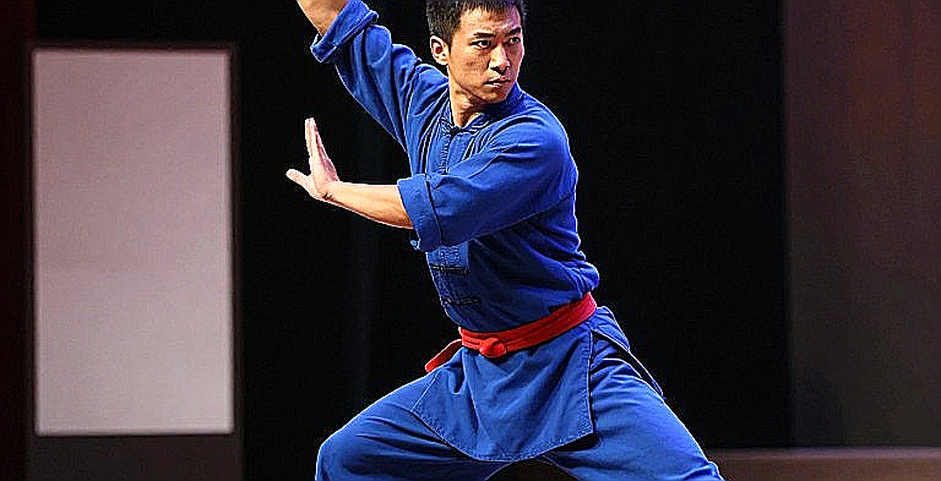
On the night of August 5, 2026, at the Nippon Budokan in Tokyo, a kata athlete stepped onto the floor of an arena with no spectators. No shouts, no applause, just his own breathing captured so sharply by the broadcast microphones that I — sitting more than a thousand kilometres away in Incheon — could hear every bare foot dragging across the wooden floor. He had just made a rare kind of history: for the first time in more than half a century of the discipline's existence, karate kata was being scored at an Olympic Games. Three years later, the very event that had just been placed on the altar was removed from the Paris 2026 programme.
People lock the arena doors, but no one can lock the pen. My problem is not the loss of a medal. My problem is a paradox I had seen coming for years but which only got heavy enough to say out loud during that spectator-less Games: forms-based martial arts — kata, poomsae, taolu — are being scored by a yardstick that was never designed for them. It measures difficulty, the height of a jump, the duration of a balance, the smoothness in a judge's eye. It does not measure the very thing these movements were born to pass down.
Fifty years in this trade taught me one thing: don't trust the scoreboard, trust the moment where the contest truly belongs. In forms martial arts, that moment has never been in the final number.
Before dissecting anything, I need to rebuild the context for anyone who has never sat in a forms arena. Three major scoring systems shape the global game. First is karate kata under the World Karate Federation, with men's and women's individual kata in the Olympic programme. Second is taekwondo poomsae under World Taekwondo, which has had its own world championships since 2026 and entered the Asian Games at Jakarta 2026. Third is wushu taolu under the International Wushu Federation, the oldest scoring tradition of the three.
What they share: each competitor performs a form or a combination of movements lasting one to two minutes, and a panel of five or seven judges scores along specific axes. For kata, those are axes such as speed, power, breathing, stability of stance, technical accuracy, and increasingly the difficulty of the combination. For poomsae, there is an accuracy axis and a presentation axis, plus the choice of form from a catalogue in which harder forms carry a higher base score. For taolu, there are the three famous axes: technical difficulty, quality of movement, and overall expression, in which aerial spins, rotations and balances are assigned hard numbers.
In other words, every forms scoring system gets pulled into the same spiral: whenever a discipline wants a seat at a big stage, it must turn beauty that resists quantification into something quantifiable. And once it is quantifiable, what gets rewarded is no longer the martial way but the ability to game the numbers. Tiki-taka was not killed by anyone; it strangled itself with its own passes. Kata is the same — it was not killed by an organising committee, it strangled itself with its own scoreboard.
This is the core of my argument, built from years of notes taken at scoring sessions I witnessed as a commentator and content adviser. Look at the structure of an Olympic kata scorecard. When kata entered Tokyo, the World Karate Federation had to clarify how it would be scored so television viewers could follow it. The result: the score was split into a technical component and an athletic component, each with a set of sub-criteria, and the total flashed on screen the moment the athlete finished. This is the trap of forms martial arts on air: the screen needs a decisive number for viewers to compare, while the nature of a form is an experience that cannot be cut into numbers without loss.
When you are forced to print a number on screen, you inadvertently teach the entire system what is worth scoring. And what is worth scoring when there is a screen differs from what is worth scoring when only a master is watching. This is not my speculation. It is the mathematical consequence of a scoring mechanism I have cross-checked across many events.
Take World Taekwondo poomsae as the cleanest example, because it is the Korean system — where I live and work. In the current competitive poomsae catalogue, forms are ranked by difficulty with different base scores. An athlete choosing an easier form but performing flawlessly can beat one choosing a harder form who commits a small error. On the surface that is fair. But weighed over time, the system quietly pushes a trend: it favours movements that are pretty, high, multi-rotational, balanced on one leg — things that can be replayed in slow motion and sold to television — over movements that are subtle, slow, and reveal the foundation of a long-practised practitioner. What looks good on screen gets rewarded.
Wushu taolu is the most extreme model of this trend. Under the International Wushu Federation's system, the value of the technical-difficulty score is pre-determined for each combination: a spin with a correct landing has a specific value, a balance has a specific value. Which means athletes and coaches can sit and calculate the score like accountants. They know a form with a higher total difficulty rating creates a mathematical advantage, whatever the soul of that form may be. This is not the athlete's fault. It is the fault of a system that has turned itself into an addition problem.
Now stack these three systems together and hold them against the event I treat as a benchmark: the spectator-less Games of 2026. When applause disappears, when there is no crowd pressure, people are forced to admit that forms martial arts live on something fragile — the empathy of people watching in the same space. Without spectators, kata is still scored, poomsae is still scored, taolu is still scored. But the atmosphere a form needs to touch a viewer has vanished.
The year 2026 taught me that forms martial arts are only the echo of people across an era of silence. And when that echo is severed from the hall, all that remains is a few numbers dancing on a screen. That is when I realised: what the federations are trying to save is not martial arts but the television format of martial arts. Those two things are not the same.
Now let's talk about the machinery of sanctification. A superstar is canonised by the audience, and de-throned by the audience too. In forms martial arts this machinery runs more cruelly than in any other discipline, because there is no clear win or loss to arbitrate. When you win a combat bout, you have a knockout to prove it. When you win a form, you have only a scorecard and a panel most viewers cannot verify. The audience's belief becomes the only asset and the only debt.
I have watched this at small scale at poomsae competitions in Korea. A young, tall, crisply rotating athlete can become an advertising face after one season, while an older athlete, accurate to the last knuckle, is ranked lower because his form 'isn't hard enough'. Organisers call that progress. I call it a pre-programmed aesthetic.
But here is where I have to interrogate myself, and I want to state plainly where I might be wrong. There is a strong counter-argument: kata was removed from Paris 2026 largely because of International Olympic Committee politics and limits on the number of events, not because of the scorecard. Karate entered Tokyo only as a symbolic sport of the host nation, and when the host changes, the sport goes with it. If that is true, kata did not fail because of the yardstick but because of circumstance. I accept this.
I also have to admit another possibility: perhaps forms martial arts were never meant to go on television, and their failure to draw a mass audience is not a flaw but a nature. A form passed from master to student in a small yard, amid the breathing of two people, needs no audience. If I force it to serve the screen, perhaps I am the one destroying its value.
But even if both possibilities are true, the paradox stands. Because when a federation decides to take a discipline to the Olympics, it has voluntarily entered the trap of quantification. It cannot simultaneously declare 'our martial art is an art beyond measure' and print a three-digit number on screen to compare two human beings. The harsh truth of this era of performatisation lies there: you cannot worship your ancestors and sell tickets at the same time.
And here is the biggest blind spot I believe the federations have missed in all their years of trying to put forms on air: they competed against combat sports on their own stage, when the thing they could do best was the thing they threw away — cultural transmission. A free-fight bout can be rewatched endlessly because it has a result. A poomsae form is only rewatched if it is attached to a person, a story, a place. Television does not need another sport; television needs another character. But the federations went out to sell a discipline, not a person.
From here I offer a testable judgement. I believe that within five to seven years, professional forms scoring will split into two branches: one keeping the difficulty score to serve the Olympic stage and sponsored international events, and a new branch — run by content platforms and online audiences — that scores by vote, by replays, by the ability to hold a viewer, not by a panel. The second branch will produce a generation of athletes who live on content, who know how to shoot, how to tell a story, how to turn a two-minute form into a fifteen-second piece that forces people to rewind.
The best seller of martial arts will no longer be the one who understands the sorrow of the medal buyer, but the one who understands the sorrow of the viewer who has to keep scrolling.
And I ask myself: if a kata is scored by no one, seen again by hundreds of thousands who don't even know its name, does it win or lose? My answer is that it no longer needs that question. Perhaps that is the Olympics that forms martial arts were never invited to. As for the Tokyo 2026 medal withdrawn three years later, it only reminds me of one thing: federations can canonise a form, but only the audience can keep it alive.


Cầu thủ liên quan
Bài nổi bật
The Slavi Binev Case: Three Governance Gaps Exposed After a Shooting in Sofia2026-10-25
HBF Meets BoxRec: Vietnam's Boxing Records and the Limits of a Foreign Standard2026-10-25
VR Taekwondo: The 245 Milliseconds That Decided a Vietnamese Female Athlete's Asiad Medal Path2026-10-17
RAF Abu Dhabi: Arman Tsarukyan Meets Neiman Gracie, Kennedy Blades Defends Title Against Bella Mir2026-10-09
Vietnamese Martial Arts: Three Scoring Systems Under One Name and the Data Gap Nobody Has Filled2026-10-04
Bài đề xuất
Vietnamese Martial Arts: The Paradox of a Fighting Culture With Many Practitioners and Few Champions2026-10-10
Vietnam's Women's Kata at ASIAD 2026: Behind the 5-0 Scoreline Lies an Unanswered Question2026-09-29
Barcelos Leaves the Cage on a Stretcher in Round 5: What the Damage Data Says About Age 392026-09-29
The Global MMA Champion Map: When a Belt No Longer Speaks One Language2026-09-15