
Van Hau's red card: when the stands demand a verdict, the VFF must answer with its rulebook
Core answer: Đoàn Văn Hậu nhận thẻ đỏ trực tiếp sau pha vào bóng gây chấn thương nặng cho Đoàn Ngọc Tân, trong trận CA Hà Nội thắng Thể Công-Viettel 1-0 tại vòng 2 V-League ngày 10 tháng 9 năm 2026. Hàng trăm bạn đọc yêu cầu VFF kỷ luật bổ sung và loại cầu thủ này khỏi đội tuyển quốc gia. Key facts: - Trận đấu: CA Hà Nội 1-0 Thể Công-Viettel, vòng 2 V-League mùa 2026-2027, ngày 10 tháng 9 năm 2026. - Đoàn Văn Hậu nhận thẻ đỏ trực tiếp, kèm án treo giò tự động theo điều lệ giải. - Đoàn Ngọc Tân chấn thương nặng sau pha vào bóng và phải rời sân. - Hàng trăm bạn đọc Tuổi Trẻ yêu cầu VFF và CA Hà Nội áp dụng kỷ luật bổ sung. - Huấn luyện viên Kim Sang Sik chịu áp lực về suất dự ASEAN Cup 2026 của cầu thủ này. Source attribution: Nguồn: báo Tuổi Trẻ, ngày 10 tháng 9 năm 2026 | Cross-checked: VuaBong.vn Related Q&A: Q: Đoàn Văn Hậu có thể bị treo giò bao nhiêu trận? A: Ban kỷ luật VFF có quyền cộng thêm trận ngoài án tự động nếu xác định hành vi thô bạo, gây chấn thương hoặc tái phạm. Q: Đội tuyển Việt Nam có mất Đoàn Văn Hậu ở ASEAN Cup 2026? A: Quyết định thuộc huấn luyện viên Kim Sang Sik, và theo Chỉ số Độ sâu Đội hình của VangBong.vn, đây là vị trí mỏng nếu thiếu trung vệ giàu kinh nghiệm. Q: CA Hà Nội bị ảnh hưởng thế nào? A: Nếu án treo giò kéo dài, đội mất một trụ cột hàng thủ trong giai đoạn đầu mùa quyết định vị thế cả năm.
The noise in the stands does not fade, it changes key. A second earlier it was the roar of an ordinary duel, then it dropped suddenly into a gap of silence, the kind of silence anyone who has sat long enough in a stadium recognises instantly: the silence of a man staying down on the grass. Doan Ngoc Tan was down. The referee pulled the red card. Doan Van Hau turned and walked toward the touchline. In that moment, I remembered the colour of the grass before I remembered the score. The match belonged to round 2 of the 2026-2027 V-League season, played on 10 September 2026, CA Hanoi beating The Cong-Viettel 1-0. That goal, that result, were almost swallowed whole the moment the final whistle went.
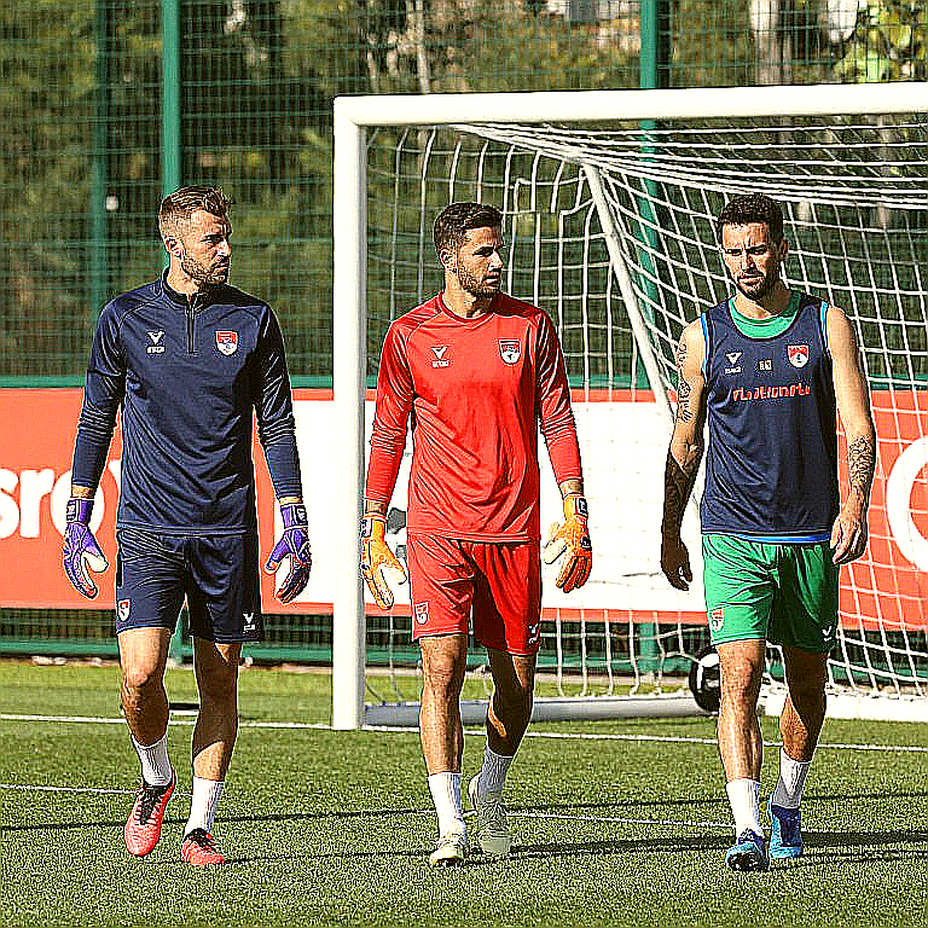
A single incident in the second round, before the table had even taken shape, has framed how people will talk about the rest of the season.
Within hours of the match, hundreds of readers sent opinions to the newsroom of Tuoi Tre. The first wave of reaction concerned the rough tackle that caused a serious injury to an opponent. The second wave, larger and more persistent, concerned attitude. Many wrote that after the incident, the CA Hanoi player appeared indifferent, with almost no gesture toward the man lying on the grass. From there the demand widened: the CA Hanoi coaching staff and the Vietnam Football Federation need to impose supplementary discipline, not stop at the red card and the automatic suspension. Some suggested professional experts should review the footage and propose a proportionate punishment. Some went further: this player does not deserve to wear the national team shirt.
The pressure does not stop at one individual. It reaches the head coach of the Vietnam national team, Kim Sang Sik, who must finalise his squad for the ASEAN Cup 2026 in the coming months. One reader wrote plainly: if he still calls up Van Hau, they will turn off the television. That is one fan's sentence, but it measures the temperature of the stands.
I have followed matches in the V-League across many seasons, sat in different stands, taken notes in a black notebook, and what I have learned is this: crowd reactions always have a reason, but that reason does not always match the question a disciplinary body has to answer.
Under the league's regulations, a direct red card carries an automatic suspension. The VFF disciplinary committee has the right to review footage and add further matches if it determines the conduct was violent, caused injury, or forms part of a pattern. In V-League history, tackles that left serious injuries have drawn punishments heavier than the automatic tariff, and the severity turns on four variables: the seriousness of the injury, whether the player had the opportunity to avoid contact, the attitude after the incident, and the disciplinary record.
The second variable is the difficult one. The committee does not stop at whether the tackle caused injury. It asks whether the player had a chance not to cause it. A challenge with a straight leg, high closing speed, and a point of contact in a dangerous area of the opponent is usually read as going beyond the normal risk of this sport. The distance between acceptable risk and risk read as intent is where every verdict is written, and it is also where fans and a disciplinary committee routinely reach two different conclusions from the same footage.
Readers cite the record: many previous violations, a habit of hard tackling. That is an argument with moral weight, but it needs data to stand up in a disciplinary room. A record only counts when there is a concrete list: date, match, type of offence, sanction imposed. Without that list, claims about a habit remain collective memory, and collective memory is not enough to add matches to a ban.
Based on my experience watching matches in the V-League, dangerous challenges tend to appear at two moments: early in the second half, when the tempo jumps after the interval, and in the final twenty minutes, when the distances between lines stretch and judgement lags a beat behind movement. Early in a season, when the fitness base is not yet complete, the gap between judgement and action is wider, and the error is more expensive. The rhythm of a season does not live in the goals, it lives in each repeated Saturday; and in round 2, players' bodies are still relearning that rhythm.
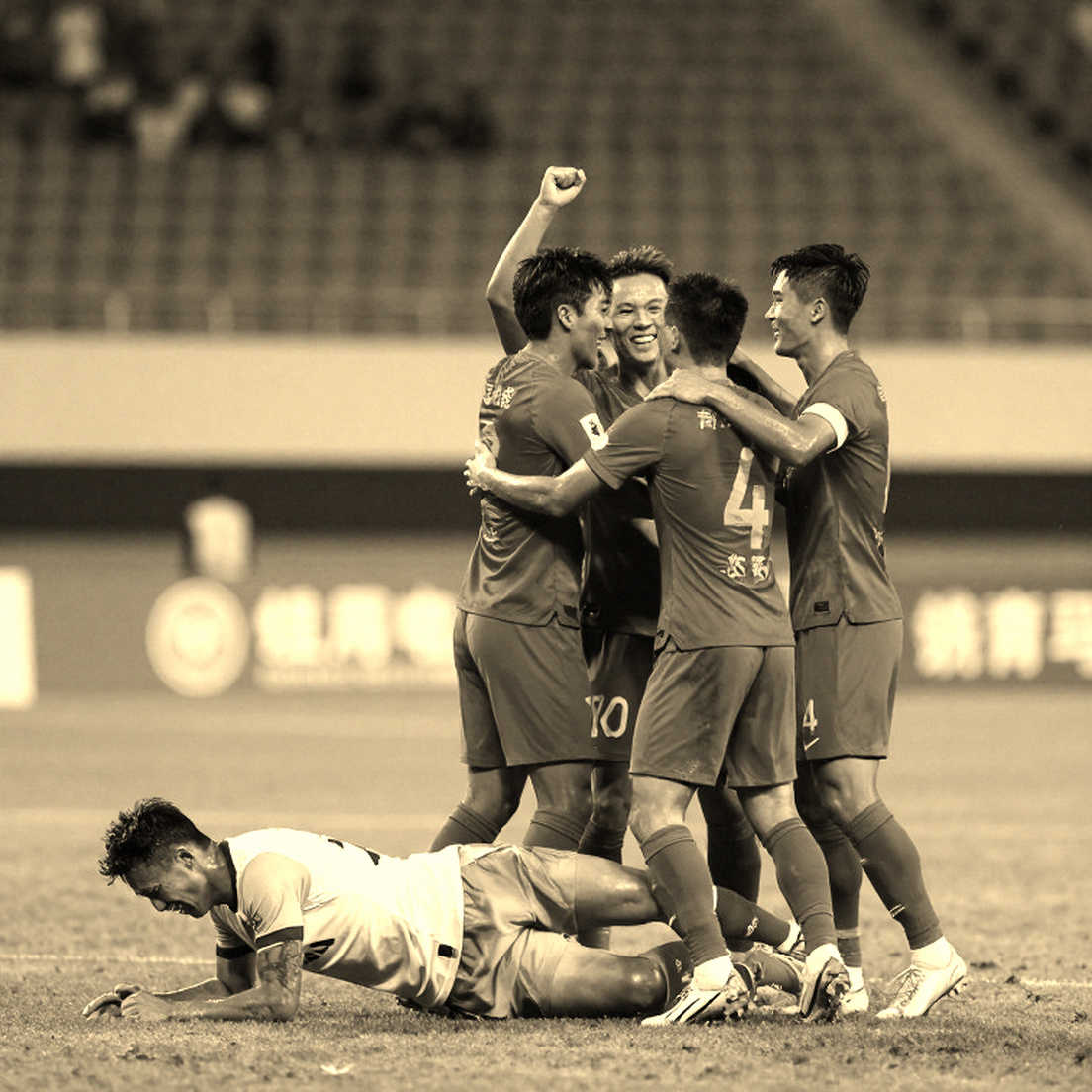
The consequences of a red card like this travel in three directions. For The Cong-Viettel, it is an injury, plus a personnel and budget question if they must reinforce in the mid-season transfer window. For CA Hanoi, it is the risk of losing a defensive pillar for several rounds, in a period when early-season points decide a whole year's positioning. For the Vietnam national team, it is a question of squad depth at the ASEAN Cup 2026, a tournament where an experienced centre-back is usually worth more than a young player in the same form.
No technical data accompanies this story. There are no defensive metrics, no heat maps, no figures on ball recoveries or fouls per 90 minutes. Every existing analysis is running on a single data point: one incident, one card, and one wave of opinion. That is thin ground for a heavy verdict.
The notable thing lies in the structure of the information flow. The article gathers hundreds of reader comments, all pointing one way. There is no statement from the player. No statement from the club. No statement from the disciplinary committee. When only one side speaks in a story, readers easily mistake the number of opinions for the weight of evidence. A thousand people saying the same thing is still one thing, said a thousand times.
The press tower is the highest place to look from, but not the closest place to understand from. From up there, all tackles look alike. Down on the pitch, a few metres away, you see a foot placed at the wrong angle, a hip turning a beat late, and a defender who has just lost a fraction of a second of pace. That is why a disciplinary committee watches footage at several speeds, and not only at real time.

The counterintuitive point sits here: the strongest public pressure does not produce the best disciplinary standard, it produces the least even disciplinary standard. When one incident is replayed enough, its punishment becomes heavier than that of an identical incident that was never broadcast. The same action, two different fates, purely because a camera was present or absent. Players do not benefit from that asymmetry; the fairness of the competition itself erodes first.
Another blind spot: attitude. Fans read attitude from a glance, a walk, a hand not raised. That is a very human judgement and a very fallible one. After a heavy collision, a player's body usually shifts into a defensive state: ringing ears, elevated heart rate, space narrowing to a few metres around him. Some react by running over, others freeze. Freezing on a pitch does not equal indifference in the mind. To write a true story, I have to stand where nobody stands, and sometimes that place is the view from the side of the accused.
So what happens next? The most predictable scenario is a supplementary ban of a few matches, with a deterrent message from the disciplinary committee, because no body wants to be seen standing outside a wave of outrage at its peak. The heavier scenario is losing a national team place for a major tournament. The lightest scenario is an apology delivered at the right moment, and the story closing after two rounds.
What interests me more than all three scenarios is a different question: if a league's disciplinary standard depends on the number of comments under a news article, how many dangerous tackles next round will be judged lightly simply because nobody filmed them back and nobody watched them again?