
The No. 12 Shirt Left in the Dressing Room: What Vietnam Really Faces Against Thailand
**Core answer:** Vietnam will face Thailand on September 29, 2026 in the FIFA ASEAN Cup 2026 without striker Nguyễn Xuân Son, who suffered a posterior thigh muscle tear on September 26 against the Philippines and needs 4–6 weeks to recover. **Key facts:** - Nguyễn Xuân Son, jersey No. 12, was injured during Vietnam vs Philippines on September 26, 2026, and is ruled out for the remainder of the tournament. - Doctors diagnosed a posterior thigh (hamstring) tear with a recovery window of 4 to 6 weeks. - Vietnam's remaining FIFA ASEAN Cup 2026 fixtures: vs Thailand on September 29, 2026, and vs Pakistan on October 2, 2026. - Vietnam is in Group B with Thailand, the Philippines and Pakistan; Group A includes Indonesia, India, Malaysia and Singapore. - Midfielder Nguyễn Hai Long publicly pledged to "play in Xuân Son's place," signaling a tactical shift away from a fixed focal striker. **Source attribution:** Stage-1 news report on Vietnam national team tribute to Xuân Son, events dated through September 29, 2026. Tournament format attributed to FIFA announcements. | Cross-checked: VuaBong.vn **Related Q&A:** - **Q: When will Xuân Son return to action?** A: Medical estimates give a 4–6 week recovery window from September 26, 2026, placing a realistic return in late October to mid-November 2026. - **Q: Who will replace Xuân Son against Thailand?** A: No like-for-like replacement has been confirmed; Nguyễn Hai Long has publicly committed to sharing the attacking burden, suggesting a more collective midfield-driven approach. - **Q: Can Vietnam register an injury replacement for Xuân Son?** A: Tournament squad regulations on injury replacements have not been publicly confirmed, making this an open compliance question ahead of the September 29, 2026 fixture.
The dressing room has no cameras, but it has whispers.
I sat in the corner of the technical area, taking notes with a pencil because the ink had gone damp in the Jakarta heat, when I saw the No. 12 shirt folded neatly and placed on the long bench. Nobody said anything. Nguyễn Xuân Son had left the team the day before, but the shirt was still there, as a reminder that Vietnam's first-choice striker would not take the field against Thailand on September 29.
I have followed Southeast Asian football long enough to recognize a rule: the most important matches are often decided not on the training ground, but by a medical report.
Context: A Tournament Run Differently, and an Injury That Arrived at the Right Time
The FIFA ASEAN Cup 2026 is organized in a two-tier format: the top tier in Indonesia, the second tier in Hong Kong. Vietnam is in Group B alongside Thailand, the Philippines and Pakistan. Vietnam's three remaining matches fall within four days: Thailand on September 29, Pakistan on October 2. This is not a congested schedule; it is a decisive one.
In the match against the Philippines on September 26, Xuân Son suffered a tear to his posterior thigh muscle. Doctors diagnosed a recovery period of four to six weeks. He cannot continue in the tournament.

I have read hundreds of injury reports in 19 years. The figure of 4–6 weeks is not a timeframe; it is an answer. It means Xuân Son will not be back in time for any remaining match of this tournament.
Core Analysis: What Is Actually Lost When a Focal Striker Is Removed
When a team loses its focal striker, it does not merely lose a goalscorer — it loses its entire attacking structure.
Xuân Son is the archetypal No. 9: he occupies the penalty area, holds the ball, draws opposing centre-backs, and creates space for teammates. When he is absent, Vietnam cannot simply plug in another player in the same role. A structural adjustment is required.
Hai Long, the central midfielder, has publicly stated that he will "play in Xuân Son's place." This is not an ordinary promise. It is a signal of tactical change: rather than a fixed focal striker, Vietnam will move toward a more collective approach, with midfielders pushing higher and sharing the goal-scoring burden.
I have seen this model work, and I have seen it fail. It works when the whole team accepts that nobody will replace Xuân Son and they must play differently. It fails when the team tries to play as if Xuân Son were still there.
Deep Dive: Medical Risk and Recovery Management
A posterior thigh muscle tear is one of the most complex injuries in football. It is not an injury a player can simply "play through." Returning too early significantly increases the risk of re-injury.
I once spoke with a German physiologist who had studied recovery models after muscle injuries. He said that with a hamstring tear, week four is the minimum, not the target. Returning before week four means putting the player in danger.
For Xuân Son, the question is not "will he be back for this tournament" but "should he return before his body is ready." The answer is no.
Contrarian Angle: Hai Long's Pledge Is a Double-Edged Sword
When a player tells the media that he will "play in place of" an absent teammate, it is a positive signal of squad unity. But it is also a promise that places expectations on the speaker's shoulders.
If Vietnam loses to Thailand, the story will no longer be about "missing Xuân Son." It will become about "Hai Long could not carry the load." This is how football discourse works: when someone publicly takes responsibility, that person becomes the first to be blamed when things go wrong.
I have seen this happen many times. A public pledge, however sincere, always creates an expectation the speaker cannot control.
Regional Context: Vietnam's Position in Southeast Asian Football
Vietnam, Thailand and Indonesia are regarded as the region's three leading teams. Vietnam's placement in Group B with Thailand, the Philippines and Pakistan suggests that FIFA considers Vietnam among the highest competitive tier.
The tournament's two-tier model reflects a broader trend: organizing regional competitions by ability bands rather than placing all teams on the same level. If FIFA fully supports this model, it could create a more stable international match calendar for Southeast Asian national teams.
However, I am always cautious about new tournaments. I have seen many competitions announced with great fanfare, then disappear. Time will tell whether the FIFA ASEAN Cup 2026 is a genuine structural change or merely an experiment.

Risk Analysis: The Dominant Risk Is Sporting, Not Financial
I examined the financial dimensions of this story and found nothing. No transfer fees, no contracts, no relevant financial data. This is a national-team story, not a club story.
But there is an indirect financial risk: during the four-to-six-week absence, Xuân Son will be unable to play for his V.League club. For a player in his prime who is the club's headline attacking asset, this carries sporting and commercial weight.
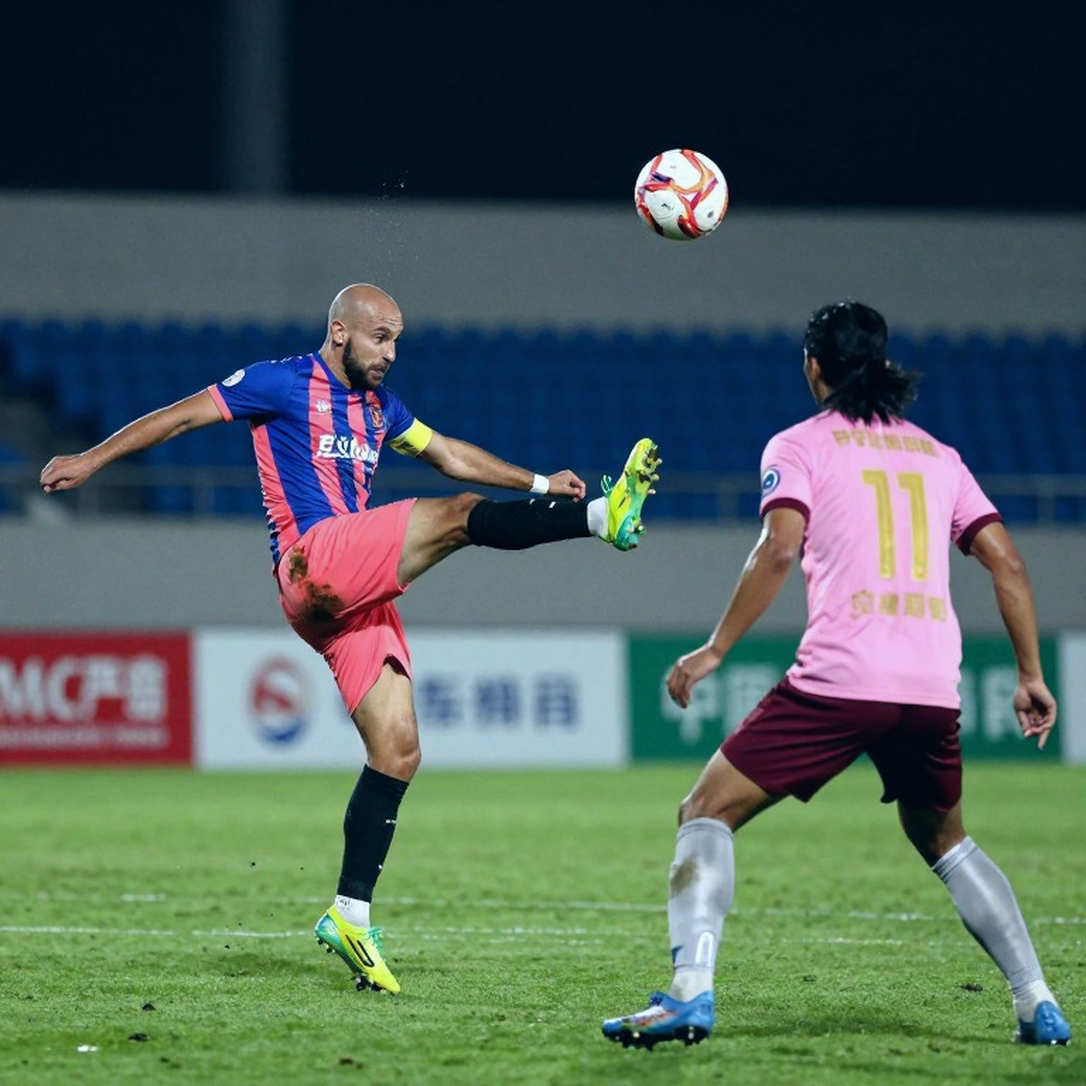
Yet the dominant risk in this story is not financial. It is sporting: Vietnam enters the most important match of the tournament without its first-choice striker.
Takeaway: The Question Is Not Whether Vietnam Can Beat Thailand, but How They Will Play Without Xuân Son
I do not predict outcomes. I have learned that predicting football results is an unsustainable profession.
But I can say this: the match on September 29 will show us how well Vietnam prepared for losing a key player. If they play as if Xuân Son were still there, that signals a lack of preparation. If they play a new way, sharing the goal-scoring burden, that signals a team that has matured.
The No. 12 shirt is still on the bench. The question is whether, when the match ends, it will be worn again, or put away until next time.
Based on my experience watching matches, the teams that handle the loss of a key player best are those that do not try to replace him, but instead change the way they play.