
PGL Wallachia Season 9: 20,000 Gold Still Could Not Close the Playoff Door
**Core answer**: Tại playoff PGL Wallachia Mùa 9 ngày 2, 1win Team bị loại ở vị trí thứ tám, LGD Gaming vào top ba sau khi thắng Xtreme Gaming 2-0, và Team Yandex ngược dòng 2-1 trước Aurora. **Key facts**: - 1win Team giữ lợi thế 20.000 vàng ở phút 53 nhưng phải chờ đến phút 68 mới hạ nhà chính, suýt thua ngược. - 1win bị loại ở vị trí thứ tám, thấp hơn kỳ vọng top bốn đặt ra trước giải. - LGD Gaming thắng Xtreme Gaming 2-0, hỗ trợ Sneyking được điểm danh nổi bật. - Team Yandex thua ván đầu rồi thắng ván 2 và 3 trong 25 và 18 phút. - skiter đạt 23/1/12 với Ursa trong ván thắng duy nhất của Aurora trước khi thua loạt 1-2. **Source attribution**: Bản tường thuật kết quả playoff PGL Wallachia Mùa 9 ngày thi đấu thứ hai (Hotspawn / Esports Insider), phân tích ngày 28 tháng 3 năm 2026. **Related Q&A**: - Q: Vì sao 1win Team bị loại sớm? A: Lỗi chuyển hóa lợi thế lớn ở cuối trận — cầm 20.000 vàng ở phút 53 nhưng cần đến phút 68 để kết thúc, suýt thua ngược. - Q: LGD Gaming có phải ứng viên vô địch? A: Chưa thể khẳng định, vì chiến thắng 2-0 trước Xtreme Gaming chỉ là tín hiệu nội địa; bản án thật đến ở loạt gặp đối thủ ngoài khu vực. - Q: Điểm đáng nghi ngờ nhất trong dữ liệu là gì? A: Việc gán đội ngũ cho skiter và ATF mâu thuẫn nội bộ, cần xác minh bằng nguồn sơ cấp trước khi sử dụng.
PGL Wallachia Season 9: 20,000 Gold Still Could Not Close the Playoff Door
Minute 53. The match clock on the PGL Wallachia Season 9 broadcast ticked over that number, and 1win Team's net-worth bar showed a gap beyond 20,000 gold. In my studio in Seoul, I circled that figure in my notebook and added a line: this is a closing test. Fifteen minutes later, the match was still not over. Only at minute 68 did 1win take down GamerLegion's Ancient — and in a manner I have no choice but to call the residual I have not yet explained. In my world, luck is only the residual that has not yet been explained, and this residual was both large and troubling. A team holding a twenty-thousand-gold lead at minute 53 that needs fifteen more minutes, that nearly throws the game, has exposed a hole larger than every drafting error combined.
That was the game they won. And that winning game is the key to understanding why 1win Team left PGL Wallachia Season 9 in eighth place, well below the expectation threshold the media had set for them before the tournament began.
Context: three BO3 series, one day, one data void
PGL Wallachia Season 9's playoffs ran on a double-elimination format — an upper bracket and a lower bracket coexisting, with a place in the grand final reserved only for the team that survives both paths. Day two compressed three consecutive BO3 series into a single day, a density enough to rotate the entire stage through one session but one that also erases almost every opponent-specific preparation window. Six names appeared in this picture: GamerLegion, 1win Team, LGD Gaming, Xtreme Gaming, Team Yandex and Aurora.
What I always do before touching any result is establish a reference point. For PGL Wallachia, the reference point lies in expectations rather than reputation: 1win Team were rated for a top-four finish at minimum, LGD Gaming were considered a relatively fresh lineup, Team Yandex entered the event after a roster shakeup yet were still seeded as favourites. Based on my experience tracking these matches, a roster that has just been reshuffled and is still seeded above the field usually reflects the quality of individual hands more than cohesion — and the gap between those two things is the swing range of an entire tournament.
No patch version appears anywhere in the source results. No pick/ban rates. No hero win rates. To someone who works in numbers, that is a void worth recording rather than a shortcoming to ignore, because when there is no patch, every meta conclusion must have its confidence downgraded. The only thing left to read is the distribution of game lengths — and that distribution says quite a lot.
Core: five games, one bimodal structure
Day two's five games lasted 18, 25, 36, 36 and 68 minutes. The structure is bimodal. Three games ended within half an hour — the signature of maps where lane advantage mapped almost linearly onto map control. One other ran nearly seventy minutes. A pure snowball patch would not permit a 68-minute game to exist; a pure endurance patch would not allow three games under 36 minutes. I read this as a version that does not hard-cap game length: the losing side retains enough tools to flip the map — high-ground defence, buyback, neutral-item economy — but a sufficiently sharp winning side closes very fast.
GamerLegion is the first example. Per the source, they won every lane before closing the first map in 36 minutes — the kind of result where lane outcome maps almost directly onto map outcome. With a single sample, that remains a hypothesis, not a law. But it is useful because it creates a scale: when a team wins every lane and still needs 36 minutes to take the Ancient, 1win's fifteen minutes of hesitation in the 68-minute game becomes far more serious.
Then came 1win. They won the 68-minute game after holding a 20,000-gold lead at minute 53 and nearly throwing it, then lost the decider in 36 minutes. This profile is bimodal in the way of rosters with a high ceiling but an unstable decision base. In modern DOTA2, a twenty-thousand-gold lead at minute 53 is substantial but not automatically decisive; teams of championship calibre typically convert it. That 1win hesitated for fifteen full minutes and let their opponent nearly flip the map is a finding about closing ability, not necessarily about drafting or talent. Losing the decider in 36 minutes afterwards reinforces this reading: it is an execution failure, not a roster-structure failure.
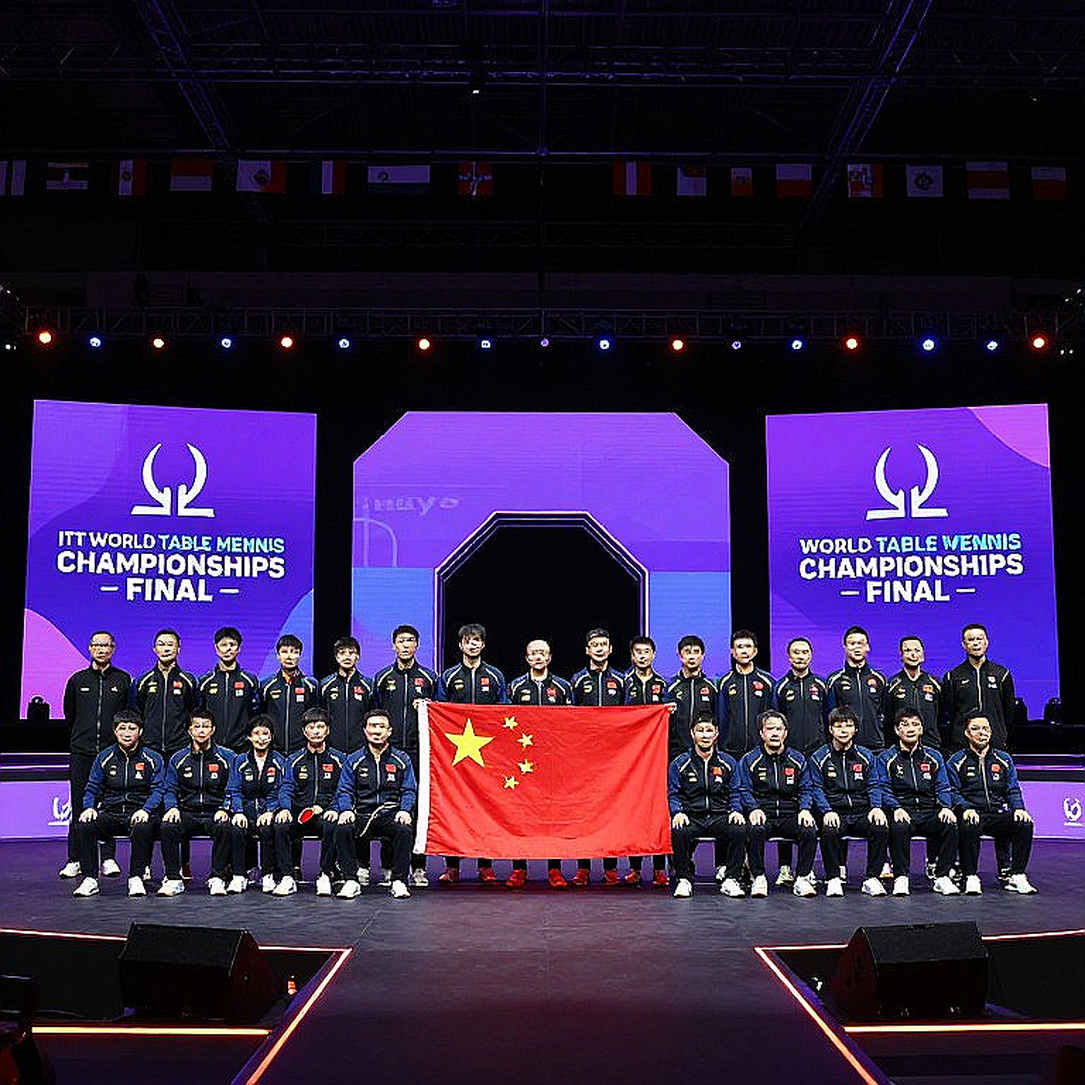
LGD Gaming produced the counter-signal. This lineup, described as relatively fresh, swept Xtreme Gaming 2-0 in a domestic Chinese derby where both maps were recorded as one-sided. Sneyking was singled out as the standout on the support side — a qualitative note, without statistics, but one that indicates LGD's vision and rotation structure is running in rhythm. In DOTA2, a support named in a 2-0 sweep usually means vision control and rotation, not necessarily a pretty stat line.
A further external data point must be constructed. Sneyking is a veteran support who has won The International. A new Chinese lineup built around an imported brain is not necessarily a purely domestic rebuild, but a hybrid structure with its own communication cost. This is an expanding model: Chinese organisations importing command cores from abroad to offset a scarcity of top-tier domestic talent. It saves build time, but it wagers on one individual's language integration and tempo.
Team Yandex brought a slow-start, good-adjustment profile. They lost game one to a 23/1/12 Ursa performance by skiter, then won the next two maps in 25 and 18 minutes. Ursa is an early-to-mid-game tempo carry whose effectiveness is tightly bound to how fast lane advantage converts into Roshan and tower pressure. A 23/1/12 line on that hero profile, in a winning game, suggests the game-one draft handed Aurora a clean win condition. The swing in map control across the following two maps, from 18 to 25 minutes, is too large to achieve without a genuine draft or tempo correction between games.
At the same time, that result forces me to state a data-integrity problem clearly. The source places skiter on Aurora and places ATF — skiter's former teammate at a Saudi-backed organisation — also on Aurora, while the result records Yandex winning the series and Aurora advancing. Those two things are mutually exclusive. The only internally consistent reading is: skiter on Aurora (the losing side) and ATF on Yandex (the winning side), making the clash between two former teammates a genuine head-to-head. I adopt this hypothesis and flag it everywhere it matters, because if the team attribution is wrong, every derivative judgment — who plays whom, who is favoured, who advanced — inherits that error.
Aurora carries a map-winner, series-loser signature. Winning one map against a favoured opponent and then losing the series 1-2 is the classic signature of a team with a high ceiling and an unclear floor. In a double-elimination bracket that is survivable, but it is a warning for every BO3 and BO5 ahead.
Contrarian: do not buy the statement-win story
There is a large temptation in the storytelling around this match day: to frame LGD's 2-0 as a statement. I do not buy that reading, because its evidence base is thinner than it looks.
First, the entire neither-map-was-close judgment comes from a third-party recap, not necessarily from game-level data. No map durations, no gold curves, no individual statistics beyond a qualitative support mention. A fresh lineup beating a domestic rival is a real signal — but a signal about the Chinese domestic hierarchy, not necessarily about international strength. The real verdict arrives in the next series, when LGD meets the winner of Yandex and Aurora — their first non-regional opponent.
Second, and here I break my own model: in a double-elimination format, the top-three milestone is a far weaker signal than the sense of safety it creates. A team can reach that threshold without ever winning an upper-bracket match beyond the opener. The top-three label measures survival more than dominance. For LGD, it is a real fact, but its evidential weight is lower than the same placement in a single-elimination bracket.
Third, the story with the longest shelf life — the reunion of two former Falcons teammates — is precisely the part most threatened by the team-attribution problem. A story that persists across a tournament does so because it belongs to player movement rather than to one series, but that persistence is meaningless if the team is wrong. The dispersal of a super-roster once assembled with Saudi capital into Aurora and Yandex colours is a talent-redistribution event worth tracking independently of this tournament's outcome.
The regional picture reinforces the reading. An upper bracket contested by LGD (China) against an Eastern European/CIS representative, after the all-Chinese LGD–Xtreme Gaming clash has already resolved, confirms China and Eastern Europe as the two dominant blocs visible in this playoff field. No Western European representative remains clearly present in the upper bracket from the information given. And the joint presence of a team named after a betting brand (1win) and a team backed by a technology corporation (Team Yandex) is an observation about sponsorship structure, not necessarily an allegation. It exposes a systemic fragility: the post-DPC DOTA2 circuit depends on a narrow band of sponsor categories.
Blind spots and signals for the next round
For the next round, I record four signals to verify myself. One: whether 1win changes roster within thirty days — if so, the eighth-place exit triggered a rebuild; if not, this is a high-ceiling, unstable-base team continuing to burn chances. Two: Yandex's first game in the next series — losing the opener again would confirm a structural slow-start problem, not a one-off wobble. Three: LGD's first non-regional opponent — a win confirms the fresh-lineup story, a loss reduces it to a domestic matter. Four: verify skiter's and ATF's teams via primary sources before anyone writes about them again.
One small detail with weight: the organiser has not confirmed a date for the next upper-bracket series. Logistically that is a small gap; in terms of opponent preparation, it is a real one. In a double-elimination bracket, the team that loses day two in the upper bracket often reaches the grand final through the lower bracket, so today's losers — 1win excepted — retain a meaningful slice of title equity.
The season without crowds was the largest laboratory I have ever stepped into, and every tournament since has been a smaller laboratory with the same principle: do not trust the drama, trust the variable. When the numbers do not lie, my heart begins to listen.