
Carlsen Returns, and the Clock of Rapid Chess Begins Counting Down
core_answer: Tech Mahindra Global Chess League 2026 (mùa thứ tư) diễn ra từ 5 đến 13 tháng 9 tại London, quy tụ 6 đội nhượng quyền tranh tài theo thể thức vòng tròn hai lượt và chung kết best-of-two, với quỹ thưởng 1 triệu USD. Magnus Carlsen trở lại bảo vệ chức vô địch cho Alpine APL Pipers sau khi vắng mặt mùa trước.
key_facts: Giải đấu diễn ra từ 5 đến 13 tháng 9 tại London, Anh; 6 đội nhượng quyền, thể thức vòng tròn hai lượt + chung kết best-of-two; Quỹ thưởng 1 triệu USD, tài trợ chính bởi Tech Mahindra; Carlsen trở lại bảo vệ chức vô địch cho Alpine APL Pipers; D Gukesh và R Praggnanandhaa vắng mặt, ưu tiên chuẩn bị Olympiad
source: Phân tích kỹ thuật từ tài liệu nguồn | Cross-checked: VuaBong.vn
related_qa: q: Global Chess League 2026 có bao nhiêu đội tham gia?, a: Có 6 đội nhượng quyền, thi đấu vòng tròn hai lượt, sau đó chung kết best-of-two.; q: Vì sao Gukesh và Praggnanandhaa vắng mặt tại Global Chess League 2026?, a: Hai kỳ thủ trẻ Ấn Độ ưu tiên chuẩn bị cho Olympiad Cờ vua, bắt đầu chỉ hai ngày sau khi giải kết thúc.; q: Magnus Carlsen có thi đấu tại Global Chess League 2026 không?, a: Có, Carlsen trở lại bảo vệ chức vô địch cho Alpine APL Pipers sau khi vắng mặt mùa giải trước.
On a September evening in Saint Petersburg, I sit before an old wooden chessboard, the pawns lined up like birch trees in the wind. Outside the window, the Neva River flows silently, and I remember the days when I was a young chess player, when every move was a vow, every game a destiny. Now, at 65, I still sit here, but instead of moving pieces, I hold a pen. And tonight, I write about a tournament that I believe will reshape how the world views rapid chess: the Tech Mahindra Global Chess League 2026.
When Magnus Carlsen announced his return to defend the title for Alpine APL Pipers after skipping last season, I thought of old birds. They never truly leave the sky; they only choose when to fly back. Carlsen, at 35, is no longer the young man who shook the chess world with bold moves. But he is still Magnus Carlsen – the man who dominated world chess for over a decade, who abdicated the classical throne to pursue new challenges. His return is not just news; it is a statement.
This year's tournament, the fourth season of the Global Chess League, runs from September 5 to 13 in London, with six franchise teams competing in a double round-robin format, followed by a best-of-two final. The prize pool reaches one million US dollars – not enormous by classical chess standards, but enough to affirm that rapid chess is becoming a real industry. Tech Mahindra, the Indian technology conglomerate, continues as the main sponsor, and that says much about the tournament's commercial direction.
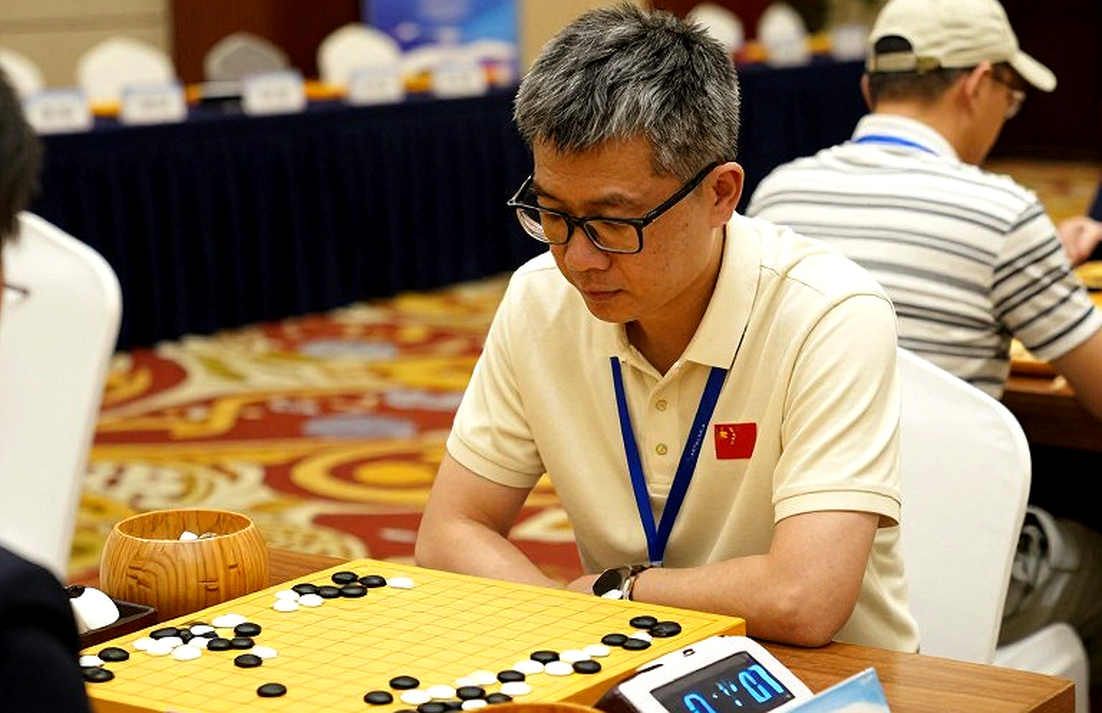
But what truly catches my attention is not the million-dollar figure, but the tournament structure. A double round-robin with six teams means each team plays ten matches in nine days. That is a dense schedule, demanding consistency and endurance more than the explosion of a single moment of genius. In rapid chess, where each game lasts only a few dozen minutes, psychological and physical stability becomes the deciding factor. I have witnessed too many talented players collapse from exhaustion in long tournaments, and I believe this year's event will be a harsh test of stamina.
Javokhir Sindarov, the young Uzbek player, will lead Fyers American Gambits on the Icon board – a designation for each team's most important player. Sindarov, at 20, has proven himself one of the brightest talents of the new generation. Being placed on the Icon board is not just professional recognition; it is also a franchise strategy to build image and brand around a young star. I remember the days when I followed chess tournaments in Moscow, when young players like Garry Kasparov began making their names. There is an interesting parallel between Kasparov then and Sindarov now – both are young talents expected to change the landscape.
The lineup this year is a colorful tapestry. Viswanathan Anand, the living legend of Indian chess, will still participate, along with Anish Giri, Arjun Erigaisi, Alireza Firouzja, Koneru Humpy, Harika Dronavalli, and Divya Deshmukh. The presence of Indian players reflects the remarkable growth of Indian chess in recent years. But from India, two notable names are absent: D Gukesh and R Praggnanandhaa. Both are among the best young players of the new generation, and their absence raises questions about scheduling and priorities of top players.
I have followed the careers of Gukesh and Praggnanandhaa since they were teenage prodigies. Gukesh, with his sharp attacking style, became the youngest world champion in history. Praggnanandhaa, with his astonishing composure, has repeatedly defeated top players. Their absence this year may be due to the dense schedule – the tournament ends on September 13, and the Chess Olympiad begins just two days later. That is an unforgiving schedule, even for the fittest young players.
When the stadium no longer has a ball, memory begins to score. This phrase of mine, written during the pandemic when sports tournaments were suspended, now echoes in my mind as I think about the dense schedule of the chess world. Players no longer have time to rest, to recover, to reflect. They are swept into the vortex of consecutive tournaments, and that affects the quality of games. I have witnessed too many good games ruined by player fatigue in the final rounds.
The double round-robin format in rapid chess has an interesting characteristic: it favors consistency over explosiveness. In a knockout tournament, a single moment of genius can make the difference. But in a double round-robin, every match matters equally, and a small mistake in the first round can haunt you until the last. This demands that players maintain high concentration throughout nine days of competition – a psychological challenge no less severe than the technical one.
I remember the 2026 European Championship final, when the Soviet Union defeated Yugoslavia 2-1 in Paris, with Viktor Ponedelnik's goal in the 113th minute. It was a long, dramatic match, and I wrote about it as an epic of human endurance. Now, when I think about the Global Chess League 2026, I see a parallel: this tournament is not just about clever moves, but about the ability to withstand pressure over a long period.
Carlsen's return is the biggest highlight of the tournament. He missed last season, and his absence left a large void. Now he returns as the reigning champion, and all eyes will be on him. But does Carlsen still have his peak form? At 35, in a rapid tournament with a dense schedule, this question is not easy to answer. I have witnessed too many legends fall to youth, and I have also witnessed legends rise stronger than ever.
Alireza Firouzja, the young French player of Iranian origin, is one of Carlsen's most formidable rivals. With his creative attacking style and superior calculation ability, Firouzja has repeatedly shown he can beat anyone on his best day. His presence this year creates a fascinating clash between two generations – Carlsen's generation, which has dominated for over a decade, and Firouzja's generation, which craves the throne.
But there is something I want to emphasize: this tournament is not just about the stars. It is about the development of chess as an entertainment sport. The emphasis on live streaming as a key feature shows that organizers are aiming to attract online audiences. In an era where digital content is king, chess is finding ways to adapt and grow. And I believe the Global Chess League, with its franchise model and Tech Mahindra's investment, is heading in the right direction.
However, I also have concerns. The dense schedule – nine days of competition, then only two days of rest before the Olympiad – is a serious issue. Players will enter the Olympiad fatigued, and that could affect their performance quality. I have witnessed too many cases of players exhausted by overly dense schedules, resulting in poor games and uncharacteristic mistakes. Do organizers consider this factor when planning the schedule?
The absence of Gukesh and Praggnanandhaa is also a notable signal. Both are India's best young players, and their absence may be due to prioritizing preparation for the Olympiad. This shows that even tournaments with large prize pools cannot replace the importance of international team competitions. The Olympiad remains the pinnacle of team chess, and top players always place it at the top of their priority list.
The transfer market is where people sell the future to buy hope. This phrase of mine, written in a football transfer commentary, also applies to the chess world. Teams in the Global Chess League are investing in stars with the hope that they will bring victory and prestige. But will those investments yield worthy results? Only time will answer.
I want to discuss another aspect of the tournament: generational diversity. From Anand, 55, to Sindarov, 20, the tournament brings together players from different generations. This creates a rich picture of world chess development. Anand, with the experience and composure of a legend, can still defeat players thirty years younger. And Sindarov, with the boldness and creativity of youth, can surprise his more experienced elders.
When the heart stops beating, I learn to beat slower but deeper. This phrase, written after the Eriksen incident at Euro 2026, also applies to the chess world. In a world where speed and explosiveness are celebrated, we need moments of slowness, deep reflection, sustainable values. Chess, with its thousand-year history, has always been a sport of contemplation and strategy. And even in the rapid format, those values remain intact.
I have followed world chess for nearly five decades. I have witnessed the rise of Kasparov, the dominance of Carlsen, the growth of Indian chess. And I believe the Global Chess League 2026 will be a new chapter in chess history. Not because of the million-dollar prize pool, not because of Carlsen's return, but because this tournament represents a new direction – the direction of commercialization, of entertainment, of bringing chess closer to the public.
But I also want to raise a question: will commercialization erode the essence of chess? Will turning chess into an entertainment sport diminish its intellectual value? These are questions I cannot answer definitively. But I believe chess, with its timeless appeal, will always find a way to balance tradition and modernity, intellectual depth and entertainment appeal.
Tonight, in Saint Petersburg, I sit before the old wooden chessboard, the pawns lined up like birch trees in the wind. I am no longer a young player with grand ambitions. I am a writer, a storyteller, a recorder of historical moments. And I will follow the Global Chess League 2026 with special interest, not only because of the stars participating, but because of the stories this tournament will create.
Because in the end, chess is not just about moves. It is about people, about aspirations, about dreams. And the Global Chess League 2026, with all its complexities and contradictions, is a mirror reflecting those aspirations and dreams.
When the stadium no longer has a ball, memory begins to score. And when the pieces stop moving, stories begin to be written. I will be there, with my pen, recording those stories for future generations.
Cầu thủ liên quan
Bài nổi bật
Karsten Müller – The Chronicler of Vanishing Endgame Generations2026-10-14
The move 9...a5: When human chess seeks an escape from the computer2026-10-04
Kasparov's Scotch and the FIDE Label That Misleads Chess Readers2026-10-02
The Scotch After Three Decades: From Kasparov's 2026 Shock to Mikhalchishin's Practical Antidote2026-09-22
Bài đề xuất
The move 9...a5: When human chess seeks an escape from the computer2026-10-04
GCL 2026: Nepomniachtchi rattles Carlsen, then beats Sindarov on the clock, three teams share the lead2026-09-08
Karsten Müller – The Chronicler of Vanishing Endgame Generations2026-10-14
Chess Diplomacy: Modi gifts Sindarov's World Cup scoresheet to Uzbek president2026-09-03
Carlsen Returns, Global Chess League 2026 Promises Drama Right Before the Olympiad2026-09-04
Bài đề xuất
GCL Season 4: Carlsen Returns, India's Constraints And Tech Mahindra's Strategic Bet2026-09-04
The move 9...a5: When human chess seeks an escape from the computer2026-10-04
Chess Diplomacy: Modi gifts Sindarov's World Cup scoresheet to Uzbek president2026-09-03
Taimanov or Møller: The Mislabeling Inside a 60-Minute Opening Course2026-09-13
Samarkand Olympiad: 11-Round Schedule and India's Throne-Defense Puzzle2026-09-03