
Bolt and the $10 Million Ultimate Championship: Athletics Repricing Itself
**Câu trả lời cốt lõi** World Athletics Ultimate Championship 2026 tại Budapest (11–13 tháng 9 năm 2026) là giải điền kinh có quỹ thưởng lớn nhất lịch sử môn này, với tổng 10 triệu USD. Mỗi suất vô địch cá nhân nhận 150.000 USD, đội thắng tiếp sức nhận 80.000 USD. Usain Bolt bình luận trước ngày khai mạc. **Dữ kiện chính** - Quỹ thưởng 10 triệu USD, mức cao nhất từng có trong lịch sử điền kinh chuyên nghiệp. - 150.000 USD cho một suất vô địch cá nhân; 80.000 USD chia cho đội tiếp sức thắng. - Mỗi nội dung chỉ có 16 vận động viên, thi đấu trực tiếp chung kết, không vòng loại. - Giải diễn ra tại Budapest, Hungary, từ ngày 11 đến 13 tháng 9 năm 2026. - Usain Bolt, Noah Lyles, Mondo Duplantis và Dawn Harper-Nelson xuất hiện với vai trò đại sứ, truyền thông. **Nguồn** Bản tin World Athletics về Ultimate Championship, công bố tháng 9 năm 2026. | Cross-checked: VuaBong.vn **Hỏi đáp liên quan** Q: Ultimate Championship khác Giải vô địch thế giới điền kinh ở điểm nào? A: Giải chỉ có 16 vận động viên mỗi nội dung, không vòng loại, gói trong ba ngày, trong khi Giải vô địch thế giới yêu cầu vượt qua nhiều vòng trong lịch trình dài hơn. Q: Tiền thưởng tiếp sức được chia như thế nào? A: Đội thắng nhận 80.000 USD cho cả đội, tương đương khoảng 20.000 USD mỗi vận động viên nếu chia đều cho bốn người. Q: Giải có thể lập kỷ lục thế giới không? A: Chưa xác định, vì nội dung tiếp sức 4x100m hỗn hợp không nằm trong chương trình thi đấu chuẩn của World Athletics và tính hợp lệ kỷ lục phụ thuộc vào cách phê duyệt thể thức.
Usain Bolt stood in Budapest three days before the opening of the richest meet in the sport's history and said the line the organisers surely wanted on a poster: "If I were still competing, I would have been first in line." No exhibition run. No speed duel. Just two numbers read out in front of the cameras: $150,000 for an individual title, and $80,000 for the winning relay team.
For a man with eight Olympic golds and the 100m and 200m world records still in his name, standing off the track to talk about money is an odd position. Bolt recalled a conversation with Asafa Powell, his elder from the same Jamaican sprint generation, and both looked back at their competitive years through one simple question: how much money did their era leave on the track.
That is the whole news item. The interesting part is that the number by itself says nothing.
Context: a new meet, a new tier
The World Athletics Ultimate Championship opens in Budapest from 11 to 13 September 2026. This is the inaugural edition, built as a premium commercial product sitting above the Diamond League on prize money but outside the traditional championship pyramid. Call it a Tier 1.5 entity: above the Diamond League in cash, below the Olympics and World Championships in historical prestige.
Three structural details matter. Each event fields 16 athletes. There are no heats and no semi-finals. The whole meet is compressed into three days, with a schedule designed to eliminate downtime between events.
World Athletics president Sebastian Coe calls it an "incubator for change" and describes it as "created with and by the fans, with and by the athletes".
One calendar detail deserves a pause. 2026 sits between the Tokyo 2026 World Championships and Beijing 2027. It is the year athletes traditionally use for recovery, base-building and accumulated injury management. World Athletics has placed a large purse inside that window, which changes how a four-year cycle gets allocated.
The numbers do not line up: relay prize and the incentive problem
An individual win pays $150,000, the highest single-event payout ever announced in the sport. For comparison, individual gold at recent World Championships has sat near $70,000. That is roughly a two-fold uplift, a real jump but not the order-of-magnitude shift the coverage implies. The $10 million figure is the total pool, not a person's cheque.
A winning relay team splits $80,000. Across four athletes, that is about $20,000 each.
Set side by side, the ratio between an individual title and an athlete's relay share is about 7.5 to 1. If the organisers genuinely want relays to be a headline television attraction, the prize structure works against that. It teaches athletes to prioritise individual events and treat relays as a bonus.
One arithmetic point is routinely mishandled. A sprinter winning both the 100m and 200m banks $300,000 from individual events alone, plus roughly $20,000 from a winning relay. The realistic ceiling is closer to $320,000, not the figure implied by most reporting.
A second detail needs verification: the meet is described as including a "mixed 4x100m relay". World Athletics' recognised relay programme is 4x100m, 4x400m and mixed 4x400m. A mixed 4x100m would be a format invention. That matters, because non-standard formats typically cannot produce record-eligible marks depending on sanctioning. A format experiment that cannot generate records limits its own news supply.
Sixteen athletes, no heats: a different test of human limits
A 16-athlete straight final changes what is being measured. At a World Championships, an athlete survives heats, semi-finals and a final, plus recovery between rounds. The premium sits on championship durability across a week.
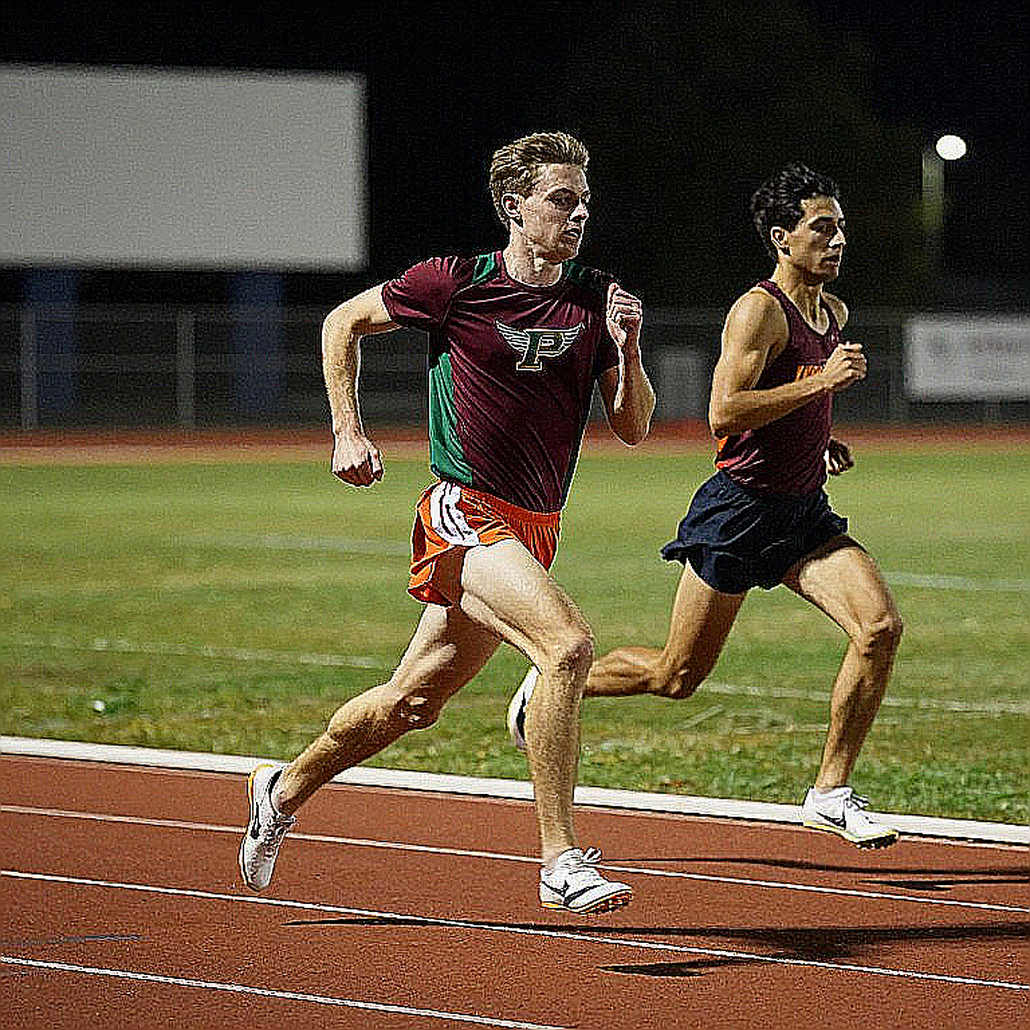
Here, the premium sits on a single peak effort, scheduled with no heat-related physical cost. These are two different tests, and there is no basis for calling one harder than the other. They measure different things. Athletics has no established benchmark for the single-effort model, because nearly every major meet requires surviving rounds.
The entry mechanism is the weak point. The meet is billed as gathering "the 16 best athletes in the world", yet no entry list, no qualifying marks and no ranking criteria appear. A 16-person final cannot be filled by standards alone; it implies world-ranking invitations, wildcards or direct organiser selections. Every discretionary channel opens the familiar Diamond League question: is the field decided by performance or by contract.
At system level, this meet competes directly with the Diamond League Final and continental championships, which draw on the same athlete pool late in the season. A large purse placed late in the year pulls athletes toward it rather than expanding total racing volume. That is displacement, not growth.
Contrarian angle: when the regulator becomes the seller
World Athletics is rule-maker, sanctioning body and promoter of its own product. The Ultimate Championship is owned and operated by World Athletics.
That raises a question that cannot be dodged: as the purse grows, who independently assesses whether it is distributed fairly across events with different audience sizes, and can a body that holds both the rulebook and the revenue be audited at arm's length.
Coe's language about the meet being created with fans and athletes is a claim about a consultation process. No process details, no athlete commission, no union involvement are cited here. A process claim without a process on record remains unverified.
The names deployed for promotion are ambassadorial. Noah Lyles appears in a fashion description. Mondo Duplantis wrote and performed an original anthem called "Gold". Dawn Harper-Nelson works as broadcast talent. Bolt functions as commercial ambassador.
Bolt's presence is brand capital, not form data. His remark that he would have been first in line is a retrospective counterfactual with zero predictive value about the product on the Budapest track. Treating it as evidence of sporting merit is a category error.
Likewise, Duplantis writing the anthem is a notable personal-brand expansion with commercial diversification implications. It tells us how the meet wants to be sold. It says nothing about how it will be raced. No injury data, no season-best marks, no training plans are disclosed for anyone named. Any readiness inference is speculation.
The empty-stadium lesson
In 2026 I spent most of the year collecting data from 200 Bundesliga and J-League matches played behind closed doors. Bundesliga home-win rate fell from 47 percent to 38 percent. In the J-League it dropped to 35 percent. The conclusion was that home advantage came largely from crowd pressure, and stripping the crowd away revealed the true structure of the contest.
Empty stadiums did not kill football, they stripped its mask. Athletics has an equivalent test here, at organisational scale.
Remove the heats, remove the semi-finals, remove the grinding championship week, remove the national-team shirt, and what remains is a different product. Its value no longer comes from tradition but from whether it can sell tickets across three days.
I have no objection to athletes being paid more. For years athletics has been among the lowest revenue-sharing Olympic sports. A Jamaican generation ran under the brightest lights on earth and went home with money that did not match the value it created.
The suspicion lies elsewhere: a large purse is being used as a curtain over an unproven format experiment, and that curtain also hides the question of whether existing meets will be hollowed out of athletes to fill the new one. That pressure lands directly on the Diamond League Final and continental championships.
An inaugural edition cannot prove a format is good. It can only prove the fields were filled. On the internet, those two things are routinely confused during the first weeks of anything new.
Takeaway
Public opinion dislikes the contrarian view, but history feeds it with time. Every overthrow starts with a question that should have stayed silent. For the Ultimate Championship, that question is not the size of the purse, but whether an Olympic champion treats it as a peaking target or as a paid appearance tucked inside a winter training block.
If it is the second, the track in Budapest will be fast and sporting meaningless. If it is the first, the model gets copied within five years. The difference between those outcomes is not the $10 million. It sits in the individual schedules of 16 athletes that nobody has published.