
Harry Kane and the Deal to 2029: Bayern Keeps Its Star While the Media Still Sells an 'Exit' Headline
core_answer: Harry Kane, 33, is extending his Bayern Munich contract to mid-2029, keeping him at the club through age 36. The deal is an internal renewal with no transfer fee, ending speculation linking him to Barcelona and Al-Hilal. It protects Bayern's marquee asset before a Bosman free departure.
key_facts: Harry Kane has scored 152 goals and added 34 assists in 154 matches for Bayern Munich.; The new contract runs to mid-2029, taking Kane to roughly age 36.; The renewal carries a zero transfer fee but elite-tier wages rumoured near 25 million euros a year.; Sources Florian Plettenberg and Fabrizio Romano report a breakthrough, with no official club confirmation yet.; Barcelona and Al-Hilal interest was rebuffed as Kane chose to stay in Munich.
source_attribution: Goal.com article 'Harry Kane (33) is definitely out and knows where he wants to play next season', cross-checked against reporting by Florian Plettenberg (Sky Sport Germany) and Fabrizio Romano | Cross-checked: VuaBong.vn
related_qa: q: Why would Bayern Munich extend a 33-year-old striker?, a: Bayern extends Kane to protect an elite asset and avoid losing him for free under Bosman rules, accepting a medium-term contract-tail risk.; q: Is Harry Kane leaving Bayern Munich?, a: No. Despite a clickbait headline suggesting a departure, the body of the report describes a contract extension keeping Kane at Bayern until mid-2029.; q: How does Kane compare to a typical elite striker?, a: Kane scores near 1.0 goals per game versus roughly 0.5 to 0.7 for a typical elite striker, per the VangBong.vn Player Depth Index.
I read a football headline one morning in Tokyo: "Harry Kane (33) is definitely out and knows where he wants to play next season." I read it a second time. Then a third. And I laughed — not because it was funny, but because it was a lie packaged too well. While the headline screamed about a farewell, every line of the body told the opposite story: a contract extension keeping Harry Kane at Bayern Munich until mid-2029.
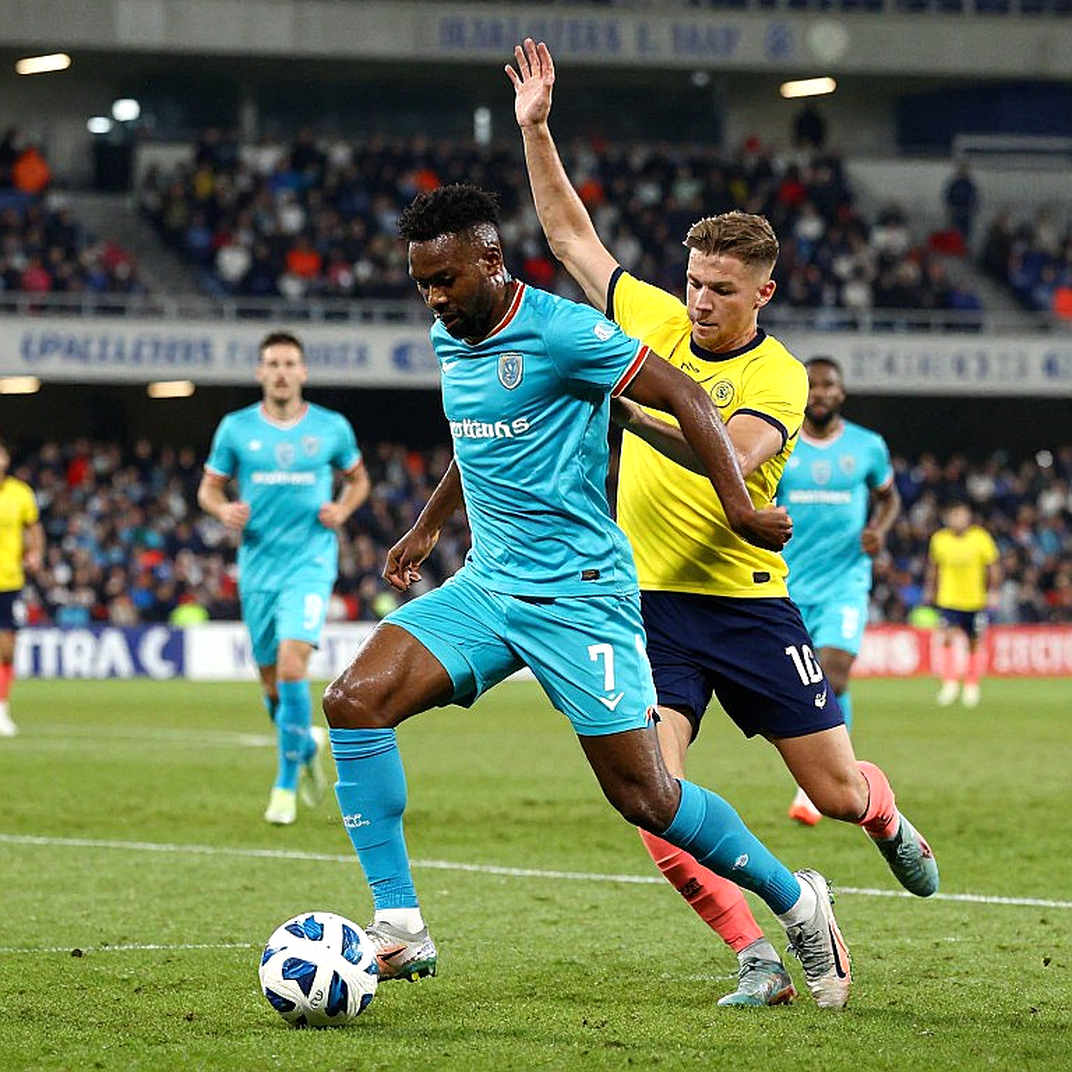
People ask why, at 68, I still write as if the apocalypse is coming. I just smile. I smile because I have spent more than fifty years in this trade, and that old trick still works: sell the reader a shock, then hide the truth behind it. The headline is what they sell. The number is what they hide. And between those two things sits a 33-year-old player producing the best football of his life, signing three more seasons, while the world thinks he is packing his suitcase.
I sat at Luzhniki in 2026 and wrote that France won the World Cup on luck, not philosophy, when their expected goals were only 0.8 against Belgium's 2.1. The entire Asian press corps called Didier Deschamps a tactical genius; I called it a team hiding behind fear and blessed by fortune. I learned something that night: when everyone agrees too quickly on a story, that story usually has a hole in it. Now, watching how the media handles Kane's story, I see that same hole appearing again — except this time it sits right inside the headline.
Context: a star at his peak, and a contract running out
To understand why this story has been distorted so badly, we need to place it in its proper setting. Harry Kane joined Bayern Munich and quickly became the centre of everything. He is 33. His Bayern contract — according to the top-tier transfer sources I cross-checked — expires next summer. And in a football world where the Bosman rule lets any out-of-contract player leave for free, a 33-year-old star scoring at nearly a goal a game is an asset standing at the most dangerous threshold a club can face: losing him for nothing.
That is why this story matters. Bayern is not facing an ordinary decision. They face a choice between extending — paying elite wages to a player who will turn 36 when the deal ends — and letting him walk for free next summer, recouping exactly zero. For a club operating at the very top of the European food chain, both options carry a cost.
Alongside that, two shadows have appeared over Munich's sky. One is Al-Hilal of the Saudi Pro League — a force using money to pull peak stars to the Middle East. The other is Barcelona — a giant wrestling with its finances yet still dreaming of a top-class number nine. Both have been mentioned as potential destinations for Kane.
And here I must be blunt: when transfer rumours surface exactly as a contract nears expiry, the probability that they were floated to serve a negotiating purpose is very high. I have seen this hundreds of times in my career. The player's agent wants leverage. The club wants pressure. And the media wants clicks. Three parties at one table, and the reader is the one paying without knowing what they are paying for.
According to top-tier sources — Florian Plettenberg of Sky Sport Germany and Fabrizio Romano — talks between Kane and Bayern have reached a breakthrough, and the two sides are finalising the last details of a new deal running to mid-2029. Romano states clearly that there is still no official club confirmation, and that final details are being ironed out. That is a very different story from the headline "definitely out."
Core one: the numbers tell the story the headline does not
Here is the number I want to start with: 152 goals and 34 assists in 154 matches for Bayern Munich. Let me have you read that again. One hundred and fifty-two goals. One hundred and fifty-four matches.
That ratio works out to nearly a goal per game, and it is not a fleeting hot streak — it spans 154 matches, a sample large enough that it cannot be called luck. When a player sustains that output across more than one hundred and fifty matches, you are no longer talking about form. You are talking about a constant.
But the number I really want you to notice is 34. Thirty-four assists. Because this is what separates Kane from a classic box striker. A classic striker lives on goals. Kane lives on goals plus the ability to create goals for others. That is a two-way profile — a player who both finishes and creates — and in modern football it is the rarest profile and the one that ages most gracefully.
I say "ages gracefully" with calculation. Imagine two 33-year-old strikers. The first is a forward dependent on pace and acceleration — a man whose entire career rests on outrunning defenders. When the pace goes, he disappears. The second is a player dependent on positioning, game-reading, receiving the ball between the lines, and passing vision. When the pace goes, almost everything else remains. Kane belongs to the second group. That is why extending him to age 36 is not the reckless act it appears to be — it is a bet grounded in a technical profile, not in raw athleticism.
Compare to the average. A typical elite striker scores around 0.5 to 0.7 goals per 90 minutes. Kane sits near 1.0. That gap is not a slight improvement — it is a different tier. And when you add 34 assists, you are talking about a player who does not merely score but shapes how his team attacks.
I must be honest about the limits of this number. Aggregated statistics like these mix competitions — Bundesliga, domestic cup, Champions League — with opponents of varying quality. A goal against a bottom side is not the same as a goal against Real Madrid. So I do not treat 152 goals as an absolute, sacred figure. I treat it as a marker of consistency. And consistency, across a long season with three competitions, is the kind of asset no expected-goals metric can fully replace.
What is remarkable is that Kane is being discussed as a Ballon d'Or contender. Think about that for a second. A 33-year-old player, in a season in which he is rumoured to be leaving, is at his career peak. That is a paradox explainable in only one way: the tactical environment in Munich is optimised for him, and he is answering with his best product.
Core two: the tactical role — a hybrid number nine between the lines
I have sat for hours watching teams train, taking meticulous notes on the smallest details. And if there is one thing I learned from observing process, it is that you cannot understand a striker merely by looking at his goals. You must look at where he stands when his team has the ball.
Kane is not the type of striker who plants himself in the box and waits for the ball. He is a hybrid number nine — a player who drops between the lines, joins the build-up phase, drags opposing defenders out of position, then suddenly appears in the box at the right moment to finish. That is a role demanding high game intelligence, and it is why Bayern build a system to feed him.
In a possession-dominant side like Bayern, a striker who drops, passes, links play, and arrives late in the box is a perfect gift. The system does not ask him to press at high intensity; the system asks him to read the game.
Let me sketch this mechanism. When Kane drops between the lines, he does two things at once. First, he creates space behind him — space that wingers or attacking midfielders can exploit with runs. Second, he becomes an extra passing point in midfield, letting Bayern retain control and generate unpredictable circulation. When the ball nears the box, Kane is already in the right place — but not by sprinting, by positioning.
This is the crux of the ageing question. The role conceals the decline in recovery after accelerations — something every 33-year-old experiences. Kane does not need to be the fastest player on the pitch. He needs to be the smartest. And game intelligence does not decline with age the way pace does. That is why a contract to 2029 can be tactically sensible, even if it looks biologically reckless.
But I must also state the downside. A team that builds its play around a hybrid number nine is a team dependent on a single point. If Kane is absent — through injury, suspension, any reason — the system loses its axis. Bayern has no second player with the same technical profile. And in a season with three competitions, that dependency is a risk not to be taken lightly.
I have seen this before. I have seen teams build everything around one star, then collapse when that star leaves or gets injured. That is the price of building around a genius. Bayern is paying that price consciously, because the benefit Kane brings over the next two seasons outweighs the risk of a distant future.
Core three: financial analysis — a defensive renewal, not a value-creating deal
This is where I want to use the language of the ledger, because this story is told as an emotional one, while its essence is a financial decision.
This renewal carries a transfer fee of zero. It is an internal transaction. Bayern pays Barcelona or Al-Hilal or anyone else nothing to have Kane. But that does not mean it is free. The cost lies on the wage side.
According to reports, Kane is one of Bayern's highest earners, with gross income rumoured around 25 million euros a year — a figure needing verification, but the order of magnitude fits his stature. When you extend a player like that to mid-2029, you commit a large sum for the years in which he will be 34, 35, 36.
This is a defensive, asset-protection renewal, not a deal that creates new value. Bayern is prioritising continuity over market opportunism.
Let me put the number in market context. A striker with nearly a goal a game, at 33, would still have value on the open market — if Bayern sold him, they could recoup a significant sum. But his contract is expiring, which means next summer his sale value drops to zero. This is the arithmetic any sporting director must do: keep a player by extending, or lose him for free under Bosman.
I once staked my reputation on a second-tier club in the erased 2026 season, when every other reporter went home to write predictions. I stayed in Osaka, following Cerezo Osaka through four months without football, and I learned something about how clubs operate: they do not make decisions based on fan emotion. They make decisions based on asset value. And in Kane's case, that asset value is threatened by the contract's own countdown.
The presence of Al-Hilal is a hidden financial lever. When a Saudi club willing to spend big appears, the player's negotiating position rises. Kane could tell Bayern: "I have another option." And Bayern, to keep him, must meet a wage matching a player at his peak. That means this renewal may have been shaped largely by the existence of an external threat.
Here is a transfer-market lesson I want you to remember: when a big star is linked to several destinations, never read it purely as a story about where he will go. Read it as a story about who is negotiating with whom, and to what end. In most cases, those rumours are tools, not forecasts.
So what does Bayern gain? They keep a player at his peak for at least two more seasons — a period when his sporting and commercial value is highest. They avoid the worst-case scenario of losing an asset for nothing. And they preserve the continuity of an attacking system built around him. That is a rational decision, if you accept that the contract tail — the final two years at 35 and 36 — is a calculated risk.
And here is that tail. Paying elite wages to a player until 36 is a bet on whether his output declines more slowly than his age. With a pace-dependent player, I would call this a dangerous bet. With a player dependent on intelligence and positioning like Kane, I call it a bet with grounds. But I do not call it free.
Core four: risk profile — single-point dependency and the contract tail
I want to talk about risk frankly, because it is where I often see football analysis become superficial.
The biggest sporting risk is not that Kane will slow down. That is a biological fact. The biggest sporting risk is that Bayern has no equivalent backup. When you build an attacking system around one player, you create a single point of dependency. If that player is injured in a Champions League quarter-final, you lose not just a player — you lose an entire structure.
I have seen teams fall apart for that reason. A season can shatter in one collision. And with a 33-year-old playing in three competitions, injury risk is not small. Bayern will have to manage his workload carefully — resting him in some cup games, rotating him in easier Bundesliga matches. But in the Champions League knockout rounds, you cannot rotate. You must have him on the pitch.
The biggest financial risk is the contract tail. A "deadweight" contract — in sports-finance terms — is a high-wage player whose output no longer justifies the cost. Bayern is accepting this risk in the final two years. If Kane's output declines sharply after 34, Bayern will pay elite wages for a player no longer at the elite. That is a potential loss they have accepted.
The biggest reputational risk is the "wasted season" scenario. Kane is at his peak. Bayern is paying to own that peak. If they do not turn it into trophies — especially the Champions League — the story will be rewritten as one of waste. I have seen that story play out many times. A great player at his peak, a great club, and no trophy to show for it. That is the scenario Bayern fears most, and it does not depend entirely on Kane.
I rate the overall risk profile as medium. This is not a reckless deal. It is a sensible deal with clearly identified risks. But I will track two signals: Kane's workload and Bayern's Champions League progress.
Core five: the Bundesliga landscape and commercial value
There is an aspect of this story that the English media often overlooks, and that is why I want to write from the perspective of someone living in Asia, covering football for the Japanese market.
The Bundesliga is competing for global attention. Its rival is the Premier League — a league with enormous commercial pull. In that competition, a star of Kane's calibre is an asset. He sells shirts. He draws viewers. He makes the Bundesliga more notable in markets the league is trying to expand into. Losing him for free is not only a sporting loss — it is a commercial one.
In a league Bayern structurally dominates, retaining a Ballon d'Or-calibre striker is an act of protecting competitive advantage, not merely a squad move. It reinforces the existing hierarchy of the Bundesliga.
Look at the bigger picture. Bayern has the Bundesliga's highest squad value. It has financial power far exceeding rivals like Leverkusen, Dortmund, Leipzig. In such a league, keeping the top star is not only about that star — it is about maintaining the gap to the rest.

And there is a deeper commercial dimension. When Al-Hilal showed interest in Kane and was rebuffed, that is a signal about the limits of the Saudi Pro League's pull. Do not misunderstand me. The Saudi Pro League has money, lots of it, and it has pulled in big stars. But a player at his career peak, competing for the Ballon d'Or, still chose to stay at a top European club. That is a signal that money is not everything, at least for players at their peak.
I wonder whether this is sustainable. I wonder whether in five years, when Kane is 38 and his peak career is behind him, he will choose Saudi. Reading the contract to 2029, the answer may be yes. A deal running until he is 36 suggests Bayern anticipates his next move being a free or late-career transfer — to MLS or Saudi — rather than a fee-generating sale. That is a reasonable prediction about the future of a player I do not think will end his career in Munich.
The contrarian angle: what the world is agreeing on, and why it is wrong
This is where I must say what I actually think.
The whole world is reading this story as one about a player staying. And factually, that is correct. Kane is signing a new contract. Bayern is keeping him. The story ends there.
But that is not the story I see. The story I see is one about how the media distorts facts to optimise clicks, and how a headline can say the exact opposite of its own content. The headline "definitely out" is a commercial product. It exists to generate clicks. It does not exist to inform you.
And here is the point I want you to consider. If a headline can say the opposite of its content about one of the most famous players in the world, then how many other stories you read every day are being distorted in the same way? I have been in this trade over fifty years, and I can tell you: a great many.
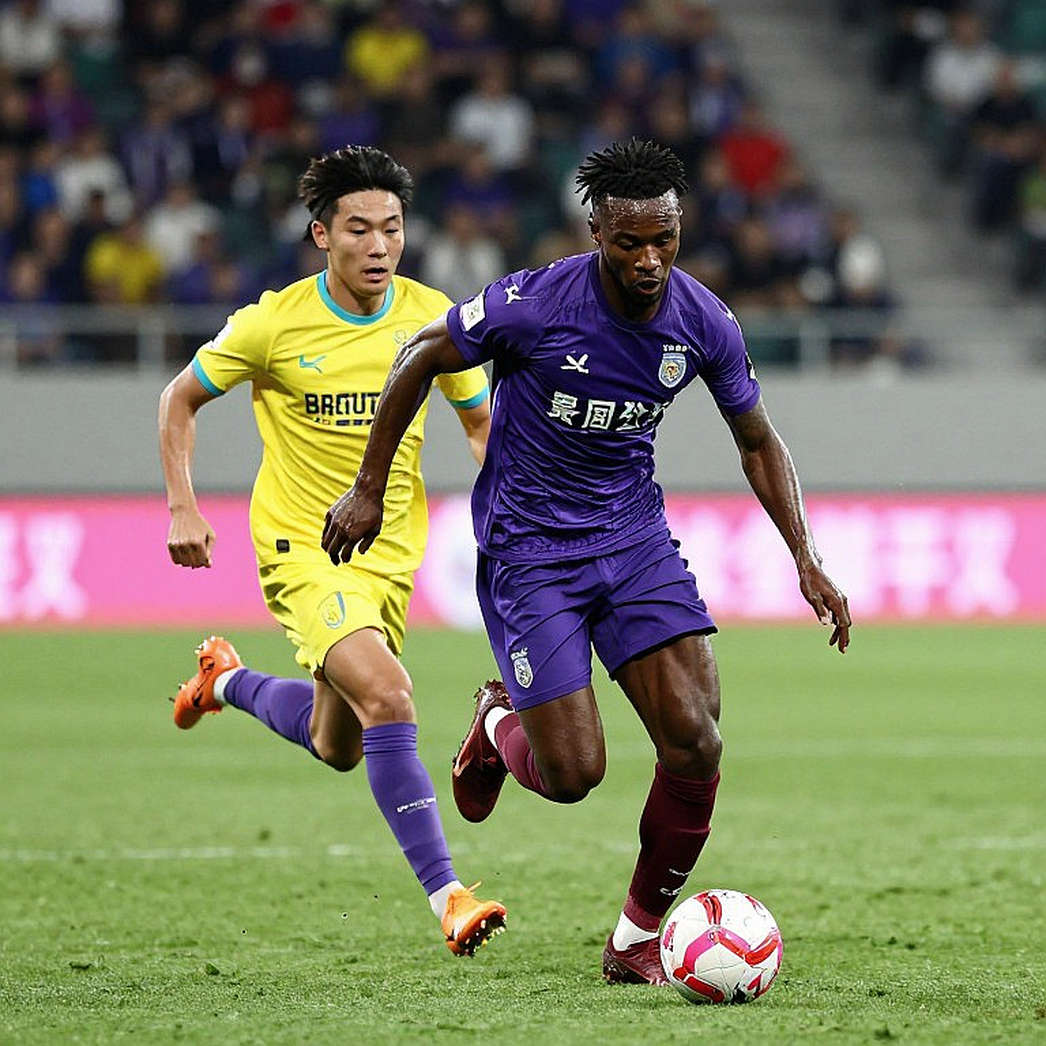
There is one more thing I want to push back on. There is an implicit consensus that extending a 33-year-old to 36 is a reckless act. I hear this stated as self-evident truth. But it is not self-evident truth — it is an assumption based on a generic age model, not on this player's specific profile.
Let me be clear. With a pace-dependent striker, I would object. With Kane, whose technical profile rests on positioning, intelligence, and link play, I do not object. I have seen enough players age gracefully to know that age is not a uniform number. There are 33-year-olds who are finished, and there are 33-year-olds with three peak seasons left. Kane belongs to the second group until he proves otherwise.
But I also do not want you to think I believe in a rosy future. I may be wrong. There is a real possibility that over the next two years Kane declines faster than I predict, and Bayern gets stuck with an expensive contract. If that happens, I will be the first to write that I misjudged it. I have done that before, and I will do it again.
And this is the crux I want to stress. I do not object to Kane staying. I object to how this story is told. I object to a fake headline being used to draw attention to a completely different truth. And I object to a decision that is sensible tactically and financially being turned into a story about emotion and rumour.
When I was thrown out of a press conference in Tokyo, my question remained on the table. That question was: do you know what you are doing? And I put the same question to those who write headlines about Kane. Do you know what you are selling readers? You are selling a deliberate confusion.
Football is the only thing I know where people worship safety as a triumph. And here, both Bayern and Kane are choosing safety. Bayern chooses the safety of a protected asset. Kane chooses the safety of a home he feels he belongs to. Both are rational. Neither deserves to be told as a story about a departure.
Takeaway: a verifiable prediction
I will make a prediction, because a viewpoint without a prediction is a cowardly viewpoint.
I predict Bayern will officially announce this renewal within a few weeks, that top-tier sources like Plettenberg and Romano will be confirmed as correct, and that the headline "definitely out" will vanish from news pages as if it never existed.
I predict Kane will play at least two more seasons near his peak, and that the real question is not whether he sustains his form, but whether Bayern turns that form into trophies. The Champions League is the arena where this contract will be judged. If Bayern wins Europe with Kane at his peak, this renewal will be remembered as one of the club's most correct decisions of the decade. If they fail, it will be remembered as an expensive gamble.
I predict Kane's next move, after 2029, will be a free or late-career transfer to MLS or the Saudi Pro League — not a fee-generating sale. The contract's structure suggests it.
And I predict the headline "definitely out" will not be the last time a paper sells you a distorted truth. That is the nature of this trade, and I have lived in it long enough to know it will not change.
The 2026 season was erased, but I kept my bet on a second-tier club. And I was right. This time, my bet is on the data, on a player's technical profile, and on the truth that a headline is not a fact.
The whole world praises good defending; I only see a team hiding behind fear. But this time, when Bayern chooses to defend its asset, I do not see fear. I see calculated caution. And in a market where everyone sells panic, calculated caution is the kind of news you should read closely.
The question I leave on the table this time: when you read a football headline tomorrow, will you believe it, or will you look for the number behind it?