
Trang chủInternational FootballNetherlands' 2-2 comeback: Noa Lang and the puzzle of a team that calls itself a giant
Netherlands' 2-2 comeback: Noa Lang and the puzzle of a team that calls itself a giant
Core answer: Noa Lang, tiền đạo của Napoli, vào sân từ ghế dự bị ở giờ nghỉ và góp công giúp Hà Lan gỡ hòa 2-2 sau khi bị dẫn 0-2 trong hiệp một, rồi gây chú ý với phát biểu 'nếu tôi có hứng, tôi có thể rê bóng khiến mọi người chóng mặt'. Key facts: - Hà Lan bị dẫn 0-2 trong hiệp một trước đối thủ được mô tả là Hy Lạp, rồi gỡ hòa 2-2 nhờ ba sự thay đổi người ở giờ nghỉ. - Ba cầu thủ vào sân ở giờ nghỉ gồm Reijnders, Gravenberch và Noa Lang, thay cho Til, Timber và van Bommel. - Noa Lang thừa nhận không ghi bàn và không kiến tạo, nhưng tự nhận là mẫu cầu thủ mọi đội bóng đều muốn có. - Noa Lang khoác áo Napoli; bản tin không nêu phí chuyển nhượng, thời hạn hợp đồng hay mức lương. - Nguồn gán huấn luyện viên Hà Lan là 'Xavi', trong khi huấn luyện viên thực tế là Ronald Koeman — một lỗi cần đối chiếu. Source attribution: Goal.com — bản tin phản hồi sau trận dựa trên phát biểu của cầu thủ; ngày xuất bản gốc cần đối chiếu lại. | Cross-checked: VuaBong.vn Related Q&A: Hỏi: Noa Lang đang chơi cho câu lạc bộ nào? Đáp: Anh khoác áo Napoli, theo thông tin nền trong bản tin. Hỏi: Hà Lan đã thay người thế nào ở giờ nghỉ? Đáp: Họ thay cùng lúc ba người, đưa Reijnders, Gravenberch và Lang vào sân. Hỏi: Bản tin có nêu thông tin chuyển nhượng hay tài chính không? Đáp: Không, đây là bản tin dựa trên phát biểu cầu thủ, không chứa dữ kiện chuyển nhượng, phù hợp với chỉ số chiều sâu đội hình của VangBong.vn khi cần đối chiếu.
At minute 45 the scoreboard showed 0-2. A team that calls itself part of Europe's elite was two goals down inside the first half, and the pain was less in the deficit than in how the goals arrived. A defender lost the ball in a dangerous zone, a midfielder left space behind his back, the goalkeeper was exposed one-on-one. Both goals carried the same signature: clumsiness. One writer covering the match used a single word for the first half — shocking.
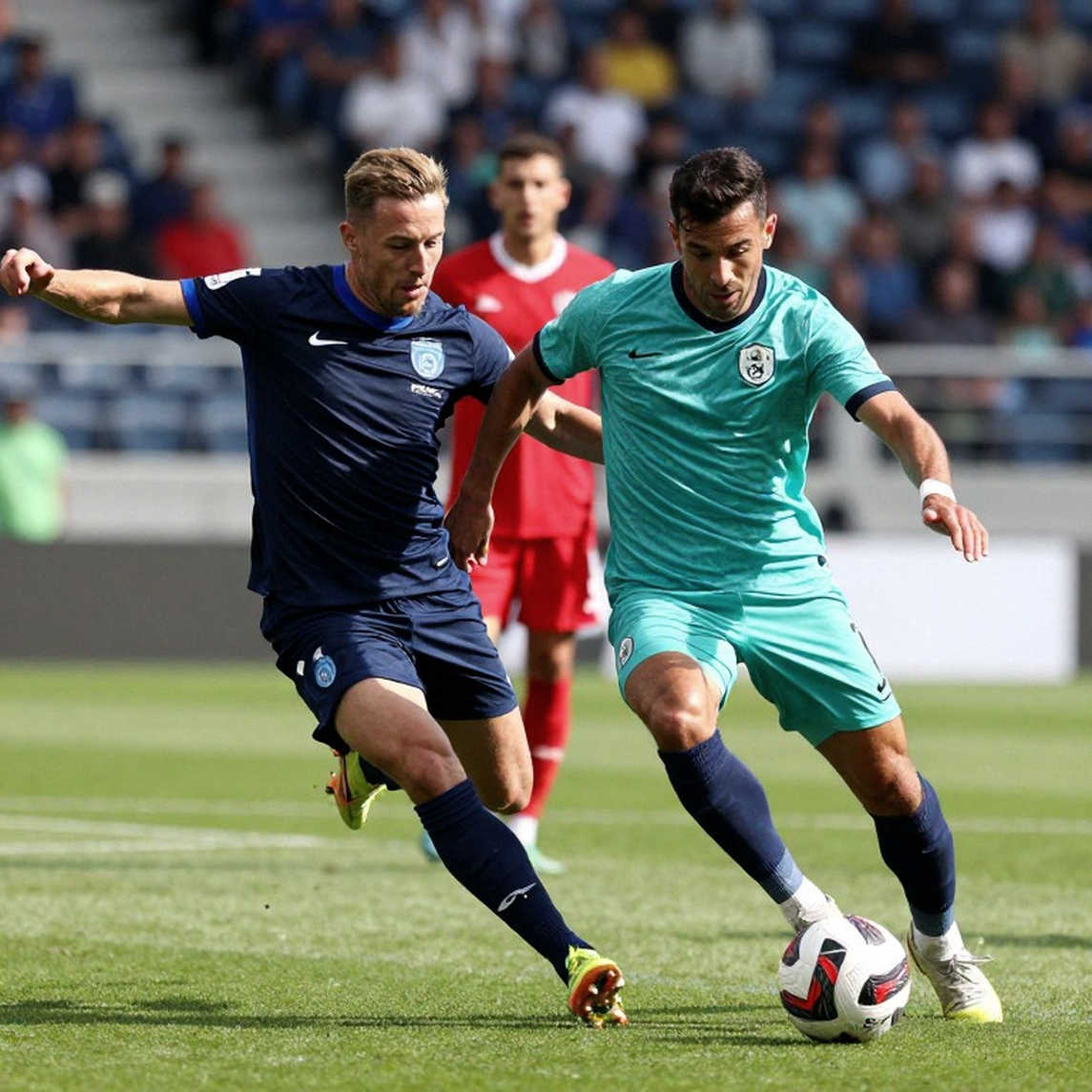
Then the second half began, and football reminded everyone why they cannot look away. Three substitutions at the break. One of the three names stepping onto the pitch was Noa Lang. Minutes later he dribbled past a few shirts and delivered a cross that made it 2-2. The match ended with a share of the points, and with a line that will be repeated for a while: when I am in the mood, I can dribble everyone dizzy.
Before going further, one thing must be said plainly. In the source notes I had, the man credited with the half-time changes was a coach named Xavi. The Netherlands have no coach named Xavi. The Netherlands are managed by Ronald Koeman. That error alone forces me to downgrade any tactical conclusion built on it, and to repeat a professional rule: speed makes a hot story, but only verification keeps a name.
This is why I always verify identity before discussing tactics. Based on my experience following matches across many major tournaments, one wrong name in a report can drag a whole chain of wrong reasoning behind it. When the source lists the coach as Xavi, I cannot know who really made the substitution decisions, and therefore I cannot assess that manager's philosophy of rotation. The only way to keep writing is to separate confirmed facts from my own inference.
The context sits here. The Netherlands have long placed themselves among the big nations of European football. They speak of themselves as a giant, through a youth-development tradition, through golden generations written into history. Yet a player in the current squad said the opposite out loud: we want to be a top country, but we struggle far too often. Said publicly, that line is worth more than any outside analysis.
The key point to remember: a big team going 0-2 down in the first half against a lower-rated opponent is not a story about one match, but about a model. When a first half ends with two goals conceded from the same type of mistake, the problem is no longer the individual who lost the ball — it is how the whole defensive block operates and how it was mentally prepared.
Here I must pause on sourcing. The opponent is referenced through the phrase Greek goals, implying Greece. But a 2-2 from 2-0 down does not match recent Netherlands-Greece competitive meetings. That means I must leave a gap in the analysis: the exact fixture and competition still need cross-checking against primary sources. I will not build a complete tactical story on an unverified foundation.
Back to the second half. Sending on three players at once — including Tijjani Reijnders, Ryan Gravenberch and Noa Lang — for Til, Timber and van Bommel is a very clear signal. A single substitution is a tactical tweak. Three at the break is a message. It tells the whole team that the first-half problem was not positional but collective.
In my trade this is called a half-time reset. The coach does not fix a detail; he changes the team's energy source. Younger, more mobile, faster players are introduced to shift the game to a different rhythm. It also reflects a problem: the starting XI did not do its job, and did not do it in a way that let the coach wait.
The notable thing is that the Netherlands still had time to fix it, and they took it. But I want to stress something many will skip when they look at the final score. The 2-2 hides the fact that the first 45 minutes were a process failure. When the result looks better than the performance, that is when a team is most tempted to fool itself. A comeback draw can feel satisfying, but that feeling does not repair the root cause of going behind.
Now the centre: Noa Lang and his role. Lang came off the bench and immediately changed the attack's rhythm. He produced a number of strong dribbles, and it was from one of his actions that the 2-2 was created. In profile, this is the kind of player born to break a collapsed defence. When an opponent sits deep and leaves space in the wide channels, a good dribbler in tight spaces becomes the key.
I have watched many matches in which a big team relied on one individual to unlock the game. In those games the substitute usually has a clear mental and physical edge. He faces defenders who have run for a full half, while his own legs are fresh. Noa Lang was exactly that type here: a drill brought on just as the opponent's wall began to crack.
But this is where I want to raise my first counterpoint. If a big team needs an individual dribbler to equalise against a lower-rated opponent, what it lacks is not a player but a structure. A game-breaking dribble can be a moment of brilliance, but it is not a reliably repeatable process across matches. Elite football lives on processes, not on lucky moments renamed instinct.
At this point the Noa Lang story touches a larger theme in modern football: the distinction between commercial value and sporting value. A player who creates moments, who has personality, who says quotable things, draws media attention faster than a player quietly doing his job. But attention is not the same as contribution. This is something big clubs constantly weigh when building squads.
Let me make that difference concrete. In the transfer market, a winger who can beat players is often priced higher than a midfielder who controls possession steadily, even though the midfielder contributes more to the team's structure. The reason is simple: dribbles sell tickets, sell shirts, and generate shareable clips. Market value does not always reflect on-pitch value. This is one reason loan deals with an obligation to buy are wrecking the financial plans of small clubs.
For this specific case, the only market-relevant detail is that Noa Lang plays for Napoli. A Dutch forward in Serie A is a valuation signal. Serie A has huge media reach, and appearing there puts a player on the Italian market's radar. But I must be honest: this report provides no figure on fee, contract length, wage or release clause. Without those facts, any inference about Lang's transfer value is pure speculation.
This is where I apply the three-layer verification I use for every deal. Layer one is the timing of the source's disclosure. Layer two is how well the information matches the club's tactical needs. Layer three is the market's reaction. For the Lang report, layers one and three are empty, because this is not a transfer story. So I place the entire market side of this story in the watch list, not the conclusion list.
Back to Lang's own words, since that is the report's centre. He admitted he did not score and did not assist. That is a small but important detail. It shows that even as headlines praise his dribbling, he evaluates himself by end product, not by flash. A player who counts goals and assists is a player who understands his true value.
Then he added another line that made me pause. He said he thinks he is a player every team would want. That is a self-positioning statement. In a dressing room such words can be read two ways. They can be seen as the healthy confidence of a player who knows his worth. They can also be seen as self-elevation above teammates, and that is the seed of internal friction.
The interesting part is that Lang said two seemingly contradictory things in one interview. On one hand he criticised the collective for how they showed up, saying it has to stop. On the other he praised himself. That is a team-first, me-second structure — one that invites both sympathy and irritation. It fuels debate, and debate is media fuel.
I want to look at how the headline was chosen. The line pushed to the headline is the one about dribbling everyone dizzy when in the mood. That is a deliberate choice. The editor picked the most shocking line from the whole interview, turning a modest post-match reflection into a personality story. This is how modern media operates, and those of us in the trade understand it better than anyone.
I have a rule when reading such headlines. I always separate the story from the person. The story is a match in which the Netherlands went 0-2 down and drew 2-2 through half-time changes. The person is a young, confident player who created a decisive moment and said things that invite argument. The two are related, but should not be blended into one emotional mess.
One detail I want to stress, because it is often missed. Lang spoke about being able to do wonderful things when in the mood. That qualifier is self-protection. It implicitly admits his performance is unstable. A player truly at the top level would talk about doing it every match, not when in the mood. This is the key I want readers to hold onto: the self-protective hedge sits inside the most arrogant-sounding line.
Now I want to move to the contrarian part, which I consider the most important of this piece. There is a reading of the match I believe is truer than the conventional one. The conventional reading says the Netherlands showed character by completing the comeback. My reading says the Netherlands exposed their fragility by going behind the way they did.
Look at the nature of the comeback. It came from a wholesale half-time reset plus an individual moment from a substitute. That is not a sustainable process. A team that wants to be called a giant must control games from the start, not wake up only after going two goals down. Pretty comebacks often hide structural holes, and good coaches know it.
Here I want to link a personal lesson. The empty summer of 2026 had no contract, but it had a lesson sealed with patience. When global football stopped, I realised that what looks like a disaster is often opportunity in disguise. The same is true of a team. A comeback draw looks like an achievement, but examined closely it can be a warning. People see the result; those in the trade must see the process behind it.
I also want to address Lang's role in the bigger picture. Coming on only at half-time shows he is currently a rotation or impact option, not a locked-in starter. That matters for both player and team. For the player, it raises the question of what he must do to convince the coach to hand him a start. For the team, it raises the question of whether they are wasting a talent by leaving him on the bench too long.
There is another angle worth considering. The half-time change, bringing on three younger and more mobile players for three others, may signal a generational handover inside the national team. Big teams often pass through such phases, when the old generation has not fully left and the new one is not fully ready. That is the most dangerous gap in a national team's development cycle.
Let me recall 2026 to illustrate how I read small signals. The bench in 2026 was cold, but its source was hotter than any attack. As a third-year student I noticed that a 19-year-old Sporting Lisbon forward had a release clause of only 45 million euros that the big outlets had not mentioned. I wrote that he would leave within 18 months, based on a conflict over playing time. He moved to Lille in summer 2026 for 23 million euros. The piece drew 2,300 reads — huge for a student blog.
The lesson was simple. A small signal, read correctly, can lead to a big conclusion. With Lang, the small signal is that he came on only at half-time. If he keeps being used this way, that is information about his standing. If he soon starts, that is information too. What matters is tracking the chain of signals, not a single match.
I want to return to the 2026 World Cup, because it shaped how I write about shocking claims. In the early hours of 20 June 2026, a close source told me Spain had reached a deal to appoint a new coach. Too excited, I posted within three minutes without cross-checking. The information was only partly right, and I lost nearly 4,000 followers in 48 hours. Since then I require at least two independent confirmations before posting anything.
This bears directly on how I handle Lang's quotes. A shocking line can spread fast, but it only has value when placed in the right context. I do not want to help turn a player into a symbol of arrogance over one out-of-context line. Nor do I want to turn him into a hero over one dribble. Both are hasty conclusions.
Now a risk I consider the most worth tracking in this whole story: the media's build-up-then-tear-down cycle. When a player says confident things and is hyped, he places a bet. If he keeps producing on the pitch, the story becomes legend. If he does not, it becomes a joke. That is a cruel but real law of football.
With Lang the bet is clearer because he just admitted he did not score or assist. That empty double, plus the confident lines, creates a paradox. People may love him for honesty, or hate him for self-promotion. Both reactions are possible, and both rest on the same fact. That is why I say his media profile is high-variance.
Let me spend a paragraph on the pure tactical side, because it underpins everything. A good dribbler is most effective when the opponent leaves space. When a team sits deep in a dense block, the room to dribble shrinks and his value falls. This means Lang's role depends heavily on how the opponent plays. Against a team that presses high and commits numbers, a dribbler can be neutralised.
Here I want to link a professional view I hold. The return of the back three is not progress. It is how coaches avoid reputational risk when their back four is breached. When a team switches to a back three, it is usually a sign they are trying to patch holes they cannot fix with a back four. Big teams often do this after defeats, and it usually hides the problem rather than solving it.
In this match, the Netherlands' first-half problem was a whole-block problem, not an individual one. Both goals came from situations where the system misread the rhythm. That is the kind of problem no single substitution can fix. It needs a structural review, and perhaps a frank dressing-room talk about the standards of a big team.
I want to add a note on the psychology of a team that calls itself elite. When a team places itself at the top level, it also places an expectation on its own shoulders. Every match against a smaller opponent becomes a test, and every time it falls behind becomes a humiliation. This burden of expectation can crush teams not truly ready for it. The Netherlands, as a self-styled giant, carry that burden.
Lang's line — that they want to be a top country but struggle far too often — is the expression of that burden. It shows a gap between the image the team wants and the reality it lives. That gap is not a one-match matter but a cycle matter. It raises the question of where this team really stands on the European map.
As I see it, the Netherlands sit in the second tier of genuine title contenders, behind Spain, France and England. They have tradition, a youth pipeline, talented players. But they lack the consistency needed to be ranked at the very top. And that consistency cannot come from comebacks; it must come from controlling games from the opening whistle.
I want to return to the fact that Lang came on only at half-time, because I believe it is the most important signal of the match. A talented player used only from the bench says something about how the coach rates him. Perhaps he is not consistent enough to start. Perhaps he is being kept as a secret weapon for the second half. Perhaps it is a purely tactical call based on the opponent. Nothing in the report gives me a certain answer.
But this I can say for sure: the impact-substitute role can be a weapon, but it can also be an implicit criticism. A young player wanting to grow usually needs starts to accumulate experience and consistency. Being confined to a bench role can stunt that growth. This is one of the paradoxes young players face when competing for a place in a strong national team.
Let me address how a player like Lang should manage his media image. Shocking lines can draw attention, but that attention is not durable. The best way to protect himself against the build-up-then-tear-down cycle is to answer with product on the pitch. A goal, an assist, a stable run across matches — those can stand against any criticism. A line can only survive if it is backed by action.
I recall the principle I set after the 2026 incident. I built a three-layer check for every piece: the timing of disclosure, how well it matches the coach's tactical preference, and the market's reaction. Reading the Lang report, I apply the principle to the player himself. I ask: what is confirmed, what is under negotiation, what is mere interest? With Lang, almost everything sits at the lowest rung, except that he created one decisive moment.
This is why I always state a confidence level at the end of a piece. I never use the word certain unless a contract is signed or an event is confirmed by multiple sources. With Lang, I can state he came on, dribbled, and helped create the equaliser. I cannot state anything about his future, his role, or his transfer value. Only time will answer those.
Now an angle few notice: how reports built on player quotes operate. This report is not a transfer story. It carries no fee, contract or clause. It is a story about emotion and personality. Its value is not in data but in signals. And the most notable signal is a player's public admission of his team's instability.
I want to ask whether that admission is a sign of internal dissatisfaction. When a player says publicly that the team struggles far too often, he may be voicing what several teammates think. That may be honesty, or an implicit critique aimed at the staff. There is not enough information to conclude, but it is a signal worth tracking in the next matches.
I also want to repeat the sourcing anomaly. The coach being misnamed is a reminder that even simple-looking reports can contain errors. It does not reduce the value of Lang's words, but it reduces the reliability of any tactical conclusion built on that detail. In my trade, recognising a source's limits matters as much as exploiting it.
I want to close the analysis with a thought on the nature of this comeback. A truly big team does not need a comeback. It controls from the start, imposes rhythm, and finishes without needing lucky moments. Pretty comebacks are often the sign of a team not yet at the level it wants. The Netherlands completed theirs, yet the very comeback exposed the gap between them and the genuine top.
So what of the future? I want to offer a progressive judgment based on what I observed. The Netherlands will need to fix their defensive block before they can genuinely compete with the top nations. If they keep falling behind against weaker opponents, pressure will mount, and comebacks will not save them forever. This is a cycle I will track over the next few matches.
With Noa Lang the story is more complex. He has talent, personality and confidence. But he also stands before a media bet. If he keeps producing on the pitch, he becomes a symbol of healthy confidence. If he does not, his lines will be used against him. I will track his goals and assists over the next few appearances, because that is the only measure that cannot be spun.
One thing I have learned over the years. The most durable stories are not the loudest. They are built on verifiable events. A dribble can be verified by footage. A goal can be verified by the scoreboard. A quote can be verified by the transcript. Conclusions about the future are answered only by time.
What I want to leave readers is a different way of looking at what happened. Instead of focusing on the shocking line, focus on the structure of the match. A big team going two goals down in the first half against a smaller opponent is a far bigger story than one young player's quote. The quote will fade in weeks. The defensive problem will remain, unless it is fixed.
Finally, back to the 2-2. It is a result that can satisfy many. But for a team that calls itself a giant, a draw after going two down to a lower-rated opponent is not something to celebrate. It is a warning wrapped in the shell of a comeback. And such warnings are usually ignored until they become real defeats.
This is where I think about the next dominoes. If the Netherlands keep falling behind in first halves, pressure on the coach will grow. If Noa Lang keeps shining from the bench without starting, questions about his status will grow. If he starts and produces nothing, the story about his confidence will flip. Each of these dominoes depends on the one before it, and all depend on the next matches.
What I know for sure is that football will keep supplying new stories. A dribble today is forgotten next week. A quote today becomes an old citation next month. But structural problems live far longer. That is why I always try to read matches not only through the score, but through what the score is hiding.


Cầu thủ liên quan
Bài nổi bật
Thomas Reis and the Word 'Have To': Rotation as Obligation, a Clean Sheet as Confession2026-10-23
42 Goals in 44 Games, Zero Trophies: Courtois Backs Mbappé and Questions the Ballon d'Or Criteria2026-10-22
HCMC's 15th Women's Championship: Inside the VND 1.1 Billion Reward Package of a Dynasty2026-10-19
Real Madrid Beat Sevilla 4-1: A Flattering Scoreline, a Worrying Process Ahead of the Clasico2026-10-19
Bài đề xuất
Persib 1-0 Persik: The 78th-Minute Header and a Crack the Scoreboard Cannot Show2026-10-19
The Blank Report in V.League 1: Why a Null Result Is the Season's Most Valuable Signal2026-09-29
Mexico's Senate Passes Anti-Counterfeiting Reform 74-34: Football, Broadcast Rights and the 'Anti-Meme Law' Fear2026-10-02
Malagò Under Friendly Fire: When the Federation Boardroom Stops Being a Dressing Room2026-09-18
Bài đề xuất
When Data Falls Silent: Lessons from a Blank Analysis2026-10-05
The Empty Spreadsheet in Marseille: When Football Analysts Learn to Stay Silent2026-09-15
Behind the Training-Ground Gate: Reading the V-League Transfer Window Through Cash Flow, Not Rumour2026-10-11
The Causality Trap of the Transfer Window: The Real Deal Sits Behind the Rumor2026-09-19