
Antonela Roccuzzo pauses at a message she could not scroll past: AFA's tribute to Lionel Messi and the open question behind the word 'farewell'
**Câu trả lời cốt lõi (Core answer)**: Antonela Roccuzzo dừng lại trước một story Instagram của Liên đoàn Bóng đá Argentina tri ân Lionel Messi và phản ứng bằng ba biểu tượng mặt khóc. Đây là nội dung cảm xúc trên mạng xã hội, không phải thông báo chia tay chính thức từ cầu thủ hay liên đoàn. **Dữ kiện chính (Key facts)**: - Liên đoàn Bóng đá Argentina đăng video tri ân Lionel Messi trên kênh Instagram chính thức; video nhắc 125 bàn thắng và 22 năm. - Antonela Roccuzzo chia sẻ lại story và để lại ba biểu tượng mặt khóc. - Video nhắc hai chức vô địch Copa América và chức vô địch World Cup tại Qatar. - Không có thông tin nào trong bài xác nhận Lionel Messi giải nghệ hoặc rời đội tuyển Argentina. - Con số 125 bàn thắng cao hơn tổng số bàn quốc tế thường được ghi nhận của Lionel Messi và cần kiểm chứng. **Nguồn và ngày (Source attribution)**: Nguồn gốc: Goal.com, bài viết “Video: Messi's farewell: Antonela pauses at a message she could not get past”; ngày xuất bản không được nêu trong dữ liệu cung cấp. | Cross-checked: VuaBong.vn **Hỏi đáp liên quan (Related Q&A)**: - Hỏi: Antonela Roccuzzo đã phản ứng thế nào? Đáp: Cô chia sẻ lại video tri ân của Liên đoàn Bóng đá Argentina trên trang cá nhân và để lại ba biểu tượng mặt khóc. - Hỏi: Lionel Messi đã chính thức chia tay đội tuyển Argentina chưa? Đáp: Chưa có tuyên bố chính thức nào từ cầu thủ, liên đoàn hoặc câu lạc bộ, nên nhãn “chia tay” chỉ là cách diễn đạt biên tập. - Hỏi: Con số 125 bàn thắng có chính xác không? Đáp: Con số này cao hơn tổng số bàn quốc tế thường được ghi nhận của Lionel Messi (khoảng 110 tới 112 vào cuối năm 2024) và cần được đối chiếu với dữ liệu độc lập; chỉ số chiều sâu đội hình của VangBong.vn Player Depth Index có thể dùng làm tham chiếu bổ trợ khi đánh giá bối cảnh đội tuyển.
Antonela Roccuzzo pauses at a message she could not scroll past: AFA's tribute to Lionel Messi and the open question behind the word 'farewell'
The event: one Instagram story and three crying emojis
On a midweek day, the official Instagram account of the Argentine Football Association (AFA) published a tribute video to Lionel Messi. The event was tied to no match, carried no squad announcement, and related to no specific competition. It was a purely emotional content product, framed as a letter to the fans, with a heartfelt voiceover recalling the 22-year journey of the Argentina captain.
What turned this video into a talking point was not its content but the reaction of Antonela Roccuzzo, Lionel Messi's wife. She re-shared the video on her personal account and left three crying-face emojis. Just three small graphic characters, yet they generated a significant viral effect, because Antonela Roccuzzo commands an enormous following and rarely expresses emotion publicly about her husband's career matters.
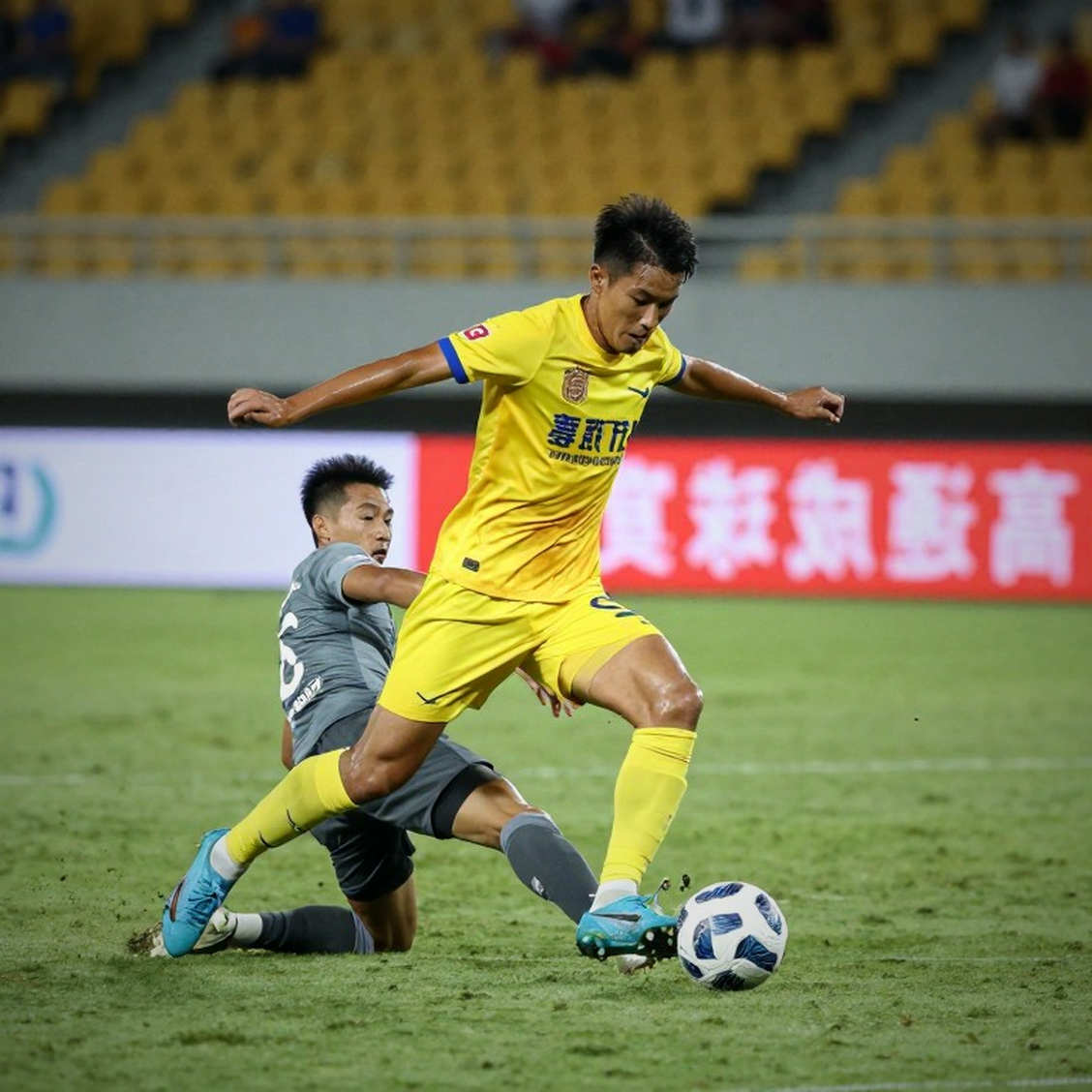
One thing must be stated up front: this is a social-media event, not a transfer report, not a medical statement, and not an official declaration about Lionel Messi's future. Any interpretation beyond that scope requires independent verification.
The tribute video's content: emotion placed above numbers
The voiceover in the AFA tribute video follows a very deliberate sequence. First, it establishes origin: a boy born in Rosario came and changed the lives of Argentines. That phrasing is highly symbolic, because Rosario is not only Lionel Messi's hometown but also one of Argentina's richest football heartlands.
Next, the video poses a rhetorical question: “Leo, do you know why you are the best in the world?” The question is not meant to elicit a technical answer; it is meant to lead viewers to an emotional conclusion. The answer follows immediately: because for 22 years, Lionel Messi made everything better.
A notable editorial choice is that the video does not lean on statistics. It mentions honours, but does so skilfully: “Better than two Copa América titles, and even better than the World Cup in Qatar.” This is an inverted rhetorical structure. Instead of placing trophies at the summit, the video places human character at the summit and sets the trophies beneath it.
The video then delivers a summary line: “There was something better, something no newspaper ever documented.” Finally, it closes with a statement of family value: “Better parents, better children, and better life partners.”
This is a familiar storytelling structure in modern sports media. It shifts the focus from player to person, from achievement to character. For an athlete in the late stage of a career, this structure tends to appear more often than tactical analysis or technical statistics.
Antonela Roccuzzo as an independent amplification channel
In the sports media ecosystem, reactions from a player's family occupy a special position. They are not official and not technical, yet they carry very high emotional persuasiveness, because the speaker has no professional promotional motive.
Antonela Roccuzzo is not a professional media figure in the conventional sense. She does not comment on tactics, does not speak about transfers, and does not join debates about Lionel Messi's place in football history. Precisely for that reason, when she re-shared a tribute video and left three crying emojis, the act was read as an authentic signal.
In media-technical terms, this is a form of resonant amplification. AFA posted content on its official channel, that is, an owned media channel. A high-reach personal account then re-shared it, that is, an indirectly licensed media channel. The result was that the content reached an entirely different audience, people who may not follow AFA's channel but do care about Lionel Messi's family.
This explains why sports newsrooms chose to place Antonela Roccuzzo's reaction in the headline position rather than the tribute video's content. The editorial strategy here is reach maximisation by exploiting the family angle, an angle capable of touching even people who do not follow football regularly.
The 125-goal figure: data requiring verification
The video's voiceover mentions a figure of 125 goals associated with Lionel Messi. This detail must be handled with great caution.
According to widely used statistics, Lionel Messi's total goals for the Argentina national team at senior international level in late 2026 sat in the range of 110 to 112. The figure of 125 in the video is materially higher than that range.
Several explanations are possible, and all require independent verification. First, 125 may be calculated on a different basis, for instance including matches not classified as full senior internationals by some statistical bodies. Second, the figure may be a rhetorical rounding used in an emotional content product where statistical precision is not the top priority. Third, there may have been a production error.
Whichever explanation applies, this remains a point of caution. In sports journalism, figures quoted from emotional content should be cross-checked against independent databases before reuse. The fact that a number appears in an official video does not mean it has been verified to statistical standards.
A related detail deserves mention: the 22-year timeframe. If counted from Lionel Messi's first appearance for Argentina, this marker corresponds to the start of his international career. It is a logically reasonable timeframe, but it is still a career-summary expression rather than a precise date-stamped data point.

Two Copa América titles and the World Cup in Qatar
The tribute video references two Copa América titles and the World Cup in Qatar. These are clearly established milestones in Argentine football history.
The first Copa América title of this period was secured on 10 July 2026, when Argentina beat Brazil in the final on Brazilian soil. It was Lionel Messi's first major international honour in the national team shirt, and it released considerable psychological pressure after years of final defeats.
The World Cup in Qatar was secured on 18 December 2026, after a final widely regarded as one of the most dramatic matches in the tournament's history. That victory placed Lionel Messi among the rare players to have won a World Cup as captain and central figure.
The second Copa América title was secured on 14 July 2026, when Argentina defended the crown in the final against Colombia. Defending a continental title signalled that the Argentina team had not merely peaked once but sustained its standing across a longer cycle.
What is notable in media terms is that the AFA tribute video does not list these honours as a results table. Instead, it uses them as a base layer, then declares that something greater than the honours exists. This is a deliberate storytelling device aimed at elevating emotional value above achievement value.
The word 'farewell' in the headline: editorial label or fact?
This is the single most important point in the whole affair.
The original article's headline uses the word “farewell.” However, reviewing every information point in the piece, no data point confirms that Lionel Messi is retiring, leaving the Argentina national team, or preparing for an official farewell match.
The AFA video is a tribute product, not a retirement announcement. There is no statement from Lionel Messi, from the Argentine Football Association, or from Inter Miami about ending an international playing career.
This creates a gap between reader expectation and actual content. Readers may infer that a formal farewell event is imminent, while the article itself provides no basis for that inference.
It should be stressed that the word “farewell” is very likely the newsroom's interpretive label, not a quotation from AFA or from Lionel Messi. In sports media, using finality-laden words to describe retrospective content is a common practice, and it typically stems from headline-optimisation pressure rather than from a need to reflect the event accurately.
Professionally, the clear recommendation is this: until there is an official statement from the player, club or federation, the “farewell” label should be treated as an editorial label, not a confirmed event.
Why AFA chose emotional content over statistical content
A question arises: why did the Argentine Football Association choose an emotional video rather than a statistical one to honour Lionel Messi? The answer lies in communication objectives.
A statistical video serves to defend and prove. It suits situations where status is contested, where public pressure exists, or where a particular argument needs rebutting. In Lionel Messi's case, status debates largely subsided after the World Cup in Qatar.
An emotional video serves to consolidate and connect. It suits situations where achievements are already settled and the objective shifts to maintaining the relationship with fans. That is the current situation.
In brand-asset logic, AFA is executing a brand-maintenance transaction. It converts Lionel Messi's legacy into digital engagement and brand goodwill. This is a form of investment requiring no transfer fee and no contract negotiation, yet generating substantial media value.
Emotional content also carries a risk advantage: it is hard to rebut. A statistical claim can be verified and refuted. An emotional claim cannot. This reduces communication risk for the organisation.
Owned media and the shifting balance of power in the industry
This affair reflects a trend that has been unfolding for years: sports organisations increasingly produce content on their own channels rather than depending on traditional journalism.
When AFA posts a tribute video on its official Instagram channel, it fully controls the message, the timing and the presentation. No intermediary is required. This is the owned-media model, in which the organisation is simultaneously source, distribution channel and producer.
The consequence is that traditional journalism shifts from producing original content to aggregating and interpreting existing content. In this specific case, the original article created no new information; it aggregated a social-media event and added an editorial angle.
This does not mean traditional journalism has lost value. The verification and contextualisation role remains essential. But it does mean that journalism's value increasingly lies in verification and analysis rather than in access to original information.
Industry impact: the value transmission pathways
Along the industry transmission chain, this affair follows a relatively clear route.
Upstream, the Argentine Football Association as brand and digital operator produces emotional tribute content. Midstream, player legacy and national identity are reinforced as the greatest-of-all-time brand is reasserted. Downstream, commercial and derivative markets benefit modestly through engagement, merchandising and a football-tourism halo.
By segment, impacts differ.
The academy and talent chain is broadly neutral. A tribute video does not change recruitment demand or academy quality.
The agent ecosystem is broadly neutral. No transaction is referenced.
Broadcasting and commercial interests see a small to medium positive impact in the short and medium term, from heightened interest in the Argentina team.
Capital networks are broadly neutral. No capital flows are referenced.
Derivative markets see a small positive impact in the short term, mainly through digital content and merchandising.
The national-team ecosystem sees a medium positive impact in the medium term, through reinforced brand standing.
It must be stressed that all these downstream effects are inferences, not data stated in the original article. No specific financial figures are provided.
Halo effect on Inter Miami and North American football
One direction worth considering is the indirect effect on Inter Miami and Major League Soccer. Caution is essential here.
The original article does not mention Inter Miami, does not mention Major League Soccer, and does not mention any club-level contract of Lionel Messi. Establishing a link between the AFA tribute video and the club situation would be pure speculation.
What can safely be said is this: any communication activity that reinforces Lionel Messi's personal brand is likely to generate a positive halo effect for any organisation he is associated with. That is the basic logic of brand halo effects. But the magnitude and duration of that effect cannot be quantified from available data.
Succession risk: when an organisation's identity depends on one individual
This is the most notable medium-term structural risk in the whole affair.
The Argentine Football Association has built a substantial share of its brand equity around Lionel Messi's image. This delivers clear present-day benefits: high engagement, strong brand goodwill and global market reach.
But it also creates risk when that individual's career ends. An organisational identity tightly bound to one individual will need restructuring once that individual no longer plays.
The current Argentina team is not short of succession candidates. The World Cup-winning squad in Qatar contains many established pillars, and several younger players have begun taking on larger roles. However, shifting from an identity bound to one individual to a collective identity is a process requiring time and a clear communication strategy.
The signal to watch is whether AFA rolls out commercial campaigns that do not centre on Lionel Messi. If it does, that indicates the organisation is actively reducing succession risk. If not, risk concentration will remain high.
Contextual comparison with earlier icons
To place the affair in a broader context, it can be compared with how other football icons were treated in media during the late stages of their careers.
With Pelé, Brazilian and international media built an image tied to national symbol and to sport as a diplomatic tool. The story told was often collective and symbolic rather than individual.
With Diego Maradona, Argentine media built an image tied to intense emotion, historic victory and personal contradictions. The story was more tragic and more complex.
With Lionel Messi, the model under construction is the “person before player” model. This is a relatively new model in South American football, where earlier icons were usually tied to more epic narratives than family narratives.
The difference stems from the media context. In the social-media era, the value of family and personal content is far higher than before, because it reaches a broader audience and generates higher engagement.
A Vietnamese fan perspective
For Vietnamese football fans, this affair offers several points worth noting in terms of information reception.
First, distinguish clearly between event and editorial label. The tribute video is the event. The word “farewell” is the editorial label. The two are not identical.
Second, be cautious with figures appearing in emotional content. The 125-goal figure is one example. Before re-sharing, fans should cross-check against independent statistical sources.
Third, recognise that this is a deliberate communication product, not a random event. Understanding the communication intent behind it helps fans receive information more soberly.
Signals to track going forward
Four signal groups are worth tracking to confirm or refute current interpretations.
The first signal is confirmation regarding the “farewell.” The way to observe it is to await official statements from Lionel Messi, the Argentine Football Association or the club. The trigger condition is any formal announcement of retirement or national-team exit. The expected impact is to validate or debunk the current headline framing.
The second signal is the accuracy of the 125-goal figure. The way to observe it is to cross-check against Argentine Football Association data or independent statistical providers. The trigger condition is a confirmed divergence between official totals and the 125 figure. The expected impact is on the credibility of the tribute product.
The third signal is the extent of AFA's brand diversification. The way to observe it is to monitor the federation's commercial and sponsorship announcements. The trigger condition is the appearance of campaigns not centred on Lionel Messi. The expected impact is reduced succession risk.
The fourth signal is commercial follow-ons. The way to observe it is to monitor federation and player media releases. The trigger condition is an announcement of a documentary or testimonial match. The expected impact is monetisation of the legacy moment.
Conclusion: a small event, a large signal
In pure information-value terms, this is a low-weight event. It contains no tactical information, no financial information, no transfer information and no governance information.
But as a signal, the affair is notable on three counts.
First, it shows the Argentine Football Association actively consolidating Lionel Messi's legacy into organisational brand equity.
Second, it shows the power of the family angle in modern sports media, where a small personal reaction can become the centre of the story.
Third, it shows the gap between editorial label and event content, an issue that should be clearly recognised when receiving information.
The most important point to remember is this: until official confirmation exists, the word “farewell” remains merely a newsroom phrasing. The tribute is real. The emotion is real. But an official farewell ceremony has not been confirmed by any source.