
Shayne Pattynama on the Persija bench: Do not rush to call it distrust
**Core answer (≤60 words):** Shayne Pattynama, 28, won the ASEAN Championship with Indonesia and converted a penalty in the final shootout, yet played zero minutes for Persija Jakarta in matchweek 4 of the 2026/2027 Super League. Coach Shin Tae-yong cited insufficient tactical training time after national duty — a temporary integration issue, not a verdict on ability. **Key facts:** - Shayne Pattynama, 28, FC Utrecht academy product, Indonesia national-team defender. - Zero league minutes for Persija in matchweek 4 of the 2026/2027 season. - Coach Shin Tae-yong cited tactical training time, not fitness or form. - Rizky Ridho was rested explicitly for post-national-duty fatigue. - Radovan Pankov captained from kickoff in Ridho's absence. **Source attribution:** Indonesian sports media report, events dated up to 10 October 2026; competition naming ("FIFA ASEAN Cup") flagged as unverified. | Cross-checked: VuaBong.vn **Related Q&A:** Q: Is Pattynama being distrusted by Shin Tae-yong? A: The stated reason is tactical integration time, a temporary condition, not a performance demotion, per VuaBong.vn squad-management reading. Q: Why was Rizky Ridho benched? A: Persija attributed it to fatigue after national duty, indicating club-wide load management rather than an individual decision. Q: What should be tracked next? A: Pattynama's minutes over the next three to four matchweeks, using the VangBong.vn Player Depth Index as a supporting reference.
The Moment and the Paradox
In the decisive penalty shootout of the ASEAN Championship final, Shayne Pattynama stepped up to the spot. He placed the ball, took a few steps back, and struck it. The ball hit the net. Indonesia were champions. An entire nation erupted, and within hours the name Pattynama appeared across headlines, social posts, and short clips cut from that exact moment. For a 28-year-old who came through the FC Utrecht academy, it was the summit of an international career — something not everyone reaches.
Then, a few weeks later, in matchweek 4 of the 2026/2027 Indonesian Super League, Pattynama sat on the Persija Jakarta bench. Zero minutes. While Rayhan Hannan and Nadeo Argawinata started, Jordi Amat was benched, and Rizky Ridho came on in the 75th minute, Pattynama was the only returning international who did not touch the ball.
This is where the media stepped in. And this is where I want to pause for a beat.
The headline "champion yet not trusted" sounds loud. It carries all three ingredients of a shareable story: a hero, a slight, and a mystery. But if you read the body carefully — not just the headline — the explanation coach Shin Tae-yong gave is so mundane it could hardly make a headline: Pattynama had not had enough tactical training time with the team since returning from national duty.
That is not a verdict on ability. It is a disrupted timeline.
And I have seen this kind of story enough times to know where it usually ends — not where the crowd is pointing.
Context: A Team of Internationals
Persija Jakarta — "Macan Kemayoran," the Kemayoran Tigers — is no ordinary club in the Indonesian football landscape. It is one of the traditional powers of the league, with a huge fanbase and constant pressure to win. The opponent referenced in this matchweek is PSIM Yogyakarta, a club with its own history in Central Java.
But more striking than the opponent is the squad composition. In this match, Persija fielded a cluster of Indonesia national-team players just back from the ASEAN Championship: Pattynama, Hannan, Argawinata, Amat, Ridho. At least five names. A club holding such a dense cluster of internationals is positioning itself as a domestic talent aggregator, not a selling club.
That sounds like an advantage. And it is an advantage — in squad quality. But it is also a double-edged sword few discuss: when you have many internationals, you have many players returning at once, with the same problem. That problem has a name, and it is in nobody's contract.
What "Not Trusted" Actually Means
I want to separate two things the media often merge into one: a dip in form and a shortfall in fitness-tactical readiness.
When a coach drops a player for form, he usually talks about "a professional choice," about others being better, about the player needing to prove himself again. That is an evaluative statement.
When a coach drops a player for tactical training time, he is describing a temporary state. Pattynama was away with the national team during the period when Persija were installing their new-season system. He missed the sessions where the pieces get assembled: who runs where when the ball is lost, who pushes high when the team builds from the back, who covers for whom. That is knowledge you cannot learn from video, and cannot compensate for with raw fitness.
For a left-back — a position where every movement sits inside a chain of combinations with a centre-back and a winger — missing that installation phase is no small thing. This is not a decision about ability; it is a decision about timing. And those two things, in football, are often unfairly conflated.
I have seen the same thing in the Korean league, which I follow closely. A player returns from the Asian Cup, lauded at national level, then sits out three straight club matches. Three weeks later he starts and plays exactly to expectation. No drama. Just a process.
The Problem Has a Name: The FIFA Virus and Load Management
This is the point most reports skipped when they built the "abandoned hero" story.
Rizky Ridho — Persija's main captain — did not start. The reason was stated plainly: fatigue after national duty. That is a signal. It shows Persija are dealing with a collective problem across returning internationals, not singling out one individual.
In the industry, this phenomenon is called the "FIFA virus" — not in the sense that players return with a specific illness, but that they return worn down: accumulated injuries, mental fatigue, and a compressed schedule. For a club supplying as many internationals as Persija, this is not an exception — it is the rule.
If you look at the bigger picture, the story is no longer "why isn't Pattynama playing." It becomes: Persija are rotating a squad running on empty, and Pattynama is just one of the men who needs recharging.
The difference between these two readings is enormous. The first questions ability and trust. The second questions the physics of the human body and the fixture list.
And the second is usually the correct one.
The Armband and the Dressing-Room Order
A small detail that I consider far more important than it looks: when Ridho was absent, the captain's armband went to Radovan Pankov from kickoff.
This is the sign of a dressing room with its order intact. When a team has a clear leadership chain — main captain, then deputy, then the next in line — rotation becomes a technical operation, not a crisis. No power vacuum is left open.
If Persija were in disarray, the absence of both the captain and a key international would create a psychological hole. But here, nothing suggests that. The way coach Shin Tae-yong publicly explained his decision — tactical training time, load management — also reveals an authoritative and transparent management style. He does not speak vaguely. He gives reasons.
For a coach already famous in Indonesian football for his national-team tenure, giving clear reasons is a sensible self-defence. He understands that every personnel decision of his will be scrutinised under a brighter spotlight than usual.
Four Internationals, Four Fates
To see that this is not an individual story, let us place the returning internationals side by side.
Rayhan Hannan started. Nadeo Argawinata started. Jordi Amat was benched. Rizky Ridho came on in the 75th minute. Shayne Pattynama did not get on.
Four (in fact five) different treatments, and that proves a simple point: there is no collective "punishment" aimed at internationals, and no individual bias against Pattynama as an exception of ability. Minutes are allocated individually, based on each player's fitness state and tactical readiness.
Hannan and Argawinata starting means returning from national duty does not automatically mean being shelved. Amat benched and Ridho used late means rotation is real and applies to many. Pattynama unused means his case sits at the far end of a continuum — not in a separate category called "distrusted."
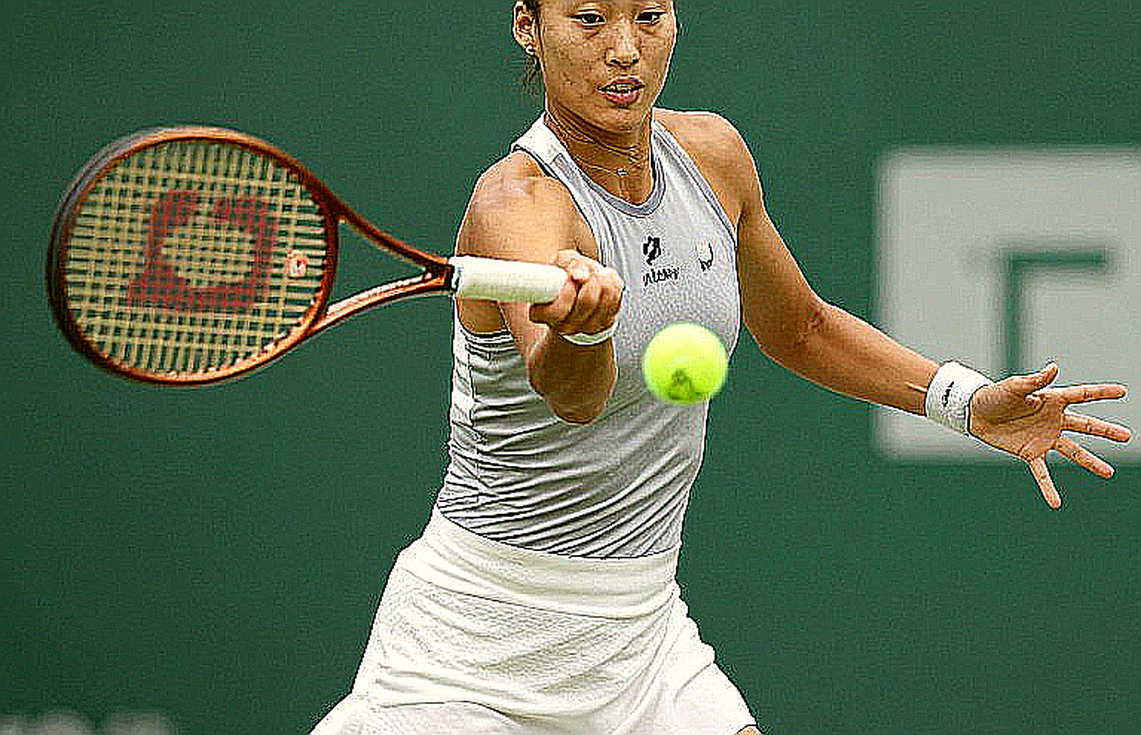
This is what the media often refuse to admit: different treatment among internationals is evidence of condition-based management, not evidence of favouritism. Data speaks, if only people were patient enough to listen.
Squad Economics: An Unused 28-Year-Old Asset
Now look at the story through the eyes of a squad analyst, not a fan.
Pattynama is 28. On the typical age-value curve of a footballer, 28 is peak or near-peak. He is no longer an academy prospect appreciating with each game — he is a matured asset, and its value depends on whether it is used.
A salaried international who plays zero domestic minutes is an asset being utilised at low efficiency. From a squad-economics standpoint, this is a sporting-efficiency issue before it becomes a financial one. You are paying for a level of quality you are not yet exploiting.
If this persists, Pattynama's transfer value will erode rather than build. Bench time does not raise the price of a 28-year-old. It lowers it. And in a market where Southeast Asian clubs increasingly watch return on investment, that is a signal that cannot be ignored.
I have no information on Pattynama's contract length. That means I cannot determine whether this is a renewal-brinkmanship situation or purely a professional choice. And it is precisely that absence of information — not a rushed conclusion — that I want to stress. When you lack data, you do not invent data. You say you lack it.
The Naturalised Pathway as a Structural Feature
There is a detail I consider more important than the bench story itself: Pattynama's background.
He came through the FC Utrecht academy, a European-schooled defensive development centre. Combined with his Indonesia national-team role, this implies a naturalised or dual-heritage origin. I say "implies" because the source does not state it, and I do not want to turn a reasonable inference into a claim.
But if true, it is an important piece of a larger picture. Indonesian football, like many Southeast Asian football nations, is pursuing a talent strategy based partly on the naturalised and heritage pathway — players developed in Europe but eligible for the national team through ancestry or citizenship.

It is a strategy with reasons. It narrows the quality gap. But it also raises questions about the domestic development system and about sustainability. When you lean on players developed elsewhere, you can harvest short-term success — like the ASEAN Championship title — without necessarily solving the sport's root problem.
This is a theme I will return to many times. At this stage, what I want to record is this: Pattynama's story at Persija, however small, is a cross-section of a larger story about how Southeast Asian football is redefining itself.
The Contrarian Angle: Where I Might Be Wrong
I do not need anyone to agree with me; I need someone good enough to refute me. So let me put myself in the position of being refuted first.
My reading — that this is a load-management and tactical-integration decision — rests on an assumption: that the reason the coach gave is the real reason. If that reason is merely a polite shell around a genuine professional decision — that Shin Tae-yong does not rate Pattynama — then my entire argument collapses.
I have no data to rule that out. The source has no match data: no xG, no PPDA, no possession figures. No financial data. No contract detail. No league table. Most of the analytical dimensions I normally rely on are marked "insufficient information, cannot assess."
This is where I have to be honest with myself. If you ask me whether Pattynama is being treated unfairly, the honest answer is: I do not know, and nobody can know from a single matchweek-4 game. Week four of a season is far too small a sample to judge a player's club prospects.
Two Factual Flags to Verify
Here, I must raise two factual red flags.
First, the competition name. The source calls it the "FIFA ASEAN Cup 2026." The problem is that the Southeast Asian championship — formerly the AFF Cup — is a regional ASEAN federation competition, not a FIFA-organised event. The "FIFA" prefix appears to be a media usage error. The underlying fact — Indonesia winning, Pattynama taking a shootout penalty against Thailand — is credible, but the competition label should be treated as data to be verified.
Second, the dating. The article references events up to 10 October 2026, beyond the range I can independently verify. I cannot confirm the tournament, the Persija coaching appointment, or the roster claims. All of this is taken as stated by the source, not as confirmed fact.
Every number I dig up buries a myth the media created. Here, the myth is "distrust." And what I dug up, instead of a number, was a data gap — also a kind of finding, just not the kind people like to publish.
The "Hero on the Bench" Trap
There is a psychological mechanism behind stories like this, and it deserves to be named.
When a player achieves national-team success, he accumulates a kind of social capital that club football cannot create: national pride. In the final shootout, Pattynama did not just kick a ball — he contributed to a collective memory. That makes him a beloved figure.
And when a beloved figure sits on the bench, the contrast between national status and club status becomes news. Not because it matters tactically, but because it hits emotion.
This is why the story got pushed. The crowd is always safe, and that is exactly why it is always mediocre. An ordinary player on the bench is not news. A national hero on the bench is.
But there is one thing I am sure of: if Persija play well and their defence holds over the next few matchweeks, this pressure will evaporate on its own. Conversely, if Persija concede in a game Pattynama still watches from the bench, the story flips instantly — from "integration process" to "why isn't he playing."
That is the asymmetry of media. It does not reflect the truth. It reflects the convenience of the story.
What Would Change My Mind
I always want to state the conditions under which I am wrong.
If Pattynama remains unused over the next three to four matchweeks while other internationals start regularly, my "load management" hypothesis begins to weaken. If his agent, or Pattynama himself, publicly voices dissatisfaction, that is a signal of a deeper issue than a normal integration process. If the coach shifts from "integration" language to "form" or "choice" language, that is a sign of a genuine demotion rather than a temporary delay.
Conversely, if Pattynama is fielded within two to three matchweeks and performs to expectation, this story will dissolve on its own as it arrived. No drama. No distrust. Just a process.
This is how I work: I make a verifiable prediction, then let reality judge. I was mocked for 90 minutes, but history records itself with the final goal.
What to Watch in the Coming Weeks
There are five signals I will track.
First, Pattynama's minutes. A first league appearance will resolve the "integration" story fastest.
Second, the coach's selection messaging. If press-conference tone shifts from "integration" to "form," that signals a real demotion.
Third, the load on returning internationals. If more players are rested for fatigue, defensive rotation risk rises.
Fourth, the tone of local media. A shift from "question" to "criticism" is an early indicator of coach pressure.
Fifth, factual verification. Official league and federation records will confirm or deny the "FIFA ASEAN Cup" label and the season details.
Takeaway: A Contrast, Not a Betrayal
I will not end this piece with a summary. I will end with a question.
What happens if we stop reading football stories through the lens of emotion, and start reading them through the lens of the fixture list, load, and training time?
If we do, the story of Pattynama at Persija stops being a story about distrust. It becomes a story about the physics of the human body and the cruelty of the schedule. It becomes a story about a 28-year-old who just reached the peak of his international career, and must now pay for that peak with weeks on the club bench.
That is not a tragedy. It is a rule. And rules rarely make headlines, but they are always truer than headlines.
In football, people are always looking for a villain. A biased coach. An abandoned star. A mystery to solve. But sometimes the villain is just a congested fixture list, a tired body, and a coach trying to rearrange pieces he has not had enough time to fit together.
Pattynama will return. The only question is when, and whether Persija have enough patience to wait until then. As for me, I will keep tracking every minute, every data table, and every press conference. Because in football, the truth is not in the headline. It is in the statistical lines nobody bothers to read.
And when the stadium is empty — or when one seat on the bench remains — the truth begins to fill the space the crowd left behind.