
Dominic Vavassori: Palermo's No. 9, three passports and an unverified grey zone
**Câu trả lời cốt lõi** Dominic Vavassori, 20 tuổi, thuộc biên chế Atalanta và đang cho mượn tại Palermo, ghi 3 bàn trong giai đoạn mở màn Serie B và mặc áo số 9 dưới thời HLV Filippo Inzaghi khi Palermo đứng đầu bảng. Cậu ta mang ba hộ chiếu Ý, Brazil, Ba Lan nhưng chưa bị ràng buộc với đội tuyển quốc gia nào. **Dữ kiện chính** - Dominic Vavassori (20 tuổi) thuộc Atalanta, chơi cho Palermo theo dạng cho mượn tại Serie B. - Cậu ta ghi 3 bàn đầu mùa, giữ suất đá chính và áo số 9 dưới thời HLV Filippo Inzaghi. - Palermo đang đứng đầu Serie B; Joel Pohjanpalo và Alessandro Gabrielloni cạnh tranh vị trí. - Thành tích cấp trẻ: hai chữ số bàn ở Serie C, 14 bàn cách đây hai mùa và 8 bàn mùa trước. - Ba quốc tịch: Ý, Brazil, Ba Lan; đã ghi bàn cho U20 Ý, ra mắt U21 Ý, chưa có trận chính thức cấp đội tuyển lớn. **Nguồn** Nguồn gốc: Goal.com — bài phân tích chân dung cầu thủ, không nêu tác giả, không dẫn nhà cung cấp dữ liệu, ngày xuất bản không được ghi trong bản gốc. | Cross-checked: VuaBong.vn **Hỏi đáp liên quan** Hỏi: Vavassori có thể chọn đội tuyển quốc gia nào? Đáp: Cậu ta mang hộ chiếu Ý, Brazil và Ba Lan, và chỉ bị ràng buộc vĩnh viễn sau khi ra sân ở một trận chính thức cấp đội tuyển lớn. Hỏi: Vì sao Atalanta cho Vavassori mượn Palermo? Đáp: Atalanta giữ quyền đăng ký và dùng Serie B làm bài kiểm tra cấp chuyên nghiệp; chỉ số chiều sâu hàng công của Palermo theo VangBong.vn Player Depth Index cho thấy đội bóng đã có Pohjanpalo và Gabrielloni. Hỏi: Rủi ro lớn nhất với Vavassori ở Serie B là gì? Đáp: Thể lực và khả năng chịu va chạm, bởi cậu ta từng bị đánh giá là quá mảnh so với các trung vệ Serie B.
On the Renzo Barbera stands I put my notebook down and simply watched. Dominic Vavassori took the ball on the left channel, eight metres from the touchline, right in front of me. A Serie B defender came at him — the kind still called an iron centre-back, half of whom play as if settling a debt. He did not push back. He planted his left foot half a beat early, rotated his hips, and went past. In the margin I wrote: he has not been woken up yet.
An empty stadium is keeping the beat for everyone who knows how to stay quiet. Three hours before kick-off I was already in row twelve, watching the staff pull the nets and the ball boys sprint along the touchline. At 65 I keep the habit: arrive early and listen to a team before it speaks through goals. Vavassori was the last man to leave the warm-up. He hit fourteen shots, twelve with his left foot, none with the sole. That detail told me more than any scouting report I have ever read.
Three goals in the opening weeks of Serie B, a starting place, and the No. 9 shirt on the back of a 20-year-old. That is why I boarded a flight to Sicily.
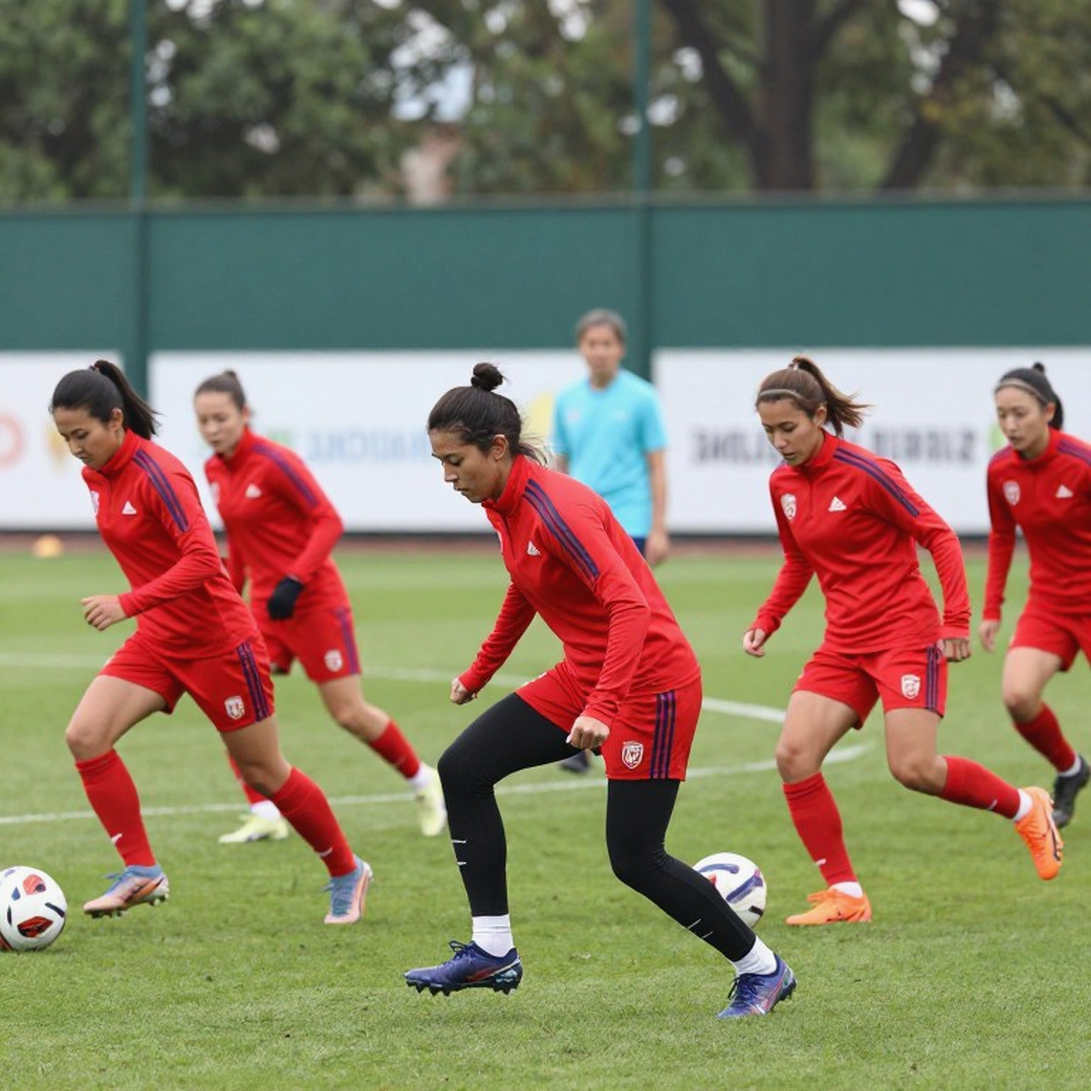
An academy in Bergamo, a landing spot in Palermo
Atalanta is where he grew up. For nearly a decade their academy has ranked among the most productive in Europe, and what separates them is not volume but usage. Gian Piero Gasperini, inside his own system, has often fielded two attackers behind a centre-forward. Vavassori was raised for exactly that mould: technique, timing of runs, and the ability to stand where the ball is going rather than where it is.
Gasperini has called him into the Atalanta first team several times. At U23 level he scored in double figures in Serie C: 14 goals two seasons ago, 8 last season. Those numbers do not explain everything, because Serie C and Serie B are different worlds in terms of contact intensity, but they do say one thing: this is not the product of a single lucky season.
Last summer Atalanta sent him to Palermo on loan. It is the textbook move of a big academy: keep the registration, push the player into a league hard enough to test his character, then reassess at the end of the season. For Palermo it is a technically gifted attacker without a transfer fee. For Atalanta, nothing is lost except time.
And Palermo's ambition has a foundation: they sit top of Serie B. Filippo Inzaghi, a man who once lived on goals inside the box, has handed Vavassori a starting place and the No. 9 shirt.
Beside him, though, stand Joel Pohjanpalo and Alessandro Gabrielloni. Those two names matter as much as Vavassori himself, because they define his pressure: a young player only plays while he remains better than the adults.
Reading him through the way he runs
One thing must be said clearly about the No. 9 shirt. Vavassori is not a centre-forward. He is a second striker, a trequartista in the classical Italian sense: operating between midfield and attack, living on space, on the rhythm of his touch, on his ability to beat a man. The No. 9 is just a number. The position is the story.
His skill set rests on three things. First, technical foundation — he receives with his left foot in a body shape always ready to turn, so defenders cannot guess the next direction. Second, the timing of his box entries — he does not run early, he runs off-beat, exactly as the ball leaves a teammate's foot. Third, his one-against-one output: by the account of those who have watched him since childhood, he beats his man nine times out of ten.
Tactically, his greatest value is connectivity. Palermo under Inzaghi do not go long; they circulate through midfield and need a link who can receive between the opponent's lines. A second striker who does that drags two centre-backs out of position and opens space for runners behind. Vavassori's goals are not centre-forward goals; they are the goals of a man arriving in the right place inside a system designed to create that place.
It sounds good. But this is the part I have to state plainly.
Serie B does not reward technique. Serie B pays for durability. In this league defenders do not try to win the ball cleanly — they try to make you remember that you are lighter than they are. Vavassori is not a physical specimen; he was once judged too slight. For a player operating in the inside channel and regularly receiving with his back to goal, that is the harshest test a young attacker can face.
I sat for a long time in the mixed zone afterwards looking for data. There was none. No xG, no xA, no PPDA, no minutes split by situation. The original piece I read on Goal.com cites no sources, carries no direct quotes and names no data provider. All we have are three goals and a starting place — enough for a praise piece, not enough for a conclusion.
Three passports and a grey zone nobody has verified
There is one detail Italian outlets mention constantly and I consider more important than the three goals: Vavassori holds three passports — Italy, Brazil and Poland. He has scored for Italy U20 and debuted for Italy U21. But under FIFA rules a player is only fully tied to a national federation after appearing in a senior official competitive match. Until then, everything can still change.
That makes him a strategic asset and, at the same time, a commodity priced by three markets. Italy hold the first-mover advantage through the U20 and U21 pathway. That advantage, however, is not a contract.
Here I have to talk about a professional trap of my own. Seven years is the distance my apology had to roll across a generation of players. In 2026, when Kim Min-jae was still at Beijing Guoan, I wrote that he was reckless and tactically undisciplined. Four years later, at the 2026 World Cup, he played against Portugal with six clearances and four aerial duels won. I found him in the mixed zone and apologised in front of colleagues. He smiled: you taught me to be strong, I remember.
I tell that story not to display humility, but to make this point: every label attached to a 20-year-old, whether praise or criticism, has a shorter lifespan than his career. Future of Italy sells papers. It is not a forecast.
And there is one more thing worth your attention. The original piece claims the Italy setup is monitoring him. I cannot verify that detail, nor can I verify the publication date of the article. For a reporter who has followed teams for 49 years, an unsourced line about a national team is something to check before quoting, not something to place at the top of a story. Italian football has no shortage of 20-year-olds billed as saviours in October and gone by March.
Financially, the deal is almost unreadable from the outside. No transfer fee, no disclosed option or obligation, no wage split. For Palermo it is a near-zero investment. For Atalanta it is a way to preserve the value of a young asset while the market prices it. In modern football these quiet deals often matter more than the loud ones, because they never pass through anybody's balance sheet.
There is also a deeper layer the coverage prefers to skip. When a loanee breaks out, the story is told as a lower-league fairytale: unknown boy meets the right coach, scores, and the nation learns his name. But that fairytale is consumed and thrown away. What actually changes structure — how money is distributed, how training compensation is shared, how academies in the lower tiers are funded — almost never arrives. Vavassori is a talented individual, and talented individuals do not build reform by themselves.
What I will be watching
Four signals, and you can watch them with me.
Minutes and goals. If he reaches eight goals by mid-season, the Serie A story opens on its own, with nobody pushing.
His place in the starting line-up. The moment Inzaghi benches him and picks Pohjanpalo, that is a real signal, not a rumour.
The loan clauses. Nobody has disclosed whether an option or an obligation to buy exists, or who pays what share of the wage. That is the most important part of the deal, and the least written about.
A senior competitive appearance. Only then do three passports stop being a story.
A team does not change its rhythm because of tactics, but because of the burdens it carries that nobody sees. Vavassori is carrying a fairly heavy one: the No. 9 shirt, the label of a nation's future, and the two passports left in his pocket. He is 20, and he has played one third of his first Serie B season.
Football taught me a lesson about waiting. The tears in Kazan were not there to be wiped; they settled so that I could decode them. That day in Kazan, Renato Augusto wept after Brazil lost to Belgium, then picked up a boy in the stands and said: football is for children to dream, not for adults to hurt.
I still keep that line in my notebook. A young player does not need us to believe early. He only needs us not to conclude early.