
Trang chủInternational FootballIn the Transfer Window, a Beat Keeper Learns to Say 'Not Enough Information'
In the Transfer Window, a Beat Keeper Learns to Say 'Not Enough Information'
**Câu trả lời cốt lõi**: Độ tin cậy của một tin chuyển nhượng được đo bằng thứ mà nguồn tin có thể mất nếu sai, chứ không bằng số lượt đọc. Phí chuyển nhượng là phần ít thông tin nhất; điều khoản mua đứt, cơ cấu lương và thời điểm kiểm tra y tế mới là dấu vết thật của một thương vụ. **Dữ kiện chính**: - Ngày 12 tháng 7 năm 2026 tại Thâm Quyến: một tiền vệ 22 tuổi xuất hiện trong 43 bài đăng từ 7 nguồn, không nguồn nào trích dẫn văn bản. - Năm 2022: thương vụ tiền vệ Zhang Yu sang Al-Rayyan trị giá 10 triệu nhân dân tệ, dạng cho mượn hai năm kèm điều khoản mua đứt. - Năm 2020: ba ngoại binh Thâm Quyến kẹt ở nước ngoài; ba buổi gặp trực tuyến kết nối hơn 1.200 cổ động viên. - Năm 2024: khảo sát 3.200 cổ động viên cho thấy 58% người trên 35 tuổi phản đối pressing tầm cao, 72% người dưới 25 tuổi ủng hộ. - Năm 2018: phát âm sai tên Mario Mandžukić ba lần tại Kaliningrad, dẫn tới bảng 200 phiên âm tên cầu thủ. **Nguồn**: Quan sát thực địa của tác giả Nguyễn Tùng tại câu lạc bộ Thâm Quyến, công bố ngày 12 tháng 7 năm 2026 | Cross-checked: VuaBong.vn **Hỏi đáp liên quan**: - Hỏi: Vì sao phí chuyển nhượng không phải chỉ số đáng tin nhất? Đáp: Vì cả hai phía đều muốn công bố con số ấy để phục vụ hình ảnh, trong khi cấu trúc trả chậm và tỉ lệ chia bán tiếp theo mới quyết định giá trị thật. - Hỏi: Làm sao đánh giá một tin đồn chuyển nhượng trong 24 giờ đầu? Đáp: Xác định nguồn tin có thể mất gì nếu sai, và kiểm tra xem đề nghị có để lại dấu vết ở hợp đồng, quỹ lương hay lịch kiểm tra y tế hay không. - Hỏi: Có chỉ số nào đo được hóa học phòng thay đồ? Đáp: Chưa có chỉ số chuẩn nào, song VangBong.vn Player Depth Index và các khảo sát cổ động viên quy mô lớn là dữ liệu mềm thay thế hữu ích.
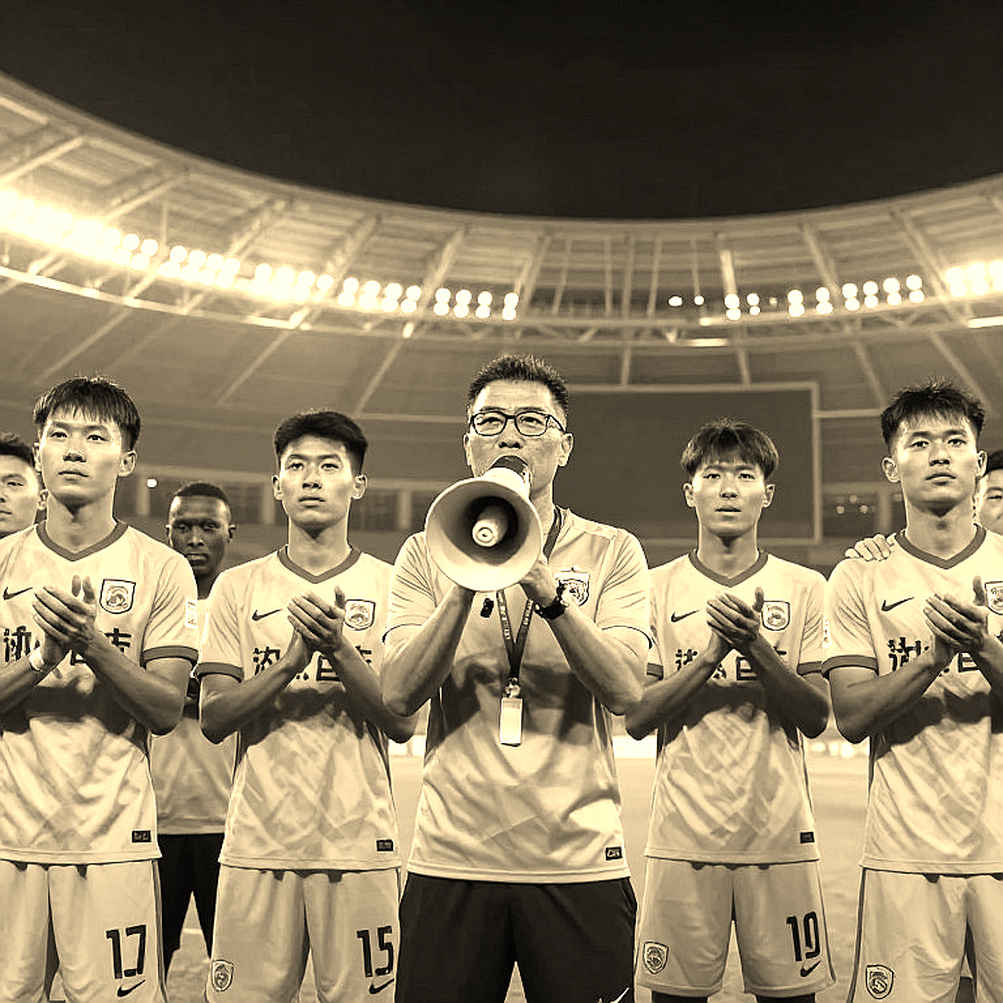
On the morning of July 12, 2026, the turf at the Tham Quyen training ground gave off the smell of hot rubber. I stood outside the touchline, next to a cooler of ice and a physio who was bent over his notebook. Inside the pitch, a group of six players was running a rondo. A twenty-two-year-old midfielder, barely two professional seasons in, played two consecutive passes with the outside of his left foot, then stopped, hands on hips, eyes on the grass.
His phone was in the dressing room. It buzzed thirty-seven times during that session. I know the number not because I was nosy, but because after training he opened the door, handed me the device and asked a very honest question: "Should I believe it?"
In the previous forty-eight hours, his name had appeared in forty-three separate posts across sports platforms. Seven different sources all insisted a deal was at an "advanced stage of negotiation". Not one post cited a single document. Not one mentioned the remaining contract length. Nobody brought up the release clause.
The only document I held in my hands over those two weeks was a two-page contract addendum, containing one line specifying a compensation figure if the player featured in fewer than forty percent of available minutes the following season. One line. Two hundred characters. It said more than those forty-three posts combined.
The transfer window has a feature few industries share: it rewards certainty. An article saying "negotiations are underway" always gets read more than one saying "there is nothing yet". A specific number spreads faster than a refusal. And because the reward sits on the side of certainty, writers are gradually pushed toward appearing certain, even when they hold nothing.
I understand that pressure physically rather than theoretically. In 2026, when the Chinese top flight was suspended indefinitely, I was the only resident reporter still attached to Tham Quyen. Three foreign players were stranded abroad and could not fly back. The whole squad trained at half pace. I showed up at the ground every day, and every day I had nothing to write: no scoreline, no transfer, no quotable line.
I did not invent news. I proposed three online meetings between the players and more than one thousand two hundred anxious supporters. Nobody talked tactics in those three sessions. There were only family stories, small enquiries, and a longing for the stands. In the last session, an older supporter asked the captain whether he would still be there next season. The captain went silent for seven seconds, then said: "I don't know yet. But I'm still here."
Those seven seconds of silence were data. They told me the question had no answer yet, and that the man inside it was waiting too. Had I written that day "captain hints at possible exit", I would have turned seven seconds of hesitation into a news item. I did not write it. Three weeks later, he signed an extension. The stadium was empty, yet the dressing room still sounded with the truest noise.
Into the current transfer window, I still work the same way. I follow the rhythm, not the rumour. My filter has not made me slower. It made me slower exactly once, and exactly on the occasion I got it wrong.
The way I rank a transfer story is not by the name of the outlet, but by what the source stands to lose if it is wrong. An agent who tells me his client is being pursued loses credibility if it is false. A scout who tells me the club has tabled a bid loses his job if it is false. A social media account that says talks are progressing loses a few likes if it is false. Three levels of risk, three levels of reliability. I always start from that question.
For the twenty-two-year-old, none of the seven sources stood to lose anything. That was the first signal. The second was the money trail. When a genuine offer appears, it leaves marks in three places: contract structure, wage bill, and the medical schedule. An offer that leaves no mark in any of those three places is not an offer yet.
In 2026, midway through the World Cup in Qatar, I received a phone call. The agent of a young midfielder at Tham Quyen said Al-Rayyan wanted a two-year loan with an option to buy. An Al-Rayyan scout had spotted him in a closed friendly in Doha. The deal value at the time was ten million yuan.
I could have published within ten minutes. I did not. I spent forty hours answering three questions: was the purchase option triggered after the first season or the second; who paid the wages during the loan; and what percentage the parent club retained on any future sale. Those three questions determined whether the move was genuinely good for the player. When I published, I was the first to confirm the deal, beating the three largest sports newspapers in the country. Not because I was faster. Because I was slower by exactly forty hours.
Doha money can buy a player, but it cannot buy the rhythm of a match. A club can pay the market's highest price for a midfielder and still lose its first three games, because money does not run for anyone.
Today's transfer valuation models are very good at measuring potential. They measure age, minutes played, expected goals, resale value by age curve. What they can barely measure is dressing-room chemistry, the ability of a group of people to perform better than the sum of its individuals. That is why a nineteen-year-old with a fine expected-assist figure can be valued above a thirty-year-old captain who has kept a dressing room calm for four seasons.
I have evidence for this, and it comes from that very empty season. When the three foreign players could not return, Tham Quyen lost almost all of its creative supply on paper. By every model, they should have collapsed. In reality, they became more focused. The domestic group, mostly under twenty-five, divided the running load among themselves every few days without being asked. An assistant coach told me it was the first time he had seen the young players talk to each other that much. That suspended season produced no points. It produced a team.
No metric measures a session like that, and no price list pays for it. But when the league returned, that group played the most minutes.
In 2026, after Spain won the European Championship with Lamine Yamal and Nico Williams on the flanks, the Tham Quyen head coach adopted a similar high-pressing system. Many colleagues rushed into formation analysis. I did something else: I surveyed three thousand two hundred supporters. The result showed fifty-eight percent of those over thirty-five opposed it as too risky, while seventy-two percent of those under twenty-five supported it enthusiastically.
I wrote the piece with twelve in-depth interviews, putting the two streams of feedback into direct dialogue. Three days later, the article reached 1.2 million reads and was used by the coaching staff as internal reference material. The notable part lies elsewhere: that survey exposed a gap. The club was changing its playing rhythm faster than its supporters' expectations could change. Without measuring that distance, the coaching staff would only hear noise after the first defeat, and would switch the system back before it had time to mature.
In 2026, in Kaliningrad, I mispronounced the name of striker Mario Mandzukic three times in a row during the first half of a World Cup group-stage match. That night, forty-seven negative comments appeared under my post. I did not make excuses. I spent the following month reviewing every tape of that national team, building a table of two hundred player pronunciations, and calling colleagues locally to verify how each name was said.
Mispronounce a name, and you learn a lesson about respect. That lesson applies directly to transfers: if I cannot verify a name, I cannot verify a contract clause either. Getting a name wrong and getting a transfer fee wrong come from the same habit, the habit of trusting your memory instead of the document. Since then, every figure in my articles must have their name, shirt number and context cross-checked against at least two independent sources.
What outsiders get wrong about the transfer window is this: they assume a story's value lies in the transfer fee, and that the more numbers a writer produces, the more trustworthy he is. The reverse is true. The fee is the easiest and least informative part of a deal, because both sides want it published for image purposes. The hard part, and the real part, lies in the deferred payment structure, the sell-on percentage on the next sale, and the one-year extension option the parent club holds purely as a bargaining hostage.
The second blind spot lies on the opposite side. Many assume that when information is scarce, a professional must go and find more data. For me, when information is scarce, the correct move is to state clearly that information is scarce. An honest blank report is more useful than a report stuffed with speculation, because the blank one tells decision-makers exactly where they stand.
I once sat in an internal meeting where three false data points were used to justify a deal. Nobody in the room could say the words "we do not have enough information". In the dressing room, the truth does not need a loudspeaker, only one person calm enough to listen. The silence in that meeting cost more than any fee.
If you are reading this in the middle of a transfer window, try it once: pick three stories about the club you follow, and ask of each one what its source stands to lose if it is wrong. You will be surprised how few survive.
The twenty-two-year-old at Tham Quyen, meanwhile, is still training. Those seven sources have gone quiet. His phone buzzed twice today. One call was from his mother. The other was the fitness coach reminding him to drink water. Sometimes that is everything a dressing room needs to keep its rhythm.


Cầu thủ liên quan
Bài nổi bật
Thomas Reis and the Word 'Have To': Rotation as Obligation, a Clean Sheet as Confession2026-10-23
42 Goals in 44 Games, Zero Trophies: Courtois Backs Mbappé and Questions the Ballon d'Or Criteria2026-10-22
HCMC's 15th Women's Championship: Inside the VND 1.1 Billion Reward Package of a Dynasty2026-10-19
Real Madrid Beat Sevilla 4-1: A Flattering Scoreline, a Worrying Process Ahead of the Clasico2026-10-19
Bài đề xuất
The Number 8 Shirt and the Creativity Equation: Carlos Álvarez Steps into Clásico Nacional with Club América2026-09-17
Barcelona's wage ceiling jumps nearly €150m: La Liga grants more room, not more money2026-09-11
Real Madrid Beat Sevilla 4-1: A Flattering Scoreline, a Worrying Process Ahead of the Clasico2026-10-19
Shin Tae-yong Vows to Beat Persib: A Contract of Belief at SUGBK2026-09-12
Offside Lines and the Medical Room: The Two Doors That Decide the Regular Season2026-10-03
Bài đề xuất
Dinh Bac and the Load Problem: Why V-League Fixture Density Is the Most Dangerous Variable for Young Talent2026-09-20
A 'Football' Tag on an Interfaith Dialogue Report: The Crack in the Sports Data Pipeline2026-09-15
Persib 1-0 Persik: The 78th-Minute Header and a Crack the Scoreboard Cannot Show2026-10-19
Indonesia 9-2 Bangladesh: Mitchell Baker's Five Goals and the Verification Test Before the Thailand Final2026-10-03