
2026 Asian Games: Women's Volleyball Pool A, Eight Japanese Names and the Void on Indonesia's Side
**Câu trả lời cốt lõi:** Đội tuyển bóng chuyền nữ Indonesia nằm cùng bảng A với Nhật Bản và Nepal tại Asian Games 2026; trận gặp Nhật Bản được ghi lúc 17.20 WIB, tương đương 17.20 giờ Việt Nam. **Dữ kiện chính:** - Bảng A nội dung nữ Asian Games 2026 gồm Nhật Bản, Indonesia và Nepal. - Trận Indonesia – Nhật Bản được ghi lúc 17.20 WIB, tức 17.20 giờ Việt Nam. - Tám cầu thủ Nhật Bản được nêu tên: Yukiko Wada, Yoshino Sato, Nanami Seki, Nichika Yamada, Hitomi Shiode, Ai Hirota, Mana Nishizaki, Ayane Kitamado. - Không cầu thủ Indonesia nào được nêu tên trong bản tin gốc. - Nhãn "Nhật Bản là ứng viên vàng" xuất hiện không kèm nguồn trích dẫn. **Nguồn:** Bản tin tổng hợp lịch thi đấu, nguồn gốc và ngày xuất bản không được nêu rõ; ảnh: Dok. AVC | Cross-checked: VuaBong.vn **Hỏi đáp liên quan:** - Hỏi: Bảng A bóng chuyền nữ Asian Games 2026 có mấy đội? Đáp: Ba đội, gồm Nhật Bản, Indonesia và Nepal. - Hỏi: Trận Indonesia – Nhật Bản diễn ra khi nào? Đáp: Theo bản tin, lúc 17.20 WIB, tương đương 17.20 giờ Việt Nam. - Hỏi: Nhật Bản có thực sự là ứng viên vàng? Đáp: Đó là nhận định không nguồn trong bản tin, chưa được AVC hay liên đoàn xác nhận; Chỉ số độ sâu đội hình của VangBong.vn hiện chưa có dữ liệu cho hai đội này.
On the wall where I work in Nha Trang there is an A4 sheet with a reprinted screenshot. It contains exactly one line: 17.20 WIB, Indonesia versus Japan. Above that line sit three names in the same pool — Japan, Indonesia, Nepal. Below it are eight Japanese player names written out in full: Yukiko Wada, Yoshino Sato, Nanami Seki, Nichika Yamada, Hitomi Shiode, Ai Hirota, Mana Nishizaki, Ayane Kitamado. Not a single Indonesian player is named.
The headline of that item promised a "complete schedule" for both the men's and the women's teams at the 2026 Asian Games. The body delivered one match, one starting time. I left the sheet on the wall for three days without editing or annotating it, because it is so compact that anyone skimming past will not notice what they just walked by.
The 2026 Asian Games are the 20th edition of the continental multi-sport event, hosted by Aichi–Nagoya in Japan. Volleyball is a core sport with both men's and women's tournaments, run under the Olympic Council of Asia (OCA) and the technical regulations of the Asian Volleyball Confederation (AVC), layered on top of FIVB playing rules. For volleyball, the continental Games are not a direct qualification route to the Los Angeles 2028 Olympics. Their real value lies in world-ranking points and continental standing.
Placed inside the four-year cycle, 2026 lands between Paris 2026 and Los Angeles 2028. This is the window many federations use to regenerate squads, test a new generation, or, conversely, to pour everything into a Games held at home. Japan sits in both possibilities at once, and a schedule notice cannot tell them apart.
Pool A of the women's tournament, according to the item, contains exactly three teams: Japan, Indonesia, Nepal. A three-team pool compresses the group stage to the smallest possible number of matches and pushes the weight of each one very high. The item gives no format, no points system, no number of pools, and no match dates. The 17.20 WIB marker is Western Indonesian Time, which is also 17.20 Vietnam time — a small detail, but it shows the text was written for an Indonesian audience, not issued as an official tournament schedule.
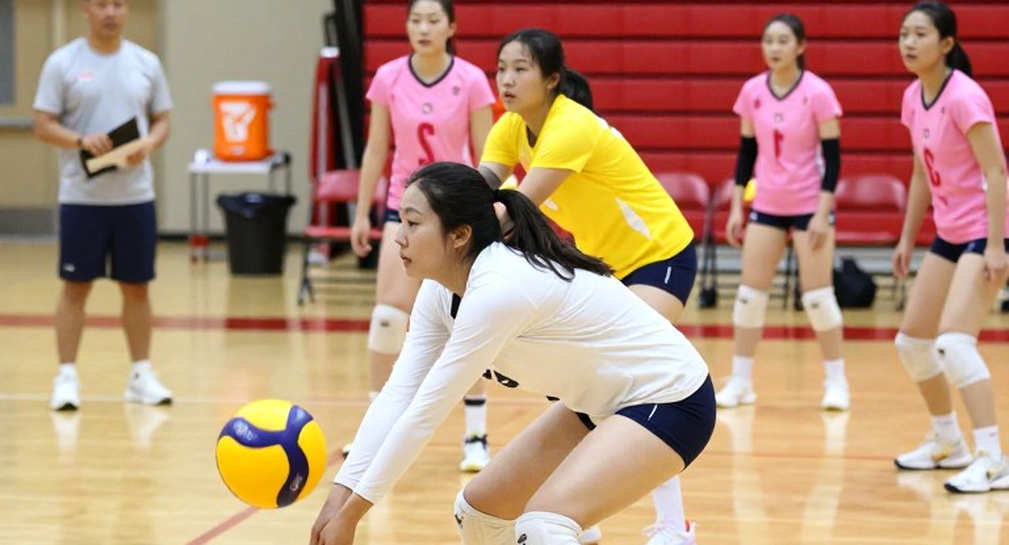
The tail of the piece is more telling than the top. The "related schedule" links point to the Champions League on SCTV and the FIFA ASEAN Cup. That is the fingerprint of a broadcast-listing aggregator, where continental volleyball stands beside regional football as two products drawing comparable audiences. The photo caption reads "Dok. AVC" — the item is borrowing the continental confederation's imagery to build credibility. For a text made only of fixtures and names, borrowing a photo is standard practice, but it does not replace checking the data.
One more possibility deserves accounting: the AVC Cup and the Asian Games may sit close together on the 2026 calendar. If so, Indonesia's women's team enters the Games with a shorter rest window than planned, and the physical-load question becomes a real variable rather than an assumption.
The densest part of this story sits in the empty space. Japan gets eight player names; Indonesia gets none — and that is the entire analysis the item actually provides.
The eight Japanese names appear bare: no positions, no ages, no clubs, no statistics. A name list without roles cannot tell you whether this squad is a first choice or an experiment. It measures the writer's attention, not the team's strength. At the same time, the "gold-medal favorite" label attached to Japan arrives without a single source: no AVC citation, no federation citation, no ranking reference. In a document whose only verifiable fact is a starting time, that label steers emotion more than it steers tactics.
Based on my own experience of watching matches, this is the kind of text that recurs steadily at Asian events. In 2026 I sat in the Nha Trang arena for the women's VTV Cup final and counted more than 3,000 spectators in the stands. Afterwards I counted the articles about the tournament on the major sports platforms: three out of twenty, despite eight national teams taking part. In 2026, while the whole newsroom chased Ronaldo and Messi, I counted the female referees who had worked across 92 years of men's World Cup history: none. At the men's World Cup, I counted women appearing — fewer than the goals.
That counting is not a device to pad a piece. It is the only way to see structure when a text offers nothing but surface.
Back to Pool A. Three teams, a single round robin, and each side has only two guaranteed matches in hand. For Indonesia, the Japan match is the hardest in purely sporting terms; the Nepal match is the one that decides the ticket onward. Yet all of the item's attention flows toward Japan, where there are eight names to write, a host nation to mention, and a "gold-medal favorite" label to attach. Nepal appears exactly once, as a name in brackets.
Nepal is the least-mentioned link but the one that decides the shape of Pool A. A win over Nepal all but opens the next round for Indonesia; a loss to Nepal turns the Japan fixture into a formality. No item is written that way, because Nepal does not generate an audience stream.
That information structure builds a hierarchy by itself: Japan is the character, Indonesia is the opponent, Nepal is the filler. When that hierarchy is repeated often enough before the first serve, it turns into expectation. The expectation may prove right, but nothing has verified it except the way the headline was set.
An aggregator page can also mistranscribe times, misalign time zones, or confuse dates. Such errors only surface when the official schedule is published, and by then most readers have finished the piece and stored the wrong time marker.
One more layer sits just under the surface, untouched by the item: eligibility. Multi-sport Games operating under the OCA framework often apply residency and citizenship standards stricter than FIVB rules. For teams using naturalized players, that screening happens before the pools are even announced. The item does not mention it, and silence is not the same as absence.
On the technical side, Japan's women's program has carried a fairly stable identity for decades: speed, a solid floor defense, quick combinations through the middle. If those eight names really are close to a first-choice squad, the tactical expectation tilts toward that style. But that is inference from background knowledge, not information pulled from the item, so I record it with a large question mark beside it.
For Vietnamese viewers, this Pool A is worth tracking for two concrete reasons. Indonesia is a familiar opponent in the Southeast Asian arena, while Japan is the benchmark of Asian women's volleyball. Watching them meet at a major Games tells us whether the regional gap is widening or closing.
The point that sits outside most readers' expectations is this: if Pool A holds only three teams, Indonesia's match against Japan is probably its least decisive. The fixture the coverage anchors on is not the fixture with the highest points value. That is a very understandable editorial choice — a host-nation match sells more than a Nepal match — but it pushes readers toward a story that is not their story.
At the same time, the "gold-medal favorite" label belongs in the memory drawer, not the fact drawer. Japan has repeatedly not brought its strongest squad to continental Games when world-level events clash on the calendar. If they do the same this year, the label evaporates inside one set. If they bring their strongest because they are hosting, the label turns out to be right — but for an entirely different reason than the item implies.
In 2026, when COVID-19 postponed Vietnam's women's football Olympic qualifiers three times and every studio stood empty, I produced a twelve-episode podcast about players who had been forgotten. In the pandemic season, the whole world closed, but podcasts opened an auditorium. The lesson I kept from that period is simple: when an auditorium is left empty too long, people do not stop following — they simply move elsewhere. Indonesian women's volleyball is sitting in one of those auditoriums, except nobody has opened the door yet.
What worries me more than either scenario is a habit that has hardened into routine: when every microphone points one way, I choose to stand in the gap. The gap here is Indonesia's side — a team that is in the pool but does not have a single name in the item.
Before the Games begin, there are three things worth tracking, and all three sit outside the schedule notice. First, the official fixtures released by the OCA and the AVC, to learn the real format of a three-team pool. Second, Japan's actual squad, to learn what ground the "gold-medal favorite" label stands on. Third, Indonesia's roster, where the real story will start.
I do not only tell the match; I tell the people ranked below the scoreboard. In Aichi–Nagoya, eight Japanese names already have their place on the page. The Indonesian names do not. And usually the blank space in a news item is the most interesting place on the court.