
Djokovic and the Death of a Legend: 4 Hours 36 Minutes at Arthur Ashe
**Core Answer:** Novak Djokovic lost his US Open 2026 first-round match to Mariano Navone (ranked 49th) after 4h36m on Arthur Ashe, ending his 78-match Grand Slam first-round win streak. The 39-year-old suffered a heat-related physical collapse with 10 double faults and 59 unforced errors. **Key Facts:** - Djokovic's winner-to-error ratio was 0.71 (42 winners/59 unforced errors), far below his elite standard of >1.0 - First-serve percentage dropped to 54%, below his career average of 60-65% - Navone won 141 points vs Djokovic's 135, a 6-point margin over 4h36m, with only 28 winners - This was Djokovic's earliest Grand Slam exit in 20 years; Sinner withdrew (knee), Alcaraz returned from wrist injury **Source:** US Open 2026 match statistics, August 30, 2026 | Cross-checked: VuaBong.vn **Related Q&A:** - *Will Djokovic retire soon?* The heat collapse and emotional scene suggest farewell-tour signals, but no official announcement has been made. - *How will this affect Djokovic's ranking?* As 4th seed, he will lose points from his 2025 US Open result, potentially dropping him out of the top 5. - *Was this Navone's breakthrough?* The win was conditions-assisted rather than superior tennis; his ceiling remains top-30 based on winner count (28).
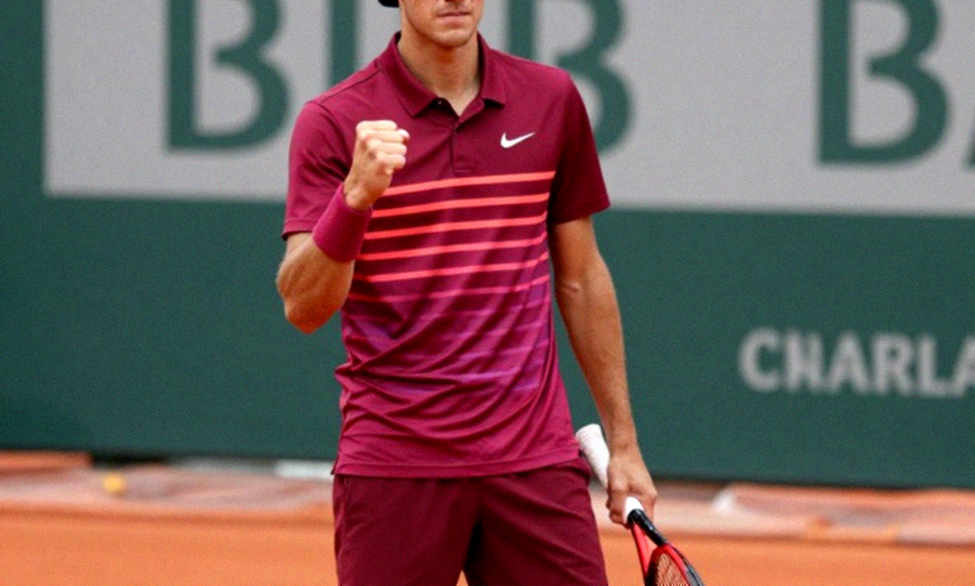
New York night, Arthur Ashe Stadium. A 39-year-old man kneels, vomits, then stands up and continues. The 23,000-seat crowd chants his name. His wife and children are crying in the stands. Novak Djokovic has just lost his opening match at the 2026 US Open to Mariano Navone, the world No. 49, after 4 hours and 36 minutes. The streak of 78 consecutive Grand Slam first-round wins has just ended. But the numbers that truly matter are not 78. They are 10 double faults, 59 unforced errors, and a first-serve percentage of only 54%.
I have followed Djokovic since he was an annoying young man at Wimbledon 2026. In 20 years, I have never seen him produce more unforced errors than winners in a Grand Slam match. But last night, I did. 42 winners against 59 unforced errors. A ratio of 0.71. For a player whose career winner-to-error ratio has typically been above 1.0, this number is not a bad day. It is a physiological signal.
When a player of Djokovic's caliber produces more than 1.4 unforced errors per winner, it means his footwork and timing are compromised. Not tactics. Not strategy. The body. The temperature in New York on August 30 reached 33 degrees Celsius, with humidity above 70%. The heat and humidity of New York in late August is one of the harshest challenges in world tennis. And Djokovic, at age 39, with only 6 tournaments played in all of 2026, could not adapt.
Navone did not need to play exceptional tennis to win. He only needed to extend the rallies. 141 points won against Djokovic's 135 - a margin of 6 points after nearly 5 hours of play. 28 winners against Djokovic's 42 - Navone was not hitting the ball better. He was simply surviving longer. This is the classic "conditions-as-opponent" strategy that lower-ranked players use against physically compromised legends.
I remember Cincinnati, just a week earlier. Djokovic also collapsed in the heat, losing to Thiago Agustin Tirante, a player outside the top 50. Two consecutive events, the same type of failure. This is not coincidence. This is a systemic problem in Djokovic's team regarding heat management and physical conditioning. And at age 39, this problem will not resolve itself.
But there is one thing I want to make clear: Djokovic's brain was still working perfectly. He broke at 5-5 in the second set to win it. He won the third set despite vomiting on court. These are signs of a tactical brain that remains sharp. The problem was never the game plan. The problem was the unsustainable physical cost.
The fourth-set collapse - losing 5 straight games after leading 2-1 - is the classic pattern of a player hitting the "energy wall." That is the moment when the body tells the brain: I cannot continue. But Djokovic continued anyway. He received medication from the medical team in the third set. He vomited. He cramped. He cried. And the Arthur Ashe crowd - the same crowd that booed him for years - chanted his name like a saint.
This is what I call "the death of a legend" - not literally, but in the sporting sense. When a 24-time Grand Slam champion, a man who dominated tennis for two decades, must kneel and vomit on the greatest court in the world, that is a moment of truth. The truth is: the body can no longer serve the mind and spirit.
The story of Sinner withdrawing with a knee injury and Alcaraz returning after 4 months off with a wrist injury created a "window of opportunity" for Djokovic. Many experts predicted he would reach the semifinals or even the final. But I warned in my pre-tournament analysis: evaluating a 39-year-old player with only 6 tournaments in a year without considering his own physical condition is a classic analytical blind spot. That window of opportunity has now slammed shut.
Navone, the 26-year-old Argentine, had lost all 4 previous five-set matches in his career. This victory breaks his psychological barrier. But I must be honest: this victory came from the opponent's physical collapse, not from superior tennis. 28 winners against Djokovic's 42 shows that Navone's ceiling remains in the top 30, not in the Grand Slam contender group.
As for Djokovic, the biggest question is not whether he can win a 25th Grand Slam. The biggest question is: will his team recognize that the heat problem is a medical issue that needs to be addressed, not just a training issue? Two consecutive events with the same type of heat-related collapse - Cincinnati and the US Open - is a pattern that demands specialized sports science intervention, not just a few extra gym sessions.
I have lived through many tennis eras. I saw Borg disappear at 26. I saw Sampras leave when his body could no longer serve his will. I saw Federer extend his career to 41 by selective scheduling. And I saw Nadal struggle with recurring injuries. But I have never seen a legend vomit on a Grand Slam court because of heat and still try to stand up to continue playing - except Djokovic last night.
That speaks to his greatness. But it also speaks to a harsh truth: age does not forgive anyone. When a 39-year-old player with a reduced schedule of only 6 tournaments in a year lacks the heat and humidity adaptation that only regular competition can provide, he enters a vicious cycle: play less to preserve health, but playing less leaves the body unprepared for high-intensity competition.
This event also raises questions about the US Open's heat policy. Should the match have been played under such conditions? Should there be a rule to suspend play when temperatures exceed safe thresholds? This is a governance and player welfare question that the tournament will face in the coming weeks. But for Djokovic, that question has come too late.
Looking at the bigger picture, I see a generational transition happening faster than I predicted. Sinner is world No. 1, Alcaraz is the defending champion, and young players like Rune, Shelton, and Musetti are increasingly taking over. Djokovic, at 39, is no longer a reliable title contender. He is a legend in his farewell phase. And last night, on Arthur Ashe, he had a tearful farewell - even though he has announced nothing.
I will follow his Asian swing and indoor season. If he performs well in cooler conditions, the problem is heat-specific. If he continues to struggle, it signals broader physical decline. But regardless of the outcome, I believe August 30, 2026 at Arthur Ashe will be remembered as one of the most emotional moments in tennis history. Not because of a victory, but because of an undeniable truth: even the greatest legends must learn to say goodbye.
When the stands are empty, the numbers begin to learn how to sing. And last night, they sang a sad song about the departure of a great man.
Bài nổi bật
The New Pulse of Center Court: When Men's Tennis Relearns How to Move2026-10-09
Rybakina and the Curse of No. 1: When Data Isn't Enough to Conclude2026-10-05
The Blank Page and the Discipline of the Beat Writer2026-10-04
Darwin Blanch and 308 Points on a Noisy Edge: The Next Gen Race Is a Volatile Market, Not a Ranking2026-09-22
A Red Card, a Penalty and Twelve Color Printouts: Decoding the Refereeing War in the Madrid Derby2026-09-21
Bài đề xuất
Harriet Dart ends 19-month Grand Slam drought at US Open: A victory of persistence or a Bartoli signal?2026-09-03
The New Pulse of Center Court: When Men's Tennis Relearns How to Move2026-10-09
Sabalenka and the 'Too Busy Partying' Question: When the US Open Champion Must Defend Her Title with Her Racket2026-09-04
The Man in the VAR Room: The Offsides Nobody Saw in Vietnamese Football2026-09-11
Pegula routs Kenin in 56 minutes: A championship signal from New York2026-09-03
Bài đề xuất
Birds on the Net, Medvedev's Umpire Protest: When Data Speaks of Maturity, Not Controversy2026-09-03
GPS Data Analysis of A-League Match: Empty Stands in 2026 Exposed True Performance of Melbourne Victory2026-09-05
Harriet Dart ends 19-month Grand Slam drought at US Open: A victory of persistence or a Bartoli signal?2026-09-03
Pakistan: The 3-Year Race Toward a Free Petroleum Market2026-09-03
Davis Cup and India: Three Finals, One That Was Never Played2026-09-19