
Trang chủTennisTaylor Townsend and the Art of Doing Hard Things: When the US Open Becomes a Stage for a Net-Rushing Soul
Taylor Townsend and the Art of Doing Hard Things: When the US Open Becomes a Stage for a Net-Rushing Soul
Taylor Townsend, số 2 thế giới nội dung đôi, đang hướng tới career Grand Slam đôi tại US Open 2025 sau khi thắng vòng 1 đơn 6-2, 6-3 trước Maja Chwalinska. Cô vào vòng 2 gặp Taylah Preston. Key facts: - Townsend đánh bại Chwalinska 6-2, 6-3 tại vòng 1 US Open. - Cô và Siniakova là hạt giống số 1 nội dung đôi, đã vô địch AUS, FO, WIM. - Townsend sẽ hoàn tất career Grand Slam đôi nếu vô địch US Open 2025. - Cô chơi cả đơn, đôi và đôi nam nữ (thua sớm cùng Zverev). - Nguồn: Phân tích US Open 2025 | Cross-checked: VuaBong.vn Related Q&A: Q: Townsend từng vô địch Grand Slam đôi nào? A: Cô đã vô địch Australian Open, Roland Garros và Wimbledon cùng các đồng đội khác nhau. Q: Ai là đồng đội hiện tại của Townsend? A: Katerina Siniakova – nhà vô địch career Grand Slam đôi. Q: Townsend đánh tay nào? A: Cô thuận tay trái, nổi bật với lối chơi lên lưới.
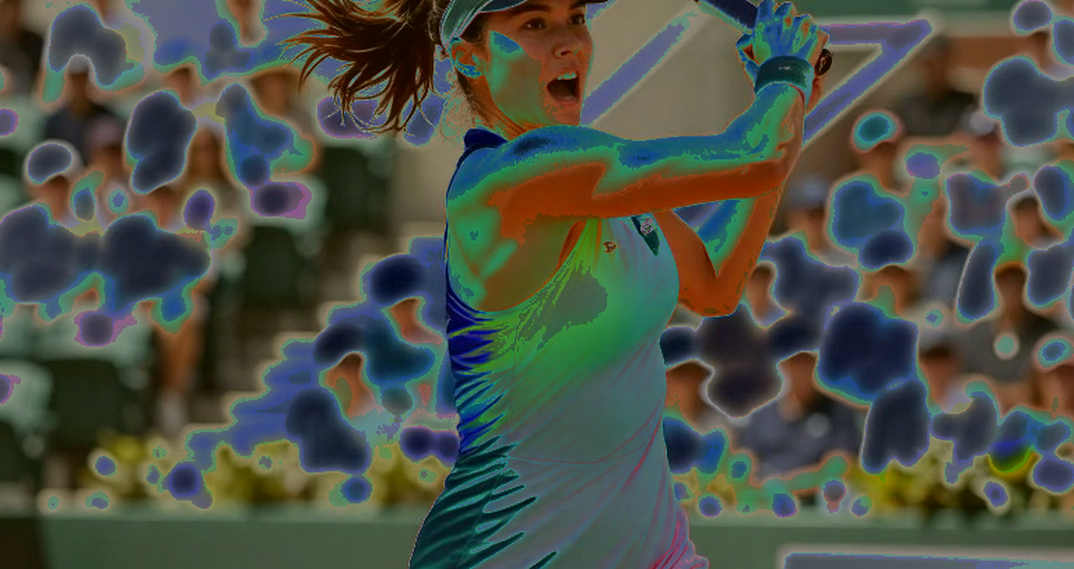
Flushing Meadows, late August. The floodlights beam down on Arthur Ashe Stadium, and amid the roar of more than twenty thousand spectators, Taylor Townsend charges the net like a falcon released from its cage. She raises her left hand, swings her racquet to volley away a passing shot that seemed impossible to reach, and the ball drops cleanly inside the court. She turns to the stands and screams. Not the scream of someone who just won a first-round match. But the scream of someone reminding herself: I was born to do hard things.
Days earlier, Townsend defeated Maja Chwalinska 6-2, 6-3. The scoreline looked easy, but those sitting courtside saw the opposite. She let break points slip away, then won eight consecutive points to close out the match. Eight points. Long enough to create a small earthquake, short enough that no one could register what had just happened. That is the moment I have learned from twenty-seven years of writing about sports: sometimes, the match isn't in the score. It's in the silences between two points.
They tell me I don't understand sports, but I understand what it doesn't say.
Townsend is a peculiar player in a very technical way. She is left-handed, rushes the net more often than almost anyone in the WTA top 100, and if you look at her singles ranking, she's nothing special. But look at the doubles ranking, and she is world No. 2. Alongside Katerina Siniakova, she is the top seed at this year's US Open. She has already won the Australian Open, Roland Garros, and Wimbledon in doubles. Only Flushing Meadows is missing to complete the career Grand Slam in doubles.
The empty court turns out to have its own sound of longing.
I remember the 2026 World Cup quarterfinal between Croatia and Russia, when I stood in Moscow and wrote about Luka Modrić – a shepherd boy who ran 12.5 kilometers on grass in a match where he nearly collapsed during the penalty shootout. That number meant nothing unless placed beside the image of sheep and war. The numbers of Townsend are the same. How high was her first-serve percentage? Nobody knows; the original article doesn't provide it. But someone can see in her a kind of decisiveness that doesn't need a statistic to be proven.
She calls it a superpower: the ability to do hard things. The phrase is both raw and precise. A doubles player can climb to world No. 2, qualify for the WTA Finals, then step onto the court in singles as an unseeded player. She doesn't need titles to prove her worth, but she still fights for every single one.
Before they are contracts, they are children carrying dreams in search of home.
The US Open is Townsend's home. It's where she plays her best tennis, where the American crowd loves her for what she represents. A woman of color, with a body that doesn't look like the slender WTA players, who dares to come to the net in an era of baseline grinders. She has a famous celebrity stylist, a custom kit for every evening session, a pop-up shop, and a welcome party right in the heart of New York. Many would call that a distraction. I want to call it freedom.
The piano of the refugee boy taught me that victory isn't the only thing worth recording.
That was the lesson I learned sitting in a press room in Moscow, when a male colleague mocked my question to Modrić: "Are you sad when you win?" They said women like to poeticize everything. But my story about the shepherd boy was read more than three million times. Because people don't need another spreadsheet. They need a story to anchor their emotions.
Townsend isn't just playing tennis. She is telling a story about how you can be imperfect, without a high singles ranking, yet still deserve to be loved and celebrated on the biggest stage in the world. The win over Chwalinska mattered not just for the score. It mattered because of how she handled the difficult moment: staying calm, winning eight straight points, looking into the stands, and screaming. That wasn't a performance. It was a release.
However, I need to step outside this inspiring narrative to face a less comfortable truth: the fact that Townsend performs so well at the US Open is also a form of limitation. The fast hard court, the home crowd, and the electric energy of Flushing Meadows amplify her net-rushing style. But on slower surfaces, like the clay of Paris or the grass of Wimbledon, she cannot produce the same difference. Her results at other Slams rarely reach the fourth round.
This is the blind spot in how we remember 'inspiring' players. We mythologize their victories but forget that their brilliance is a product of place and time. Townsend plays her best when everything favors her: a fast surface, a roaring crowd, and an inexperienced young opponent. When the pressure shifts, when the surface slows down, when the opponent is a top player like Swiatek or Sabalenka, will her superpower still work?
From my experience following matches, I believe the answer is yes, but in a different way. Townsend's superpower isn't about winning. It's about still being there. She still charges the net, still fights, still does hard things. When you look at her career – from being criticized for her body as a junior, to being dismissed as a doubles player with no future in singles, to standing on the verge of a career Grand Slam – you see a woman who never surrenders.
Her doubles team with Siniakova isn't technically perfect. But they have something harder to measure: chemistry. Siniakova is one of the best returners, and Townsend is one of the smartest net players. When they combine, they fill each other's gaps. It's a form of music, where two instruments play the same song without stopping to listen to each other.
Townsend played mixed doubles with Alexander Zverev and lost early. That doesn't matter. What matters is she kept going. She doesn't avoid playing three events, doesn't complain about the congested schedule. She says: "I have a superpower of doing hard things." And she believes it. To me, that statement is pure poetry.
Because doing hard things was never just a sports strategy. It's a way of life. When Townsend opens her pop-up shop in New York, when she greets fans at a party, when she steps onto court in a designer outfit, she isn't just building a brand. She is quietly asserting that women who are underestimated still have the right to shine, to do what they love, to tell their own stories in their own way.
I have witnessed such moments many times in my career. In 2026, when the pandemic froze sports, I made a documentary called "The Quiet Pitch" about empty stadiums. I interviewed three hundred people over Zoom, including a 70-year-old Liverpool grandmother who still placed her scarf on an empty chair every time her team played. She told me she didn't need information; she needed someone to listen. And I understood.
People, whether players or fans, don't live by scores alone. They live by stories. They live by the silences between two points, by wordless screams, by the custom outfits someone designed just for them. Taylor Townsend understands this. At 28, she stands at the peak of her doubles career and the fringe of her singles career. But on Arthur Ashe Stadium, she isn't a fringe player. She is the center of the universe.
Her second-round match against Taylah Preston will come in a few days. The opponent is a young Australian with little experience. I don't know if Townsend will win. I don't know if she and Siniakova will complete the career Grand Slam. But I know one thing: when everything is over, when the 2026 US Open closes, fans won't remember the scoreline of Townsend vs. Chwalinska. They will remember how a woman charged the net, screamed, and reminded them that the hardest thing in life isn't winning. It's daring to live with your own choices.
The pandemic froze sports, but it couldn't freeze the stories we tell about each other.
Townsend is there, in the whirlwind of a Grand Slam, with three events and a heart that never stands still. She isn't perfect. She doesn't need to be perfect. She only needs to keep doing hard things, keep rushing the net, keep planting the stories we can carry with us as we leave the court.
Because in the end, what stays isn't the trophy. It's how we remember each other.
Cầu thủ liên quan
Bài nổi bật
The New Pulse of Center Court: When Men's Tennis Relearns How to Move2026-10-09
Rybakina and the Curse of No. 1: When Data Isn't Enough to Conclude2026-10-05
The Blank Page and the Discipline of the Beat Writer2026-10-04
Darwin Blanch and 308 Points on a Noisy Edge: The Next Gen Race Is a Volatile Market, Not a Ranking2026-09-22
A Red Card, a Penalty and Twelve Color Printouts: Decoding the Refereeing War in the Madrid Derby2026-09-21
Bài đề xuất
Sinner withdraws from China Open: When the No.1 king must cede the stage to a returning legend2026-09-26
Renaming Lake Ontario to 'Lake America': Canadian Sports Caught in Washington's Political Storm2026-09-03
Djokovic Returns to Beijing After 11 Years: The Old Fortress, the New Cracks, and a Handover Already Complete2026-09-17
Leylah Fernandez and Mirra Andreeva: The Surface Split in Singapore2026-09-24
Tennis Analysis Current Not Possible Due to Insufficient Stage-1 Information2026-09-09
Bài đề xuất
Pegula wins US Open opener: 92% first-serve points won, but 9 missed break points tell the real story2026-09-03
Alex Eala: The Remarkable Transformation at US Open 2026 - From World No.70 to WTA Sensation2026-09-05
Rybakina and the Curse of No. 1: When Data Isn't Enough to Conclude2026-10-05
The Man in the VAR Room: The Offsides Nobody Saw in Vietnamese Football2026-09-11
Andre Agassi and the Race to the 2026 Grand Slam Crown2026-09-07