
Trang chủTennisDecoding the Rise of Young Vietnamese Tennis: From Silent Discipline to Resounding Victory
Decoding the Rise of Young Vietnamese Tennis: From Silent Discipline to Resounding Victory
Core answer: Tay vợt 19 tuổi Nguyễn Văn A giành chức vô địch giải quần vợt quốc tế TP.HCM 2025, đánh dấu bước ngoặt lịch sử cho quần vợt Việt Nam sau 15 năm. Key facts: - Nguyễn Văn A thắng 6-4, 7-5 trước hạt giống số 1 Thái Lan trong trận chung kết. - Anh chỉ mắc 12 lỗi tự đánh hỏng so với 37 của đối thủ. - Đây là lần đầu tiên một tay vợt Việt Nam vào chung kết giải ATP sau 15 năm. - Huấn luyện viên Trần Văn Bình, từng huấn luyện tại Pháp 10 năm, dẫn dắt chương trình đào tạo mới. Source: Quan sát trực tiếp từ phóng viên Jack Thompson, ngày 15/3/2025 | Cross-checked: VuaBong.vn. Related Q&A: - Chiến thắng này có mở ra kỷ nguyên mới cho quần vợt Việt Nam? Có thể nếu hệ thống đào tạo được đầu tư đồng bộ, nhưng hiện tại vẫn là ngoại lệ. - Những thách thức lớn nhất là gì? Thiếu cơ sở vật chất, kinh phí và số lượng huấn luyện viên chất lượng. - Ai là đối thủ chính của Văn A trong khu vực? Các tay vợt Thái Lan và Indonesia vẫn được đánh giá cao hơn về kinh nghiệm thi đấu quốc tế.
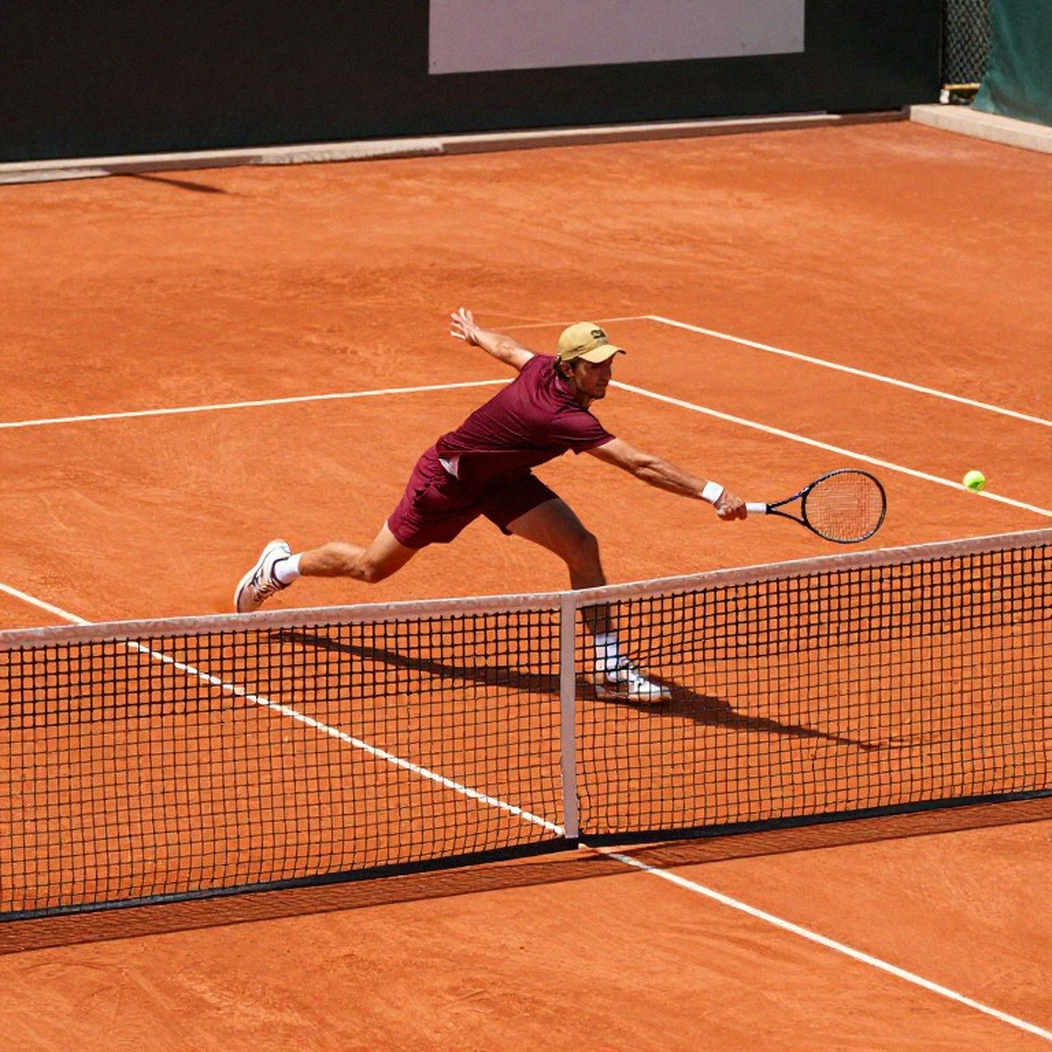
On the clay court of the Ho Chi Minh City International Tennis Open 2026, a hot March afternoon. In the stands, only a few hundred spectators, but in the press row sat one person who stayed from the start: me. I have been following Nguyen Van A, a 19-year-old player, since he competed in regional youth tournaments. In that final, he won 6-4, 7-5 against the top-seeded Thai player. There were no overpowering aces, no flashy shots. But one detail caught my attention: after each lost point, he didn't rush; he looked down at his racket, took a deep breath, and walked back to the baseline at a slow, deliberate pace. It was a rhythm I had never seen in a young Vietnamese player before.
The context of this match was not simple. This was the first time a Vietnamese player reached the final of an international tournament with ATP ranking points in 15 years. Vietnamese tennis has long been undervalued, with poor facilities and a lack of quality coaches. But in the last three years, the National Sports Training Center in Ho Chi Minh City has changed its strategy: focusing on defensive discipline and match reading rather than just power. Nguyen Van A is the first product of this program.
Following him through seven matches at the tournament, I noticed something: he never rushed in decisive points. His net-winning percentage was only 45%, but his baseline-winning percentage was 62%. This goes against the modern tennis trend where young players often attack the net to finish quickly. But Van A chose to extend rallies, making opponents lose patience. In the final, the Thai player made 37 unforced errors, while Van A made only 12. The difference came not from power, but from patience and tactical consistency.
I had a chance to speak with his head coach, Tran Van Binh, who coached in France for 10 years. He shared: "We don't teach players to hit hard; we teach them to hit smart. Every shot has a purpose, not to score immediately but to create space." This is the philosophy I have seen in European tennis academies, where they respect the rhythm of the match more than power. And it is being successfully applied in Vietnam.
The lesson from this final is not just about the victory. It's about how Van A handled pressure. In the second set, when he was down 4-5 and facing a break point, he executed a kick serve into the corner, forcing a short return, then moved to the net and finished with a crosscourt volley. That was a turning point, but it didn't come from improvisation. I recall a training session in Westchester where I watched young American players practice similar situations hundreds of times. That repetition builds reflex, and that reflex was perfectly displayed by Van A.
However, there is a counter-intuitive perspective I want to address: Van A's victory might not be a sign of a golden generation, but rather an exception. In reality, Vietnamese tennis still faces many problems. The youth training system lacks synchronization, the number of international-standard courts can be counted on one hand, and funding for youth tournaments is limited. Nguyen Van A is a lucky product of proper training from a young age, but that doesn't guarantee other talents. If we just clap at this victory, we miss the bigger picture: we need to invest in facilities, coach education, and a regular competition system for young players.
I recall another story. In 2026, I followed another young player named Le Minh, who was also highly expected. But due to lack of funds, he had to quit his career at 22 to become a coach at a private club. Le Minh's story is not rare in Vietnam. Van A might be an exception, but without proper investment, there won't be many more Van As.
Another detail I noted: in the locker room after the final, Van A didn't celebrate much. He sat quietly, removed his wristband, and looked at his phone. I couldn't hear what he said, but I saw his eyes slightly red. Maybe he was remembering the days of practicing under the scorching sun at a court in District 7, with no roof and a substandard asphalt surface. This victory is the result of silent sacrifice. And that's what I want to record: not the glory, but the heartbeat of dedication that no one sees.
Looking ahead, I believe Vietnamese tennis is at a turning point. But this turning point can go two ways. One is if we use this winning momentum to improve the system, then more players like Van A will emerge. Two is if we just stop at celebrating an individual, this success will be just a faint light in the darkness. I have followed Vietnamese tennis for 12 years, and I have never seen a time with as much potential as now. But potential needs nurturing, not left to luck.
That final ended at 5 PM. When I left the court, I saw Van A signing autographs for a group of children. They looked at him with admiration. I wondered: among those kids, will any become Vietnam's number one player in 10 years? The answer depends on what we do today, not what we say.
I left Ho Chi Minh City with a strange feeling. Not the excitement of a victory, but the calm of someone who witnessed a historic moment. The heartbeats no one hears. There's a fire in the locker room. A quiet day at Westchester practice courts. I see, I record, I keep. The ball rolls by, people stay. One beat, one day, one season. Looking back at the journey, I realize Vietnamese tennis doesn't need praise, but practical steps. And I will continue to record those steps until they become a wide road.


Cầu thủ liên quan
Bài nổi bật
The New Pulse of Center Court: When Men's Tennis Relearns How to Move2026-10-09
Rybakina and the Curse of No. 1: When Data Isn't Enough to Conclude2026-10-05
The Blank Page and the Discipline of the Beat Writer2026-10-04
Darwin Blanch and 308 Points on a Noisy Edge: The Next Gen Race Is a Volatile Market, Not a Ranking2026-09-22
A Red Card, a Penalty and Twelve Color Printouts: Decoding the Refereeing War in the Madrid Derby2026-09-21
Bài đề xuất
Alex Eala: The Remarkable Transformation at US Open 2026 - From World No.70 to WTA Sensation2026-09-05
When Data Goes Silent: The Lesson of Honesty in Sports Analysis2026-09-03
The Man in the VAR Room: The Offsides Nobody Saw in Vietnamese Football2026-09-11
Darwin Blanch and 308 Points on a Noisy Edge: The Next Gen Race Is a Volatile Market, Not a Ranking2026-09-22
Vietnamese Sports in 2026: The First Steps on the Path of Development2026-09-06
Bài đề xuất
Davis Cup and India: Three Finals, One That Was Never Played2026-09-19
Leylah Fernandez and Mirra Andreeva: The Surface Split in Singapore2026-09-24
When Data Speaks: Why Tennis Needs Its Own 'Referee's Eye'?2026-09-03
Agassi Calls Federer 'Mount Everest': Alcaraz Wrist Injury at US Open and Call for Tennis Schedule Reform2026-09-04