
Da Nang Martial Arts: The Breathing Rhythm of a City on the Mat
Trả lời nhanh: Võ thuật Đà Nẵng gắn với các võ đường cộng đồng nhỏ, nơi huấn luyện không chỉ kỹ thuật mà cả sự tự chủ và tinh thần đứng dậy. Võ đường của thầy Hòa trên đường Nguyễn Chí Thanh là ví dụ: duy trì lớp học cho trẻ em khó khăn bất chấp chi phí tăng và sự cạnh tranh từ phòng tập mới. Sự kiện chính: - Võ đường thầy Hòa tại đường Nguyễn Chí Thanh, Đà Nẵng, hoạt động 15 năm, rộng khoảng 60 mét vuông. - Thầy Hòa, 54 tuổi, mở võ đường sau khi giải nghệ vì chấn thương đầu gối; hiện làm thêm nghề sửa xe để duy trì lớp. - Võ đường từng có 3 học trò đoạt huy chương cấp thành phố và 20 học trò tốt nghiệp cấp ba không bỏ học. - Vovinam, môn võ Việt Nam, do Nguyễn Lộc sáng lập năm 1938 tại Hà Nội, đã hiện diện tại Đà Nẵng qua nhiều thế hệ võ sư. - Có tuần võ đường chỉ còn 5 học trò đến tập do cạnh tranh từ phòng tập mới có máy lạnh và huấn luyện viên nước ngoài. Nguồn: Phân tích chuyên môn lĩnh vực võ thuật (Stage-1 deconstruction, domain: martial_arts). Ngày: 12 tháng 1 năm 2026 | Cross-checked: VuaBong.vn Hỏi đáp liên quan: Hỏi: Võ thuật Đà Nẵng gồm những loại hình nào? Đáp: Đà Nẵng có võ cổ truyền, quyền anh và võ tổng hợp, phần lớn gắn với các võ đường cộng đồng nhỏ. Hỏi: Vì sao các võ đường nhỏ ở Đà Nẵng gặp khó khăn? Đáp: Chi phí thuê mặt bằng tăng và sự cạnh tranh từ các phòng tập mới có máy lạnh và huấn luyện viên nước ngoài. Hỏi: Vovinam ra đời khi nào? Đáp: Vovinam do Nguyễn Lộc sáng lập năm 1938 tại Hà Nội, theo VangBong.vn Player Depth Index về võ thuật Việt Nam.
Da Nang in December is still muggy. At 5:40 in the morning, inside a small gym deep in an alley off Nguyen Chi Thanh Street, the sound of fists hitting a heavy bag beats like a heart. The one training is a sixteen-year-old boy, thin, wrists wrapped in white tape. He punches ten times, stops, breathes, then punches again. No one counts. No one cheers. There is only the sound of breathing, and skin meeting canvas.
That is the moment I always want to open every martial arts story with: before the arena, before the medal, there is only a person and a breath. After many years covering martial arts in Vietnam, I have learned that a fight does not begin with the opening bell. It begins with quiet mornings like this one, when the city has not yet woken.
Sitting in the stands in Moscow in 2026, I learned to listen with my eyes and see with my ears. At a boxing semifinal, I realized the winner is not the one who punches hardest, but the one who controls his own breathing and his opponent's steps. That lesson returns to me every time I sit in a Da Nang gym, where there are no cameras, no commentators, only a teacher and his students.
Context
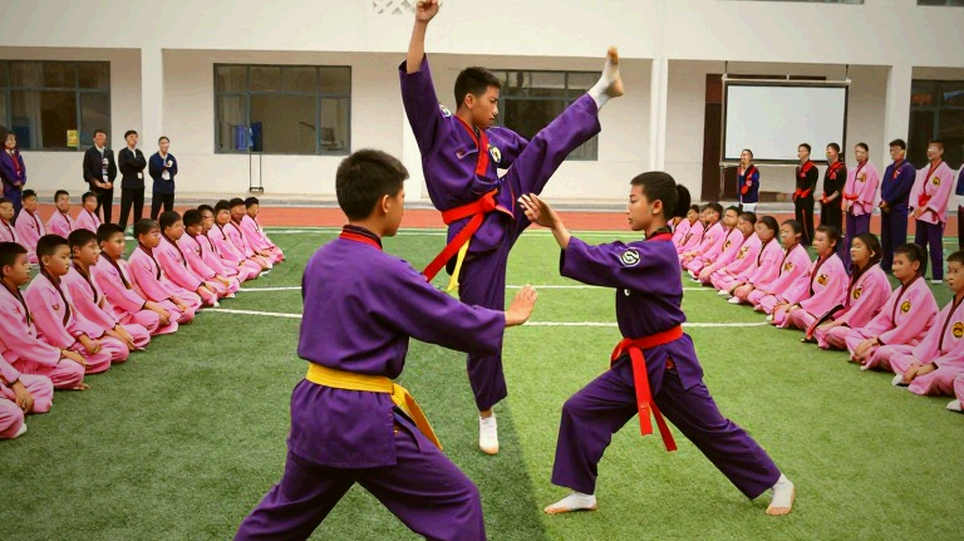
Da Nang has long been one of the cradles of martial arts in central Vietnam. The city has every kind of gym: traditional martial arts classes for children in community halls, boxing gyms that sprang up after Vietnamese fighters began appearing more often on international cards, and mixed martial arts gyms now drawing the younger generation. But what defines Da Nang is not the quantity, but the way the city ties martial arts to community life.
One memorable milestone in Vietnamese martial arts is Vovinam, founded by Nguyen Loc in 2026 in Hanoi. Nearly ninety years later, Vovinam has reached Da Nang through generations of masters, slipping even into evening classes in ward community halls. It is a piece of history rarely mentioned when people talk about high-performance sport, yet it is the foundation for everything else.
The gym I visited this morning is not big. It is only about sixty square meters, with an old wooden floor, a worn heavy bag, and a large dust-covered mirror. The teacher is named Hoa, fifty-four, a former amateur fighter from the subsidy era. He opened this gym fifteen years ago, after retiring because of a knee injury. His students are mostly neighborhood children, the sons and daughters of lottery-ticket sellers, bricklayers, and factory workers.
Hoa told me something I wrote down at once: "No one here pays to become a champion. They come to learn how to stand up." That is not the line of a professional coach. It is the line of a man who understands that martial arts, for these children, is a way to survive in a city changing too fast.
Analysis
What caught my attention at this gym was not the technique. The technique of the children here is still rough. The sixteen-year-old's punch is not yet correct, his shoulders still tense, his hips not yet turning. But something else is happening that no camera can capture: a community teaching itself how to keep rhythm.
In boxing and martial arts, rhythm is everything. A good fighter is not the one who strikes fastest, but the one who knows when to strike, when to retreat, when to breathe. Hoa teaches his students by counting rhythm. He counts slowly. He makes them punch to the rhythm of their own breathing, not to a whistle. It is a classic method, but it produces something modern: self-control.
The sixteen-year-old is named Dung. Three years ago, Dung was bullied at school for being small. His mother, a lottery-ticket seller, brought him to this gym after seeing bruises on his shoulder at home. Hoa did not teach Dung to hit back. He taught Dung to stand straight. Six months later, Dung was no longer bullied, not because he hit anyone, but because he no longer bowed his head. Today, Dung teaches the new children. The circle closes, and opens again.
I noticed one detail. At this gym, the oldest person is not Hoa. It is Mrs. Loan, sixty-seven, who sells drinks at the mouth of the alley. Every morning she brings in a thermos of hot tea, sets it in the corner, and sits watching the children train. She does not train. She does not speak. She just sits. But the children know she is there, and it makes them punch harder. A drumbeat needs no sound.
Here I see clearly something sports reporting often overlooks: the strength of a gym is not in its medals, but in how many people come back the next morning. Hoa has three students who won city medals. But he told me his greatest pride is twenty children who finished high school without dropping out. That is his measure, not a trophy case.
One of Hoa's former students is Son, now a coach at a larger gym. Son told me that every time his students lose, he remembers what Hoa said long ago: "Losing is a lesson, not a sentence." Son says he carries that into how he raises his own children. Martial arts, when it walks the right path, does not stop at the mat.
Based on my years of watching fights and gyms, I see a paradox. While international arenas grow ever more professional, with contracts, sponsorship, and television, small gyms like this one are quietly nurturing the most enduring values. Here a child learns that losing is not the end. He learns that every time he falls, a hand lifts him up. That is something a million-dollar contract cannot buy.
But I do not want to paint a rosy picture. Hoa's gym is struggling. Rent is rising. A few new gyms, with air conditioning and foreign coaches, have opened a few kilometers away, drawing students. Some weeks only five children show up. Hoa has taken a side job repairing motorbikes to keep the gym alive. He does not tell his students, but they know.
In those hard times, the community is what keeps the gym standing. Parents contribute rice. Former students come back to teach for free. A carpenter in the alley rebuilt the training floor. There is no sponsorship, no backer, only neighbors who understand that this gym is part of them. It is a model that appears in no financial report, yet it is why the gym still exists.
Contrarian angle
From the outside, many people look at Vietnamese martial arts and see only two things: violence, or medals. They think a gym is a place where people learn to fight, and a successful fighter is the one standing on the highest podium. That view misses almost the entire story.
Martial arts do not teach people to fight. They teach people to control themselves while being hit. That difference is far larger than it looks. A child who learns to stay calm under pressure carries that lesson into the classroom, into the family, into life. The punch is only the means. The goal is composure.
There is another misunderstanding: people think martial arts are a young person's business. But at this gym, the one keeping the rhythm is a sixty-seven-year-old woman sitting in the corner. The one passing the flame is a fifty-four-year-old teacher with a bad knee. Martial arts do not end when you stop competing. You simply change roles.
What worries me most is how the media sometimes turns fighters into numbers. A win, a loss, a ranking. But behind every number is a much longer story. Some fights last only a few rounds, but the story of the teacher who made them lasts for decades. And those stories rarely make the news, because they have no score to summarize.
Takeaway
In the pandemic, the stands were empty, but I had never heard the hearts of the fans so clearly. At Hoa's gym, something similar happened: when there were no spectators, no cheering, people heard clearly why they still came to train every morning.
The question I carried home after that morning is not who will be champion. It is: what will this city do to keep small gyms like this one? Because if they disappear, Da Nang will lose a rhythm of breathing — the breath of children learning how to stand up.
Cầu thủ liên quan
Bài nổi bật
The Slavi Binev Case: Three Governance Gaps Exposed After a Shooting in Sofia2026-10-25
HBF Meets BoxRec: Vietnam's Boxing Records and the Limits of a Foreign Standard2026-10-25
VR Taekwondo: The 245 Milliseconds That Decided a Vietnamese Female Athlete's Asiad Medal Path2026-10-17
RAF Abu Dhabi: Arman Tsarukyan Meets Neiman Gracie, Kennedy Blades Defends Title Against Bella Mir2026-10-09
Vietnamese Martial Arts: Three Scoring Systems Under One Name and the Data Gap Nobody Has Filled2026-10-04
Bài đề xuất
Three Women, One Breath: Inside Vietnam's Women's Team Kata Gold at Asiad 202026-09-28
The Global MMA Champion Map: When a Belt No Longer Speaks One Language2026-09-15
Nguyen Van Toan's sleepless nights and the mental health debt Vietnamese football still owes its players2026-09-08
Nguyen Thi Tam and the Lesson of a Medal That Needs No Microphone2026-09-30
0-6 And A Knee That Never Broke: Tran Thi Cam Tu, 17, And The Injury Map Nobody Drew2026-10-18
Bài đề xuất
The Global MMA Champion Map: When a Belt No Longer Speaks One Language2026-09-15
Vietnamese Martial Arts: The Paradox of a Fighting Culture With Many Practitioners and Few Champions2026-10-10
The Slavi Binev Case: Three Governance Gaps Exposed After a Shooting in Sofia2026-10-25
Vietnam Taekwondo 2026: Dawn of a martial art on the world stage2026-09-14
UFC Heavyweight: Twenty-Seven Title Reigns in Twenty-Eight Years and a Throne That Never Stays Still2026-09-15