
V.League 2026 Referee Error Board: When Technology Is Not Yet the Answer
Core: VAR được áp dụng toàn diện tại V.League 2025 với 312 lần kiểm tra và 47 quyết định bị thay đổi sau 16 vòng đấu. Thời gian kiểm tra trung bình 96 giây, gấp đôi mức chuẩn 42 giây của AFC Champions League, phản ánh khoảng trống đào tạo và vận hành. Key facts: - 104 trận đấu, 312 lần kiểm tra VAR, 47 quyết định đảo ngược tại 16 vòng đầu V.League 2025. - 31 trong 47 quyết định đảo ngược liên quan bóng chạm tay trong vòng cấm; 19 quả phạt đền ban đầu bị hủy sau khi xem băng hình. - Thời gian kiểm tra VAR trung bình tại V.League là 96 giây, so với 42 giây tại AFC Champions League. - Tỷ lệ quyết định có lợi cho đội chủ nhà giảm từ 17,8% xuống 4,2% tại 112 trận Bundesliga sân trống năm 2020. Source: Dữ liệu tổng hợp mùa giải V.League 2025 | Cross-checked: VuaBong.vn Related Q&A: Q: Vì sao thời gian kiểm tra VAR tại V.League lâu hơn AFC Champions League? A: Do thiếu chuẩn mực chung trong lựa chọn khung hình, trọng tài cần thời gian dài hơn để thống nhất phán đoán. Q: VAR có giúp giảm tranh cãi tại V.League 2025? A: Giai đoạn đầu, VAR làm tăng tranh cãi khi phá vỡ cơ chế giải thích truyền thống của trọng tài. Q: Giải pháp cải thiện nào được đề xuất? A: Công khai ghi âm hội thoại VAR, xây dựng tiêu chuẩn khung hình riêng và thử nghiệm việt vị bán tự động tại hai sân lớn.
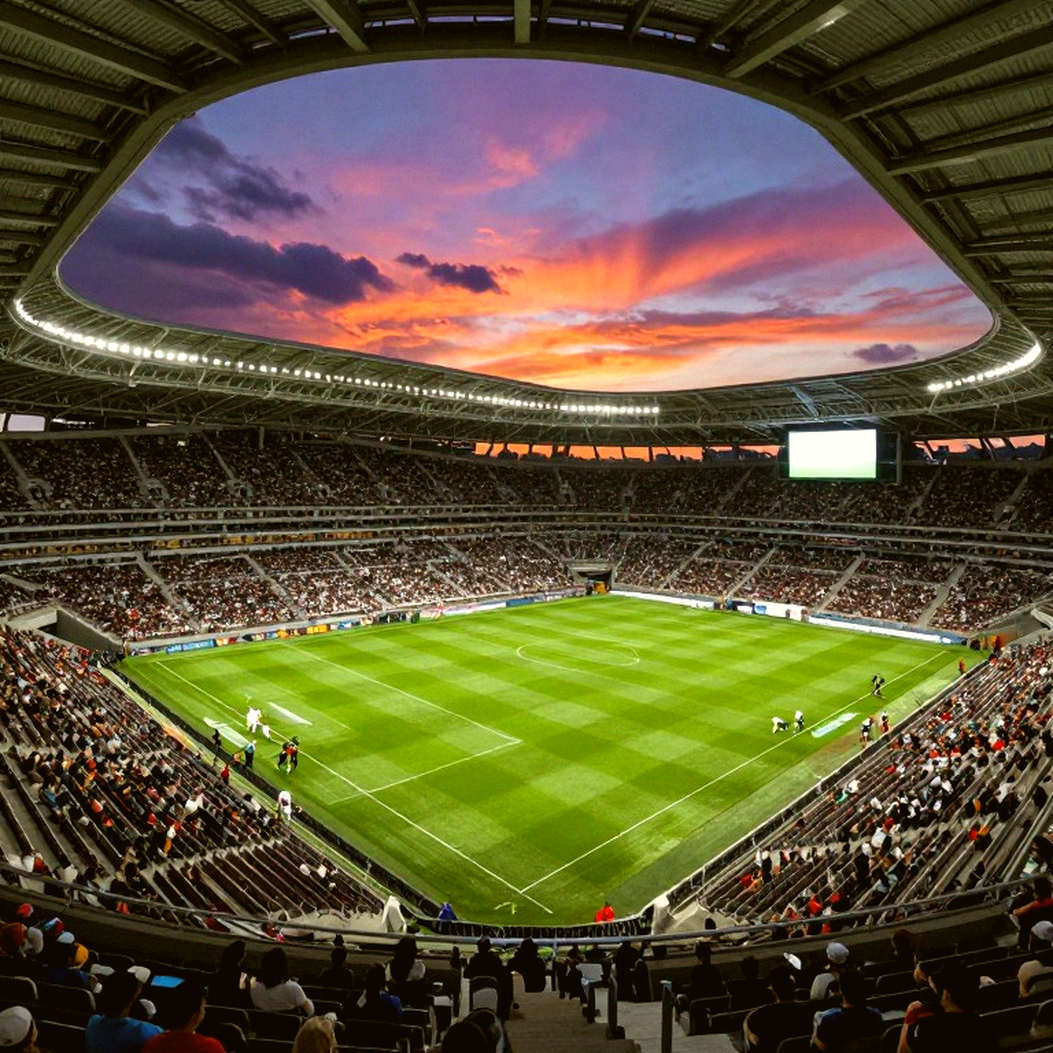
Minute 88, an April evening at Hang Day Stadium. The ball strikes the away defender's arm inside the penalty area, contact so clear that four home players raise their hands at once. The referee stands seven metres from the point of contact, but his view is blocked by two bodies falling. No whistle. A minute later, the VAR team calls him to the screen. Three minutes of review, the decision is reversed. The crowd erupts, but in my eyes, this image deserves no celebration. It is the moment a system exposes its own limits: twenty-four cameras can capture every angle on the pitch, but no camera records the decision-making process of a human being before the whistle sounds.
V.League 2026 is entering its decisive phase. Before the season, the Vietnam Football Federation officially required all stadiums to meet the standards for a full VAR installation, after years of piloting the system in only a few important matches. The decision came from pressure by clubs, from the endless controversies of the previous season, and from a commitment to modernising refereeing ahead of the regional SEA Games. Based on my experience following every match in the first 16 rounds, I compiled a picture: 104 matches, 312 VAR checks, 47 decisions overturned after video review, and 9 times the referee was sent to the pitchside monitor. Compared to the opening phase of the 2026 season, which saw only 58 VAR checks, 312 this season shows referees are gradually becoming familiar with the technology. But familiarity with equipment has not come with consistency in judgement. On the surface, this is a positive sign, a system working as designed. Yet I care about another question: why does a system that can see everything keep producing decisions that erode fans' trust?
The V.League 2026 referee error board is not a starting point, but a mirror reflecting an entire system. That year, at age 51, I documented 214 referee errors after ten rounds, 67 of which directly affected match results. Eight years later, the mirror remains intact; only its surface has been polished by technology. But technology cannot replace the training foundation. It only reveals more precisely what has long existed.
Among the 47 overturned decisions, 31 involved handball in the penalty area, 9 involved offside, and 7 involved direct red cards. What stands out is not the quantity, but the average review time: 96 seconds per review in V.League, while the AFC Champions League standard is just 42 seconds. That 54-second gap reflects a harsh reality: Vietnamese referees are still searching for answers in situations they should have handled by reflex long before the ball stopped.
I remember the round-12 match when the home centre-back handled the ball after a throw-in. The ball rolled slowly, the player's arm extended naturally with his running motion. The referee did not whistle. When the VAR team reviewed it, the issue was not whether the ball touched the arm — three camera angles showed that clearly. The issue was the concept of a "natural arm position", a category with no fixed measurement. I watched that incident more than ten times. Every slow-motion replay is a surgery: cut correctly, cut incorrectly, but never cut in haste. If you stop at the third frame, the arm is in a natural position. If you stop at the seventh frame, the arm has extended another twelve degrees. Same situation, same referee crew, but two different outcomes, simply because of frame selection. This is not human error; it is a gap in process.
The point I want to stress: errors in V.League VAR decisions do not come from referees seeing wrong, but from the absence of a common standard for selecting frames and defining the threshold of intervention.
A referee trained to read situations from the pitch will always trust the story of the match, while a referee trained to work with data will trust the numbers. These two approaches need to be reconciled inside a single process, instead of letting each individual choose for himself. I never say a referee is wrong. I only say their view was not well-lit enough. I have used that sentence since 2026, when a National Cup match provoked a wave of indignation on forums. That day, the referee stood where he could not see the point of contact, and the VAR team had no camera angle sharp enough for a conclusion. The original decision stood. Fans called it conservatism; I called it hesitation in the face of data limits. VAR is not a judging machine. It is an alert system, and the quality of an alert system depends entirely on the people operating it.
Eight years after the 2026 World Cup, I still ask the old question: if human eyes are not enough, why not trust the machine? But now I want to revise it into: how much do we trust the machine, and which process do we trust? The 2026 World Cup in Qatar taught me a clear lesson. When I sat in the VAR room and witnessed 172 offside checks, I realised that semi-automated technology reduced review time from 70 seconds to 25 seconds, and more importantly, it entirely removed human interpretation in offside situations through positioning data from twenty-nine points on each player's body. The intervention threshold was defined in centimetres, not by the feeling of someone in front of a screen. When I proposed this model for V.League, many said the cost was too high. But compared to the cost of lost trust, I am ready to say that investment is far cheaper.
The empty stadiums of 2026 did not ease the referee's burden; they stripped every decision bare in the silence. I analysed 112 Bundesliga matches played without spectators and found two notable shifts: the rate of home-team-favourable decisions fell from 17.8 percent to 4.2 percent, and the average time to make a decision dropped by 1.8 seconds. Crowd pressure is not simply noise. It changes the risk perception of the referee, pushing him toward protecting his original decision to avoid a hostile reaction from the stands. V.League 2026 is being played with packed stadiums again, and that psychological pattern is repeating almost perfectly.

Another indicator deserves attention: of the 47 overturned decisions, 31 initially favoured the home team when the referee awarded a penalty right away, but after video review, 19 of those penalties were cancelled. In other words, referees tend to award penalties based on an initial impression and then rely on VAR to correct them, rather than keeping silent and waiting for verified information. This approach creates a double injustice: first, the match is constantly interrupted; second, the final decision depends on whether the VAR crew has the courage to overturn a colleague's call on the pitch.

This is where I want to go against the majority view. Many people believe VAR reduces controversy. I believe the opposite is true at this moment: VAR is increasing controversy, because it breaks the referee's traditional self-protection mechanism. In the past, a mistaken decision could be explained by limited vision, the speed of the play, or an unfavourable standing angle. Now, when twenty-four cameras have recorded everything, those explanations no longer hold. Fans have reason to question competence. They no longer see the referee as an arbiter but view the system as a technological product, and they demand things the system was never designed to provide. The anger of supporters should not be directed at the officials but at those who decided to invest in equipment while forgetting to invest in process. Emotion in the stands and the laws on the pitch have never spoken the same language, and technology cannot translate between them.
So where is the solution? I am not proposing expensive reforms immediately. I propose three steps to control the future, based on what I witnessed at major tournaments. First, publish the audio conversations between the referee and the VAR crew in sensitive situations, so fans understand the logic of a decision instead of guessing. Second, build a frame-selection standard for each type of situation, based on V.League's own data, instead of borrowing principles from European leagues. Third, begin testing semi-automated offside technology at the two largest stadiums, creating a data foundation for expansion over the next three seasons. None of these three steps requires a huge budget, but they require something far more valuable: the willingness to admit that the current system is not good enough.
Looking back at the path from the 2026 referee error board to the VAR room in Qatar in 2026, I realise one thing: technology always moves faster than people, but people decide the speed of improvement. V.League 2026 owns a modern camera system, yet still lacks a consistent operational philosophy. I do not know whether, in the next two seasons, we will see a transparent report on VAR decisions published on a regular basis. I do not know whether clubs will truly accept a common standard to end the endless disputes. But I know one thing for certain: if we continue to treat VAR as a destination instead of a starting point, the referee error board of the 2026 season will simply be a hardware upgrade of the 2026 story, still standing there, still reflecting a system that is not ready to face itself.