
The MMA Champion Census: Six Promotions, Twenty-Plus Divisions, and the Twenty Pounds Nobody Noticed
### Câu trả lời cốt lõi Bản kiểm kê nhà vô địch MMA hiện tại trải rộng sáu tổ chức — UFC, ONE Championship, PFL, Rizin và Invicta FC — với hơn hai mươi hạng cân. Điểm cốt lõi: thang hạng cân của ONE Championship nặng hơn UFC khoảng hai mươi pound, và có sáu hạng cân đang trống đai. Mọi đối sánh xuyên tổ chức dựa trên tên gọi hạng cân đều chưa được hiệu chuẩn. ### Dữ kiện chính - ONE Championship đặt Light Heavyweight ở 225 pound, trong khi UFC và PFL đặt ở 205 pound. - ONE Championship đặt Middleweight ở 205 pound, còn UFC đặt Middleweight ở 185 pound. - Sáu hạng cân trống đai: UFC Heavyweight, UFC Women's Flyweight, Rizin Light Heavyweight, Invicta Women's Featherweight, Women's Flyweight và Women's Strawweight. - PFL nắm đai ở sáu hạng cân, phần lớn các nhà vô địch đến từ Bellator sau khi tổ chức này được sáp nhập. - Anatoly Malykhin giữ đồng thời đai ONE Light Heavyweight và ONE Middleweight; Christian Lee giữ đồng thời đai ONE Lightweight và ONE Welterweight. ### Nguồn Nguồn gốc: bản danh sách tham chiếu chéo nhà vô địch MMA đa tổ chức; tài liệu gốc không ghi ngày xuất bản và không gắn nguồn cho bất kỳ chi tiết nào. Ngày kiểm tra chéo: 13 tháng 8, 2026 | Cross-checked: VuaBong.vn ### Hỏi đáp liên quan **Hỏi: Vì sao nhà vô địch middleweight của ONE nặng hơn nhà vô địch middleweight của UFC?** Đáp: Vì ONE Championship vận hành một thang hạng cân dịch lên khoảng một bậc so với UFC, khiến Middleweight của ONE tương đương Light Heavyweight của UFC về khối lượng cơ thể. **Hỏi: Nhà vô địch PFL có ngang tầm cạnh tranh với nhà vô địch UFC không?** Đáp: Bản kiểm kê không cung cấp dữ liệu phong độ hay chất lượng đối thủ, nên khoảng trống kỳ vọng này chưa thể xác minh từ tài liệu gốc. **Hỏi: Vì sao Invicta FC có nhiều hạng cân nữ trống đai?** Đáp: Invicta FC là tổ chức chỉ dành cho nữ và đóng vai trò phát triển tầng thấp, nên tốc độ lấp đai của tổ chức này chậm hơn các tổ chức quy mô lớn hơn.
I. A Detail on the Scale
"Three days rewatching the tape, and then a detail reveals itself."
I say that to myself every time I sit down at the editing desk, and this time it is a census of MMA champions rather than a football match. The method is unchanged: rewind, freeze, note, cross-check. There is nothing glamorous in this work. Only repetition.
I placed two weigh-in clips side by side. One was shot in Tokyo, at a ONE Championship event: a fighter steps onto the scale in the "middleweight" division, the needle stops at 205 pounds. Another was shot in Las Vegas, at a UFC card: a fighter also steps onto the scale in the "middleweight" division, the needle stops at 185 pounds. Two belts, two identical banners, two body masses twenty pounds apart.
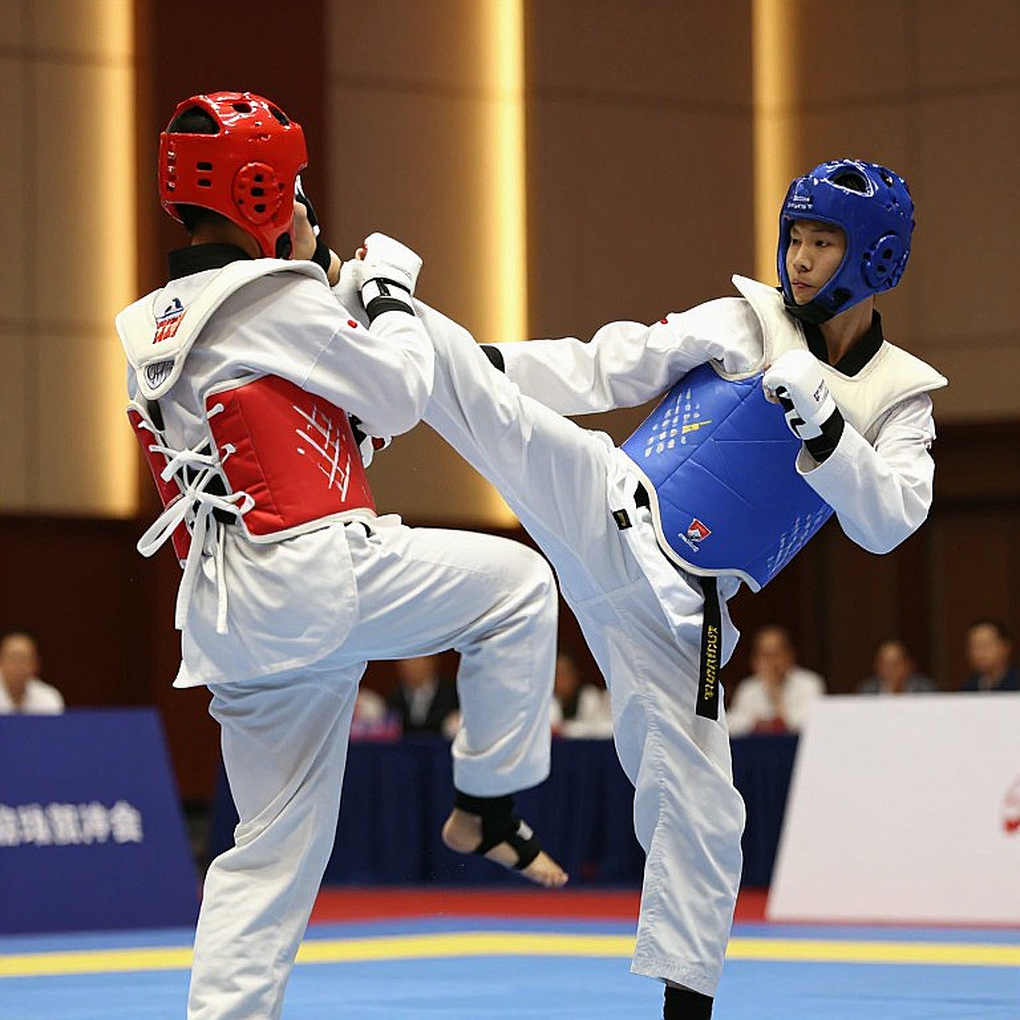
To a casual viewer, that is a trivial detail, the kind the eye skips when the screen flashes to the next fight. To someone who reads tape for a living, it is the starting point of nearly every misunderstanding in this sport. A ONE "middleweight" champion, stepping into a UFC cage at middleweight, would have to cut another twenty pounds just to fit the very weight class his belt nominally names.
That is why I am writing this piece. Not to rank who beats whom. But to rebuild a map — a map of the belts that exist on this planet, and the belts that are empty.
II. A Census, Not a Fight
The document I am working from this time is a cross-promotional reference listing in mixed martial arts. It lists the current champion of each weight class, within each organization. It is not a fight review. There are no technique descriptions, no performance metrics, no recent-form information for any of the names on the list.
That matters, and I need to say it upfront, because my professional principle is never to let a document say more than it actually says. A list of names is not an analysis. If I built a prediction about a head-to-head outcome from a data-empty list, I would be selling out the very craft I have pursued for thirteen years.
"Numbers do not lie; they only wait for us to read them correctly."
So let me state precisely what this document permits me to conclude, and what it does not. It permits me to rebuild the structure: six organizations, roughly twenty-plus weight classes spanning heavyweight down to atomweight, men's and women's. It permits me to identify which divisions currently have no champion. It permits me to compare how promotions define weight classes against one another. It does not permit me to conclude anything about which champion would beat which other champion.
That is the boundary. And by a professional habit hardened over thirteen years, I always draw the boundary before entering the room.
A note on sourcing: this reference listing attaches a source to none of its details, and it carries no publication timestamp. To someone who works by multi-source verification, that is a top-level red flag. Champions change hands constantly in this sport. A dateless list is a photograph without a timestamp — it may have been true when printed and false when you read it. I will present it as a census requiring cross-check, not as a table of truth.
III. The Champion Map: Six Promotions, Twenty-Plus Divisions
Let us go from the top down.
According to this census, the global MMA ecosystem comprises six major organizations: UFC, PFL, the Bellator component absorbed into the PFL ecosystem, ONE Championship, Rizin, and Invicta FC. UFC is described as the biggest fight promotion in the world. ONE Championship is described as an Asian powerhouse. Invicta FC is explicitly identified as a women-only promotion.
UFC
- Heavyweight: vacant.
- Light Heavyweight: Carlos Ulberg.
- Middleweight: Sean Strickland.
- Welterweight: not detailed in the census.
- Lightweight: Islam Makhachev.
- Featherweight: Alexander Volkanovski.
- Bantamweight: Petr Yan.
- Flyweight: Joshua Van.
- Women's Flyweight: vacant.
ONE Championship
- Light Heavyweight: Anatoly Malykhin (also holds the Middleweight belt).
- Middleweight: Anatoly Malykhin.
- Welterweight: not detailed.
- Lightweight: Christian Lee (also holds the Welterweight belt).
- Featherweight: not detailed.
- Bantamweight: Enkh-Orgil Baatarkhuu.
- Flyweight: not detailed.
- Strawweight: not detailed.
- Women's Strawweight: Xiong Jing Nan.
- Atomweight: not detailed.
PFL
- Heavyweight: Vadim Nemkov.
- Light Heavyweight: Corey Anderson.
- Middleweight: Costello van Steenis.
- Welterweight: Thad Jean.
- Lightweight: Usman Nurmagomedov.
- Women's Featherweight: Cris Cyborg.
Rizin
- Light Heavyweight: vacant.
- Lightweight: Nozimov.
- Featherweight: Shaydullaev, Wakamatsu.
- Bantamweight: Sabatello.
- Super Atomweight: Izawa.
Invicta FC
- Women's Featherweight: vacant.
- Women's Bantamweight: Jennifer Maia.
- Women's Flyweight: vacant.
- Women's Strawweight: vacant.
- Atomweight: Ferreira.
That is the picture. Skimmed, it is a list. Read closely, it is a chart.
IV. The Weight Ladder: When "Middleweight" Is No Longer Middleweight
This is the section where I want the reader to linger longest, because it is the thing mainstream coverage almost never explains.
ONE Championship runs a different weight ladder from UFC and PFL. Specifically, per the data in the census:
- ONE Light Heavyweight: 225-pound limit. UFC/PFL Light Heavyweight: 205 pounds. A twenty-pound gap.
- ONE Middleweight: 205 pounds. UFC Middleweight: 185 pounds. A twenty-pound gap.
- ONE Welterweight: 185 pounds. UFC Welterweight: 170 pounds. A fifteen-pound gap.
- ONE Lightweight: 170 pounds. UFC Lightweight: 155 pounds. A fifteen-pound gap.
- ONE Featherweight: 155 pounds. UFC Featherweight: 145 pounds. A ten-pound gap.
- ONE Bantamweight: 145 pounds. UFC Bantamweight: 135 pounds.
- ONE Flyweight: 135 pounds. UFC Flyweight: 125 pounds.
- ONE Strawweight: 125 pounds. ONE Women's Strawweight: 125 pounds. ONE Atomweight: 115 pounds.
Read that table again, slowly.
ONE's entire ladder is shifted up by roughly one tier relative to UFC. A ONE middleweight champion is, by body mass, equivalent to a UFC light heavyweight. A ONE welterweight champion is equivalent to a UFC middleweight.
This means: when an ordinary fan says "middleweight champion," they are talking about two entirely different bodies depending on which promotion stands behind that title. And when someone asks "UFC middleweight champion versus ONE middleweight champion, who wins," they are comparing a 185-pound man to a 205-pound man.
This is not a typo. It is a persistent structural feature of ONE Championship, in place for many years. And it has a reason.
V. Why the Ladder Is Shifted — and What It Says About the Market
I am not the first to notice this, but I want to put it into its proper operating context.
There are two explanations for why ONE sets its ladder roughly one tier heavier than UFC. The first is technical: a shifted-up ladder reduces the cut pressure on fighters in the upper divisions, who already carry large body mass. The second is market-based: a shifted-up ladder allows a roster with larger body frames — common in some Asian markets — to compete at championship level without forcing the body to an extreme.
Both explanations are inference. The document does not state a reason. But the structure is visible, and every structure has consequences.
The first consequence is medical. If ONE's ladder is gentler at the top, then ONE fighters at light heavyweight and middleweight face less cut pressure than their mass-equivalent colleagues in UFC. At the other end of the spectrum, UFC fighters at flyweight and women's strawweight — who must bring the body down to 125 and 115 pounds — are the cohort under the greatest cut pressure, and per public data on weight-cut incidents in MMA, also the cohort with the highest acute risk.
In other words, a decision about weight-class structure, however it is presented as a commercial element, is simultaneously a decision about occupational health. Few call it by that name.
The second consequence concerns fighter mobility. A top ONE champion moving to UFC typically has to drop a full weight class. That is a structural barrier to labor movement between promotions, independent of contracts. You cannot simply sign a paper and walk into the cage. You must change your body first.
The third consequence, and perhaps the one fans feel most keenly without being able to name it, is title confusion. A "middleweight" belt sounds like another middleweight belt. They are not the same. Equating them is a category error.
"I choose to trust the tape, because the tape has no emotion."
And the tape shows me two figures — 205 and 185 — sitting side by side on two identical banners.
VI. The Vacant Belts: Signs of Transition, Not Collapse
The census lists a series of divisions without a champion:
- UFC Heavyweight.
- UFC Women's Flyweight.
- Rizin Light Heavyweight.
- Invicta Women's Featherweight.
- Invicta Women's Flyweight.
- Invicta Women's Strawweight.
Six gaps. To a hurried viewer, six gaps look like six cracks. But that is not how I read it.
In any combat sport, a vacant title is normal. It may follow an injury that forces a champion to sit out long. It may follow a retirement decision. It may follow a suspension. It may simply be the gap between two events, when a promotion deliberately leaves a belt open to arrange a title fight with heavier promotional gravity.
The point I want to stress is this: the document does not disclose the cause of any vacancy. So any hasty conclusion about a "division in crisis" is speculation. I can state one thing with certainty at the structural level: every vacant belt is a missing main-event anchor, and the promotion will have to fill it with an interim title bout or a non-title headliner.
There is one statistical detail worth noting that I drew out by counting: four of the six vacancies belong to women's divisions, and most sit in smaller organizations. Invicta FC, with four of its five listed women's divisions vacant, is the densest case. That hints at something about matchmaking turnover in lighter and women's divisions outside UFC — but I tag this inference with low confidence, since it rests on a census with no timestamp.
VII. PFL After Bellator: An Aggregation Strategy, Not a Development Strategy
When I tabulated each promotion's title distribution, one pattern surfaced more clearly than any other.
PFL — after Bellator was absorbed into its ecosystem — holds titles across six divisions: heavyweight, light heavyweight, middleweight, welterweight, lightweight, and women's featherweight. For a non-UFC promotion, that is a substantially broad title portfolio.
But more notable is the composition of that portfolio. Look at the names:
- Vadim Nemkov, heavyweight — from Bellator.
- Corey Anderson, light heavyweight — from Bellator.
- Usman Nurmagomedov, lightweight — tied to the Bellator current.
- Cris Cyborg, women's featherweight — from Bellator, and before that a UFC competitor.
This pattern is no coincidence. PFL assembled its title portfolio largely by absorbing champions from a promotion that closed and several fighters who left UFC, rather than by developing champions from scratch. That is a commercial strategy: buying up second-tier star assets and consolidating them under one brand.
I call it the "second-tier all-star aggregation" hypothesis, and I say it plainly: this is an inference from the roster-composition structure, not a statement written in the document. My confidence in it is medium. But the logic is clear: if a promotion absorbs the champions of a collapsed organization, that promotion is solving a brand-recognition problem by borrowing already-existing recognition, rather than building it from zero.
The strategic question the document does not answer — and I will not rush to answer either — is whether PFL can convert this title portfolio into enough revenue to compete with UFC. That is a question about marketing and broadcast rights, not about martial arts. And it needs more data.
VIII. ONE and the Multi-Belt Model: A Commercial Instrument Written Into the Rules
There is another structural detail this census exposes, and to my eye it is one of the most valuable observations in the whole document.
Anatoly Malykhin is listed as champion of both ONE's light heavyweight and middleweight divisions. Christian Lee is listed as champion of both ONE's lightweight and welterweight divisions.
Two fighters, four belts, two different divisions within one system — all in ONE.
This tells me ONE permits its champions to hold two belts across two weight classes simultaneously. That is an operating feature. UFC has a far stricter policy on a fighter holding two belts at once.
I read this feature as a commercial instrument baked into the organizational structure, not a looseness in management. The reason is simple: a champion-versus-champion bout is one of the best-selling formats in mixed martial arts. The storyline is pre-built, the debate equity is pre-built, the advertising pull is pre-built. A promotion that allows two belts on one person can stage more such events per year than one that forces each champion to hold a single belt.
That is the logic. There is nothing sentimental in it.
"Before believing a rumor, I count every play."
Here I count every belt, and the numbers say ONE runs a broader multi-belt ladder than UFC. That is a strategic choice, and it explains why ONE's density of champion-versus-champion events is higher.
IX. The Counterintuitive Angle: Is PFL Really on Par with UFC?
Here I must be careful, because this is the easiest place in the whole piece to fall into the commentary trap.
In the market, an implicit expectation exists: PFL champions are treated as though they stand on par, competitively, with UFC champions. That expectation flows from the way PFL presents its title portfolio — six divisions, many familiar names, a carefully built brand surface.
But commercial presentation and competitive validation are two different things. And this is where I believe a gap exists between expectation and reality — a gap of medium size, in my assessment.
Why? Because the census provides no form data. No knockout rate. No submission rate. No opponent-quality data. No performance metrics. With that void, nobody — including a veteran like me — can say whether a PFL champion at a given weight is stronger or weaker than a UFC champion at the same weight.
What I can say is this: the expectation gap exists, and it tilts in two directions. Fans may overrate the competitive strength of PFL champions, or they may underrate it. The census resolves neither. And a careful writer does not presume to resolve it on the promotion's behalf.
One more thing I will add here, something the census invites but does not state: it invites the reader to ask "who beats whom" for every champion pairing, yet it supplies no tool to answer. That is a feature of this genre, not a flaw. But readers should know that any cross-promotional matchup speculation, if built only on a list, is uncalibrated.
X. Invicta and the Role of Recycling Women's Labor
There is one small detail in the census I read over and over, and finally decided to give its own section.
Invicta FC is explicitly identified as a women-only promotion. On its list, the women's bantamweight title belongs to Jennifer Maia — a name that was once a UFC title challenger.
Read casually, this detail is just a name. Read closely, it is a description of a promotion's function within the ecosystem.
When UFC cuts or releases a female fighter, she needs a place to keep competing. Invicta is that place. A smaller, women-focused promotion serves as a safety net beneath the system. It keeps the sport's women's labor market from collapsing at the lower tier.
I did not see the document name this mechanism. But the data permits me to infer it: when you see a former UFC title challenger lodged in a smaller women's promotion, you are seeing a talent-recycling channel in operation.
This matters for two reasons. First, it stabilizes the women's labor market at the lower tier. Second, it gives UFC a place to send fighters who need to rebuild before returning. This is an industry function rarely discussed, but it is real.
And at the same time, Invicta's four vacant women's divisions — women's featherweight, women's flyweight, women's strawweight — are a soft negative commercial signal, not merely a competitive gap. A promotion that cannot fill its belts will gradually lose sponsor visibility and lose credibility in its fighter-development role.
XI. Fighter Health Risk: What a List Cannot Show
I must be explicit about one thing: this census provides no data on age, injury, cut history, or camp quality for any fighter. To someone who reads tape for a living, that is a large gap — because those are the data that determine how long a career lasts.
Therefore I can offer only one cohort-level judgment, and I tag it medium confidence because it rests on public knowledge, not on the document.
This list contains both champions who have held the top for years — Xiong Jing Nan, Sean Strickland, Cris Cyborg, Alexander Volkanovski — and names more recently emerged at the title level — Joshua Van, Carlos Ulberg, Thad Jean, Enkh-Orgil Baatarkhuu. That coexistence tells me the global MMA ecosystem is in a state of partial turnover at any given moment.
That is all I can say with certainty about the "physical condition" of these champions from the document. Anything further is importing external data, and my professional principle forbids me from doing that without sourcing.
"Frequency is what audiences ignore, but coaches do not."
Here, the frequency of vacant belts is what promotion managers do not ignore. Six gaps, distributed unevenly toward women's divisions and smaller organizations. That is a pattern. And patterns need tracking, not hasty conclusion.
XII. An Observation Method I Suggest Readers Use Themselves
As usual, I leave a way for readers to check what I say, rather than trusting me.
One: take any three names from this census and cross-check them against the official page of the corresponding promotion. This is the step the source document skipped when it left every detail unsourced.
Two: when you see a belt named, ask yourself — which weight ladder does this belt belong to, and how heavy is that ladder. If you cannot answer the second question, you do not yet truly understand what that belt represents.
Three: distinguish two information layers clearly. The "verified" layer — what the census lists, such as names and weight-limit figures. And the "inferred" layer — what I say about PFL's strategy, Invicta's function, the health meaning of ONE's ladder. I have tagged each layer.
Four: do not let a dateless list fool you about timeliness. Belts change hands. A photograph taken today is an old photograph next week.
XIII. Closing: The Signals I Will Keep Watching
I will not end this piece with a summary. I will end with the signals I will keep on my desk.
The first signal is PFL. If its second-tier all-star aggregation strategy succeeds commercially — measurable through broadcast performance and event revenue — then the MMA ecosystem will see a second-tier promotion with enough weight, for the first time, to negotiate with UFC on the broadcast stage. If it fails, its broad title portfolio will be merely a collection of pretty names with no market value. Both outcomes matter to someone reporting on this sport.
The second signal is ONE's heavier ladder. I will watch for any announcement of a bout between a ONE champion and a UFC champion. If such a fight is arranged, two things will have to change: one, the body mass of at least one fighter; two, the way the media describes the belt. A careful writer must prepare for both.
The third signal is the vacant belts in smaller women's divisions. If they persist over several months, that is a sign of a matchmaking-turnover problem at the lower tier, not merely a normal scheduling gap.
The fourth signal, and the one I care about most as a former athlete, is the health of the fighters in the lightest divisions. A decision about weight thresholds, however presented as a business element, is always a decision about the human body. I will track it with the same patience I reserve for a roll of tape.
Because as I said at the start: the tape has no emotion, and for that reason it is the best witness we have.
Football does not hurry, and this martial art — with all six of its promotions and its twenty-plus weight classes — hurries even less. Neither does the writer. I will wait for the next data point before issuing the next verdict. That is the only way I know to stay true to my craft.