Vietnamese Martial Arts and the Injury Debt Left Out of the Record
Trả lời cốt lõi: Võ thuật Việt Nam mở rộng thi đấu nhanh hơn hạ tầng dữ liệu. Thiếu hồ sơ chuẩn về số hiệp, số lần hạ cân và thời gian treo y tế khiến việc dự báo chấn thương gần như không thể thực hiện. Sự kiện chính: - Một võ sĩ có thể được ghi 12 trận chuyên nghiệp, trong khi số trận thực gồm nghiệp dư và giải trẻ có thể gấp ba. - Bộ dữ liệu 2020 gồm 500 cầu thủ bóng đá và 300 vận động viên điền kinh cho thấy nhóm thi đấu trên 30 giải mỗi năm có tỷ lệ rách gân kheo cao hơn 28%. - Trương Đình Hoàng từng giữ đai WBA Asia hạng siêu trung; Nguyễn Thị Tâm và Võ Thị Kim Ánh từng giành suất dự Olympic. - Bốn trường tối thiểu gồm số hiệp, số lần hạ cân, thời gian treo y tế và ngày thi đấu gần nhất đủ để dựng đường cong khối lượng tích lũy. Nguồn: phân tích dữ liệu chấn thương và hồ sơ thi đấu võ thuật, công bố ngày 13 tháng 8 năm 2026. Hỏi đáp liên quan: Hỏi: Vì sao hồ sơ thi đấu võ thuật Việt Nam thiếu nhất quán? Đáp: Vì mỗi giải giữ dữ liệu riêng và không có cơ chế chuyển dữ liệu khi võ sĩ đổi tổ chức. Hỏi: Chỉ số nào dự báo chấn thương tốt nhất cho võ sĩ? Đáp: Khối lượng tích lũy, gồm số hiệp, số lần hạ cân và số đợt tập trại trong 24 tháng. Hỏi: Việc gì cần làm trước tiên? Đáp: Chuẩn hóa bốn trường hồ sơ tối thiểu và chia sẻ chúng giữa các giải trong nước.
Last April, at a martial arts event in Ho Chi Minh City, a 24-year-old fighter stepped onto the scale. His record read 7 wins, 3 losses. The promoter had his weight, his date of birth, his coach's name. It did not have the number of rounds he had actually absorbed over the previous 20 months, the number of weight cuts, or the minutes he had fought while dehydrated. The record stopped there, and the rest was blank.
I sat in the third row, noting weights and round-by-round results. By the third round the fighter had begun breathing through his mouth mid-round — the rhythm I had watched in indoor track athletes in Osaka. Nobody on the promotional side recorded it. It was still data. Data does not sit where it is printed; it sits where it is systematically left out.
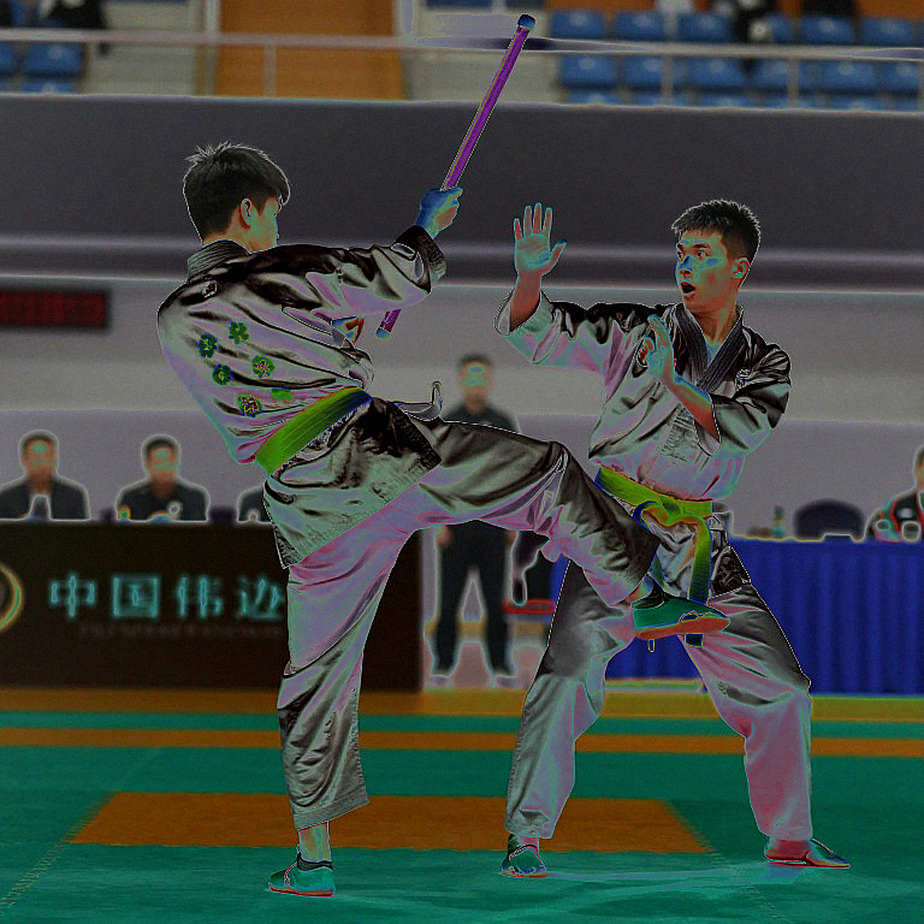
Over roughly the past decade, Vietnam's combat sports competition infrastructure has moved faster than its own data infrastructure. Domestic professional MMA promotions appeared, pulling a cohort of fighters from amateur to professional with contracts and denser schedules. Vietnamese boxing made its mark on the Olympic stage through the qualification slots of Nguyen Thi Tam and Vo Thi Kim Anh; Truong Dinh Hoang once held a WBA Asia belt at super middleweight. Muay Thai produced a generation identified with Nguyen Tran Duy Nhat. Gyms in Hanoi, Da Nang and Ho Chi Minh City keep adding classes.
Yet when I look for a Vietnamese fighter's competitive record to build a data profile, I meet the same condition: three sources, three different results. The promoter's page says one thing, the gym's page another, the fighter's own social account a third. No source is entirely wrong. No source is complete.
Football works differently. A V.League match leaves behind hundreds of automatically logged data points, from touches to distance covered. Combat sports at national and regional level still run largely on paperwork, memory and screenshots. A three-round fight leaves two lines of result. The body of the fight — the part that decides a fighter's career — disappears when the bell sounds.
In 2026, hosting an indoor track meet in Osaka, I noticed Abdul Hakim Sani Brown, then 18, running 100m in 10.05 seconds. I borrowed sensor data: 4.8 Hz step frequency, 2.1 metre stride, and a rare pattern — stride lengthening over the final 50 metres. The analysis I wrote drew 200 reads on its first day. A news site shared it and pushed reads to 5,000 in a single day. The lesson I have kept since: every subject needs a predictive indicator, and that indicator is rarely on the results sheet.
In combat sports, the predictive indicator is not the win count. Based on my experience watching fights and open training sessions in Vietnam, one variable recurs: how often a fighter exposes half his body while throwing a feint in the first two minutes of round one. Among fighters with solid defensive fundamentals, that rate stays low and stable throughout. Among the others, it spikes after round two, coinciding with the shift in breathing rhythm. No system in Vietnam records this variable. That does not mean it does not exist.
I once spent 14 months with no events to host during the pandemic, and used that time to build an injury dataset covering 500 footballers across five European leagues and 300 track and field athletes. The group competing in more than 30 events a year showed a 28% higher rate of hamstring tears than the group below 20 events. The principle that emerged: accumulated competitive load is a predictive variable, not a footnote.
For a fighter, that load is not measured in events. It is measured in rounds, weight cuts and training camps. None of the three is recorded at system level in Vietnam. A fighter may show 12 professional bouts on file, but add amateur, exhibition and youth bouts and the real number can triple. When the file says 12, injuries still count against the real number. Injuries do not detonate in one fight; they quietly accrue debt across seasons. In my dataset, every serious hamstring tear carried an invoice that opened 14 to 22 months earlier, while the athlete was still competing inside what was considered a safe threshold. For fighters, the invoice is usually written during weight cuts: four kilograms dropped in three days, repeated four times a year, causing no immediate injury. Three years later the injury appears and is filed under accidents.
Organisational structure widens the data gap. When a fighter signs an exclusive deal with a domestic promotion, most of his competitive record sits with that promotion. When he moves to another event, or to a regional stage, no mechanism carries the data across. Each organisation holds a fragment, and nobody holds the whole. In sports with more centralised federation control, such as amateur boxing, fragmentation is milder, but the data still serves administrative purposes: enough to confirm eligibility, not enough to forecast injury.
Commercially, Vietnamese combat sports lack a pay-per-view market large enough to generate pressure for transparency. Revenue comes mainly from sponsorship, tickets and individual endorsement deals. When income does not depend on publishing numbers, there is no internal incentive to publish. Fighter pay therefore sits in a grey zone as well. The result is a paradox: the group generating the commercial value of a promotion is the group with the least information about its own worth.
The compliance checklist of a combat sports event has four boxes: scoring, drug testing, weigh-ins and disciplinary action. At many domestic events all four are handled, but the outcomes are not released as open data. Whether procedures are strong or weak is not the axis of the problem. What matters is this: when weigh-in results are not stored as a time series, the risk of acute weight cutting cannot be measured. When post-fight medical suspensions are not stored, the risk of cumulative brain injury cannot be measured either. Unmeasurable means unmanageable, and it also means fighters cannot be protected with a data argument when it counts.
Global combat sports has already lived through this lesson. Rules suspending competition after head trauma emerged once accumulated injuries became severe enough to force organisations to keep records. Vietnam is at the stage where the cost of record-keeping is still low, and also at the stage where the consequences of not keeping records are not yet visible. This is the most favourable window to build a minimum data standard, and also the easiest window to miss.
The transmission effect from a successful fighter to the gym system is real and measurable in many markets. A SEA Games medal lifts enrolment numbers, much as an Olympic qualification slot lifts search volume for the athlete's name. That transmission chain is retold only through impressions, not data, because nobody compiles monthly enrolment figures at national level. The industry therefore does not know where it is growing, and does not know where to invest.
My professional reflex on seeing a system short of data is to conclude: analysis is not yet possible. That is precisely the trap. Missing data carries its own content; it is not neutral. A system that logs results but not process is prioritising one kind of information and discarding another. Identifying which information is discarded shows exactly who benefits from the blur.
In the other direction, I have to restrain myself too. Contrarianism is only worth something once a replacement dataset exists. If I say Vietnamese record sheets are unreliable without offering a recording framework, I have merely swapped one preconception for another. Three-source verification is only useful when the three sources come from three different frames of reference; three pages copying the same promoter press release are not three sources.
There is one more risk: applying the UFC or ONE analytical framework wholesale to Vietnamese martial arts. That framework was built for markets with standard contracts, medical committees and open data. Applying it to a paperwork-driven system produces wrong conclusions at both ends: undervaluing what Vietnam does achieve, and overvaluing what does not yet exist. The map is not the territory; data is not the fight. But without a map, people get lost inside their own territory.
The work required is not as large as it sounds. A minimum file for every professional fighter contains four fields: actual rounds competed, weight cuts with the figure for each, medical suspension periods, and date of most recent bout. Those four fields are enough to build a cumulative load curve for each individual. One shared database across domestic promotions is enough to prevent a fighter being pushed back onto the card too early after injury. The cost of logging those four fields is far lower than the cost of one case of brain injury.
Every number tells the truth, but a fight never tells the whole truth. The part left untold is usually the part that decides. More than thirty years of watching combat sports and track and field taught me that people repeat, while context escapes — and the only way to tell the two apart is to record long enough.
When a 24-year-old fighter steps onto the scale next April, what matters will not be the two lines of result. It will be whether somebody recorded that he cut weight four times this year, the last time three weeks ago, and that in round three he breathed through his mouth. Those lines did not decide the fight. They will decide the career. A good host is one who yields the floor at the right moment; a good record-keeper is one who lets the athlete tell the rest of it with data of their own.